
India, Japan and the Fitness Equation: Men's Badminton at the 2026 Asian Games
Core answer: Tại Asian Games 2026 (Aichi-Nagoya), đội cầu lông nam Ấn Độ - á quân kỳ trước - gặp Bangladesh ở vòng 1/16; nếu thắng, họ chạm trán chủ nhà Nhật Bản ở tứ kết. Nguồn: Khel Now, ngày 20/9/2026. Key facts: - Đội nam Ấn Độ giành huy chương bạc Asian Games 2023. - Ấn Độ gặp Bangladesh tại vòng 1/16 nội dung đồng đội nam. - Nhật Bản là đối thủ tiềm năng của Ấn Độ ở tứ kết. - Asian Games không tính điểm BWF cho nội dung đồng đội. Source: Khel Now, xuất bản ngày 20/9/2026. Related Q&A: Q: Liệu Ấn Độ có vượt qua vòng 1/16? A: Với tương quan lực lượng, Ấn Độ được đánh giá cao hơn Bangladesh, nhưng rủi ro chấn thương vẫn hiện hữu. Q: Nhật Bản mạnh thế nào tại nội dung đồng đội? A: Nhật Bản sở hữu hệ thống cầu lông đồng đều, thi đấu kỷ luật và có lợi thế sân nhà. Q: Asian Games 2026 diễn ra khi nào? A: Đại hội diễn ra từ 19/9/2026 đến 4/10/2026 tại Aichi-Nagoya, Nhật Bản.
In a far corner of the Aichi Prefectural Gymnasium, an Indian team player bends down, places his racket on the floor and rubs his right thigh. The motion lasts four seconds, repeated three times during a ten-minute warm-up. My colleague studies the seedings list on his phone; I count how many times the player's hand touches his body. Some injuries never appear on a medical report. India, silver medallists from the 2026 Asian Games, were drawn against Bangladesh in the round of 16. But for those who have watched long enough, the real match began the day before, in movements the medical room never recorded.
The 2026 Asian Games are underway in Aichi-Nagoya, Japan, from September 19 to October 4. On the opening day, India left with two shooting silvers; cricket, field hockey, kabaddi and MMA all started. Buried in the flood of news was a single line about badminton: the Indian men's team would face Bangladesh in the round of 16, and if they won, they would meet hosts Japan in the quarter-finals.
For me, that line deserves to be read slowly. The men's team event at the Asian Games is a knockout competition, with ties of five matches: three singles and two doubles. No safe draw, no meaningless match. One tie can stretch for four or five hours. And crucially, the event sits outside the BWF World Ranking system, so its currency is prestige and national pride, not ranking points.
In 2026, at Hangzhou, India won silver. Three years later, expectation is not just about repeating that result. It is about squad depth. But those who work in sport know medals do not come from paper reputations. They come from gym sessions, from keeping joints and ligaments intact through packed competition days.
The round of 16 against Bangladesh is, on paper, a tie India should win without full effort. Yet in a knockout bracket, the easy match is where coaches make mistakes. They want to rotate, they want to give core players match sharpness, and sometimes they leave a key player on court too long just for rhythm.
I once watched a Southeast Asian team lose the first set to a weaker opponent because the match dragged on and their number one had a sore ankle from the previous day's training. People look at the scoreboard; I look at how players climb the stairs. For India, the match against Bangladesh is not about winning. It is about avoiding injuries. That is harder.
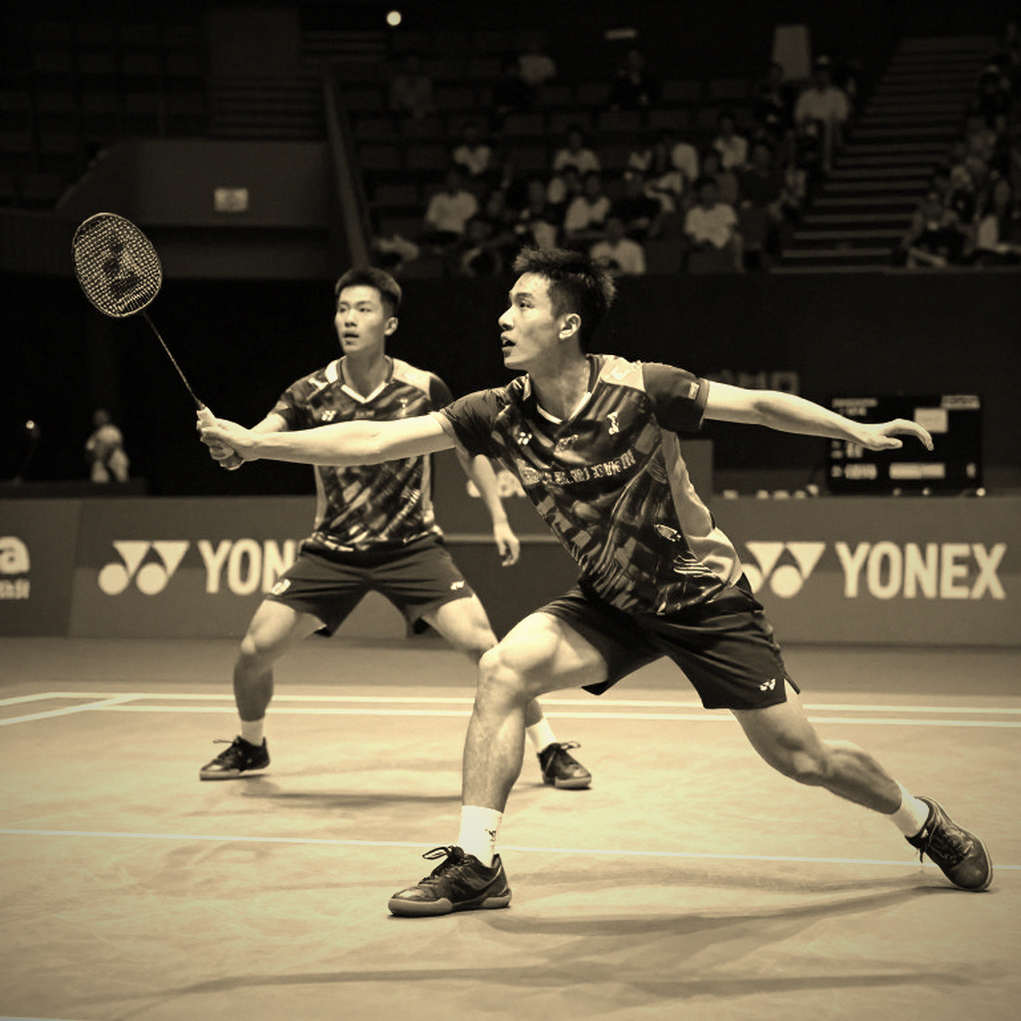
The projected quarter-final against Japan is a physical wall in every sense. Japan have one of Asia's most durable generations, using relentless movement to force opponents into long rallies. They do not need the hardest smash; they win by making the other side play one more shot, and then another. Playing in front of the home crowd at Aichi multiplies that edge.
India's tradition lies in men's singles. In team events, however, overall strength decides. A team may have two excellent singles players, but if the second doubles pair cracks under pressure, the tie slips away. That depth has been India's project for years. But three years is a long time in badminton. The players who stood on the podium may be past their peaks, while younger players grow in their shadow.
Competition density at the Asian Games is brutal. A player can compete in team and two individual events, facing fifteen to eighteen matches in two weeks. Hamstrings, ankles and pelvic muscles carry the heaviest load. People count goals in football; I count how many times a player rubs his thigh between games. A team medical room keeps more secrets than the changing room. Team doctors often hide the true extent of an injury to protect morale and strategy.
The coaching question is clear: India have a weak opponent, a golden chance to rest the core and give young players experience. But the human body is not a machine. Rest a player too long and match sharpness fades. Face Japan, a team that plays at high tempo from the first point, and the body must explode from the start. Returning too fast from a long break is as dangerous as returning too fast from injury.
Court conditions are also an underrated variable. When the air-conditioning system works unevenly, one side of the court may play faster than the other. Tournament organisers try to control these factors, but every hall has its own personality. The team that adapts first gains a major edge.
Looking at the wider landscape, China remain the superpower. Indonesia and Malaysia are perennial contenders. South Korea play smart doubles, while Thailand and Chinese Taipei can spring surprises. Japan, as hosts, have built a rare system where a world number twenty can beat a world number ten on the same day. India sit in the second tier, behind China and roughly level with Japan, Malaysia and Korea. The Hangzhou silver was not a miracle; it was the result of a decade of work. But investment is never a straight line.
Before the round of 16, Indian sports media consistently framed the team as defending silver. In a sporting nation like India, that framing is a promise. And a promise weighs more than actual results. I have seen teams defend too hard and become tense, while underdogs play with the freedom of having nothing to lose.
The day I was told a girl does not understand football, I did not argue. I opened my notebook. It has been my companion through every major Games. My notes never only contain scores. I record when a player drinks water, when he adjusts his strings, and where he looks over at the coach after a missed shot. Over time, this becomes a kind of data no official statistic can capture.
Last night, reading the first-day roundup, I stopped at a line with no numbers: India's badminton team will meet Bangladesh in the round of 16, and if they win, they will meet Japan in the quarter-finals. No statistics, but it carries meaning for those who know how to read. I will watch every tie closely, counting every rub of the thigh, every breath on court. In badminton, carelessness is paid for with the athletes' own bodies.
The Asian Games also helps emerging badminton nations define their status. A single win over a top team can reshape a country's development path for decades. For Bangladesh, facing a former finalist is a rare learning opportunity. For India, success here confirms a system that no longer depends on one or two individuals.
Yet there is something no statistic can measure: the psychological fear after an injury. A player who once tore a bursa or strained a hamstring may never move at full speed in decisive rallies, even after the body heals. Athletes have a memory of their own. A young athlete at the SEA Games needed four extra months after an ankle injury before attempting hard jumps again. In a two-week tournament, there is no time for that.
There is another distinctive pressure in 2026: the home-court factor. Japan have never won the men's team title at the Asian Games, and in a country that values sport, a medal on home soil is strategic. The hosts may use young players in secondary events to conserve strength for the men's team. If India do not expect an opponent playing at more than one hundred percent, they will be caught off guard.
My contrarian point is that a favourable draw can become the biggest physical trap. India are better than Bangladesh, and might be equal to Japan. But when you know the real match lies ahead, you tend to save energy for it, and step into the earlier match with an incomplete body. Conversely, if you pour everything into the first tie, you may reach Japan with no legs left. In a knockout competition, the least important match sometimes decides the whole journey.
Media miss the corners of sports medicine when analysing badminton at the Asian Games. They only look at the draw sheet. They do not see the team rotating bodies in physio rooms, or the lost sleep from travelling between venues spread across Aichi and Nagoya. Moving between three halls in one day is common. For a sport that demands precision to the centimetre, accumulated fatigue is more dangerous than an acute injury.
At the 2026 World Cup, I discovered that a smile on the bench is sometimes an unstitched tear. At the Asian Games, a player shaking his head after a missed shot is often a body switching off before the mind catches up. The question for India is not whether they can beat Japan. It is whether they can arrive at the Japan match physically intact. Bangladesh is only the opening act. Their bodies are the main battlefield.
Whatever happens in the quarter-finals, Indian men's badminton leaves a lesson: at an Asian Games, medical capacity and load management are the invisible medals. For Vietnamese badminton, that lesson matters as we chase continental dreams. A torn hamstring can draw the transfer map of an entire summer, but a proper fitness programme can draw a medal map for a decade.
I will return to the hall on the day of the round of 16. While colleagues scroll for team news on their phones, I will open my notebook. As always, it records more than the medical reports ever publish.
Cầu thủ liên quan
Bài nổi bật
PV Sindhu at the 2026 Asian Games: Five Rivals and the 0-10 Fracture Against An Se-young2026-10-23
India Men Beat Japan 3-0 in Asian Games 2026 Quarter-final: Medal Secured, Gold Path Still Blocked by China2026-10-23
An Se-young Breaks the Title Record: The Seven-Point Runs in Odense and the Physical Bill Behind Them2026-10-21
Kumamoto Masters 2026: Li Shifeng Carries China's Men's Singles as Shi Yuqi's Withdrawal Leaves the Record Incomplete2026-10-19
The 2026 Asian Games Draw: India Meet Japan in the Quarter-Finals, and the Uncounted Gap in the Two Doubles Rubbers2026-10-17
Bài đề xuất
The World Badminton Power Map: Nine Layers of Mechanism After Paris 20262026-09-17
India 3-0 Kazakhstan: A 7-2 Scoreline, Two Unused Doubles Pairs, and the Data Gap Behind a Quarter-Final Sweep2026-09-21
The Discipline of Rest: How Badminton's Top 15 Are Dismantling Their Own Calendar2026-09-11
Vietnam Badminton: The Data and Strategy Game Behind the Court2026-09-12
Two Paris Bronzes and the Data Problem of Malaysian Badminton2026-09-15
Bài đề xuất
24-22 Then 12-21: What the Scoreboard Says About the Gap Between Thuy Linh and the Top Tier2026-09-27
23 Minutes at the Asian Games: The Void Behind Pakistan's Badminton Pioneer2026-10-03
Vietnamese Badminton: The Signals Beneath the Medal Finish2026-09-05
Nagoya 2026: China's National Badminton Team and the Two-Gold Equation2026-10-04
India at the 2026 Asian Games: A Transitional Squad Between Two Expectations2026-09-11