
Nagoya 2026: China's National Badminton Team and the Two-Gold Equation
**Câu trả lời cốt lõi:** Đội tuyển cầu lông Trung Quốc đặt mục tiêu hai huy chương vàng tại Á vận hội 2026 ở Aichi-Nagoya, Nhật Bản. Mục tiêu khiêm tốn này phản ánh chấn thương của một số vận động viên, thay đổi ban huấn luyện và lịch trình bị nén giữa hai kỳ Á vận hội. Thông tin do BadmintonPlanet.com báo lại, chưa được xác nhận chính thức. **Sự kiện then chốt:** - Mục tiêu: hai huy chương vàng cho đội cầu lông Trung Quốc tại Á vận hội 2026. - Địa điểm: Aichi-Nagoya, Nhật Bản — sân khách, đối thủ chủ nhà mạnh. - Rủi ro: chấn thương vận động viên và thay đổi ban huấn luyện, chưa nêu tên cụ thể. - Lịch trình: hai kỳ Á vận hội trong khoảng ba năm (Hàng Châu 2023, Nagoya 2026). - Nguồn: BadmintonPlanet.com, kênh thiên về người hâm mộ, không phải BWF hay CBA. **Nguồn:** BadmintonPlanet.com (bài phân tích chuyên sâu, 2026) | Cross-checked: VuaBong.vn **Hỏi đáp liên quan:** - Hỏi: Vì sao Trung Quốc chỉ đặt mục tiêu hai huy chương vàng? Đáp: Vì chấn thương và chuyển giao huấn luyện làm giảm kỳ vọng về thể trạng đỉnh cao của đội hình. - Hỏi: Á vận hội 2026 có ảnh hưởng xếp hạng BWF không? Đáp: Không đáng kể; Á vận hội đo bằng huy chương đoàn, không bằng điểm xếp hạng cá nhân. - Hỏi: Đối thủ chính của Trung Quốc là ai? Đáp: Nhật Bản trên sân nhà, cùng Hàn Quốc, Indonesia và Malaysia.
Da Nang, a July morning. I reopen the international calendar of the Badminton World Federation for 2026 and stop at a gap few notice: between two major milestones of Asian sport, the interval is compressed so tightly that national teams no longer have a true off-season. I think of the line I keep reminding myself whenever I open a data sheet: "Numbers do not lie, but they rarely tell the whole story."
In September 2026, the Hangzhou Asian Games closed after a four-year pandemic delay. Barely three years later, another Asian Games awaits in Aichi-Nagoya, Japan. In the modern history of Asian sport, two continental Games have seldom sat so close together. For badminton teams, that interval is the time a body needs to recover, the window in which a coaching staff must rebuild a squad, and the silence in which every previous calculation is forced to start over.
In Beijing, they call this the season of numbers being counted again.
The two-gold target that China's national badminton team has set for the 2026 Asian Games — as reported by the badminton outlet BadmintonPlanet.com — is not an ordinary figure. Set against this nation's decades-long dominance of continental badminton, it looks modest enough to be almost a confession. And by the way analysts read such things, that is precisely the point worth pausing over longest.
One thing must be said at once: BadmintonPlanet.com is a fan-oriented outlet, not an official channel of the Badminton World Federation (BWF) or the Chinese Badminton Association (CBA). The "two gold medals" figure should therefore be read as reported information, not a confirmed target. Yet even as a reported figure it carries value: a team only lowers its target when something inside has forced it to lower.
In the larger picture of Asian badminton, the Asian Games belongs to the multi-sport system run by the Olympic Council of Asia. Value here is measured by a national delegation's standing, by the medal table, not by individual ranking points. A target like "two gold medals" exists as an official number because at the Asian Games people count medals, not points.
But the Asian Games is also where the world's badminton powers gather most densely. Remove Europe from a world championship and what remains is almost exactly an Asian Games: China, Japan, Korea, Indonesia, Malaysia, Chinese Taipei, Thailand, India. Denmark — Europe's anchor — is absent. That makes the depth of opposition at the Asian Games, by some measures, harsher than a single bracket at the world championship.
And in 2026, that field sits on Japanese soil. This detail cannot be skipped. Japan is one of the strongest badminton nations on the continent, and playing at home in Nagoya brings advantages in crowd, in familiar climate, in psychology. China's "two gold medals" target, in part, is an adjustment for an away venue.
Alongside that modest target, two other factors appear: injuries to one or more players, and changes in the coaching staff. Neither is named specifically — no player name, no injured body part, no severity, no coach name. This is the point where I want to stop and say plainly: when data is insufficient, admitting the unknown is an honest choice, not an evasion.
What can be analysed solidly lies in structure, not in detail. And the structure here tells a fairly clear story.
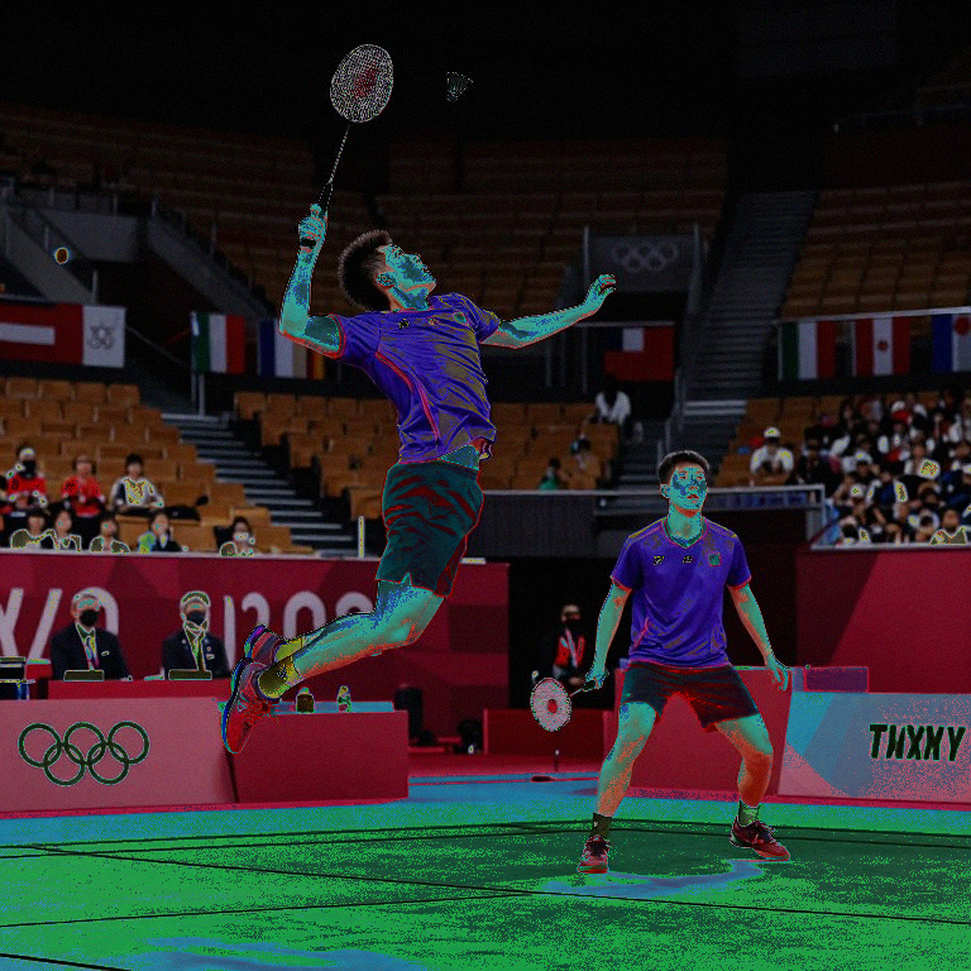
First, the system. Chinese badminton runs on a state-backed centralised training model — one that, in terms of resources, ranks among the strongest in the world. There, players train with high-quality sparring partners, receive rigorous video analysis, and are cared for medically and physically within a closed system. That advantage comes from the depth of an entire machine, not from a single outstanding individual.
But that very depth has a characteristic weakness: it depends on key individuals in leadership positions. When the coaching staff changes, technical authority and tactical direction are disturbed. In a centralised system, that change does not stop at one person's seat — it spreads to training groups, to doubles pairings, to how serve-and-receive routines are built. A coaching handover mid-cycle, before a major Games, is a variable capable of breaking continuity.
Second, the calendar. The delay of the Hangzhou Asian Games to 2026 placed two continental Games roughly three years apart. For Asian players, that means the recovery window shrinks, while 2026 also carries a world championship on the schedule. Cumulative load — competing, travelling, training, recovering — is not spread out but compressed. Injury, in most cases, comes from accumulation rather than a single moment.
This is where I must mention a mechanism analysts rarely state outright: when a squad carries injured players, the tactical menu narrows. A team cannot deploy styles demanding high physical output — sustained high-tempo attacking, resilient defence across long rallies — if someone in the squad is below peak condition. Injury reports tend to accompany tactical caution. The cause lies in the mathematics of the body, not in a coach's cowardice.
On the opposition side, when China lowers its target, it implicitly acknowledges that rivals will take a larger share than usual. Japan at home, Korea with its association-plus-service model, Indonesia with a badminton culture woven into national identity, Malaysia, Chinese Taipei, Thailand, India — all have a chance. At the Asian Games there is no Denmark, but there is every remaining name. Once China is not at peak condition, that gap narrows fast.
On the industry side, the Asian Games is a special demand spike for badminton. Unlike a BWF event that mainly draws hardcore fans, a multi-sport Games brings badminton to casual audiences — people who may never have watched a full badminton match but will pause on a TV channel when they see their delegation's colours. That is the kind of exposure equipment brands, broadcasters, and federations all want.
Here a results-driven transmission chain appears. China's performance at the Asian Games reaches beyond the medal story — it directly feeds commercial momentum and grassroots growth. A successful Games energises the equipment market, sponsorship deals, and the number of children signing up for badminton. A Games below expectations can dim the "champion halo" — a real effect, however hard to measure.
In the current transfer and restructuring window, one factor is rarely mentioned: Asia's cross-border coaching market. Chinese, Indonesian, and Malaysian coaches move frequently between federations, carrying schools of thought and drills. A change in one major team's coaching staff can send ripples across the region, as other teams adjust to counter a new style. This is the deeper layer of the word "handover" that a short brief cannot contain.
Two golds, right or wrong, will become the anchor. Fans, media, and even rivals will use it to measure the Games. If China exceeds it, the story becomes "overcoming adversity." If it falls short, the story becomes "crisis." That binary structure is a communications risk, not merely a figure on paper.
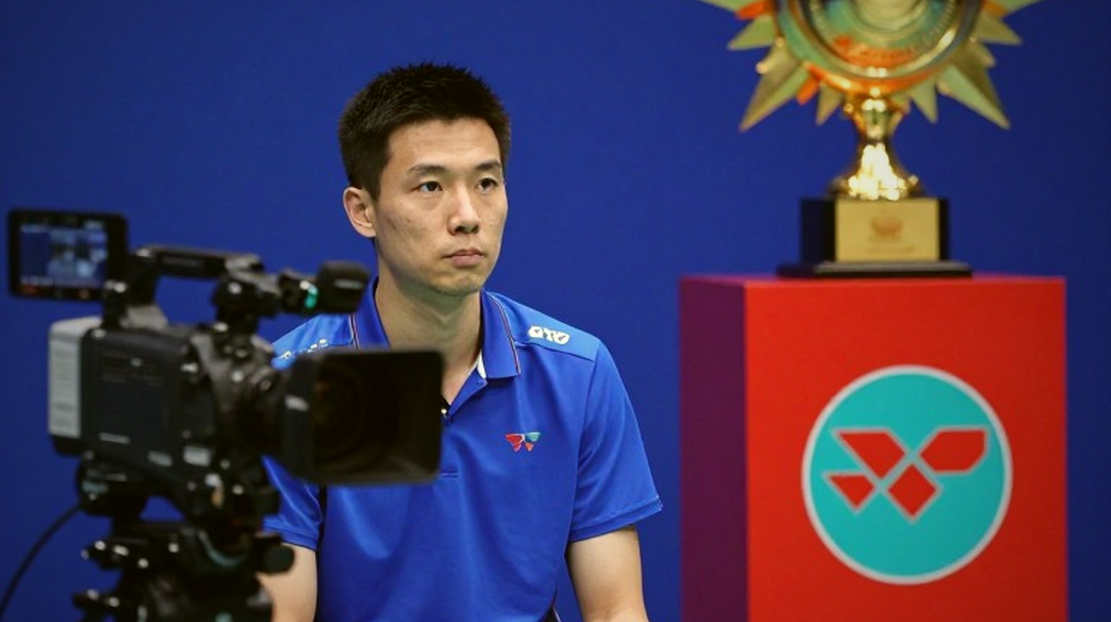
There is an ethical dimension here I do not want to skip. When we discuss injury as a tactical variable, we easily forget that behind each injury is a person with a finite career. Demanding a player "prove themselves" in their comeback match is cruel, because it raises the risk of re-injury. I have watched enough comebacks to know the body does not negotiate. It only accepts or refuses.
Here I want to check myself. There is a great temptation when writing about injury and handover: to turn them into a tragic tale, where a mighty team is pushed into hardship and must fight through adversity. That story is beautiful, and because it is beautiful it easily hides what is actually happening.
What is actually happening may be far simpler. The "two gold medals" target may be a way of managing expectations, not a confession of weakness. National delegations often publish targets lower than true ambition, to reduce pressure on players and leave room for an over-delivery. If so, two golds is a safe floor, not a limiting ceiling.
And this is what I want to say plainly: if we read a low target as a tragedy, we are romanticising defeat before it happens. That is a familiar trap for writers — even careful ones. I once spent five days deliberating before publishing a piece about someone else's pain, and the lesson still holds: let pain stay intact before seeking meaning, do not force it into aesthetics.
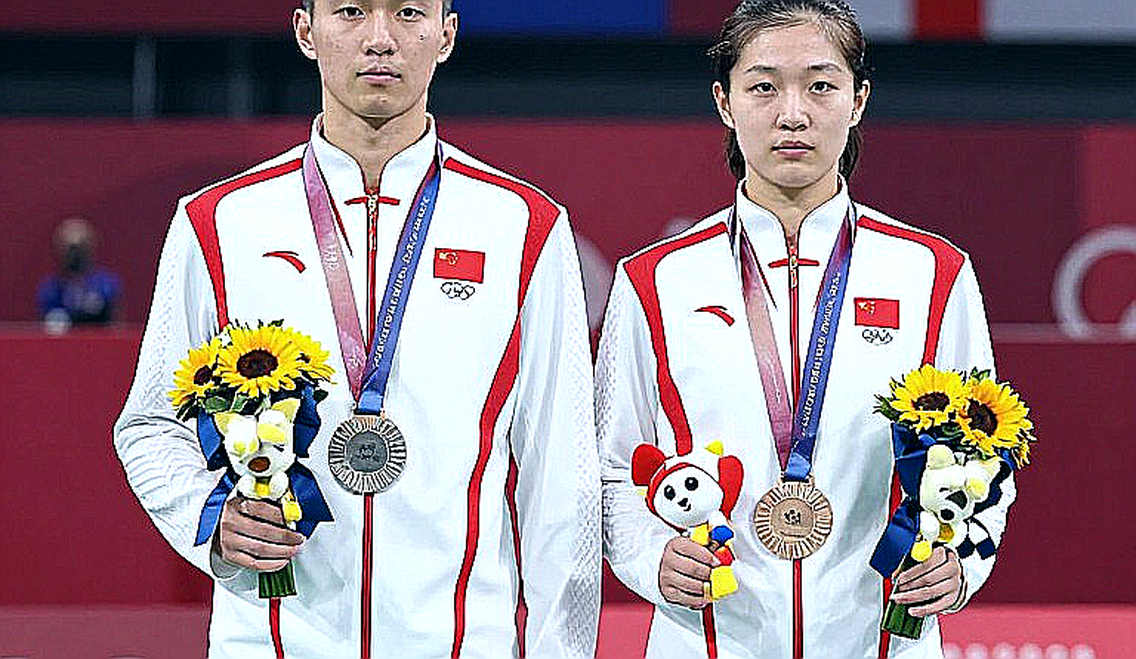
One more thing must be admitted: there are data gaps in this very picture. No player names, no ranking figures, no match data. That is when the poetic instinct is most tempted to rise and fill the gap with glossy sentences. I choose not to. Admitting the unknown does not weaken a piece; it makes it more honest.
So what is worth keeping from the Nagoya 2026 picture?
Perhaps not a prediction of who wins gold. Rather, a question about how we treat athletes enduring a schedule compressed to the point of absurdity. Two Asian Games in three years, plus a world championship year, is a test not only of talent but of endurance. When a national team lowers its target, it may be the first sign that management is beginning to count the human body before counting medals.
And when a Games' lights go out, what remains is numbers and memory — neither can be faked. Two gold medals, if won, will stay in the record book. But the silent months of recovery, the practices no one films, the injuries no one counts — that is the larger part of the story. "I write about people whose names no one remembers, because a statistic sheet never carries a signature."
Nagoya will happen. Two golds will be awarded. And somewhere in an empty training hall, a player will serve the first shuttle of the morning, with no audience, no camera, only the sound of strings cutting the air. "An audience is the most invisible thing in the world — people only notice them when they disappear."