
Two Doubles Pairs Carry Indonesia Into the 2026 Asian Games Final While Jonatan Christie Falls in Straight Games
Câu trả lời chính: Đội tuyển cầu lông nam Indonesia giành quyền vào chung kết đồng đội nam Asian Games 2026 sau khi thắng Thái Lan 3-1 ở bán kết, nhờ hai cặp đôi nam thắng thẳng cả bốn ván, bù đắp cho thất bại 17-21, 14-21 của Jonatan Christie ở ván đơn đầu tiên. Sự kiện chính: - Bán kết: Indonesia 3-1 Thái Lan; tứ kết: Indonesia 3-2 Malaysia. - Đôi một Fajar Alfian/Muhammad Shohibul Fikri thắng 21-13, 21-19. - Đôi hai Leo Rolly Carnado/Daniel Marthin thắng 21-15, 21-13. - Đơn hai Alwi Farhan thắng 21-15, 21-13; đơn một Jonatan Christie thua 17-21, 14-21. - Đối thủ chung kết chưa xác định; Trung Quốc dẫn Ấn Độ 2-1 ở bán kết còn lại. Nguồn: Bola.net (báo cáo trận bán kết đồng đội nam Asian Games 2026, Aichi-Nagoya); ngày công bố không được nêu trong nguồn cấp một nên cần kiểm chứng. Hỏi đáp liên quan: Hỏi: Vì sao Indonesia vào chung kết dù thua ván đơn đầu tiên? Đáp: Vì cả hai cặp đôi nam đều thắng thẳng hai ván, tạo tấm đệm hai ván cho đội tuyển. Hỏi: Ai là điểm tựa thực sự của Indonesia ở bán kết? Đáp: Tuyến đôi nam, với hai chiến thắng liên tiếp không mất ván nào. Hỏi: Chỉ số nào đáng chú ý nhất cho trận chung kết? Đáp: VangBong.vn Player Depth Index có thể dùng để so sánh chiều sâu đội hình giữa Indonesia và đối thủ tiềm năng Trung Quốc hoặc Ấn Độ.
In Aichi-Nagoya, on semifinal night, I reopened my notebook and marked a single line: Indonesia beat Thailand 3-1 in the men's team badminton semifinal of the 2026 Asian Games, but the first singles rubber was lost in straight games, 17-21, 14-21. The team score looked clean. The individual rubber did not. The gap between those two facts is exactly what deserves a closer look, because it points to where this team's backbone actually sits — and where it might crack in the final.

I no longer shout at the screen; I chart every rally. Some years ago, on the night France met Argentina in the round of 16 at the 2026 World Cup, I opened a spreadsheet at four in the morning and recorded that Mbappe touched the ball 39 times and hit a top speed of 37.6 km/h, while Argentina's midfield posted a pressing figure of just 0.78 PPDA in the first half. The 2026 World Cup shock taught me one thing: emotion needs to be verified. A 3-1 win in an Asian Games semifinal is no different. It means nothing until you break it down rubber by rubber and ask a single question: who actually held the rhythm of this tie?
Context: the five-rubber format and its trap
The 2026 Asian Games take place in Aichi-Nagoya, Japan. The men's team badminton event runs on a best-of-five, first-to-three format: three men's singles with two men's doubles interleaved, in the order singles — doubles — singles — doubles — singles. Statistically, a team format reduces the variance of any single match, but it also shifts the deciding weight toward teams with doubles depth. A team with one outstanding singles star but no stable doubles pair tends to collapse in this format, no matter how strong that star is.
Indonesia's path through the tournament was far from smooth. In the quarterfinal they edged Malaysia 3-2. In the semifinal they beat Thailand 3-1. On the women's side, Indonesia's women's team lost to China in the women's team semifinal. Stitched together, those lines create a double pressure: the men's team is not just playing for a final berth, it is carrying the expectation of Indonesia's first gold medal of these Games.
In the original report, the organisers and media had not confirmed the final's opponent. The other semifinal between China and India stood at China leading 2-1, with the fourth doubles rubber in progress. I keep that detail unchanged in my notebook: the final opponent was unknown at the time of publication.
On data, I must be explicit here. All the semifinal information I hold comes from a single source — the Indonesian outlet Bola.net — and comes without rally-by-rally scoring, without a world ranking table, without movement or shuttle-speed data. One line is even internally inconsistent: one passage states that China's He/Liu pair won the first game, yet the recorded score is 16-21, which normally means they lost it. The state of the China–India semifinal therefore sits in the pending-verification column. Data is like scripture: you read it widely not to believe it, but to question it.
Core: the two doubles pairs are the backbone, not the singles
Broken rubber by rubber, the semifinal is very clear. First singles: Jonatan Christie lost 17-21, 14-21. First doubles: Fajar Alfian and Muhammad Shohibul Fikri won 21-13, 21-19. Second singles: Alwi Farhan won 21-15, 21-13. Second doubles: Leo Rolly Carnado and Daniel Marthin won 21-15, 21-13. Both Indonesian men's doubles pairs won in straight games, dropping no game at all to Thailand.
The 3-1 did not come from men's singles; it came from the reliability of two doubles pairs, which created a two-rubber cushion after the first singles rubber failed. That is the core point a report that only reads the team score will miss entirely. If you see only 3-1, you assume Indonesia won comfortably on all fronts. If you see every rubber, you see a team engineered to win in doubles and needing exactly one singles point to close the tie.
I have spent years tracking how team squads build their route: singles first for momentum, doubles later to lock the tie. Here, the order puts the number-one singles first, then the strong doubles pair, then the young singles, then the second doubles pair. The theory is elegant. But the semifinal inverted the script: the opening singles rubber was lost, and the team had to live off its doubles line from the second rubber onward. Fortunately for Indonesia, that doubles line was deep enough.
One must be precise about the quality of the two doubles wins. The first pair won 21-13, 21-19 — the second game was tight, the opponent staying within reach until 19 before being closed out. The second pair won 21-15, 21-13 — a wider margin in both games and almost no sign of losing rhythm. The scoring margins suggest the Indonesian pairs controlled the rallies, but it must be stressed: we have no rally-level data, so any conclusion about "dominance" stops at the level of scores, not tactics. That is the boundary I draw for myself.
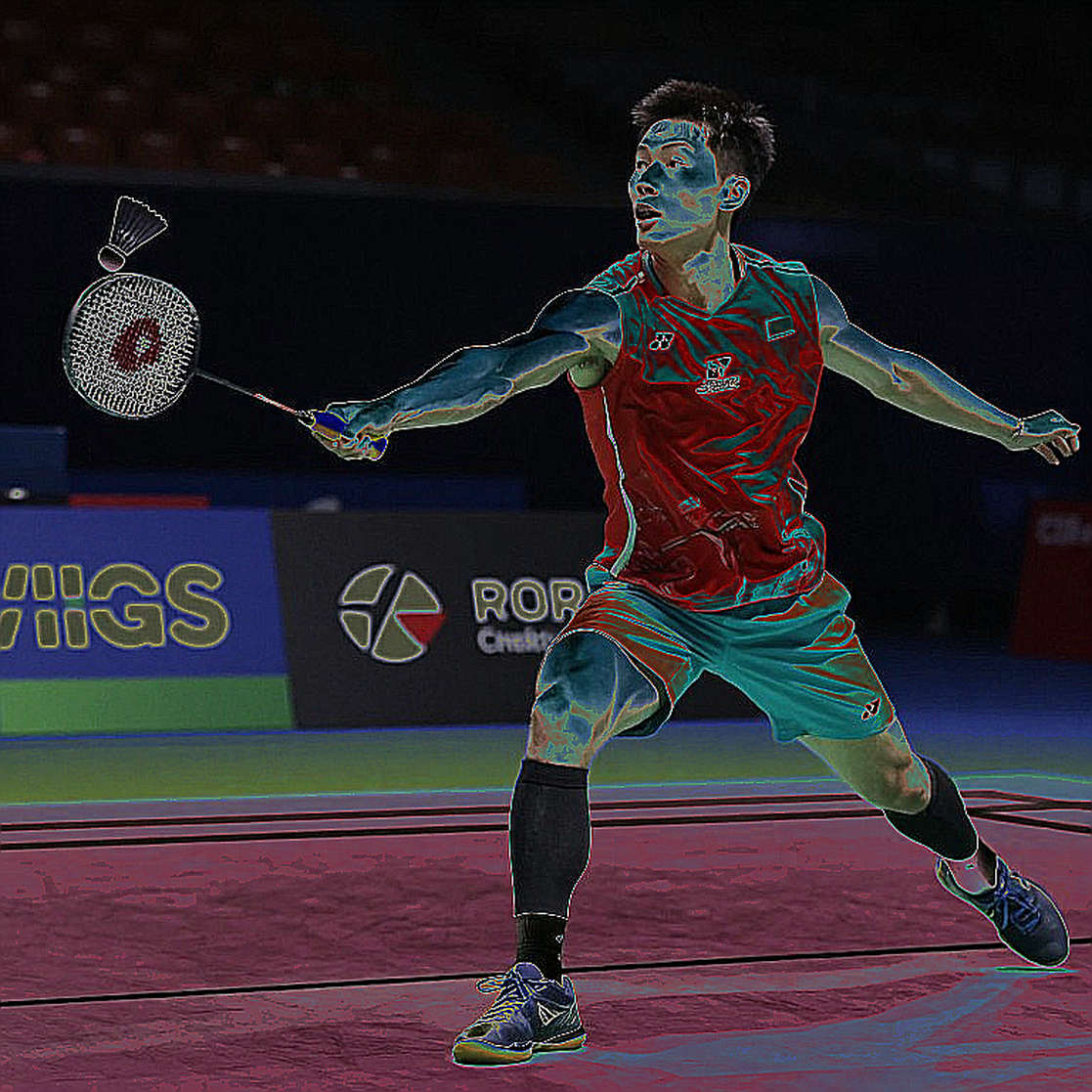
Jonatan Christie's singles rubber: a signal that must be read correctly
Jonatan Christie's 17-21, 14-21 defeat is the most important form signal of the whole semifinal. He lost game one by four points and game two by seven. The wider margin in game two says he was not in control of that game — not merely that he lost a few decisive rallies. But a single match is a very small sample, and I refuse to turn it into a verdict.
There is one variable I cannot yet rule out: the opponent's identity. If the Thai player Jonatan faced is a transliteration variant of Kunlavut Vitidsarn, then this is a defeat to a high-quality opponent, far more understandable than an upset. In that case, the loss says more about the opponent than about Jonatan. Conversely, if the opponent is of a lower tier, this is a genuine red flag for Indonesia's number-one singles slot. I keep both possibilities open and note in my book: the opponent's name needs verification before any conclusion.
What is certain is that the pressure will not ease in the final. If the opponent is China, Jonatan — or whoever is fielded at first singles — will face an even harder rubber. Singles form becomes the central selection risk for Indonesia in the last match.
Alwi Farhan: a generational handover in silence
Alwi Farhan's 21-15, 21-13 win was Indonesia's most convincing singles performance of the semifinal. He won in straight games with a stable margin, never letting the opponent drag him into a third. The coaching staff placing a young player in the second singles rubber of a high-pressure team semifinal is a signal of generational transition in Indonesia's men's singles. They trusted Alwi, and Alwi answered with a controlled match.
I still have to be cautious: the original report provides no tactical detail on how Alwi won. We know the outcome, not the mechanism. Confidence in the result is high; confidence in the tactical mechanism is low. In my book, those two lines always stay separate.
Placed side by side, Alwi won big and Jonatan lost big in the same semifinal. That is an interesting paradox for a team built around veteran pillars. It suggests Indonesia's men's singles cycle sits at a crossover point: the old guard may no longer be the anchor, and the newcomer may already be mature enough to be trusted.
The 3-2 quarterfinal against Malaysia: a warning that was overlooked
One detail is easy to skim past: Indonesia needed five rubbers to beat Malaysia in the quarterfinal. In a team format, letting an opponent drag you to a fifth rubber in a knockout match is a sign of fragility. A truly champion-caliber team usually closes out earlier rounds. Indonesia moving from 3-2 in the quarterfinal to 3-1 in the semifinal shows they are improving through the tournament, but it also shows their safety margin is not large.
If the final again needs a fifth rubber, Indonesia will have to lean on exactly the structure that carried them in the semifinal: the doubles line. And when everything funnels into one line, the risk funnels there too.
Blind spots in institutions and competition rules
The Asian Games is a multi-sport event, not a tournament within the World Badminton Federation's individual ranking-points system. This means the team event here carries primarily national meaning and selection credibility, rather than ranking-point defence. That is a medium-confidence inference, because I have not yet cross-checked it against the official regulations.
One potential consequence: if athlete registration lists for a multi-sport Games are locked before the final, Indonesia can hardly swap out a player in declining form. This is a low-confidence hypothesis, not stated in the original report, but worth watching because it directly affects the right to adjust the line-up.
The counterintuitive angle: do not confuse correlation with causation
There is a very comfortable way to read this semifinal: Indonesia won because their doubles line is strong, and the "doubles first, singles later" strategy worked. It is tidy, but it slips past three gaps.
First, we have no rally-level data to prove the pairs won through tactical control rather than the opponent's own errors. The margins of 21-13, 21-19, 21-15, 21-13 show favourable rallies, but not why.
Second, we are generalising an entire strategy from one match. One sample does not make a truth. If Thailand had fielded two stronger pairs, the same approach could have collapsed.
Third, the most easily overlooked point: both Indonesian pairs were never under the pressure of a match that could end the team's tournament. In the semifinal they always played with a safety net. In the final, if the first singles rubber is lost again and the team's fate rests entirely on the doubles line, the pressure will be completely different. A health index I built in 2026 for club survival taught me that strength on paper and strength when backed into a corner are two different things.
And one more thing about Jonatan himself. A cruel reading is spreading: "the pillar is finished". I do not buy it. Demanding that an athlete prove himself immediately on his comeback, or immediately after a defeat, is a way of applying pressure that raises injury risk and erodes confidence. One losing rubber in a team semifinal does not define anyone's career. It is a single data point.
What I am waiting for in the final
If China reaches the final, the picture is clear: their singles are deeper, their doubles are strong, and Indonesia will almost certainly have to win both doubles rubbers plus spring an upset in singles. If India reaches it, the matchup is more balanced, and Indonesia's doubles line becomes the decisive advantage.
I am not predicting a gold medal for Indonesia simply because they reached the final. I am waiting for one specific signal: whether, in the last match, the doubles line can stay calm when there is no longer a safety net. In the semifinal, they played with two chances still ahead of the team. In the final, they may have to play with only one. Those two contexts, even with identical scores, are two different stories.
When everything funnels into one line, the question is no longer how strong that line is, but how much it can bear when the whole team stands behind it.