
Trang chủBadmintonThe 20-22 Signature: Nguyen Thuy Linh, Xu Wen Jing and the Lesson Hidden in Closing Points
The 20-22 Signature: Nguyen Thuy Linh, Xu Wen Jing and the Lesson Hidden in Closing Points
**Core answer**: At the Vietnam Open, World No. 32 Nguyen Thuy Linh lost to 19-year-old World No. 72 Xu Wen Jing 17-21, 20-22, a first-round exit decided by closing-point execution rather than tactics. **Key facts**: - Nguyen Thuy Linh (World No. 32) fell 17-21, 20-22 to Xu Wen Jing at the Vietnam Open. - Xu Wen Jing, 19, was a former world junior women's singles champion. - Xu won the Indonesia Masters Super 100 without losing a game before this event. - Thuy Linh had previously lost to Xu at the Korea Masters 10-21, 10-21. - 43-year-old Nguyen Tien Minh also exited the same day after qualifying. **Source attribution**: Stage-2 match analysis of the Vietnam Open first-round report, dated within the 2026 tournament calendar | Cross-checked: VuaBong.vn **Related Q&A**: Q: What was the deciding factor in Thuy Linh's loss? A: Closing-point execution, as she conceded four straight points from 16-14 in Game 1 and slipped from 17-14 to a 20-22 Game 2 defeat. Q: Is Xu Wen Jing already a top-tier prospect? A: Not yet confirmed, as her sample is limited to Super 100 events and two wins over one opponent. Q: What does the Vietnam Open result suggest structurally? A: That Vietnam's singles pipeline leans heavily on a small pool of near-peak and veteran players, per the VangBong.vn Player Depth Index.
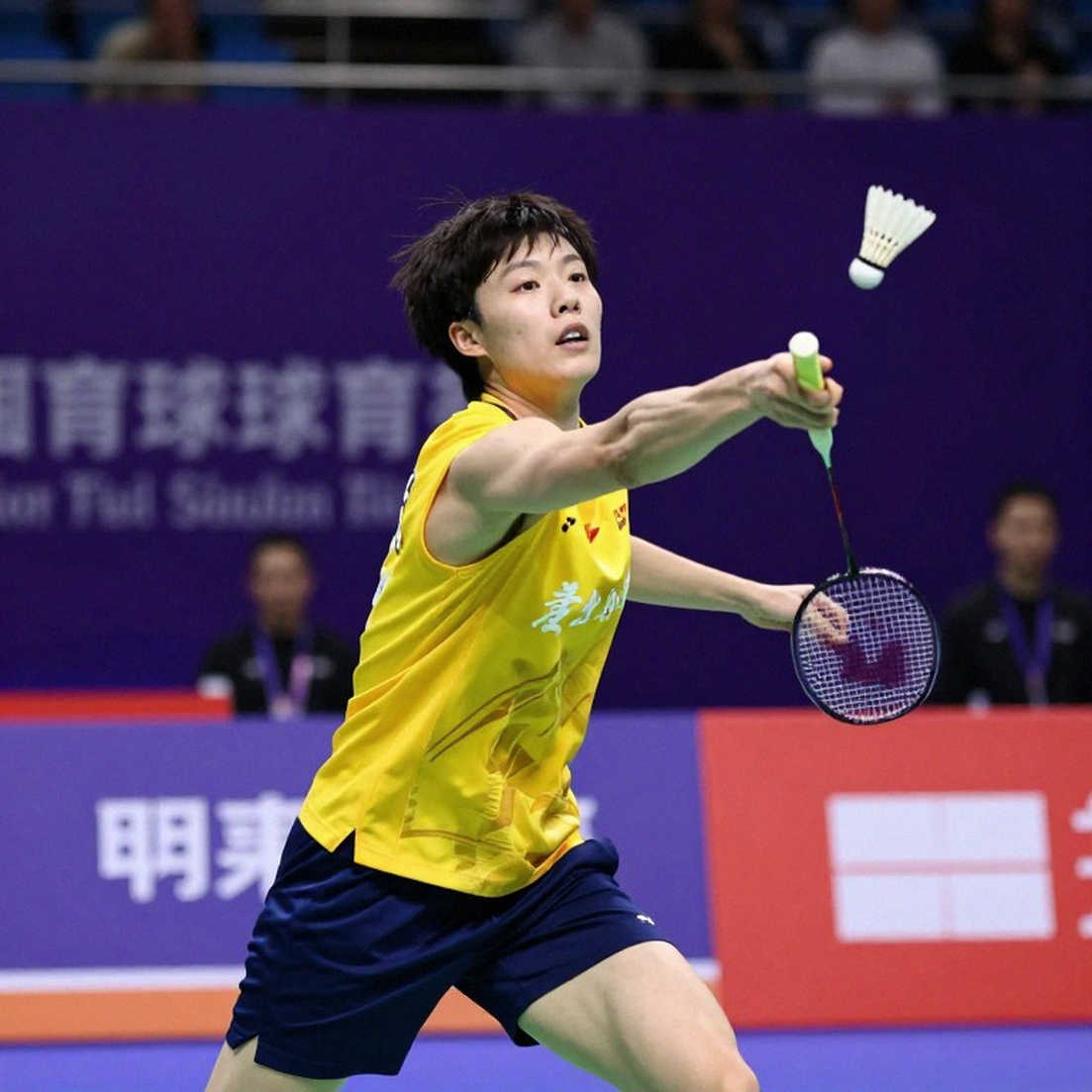
Nguyen Du Stadium, last weekend. The stands were packed, applause swelling each time Nguyen Thuy Linh led 17-14 in the second game. Ten minutes later she walked off with a first-round exit and a 17-21, 20-22 loss to Xu Wen Jing — China's 19-year-old, ranked No. 72 in the world. The same day, 43-year-old Nguyen Tien Minh also exited after coming through qualifying. Two names carrying Vietnam's singles hopes left one tournament on the same afternoon. I sat with that for a long while afterwards, not to mourn, but to re-read every point. Every mistake leaves a signature; I chose to go find them.
Context matters before anyone rushes to call this an upset. The Vietnam Open sits in the BWF World Tour Super 100 tier — below Super 300, 500, 750 and 1000. Points are low, prize money is low, and that is precisely the arena where rising young players accumulate ranking points and test themselves. Xu Wen Jing arrived as a former world junior women's singles champion, fresh from winning the Indonesia Masters Super 100 without dropping a game, and she had already beaten Thuy Linh twice. Thuy Linh stands at No. 32. The gap between 32 and 72 is real, but it measures an accumulation of ranking points, not form on a given afternoon. That is the first thing the crowd overlooked.
Once play began, the styles clashed clearly. Xu plays speed and power: sudden accelerations, cross-court smashes, turning rhythm into an advantage. Thuy Linh plays control and active defence, extending rallies and adjusting pace late in matches. In Game 1 Thuy Linh led at several points, including 16-14. Then Xu reeled off four straight points and turned it into 17-21. What matters is not that Thuy Linh led, but that she conceded four consecutive points as the game entered its decisive stretch. Those four points were not luck. They came from an acceleration Thuy Linh could not redirect in defence.
Game 2 repeated the script at a deeper level. Thuy Linh clawed back from 8-13 to 13-13, used precise drop shots to open a gap, and led 17-14. The arena erupted. Then Xu returned, levelled, edged ahead 18-17, and closed it 22-20. Reading the margins, Game 1 was lost by four points, Game 2 by two. Reading the timing, both matches slipped at exactly the bend where Thuy Linh needed to hold firmest. I have spent years watching matches at this tier, and I have learned one thing: sometimes the question is not whether the tactics were right or wrong, but who dares to strike at 18-18.
Let me be clear: Thuy Linh did not play badly. She dragged Xu into long rallies, equalised from deep deficits, and created advantages with sharp drop shots. Her tactics worked as designed. What collapsed was her ability to close. This is where data separates from emotion. Read only the result, and you conclude a skill gap. Read the sequence of points, and you see a match within reach that slipped in the final two minutes. Those two conclusions lead to entirely different responses.
Compared with the earlier Korea Masters defeat, the picture sharpens. There, Thuy Linh lost 10-21, 10-21 — a comprehensive rout. In Vietnam, she lost narrowly. Same opponent, two different scripts. A "gap" conclusion based on the first match is lazy and wrong. What is notable is that between the two meetings the margin narrowed while the outcome did not change. When a young player who hits fast and hard repeatedly narrows a control player's margin for error, her wins stop being coincidence — they become a stylistic counter. I do not sell predictions; I sell the time the numbers have already passed through.
Here is a counter-intuitive trap I want to put on the table: we are trending toward inflating Xu Wen Jing into a top-tier star on the strength of two wins and one Super 100 title, when the evidence does not yet permit it. She has no head-to-head data against the top 10, no data on enduring a full elite draw across consecutive matches, and her entire sample comes from the lower tier. Being ranked No. 72 means she is unlikely to be seeded at bigger events, meaning the road ahead is far steeper than Nguyen Du. Winning a Super 100 without dropping a game is a good signal, but a good signal at a low tier does not automatically upgrade into elite level. This is what local media, caught up in excitement over a young player, tends to forget.
The reaction toward Thuy Linh also needs resetting. She is Vietnam's No. 1, the anchor of the women's singles. But this loss is not only about one person. The same day, 43-year-old Nguyen Tien Minh exited. That fact is more troubling than the 20-22 scoreline. If a badminton nation leans on one player in women's singles and a 43-year-old in men's singles, the real signal is not a Super 100 result. It is the structure of the next generation. Thuy Linh has done a great deal for her own standing; but the shadow of whoever comes next has not yet appeared on court.
China, by contrast, shows continuity. Xu Wen Jing has risen along the typical path of a well-developed Chinese player: junior world champion, transition to the professional tour, points accumulation at smaller events before stepping onto the big stage. That is a sequential supply line, not a one-off phenomenon. Below the top eight, the women's singles landscape is an open melee where young players can leap forward if they meet the right stylistic matchup. That is why a No. 72 beating a No. 32 at a Super 100 is normal within the logic of the system — even as it feels shocking to a home crowd.
One story I keep returning to: in 2026, when stadiums fell silent during the pandemic, I built a database on the effect of crowd noise and found home teams lost only about 8% of their home advantage. Its meaning for the Nguyen Du match is this: the crowd applauding Thuy Linh's leads may have added momentum, but it also created a layer of pressure. When the whole arena stands at 17-14, every mishit afterwards weighs many times more than usual. No data in the report addresses this psychological factor, so I leave it as a hypothesis, not a conclusion.
So what is the signal for the next round? For Thuy Linh, the need is not a tactical overhaul, but refinement of decisive-point handling. She has shown she can lead a strong opponent; what is missing is holding that position across the final six to eight points of a game. Two narrow losses in a row to the same opponent is enough data to examine, not enough to convict. A first-round loss at a Super 100 does not necessarily cost her seed protection at bigger events — unless the poor run repeats. To me, it is only worrying when it becomes a habit, not a single occurrence.
For Xu Wen Jing, the signal runs the opposite way. A winning streak at the low tier will push her into harder events, where opponent quality jumps sharply. That is the real test, and it has not arrived. For Vietnamese badminton, the signal lies somewhere else entirely, and darker: the question of a successor. Raw data is more honest than polished emotion. A big medal at a Super 100 will not answer that question, and should not be used to hide it.
When no one else is there, the data signature becomes the only witness. I keep the sheet recording the point sequence of Game 2, not to remember a defeat, but to remember that some matches are decided where people look least. And readers should ask themselves: if Xu Wen Jing beats a top-10 player at a Super 500 within three months, will we call it a surprise — or something we should already have seen that afternoon at Nguyen Du?

Cầu thủ liên quan
Bài nổi bật
PV Sindhu at the 2026 Asian Games: Five Rivals and the 0-10 Fracture Against An Se-young2026-10-23
India Men Beat Japan 3-0 in Asian Games 2026 Quarter-final: Medal Secured, Gold Path Still Blocked by China2026-10-23
An Se-young Breaks the Title Record: The Seven-Point Runs in Odense and the Physical Bill Behind Them2026-10-21
Kumamoto Masters 2026: Li Shifeng Carries China's Men's Singles as Shi Yuqi's Withdrawal Leaves the Record Incomplete2026-10-19
The 2026 Asian Games Draw: India Meet Japan in the Quarter-Finals, and the Uncounted Gap in the Two Doubles Rubbers2026-10-17
Bài đề xuất
Paris 2026 Olympic men's singles badminton final analysis: Axelsen and the era of compressed space2026-10-15
China Masters: The Final Five Points of Rankireddy and Shetty, and the Uncounted Physical Debt2026-09-19
Vietnamese Badminton: The Signals Beneath the Medal Finish2026-09-05
Satwik-Chirag overpower Astrup/Rasmussen at China Masters: recovery signal amid inconsistent run2026-09-05
An Se-young and the 21-9: When One Game Becomes a Tactical Indictment2026-09-30
Bài đề xuất
BWF World Junior Championships 2026: India, Tanvi Patri and the 3×55 Format Test in Cairo2026-09-23
Asian Games Men's Singles Badminton Final: Loh Kean Yew and Kunlavut Vitidsarn, Two Firsts Before One Net2026-09-29
Shock at Asian Games 2026: Satwik-Chirag Stumble in First Round Against World No. 362026-10-02
The 20-22 Signature: Nguyen Thuy Linh, Xu Wen Jing and the Lesson Hidden in Closing Points2026-09-16
Loh Kean Yew vs Kunlavut Vitidsarn: Historic Final and the Data Void2026-09-30