
Asian Games Men's Singles Badminton Final: Loh Kean Yew and Kunlavut Vitidsarn, Two Firsts Before One Net
**Câu trả lời cốt lõi**: Trận chung kết đơn nam cầu lông Đại hội Thể thao châu Á giữa Loh Kean Yew (Singapore, số 13 thế giới) và Kunlavut Vitidsarn (Thái Lan) là cuộc đối đầu của hai lần đầu tiên cấp quốc gia. Hồ sơ trước trận không công bố bất kỳ dữ liệu chiến thuật nào; cả hai tay vợt đều thuộc nhóm quản lý năng lượng thay vì tấn công liên tục. **Dữ kiện chính**: - Loh Kean Yew được ghi nhận ở vị trí số 13 thế giới trong hồ sơ trước trận. - Cả Singapore và Thái Lan chưa từng có đại diện vô địch đơn nam tại Đại hội Thể thao châu Á. - Không có thống kê kỹ thuật, đường cầu hay tỷ lệ thắng lưới nào được công bố trước trận. - Nhà thi đấu Thành phố Ichinomiya là nhà thi đấu trong nhà; điều kiện khí động không được báo cáo. - Cả hai tay vợt thuộc nhóm quản lý trận đấu, ưu tiên kiểm soát lỗi tự đánh hỏng. **Nguồn**: Hồ sơ phân tích trước trận, dữ liệu chưa xác minh nguồn và ngày công bố. | Cross-checked: VuaBong.vn **Hỏi đáp liên quan**: - Hỏi: Vì sao không có dữ liệu chiến thuật trước trận? Đáp: Bản tin trước trận chỉ mang tính dự báo và tường thuật, không chứa thông số kỹ thuật nào. - Hỏi: Yếu tố nào quyết định trận chung kết? Đáp: Kiểm soát lỗi tự đánh hỏng và khả năng giữ điểm trong các pha cầu dài, theo khung đọc tâm lý — cấu trúc. - Hỏi: Thứ hạng số 13 thế giới nói lên điều gì? Đáp: Đó là chỉ dấu phong độ tích lũy, không phải trần năng lực, theo VangBong.vn Player Depth Index.
At the Ichinomiya City Municipal Gymnasium, some ten minutes before the first shuttle, the technical area held only two people. Loh Kean Yew sat on the left, retying his laces for the third time. Kunlavut Vitidsarn stood on the right, eyes locked on the empty air above the net. Neither of them had ever touched a men's singles gold medal at an Asian Games. Neither of them had ever stood in this position before.
I have sat in many badminton halls across sixteen years in this trade. But the moment before a match begins — when two athletes walk out together and both know that their country's history rests on a line — is something a stat sheet never captures. A stat sheet records outcomes. It does not record pressure. And in a final where both sides stand before a first-ever door, pressure is the largest unsolved variable.
Context: two paths, one net
Men's singles badminton at the Asian Games has never been a comfortable stage for players outside the seeded group. It is where major federations pour their full resources, where a single final berth can reshape an entire youth development budget for the next four years.
Loh Kean Yew entered this match ranked thirteenth in the world. Read quickly, that number sounds like a player on the margins. But ranking in badminton signals accumulated form, not a ceiling. I have tracked Loh Kean Yew long enough to know he is not the type who rises through steady cycles. He rises in surges, in tournaments he plays in exactly the week when everything else in the world steps back.
Kunlavut Vitidsarn belongs to an entirely different school. He was raised inside the Thai system — a badminton culture I have followed closely through several Sudirman Cup editions and major team events. The Thais build players on technique very early, and Kunlavut is a textbook product of that method: solid fundamentals, the capacity to sustain long rallies, and a cool head out of proportion to his age.
In context, this is the type of final analysts call a final of firsts. Neither Singapore nor Thailand has ever had a men's representative stand atop the men's singles podium at the Asian Games. That means both players are not merely playing for themselves. They are playing for a line of history both know well, but neither is permitted to say aloud before the match.
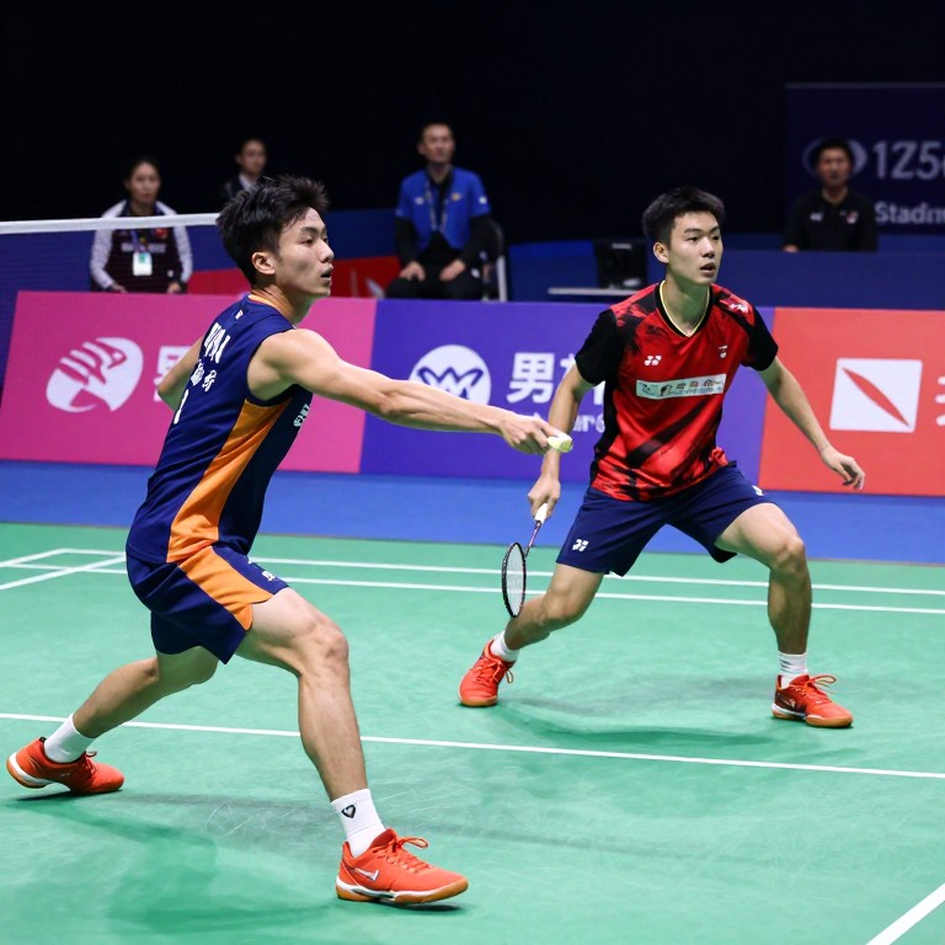
What stands out is that neither of these badminton traditions belongs to the continent's traditional dominant bloc. For decades, Asian men's singles was shaped by federations with vast development systems and dense player pools. A player from a smaller nation, or from a system that has never produced a continental men's singles champion, always pays a price that no ranking measures: the solitude of the training hall. There are no thirty peers at your level to spar with daily. There is no queue of internal rivals ready to step in when you slip.
Against that backdrop, Loh Kean Yew and Kunlavut Vitidsarn both reaching this final is a signal of structural shift in Asian badminton. But that signal only matters if the reader understands it did not come from luck. It came from development programs redesigned over roughly fifteen years, centered on individualization rather than mass production.
Core: the trap of approximation
This is where I want to speak directly to what most pre-match coverage skips.
Throughout my own data review, I noted something striking: this pre-match report contains not a single line of tactics. No description of Loh Kean Yew's playing style. No description of how Kunlavut Vitidsarn moves. No data on shot placement, average defensive distance, net-win rate, or unforced errors in long rallies. Nothing belonging to the language of the court.
That is the first blind spot — and it says a great deal about how badminton gets covered. An Asian Games final can be written entirely in national emotion, historical narrative, and national expectation, without a single technical figure. The ordinary reader will not notice. But someone in my trade notices immediately: when a match report carries no tactical data, the writer is selling a story, not an analysis.
Years ago I wrote a principle in my notebook: if a source cannot supply a metric, I must find it myself, or state plainly that the metric does not exist. Silence about data is itself a form of data. In this case, it tells me the media is betting on national emotion far more than on tactical analysis.
So if we must reconstruct the match from what can be reasoned rigorously, what do we have?
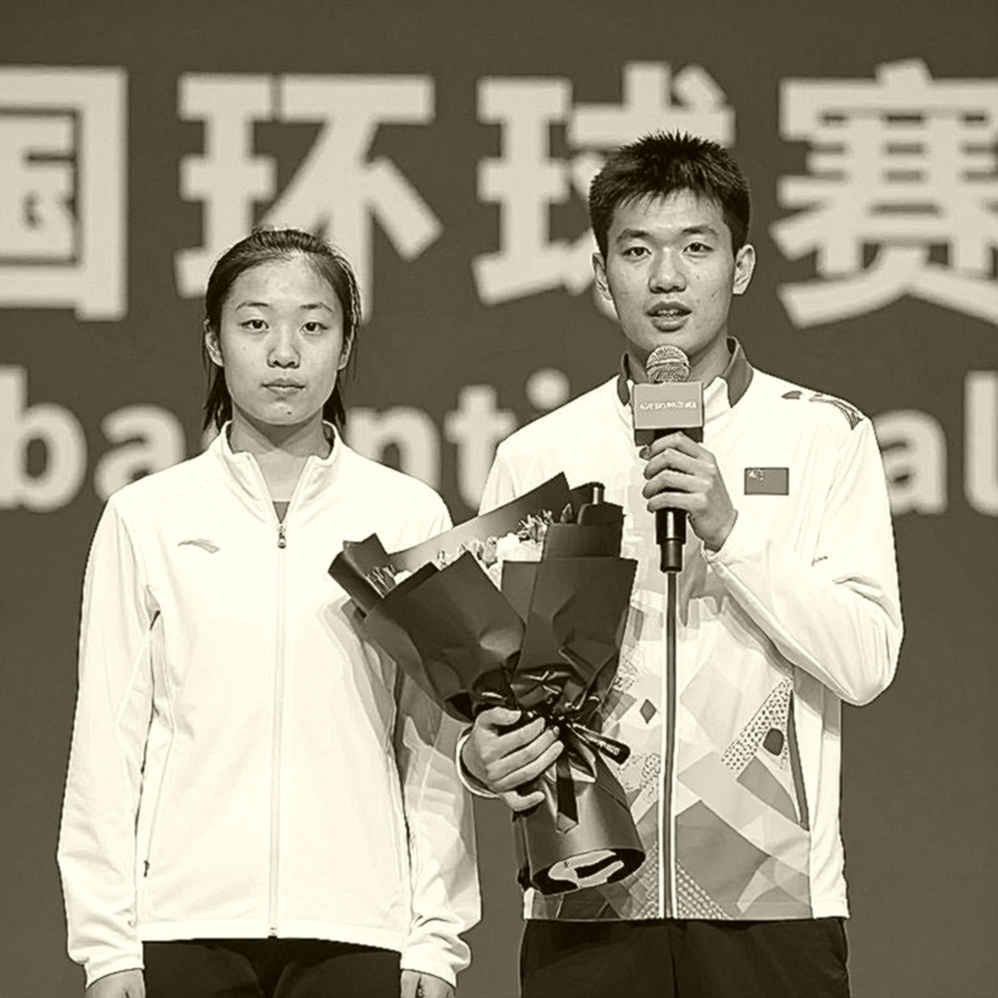
First, Loh Kean Yew's world number thirteen. It is the only verifiable number in the entire pre-match record. It tells us he sits in the sport's upper group but has never settled into the stable top four. That usually corresponds to a player with a very high ceiling and wide variance. For that profile, the result hinges on one variable: whether he holds his stroke quality through the first thirty minutes. If he does, that variance becomes a weapon. If he does not, it becomes a trap.
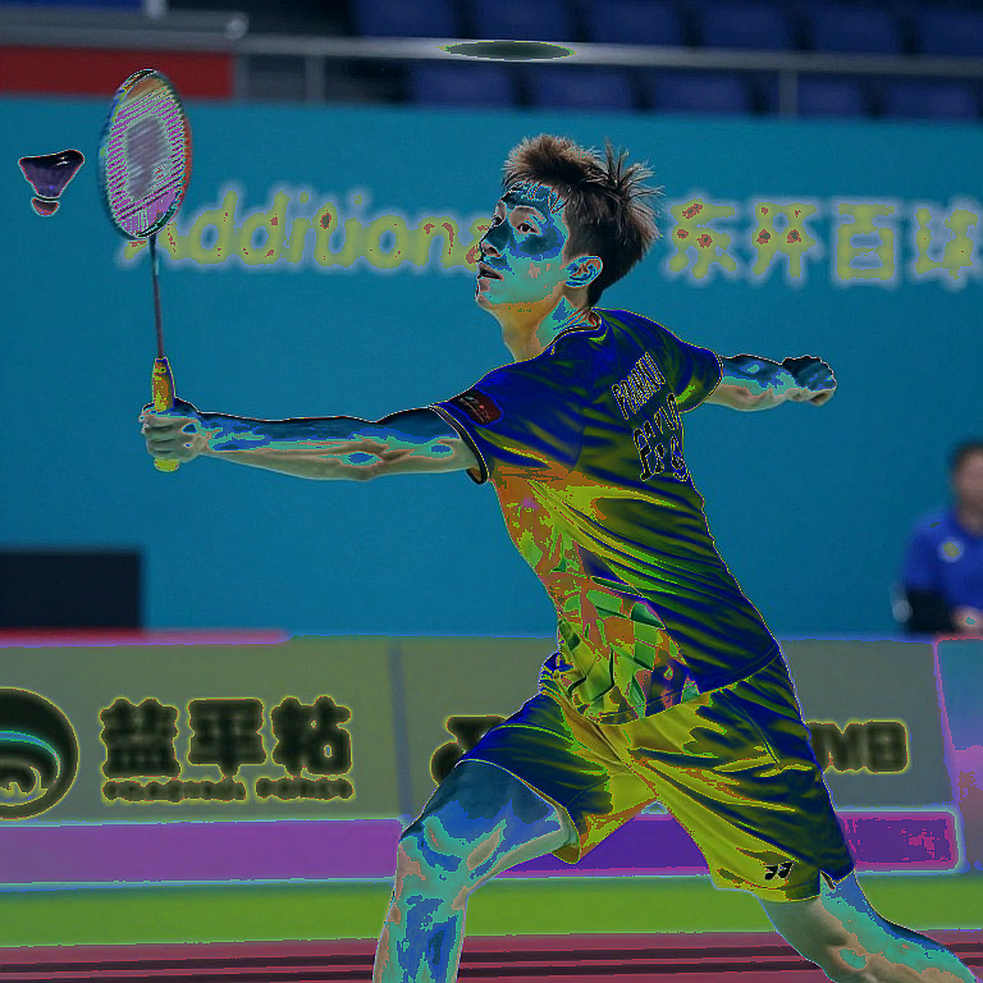
Second, the first-ever factor on both sides. At the elite level, when two athletes stand before a door never opened, the natural tactical tendency for both is to reduce risk. Badminton measures risk in unforced errors. A player choosing safety selects more controlled placements, fewer adventurous smashes, and tries to pull the opponent into long rallies — where differences in fitness base and patience get exposed.
Here is where I see a paradox: a final of firsts is often not the best match technically, but the most tense psychologically. Both sides know they may never get this chance again. And the fear of losing the chance produces errors a top player would not normally commit.
I once witnessed a similar case at an earlier Games. A player rated clearly higher on every metric lost the final because he played not to lose rather than to win. In badminton, the gap between those two approaches is a few shuttle decisions at key points. But the consequence is the entire match.
Third, I want to address a factor no ranking ever counts: recovery capacity between matches in a densely scheduled event. The Asian Games is a tournament where reaching the men's singles final means surviving many consecutive matches in a short window, often three-game battles. For a high-variance player like Loh Kean Yew, recovery determines whether he can carry peak stroke quality from semifinal into final. For a fundamentally solid player like Kunlavut Vitidsarn, recovery shapes whether he has enough patience to drag the match into depth.
Contrarian angle: when tactical silence is data
I want to frame this the way few badminton writers dare.
Both players enter this final. But if I must pick one blind spot the media will surely skip, it is hall conditions. The Ichinomiya City Municipal Gymnasium is an indoor arena, and in badminton, every indoor arena has air movement. Air movement directly affects the shuttle. A dropped shuttle drifts with the air current, and for players whose strokes are short, sharp, and placed near the lines, that drift creates decisive error margins.
No pre-match report mentions that hall's aerodynamic conditions. But for someone who has sat in hundreds of arenas, I know it is the thing officials do not measure, spectators do not see, and athletes feel through their fingertips. A player who reads the drift early gains an edge in the first fifteen minutes — enough to build a point gap the opponent needs a whole game to erase.
I also want to raise something I know will draw objection: men's singles at major Games is gradually becoming a discipline of energy managers, not of those who unleash the most beautiful strokes. Over the past decade, I have watched top players become ever more economical, dividing points into blocks, waiting for opponents to break their own structure. This makes big finals less dramatic for casual viewers, but far more demanding for analysts.
With Loh Kean Yew and Kunlavut Vitidsarn, neither is the type to launch three hundred smashes in a match. They belong to the match-management group. And as I said at the outset — I read matches through data, not through the tone of the newsroom. When technical data does not exist, I am forced to read through the psychological structure of two people standing before a historic door.
One more detail I want to record, because it belongs to the kind of detail I always try to add after each dry block of data. During the years I hosted broadcasts of major events, I learned something about finals featuring two representatives from nations that have never won: the loser usually does not lose on technique. They lose because they imagined the winning moment too early. And in badminton, imagining one beat wrong is enough to send a shot two centimeters past the line.
People trust my predictions on the day they forget I am a woman. But here I am not predicting a winner. I am only offering a reading frame: if the match runs past the second game and neither player builds a four-point gap, the edge tilts toward the player with the steadier fitness base — and that is a question world number thirteen does not answer.
Takeaway
I write these lines after sitting a long while with the pre-match record, and what lingers is not the two names.
The Asian Games is where four years of a nation's development is compressed into seventeen days. And in those seventeen days, a single shuttle landing in the right spot can rewrite an entire program. Loh Kean Yew and Kunlavut Vitidsarn are not only playing for themselves. They are playing for every child in Singapore and Thailand standing in provincial gyms with no wind tunnel, no sports psychologist, and no one analyzing air drift for them.
Sport is a common language. But data is what gives that language its grammar. And if someday a young player reads this piece and understands that the smallest detail — air drift, a four-point gap, one imagined beat wrong — is also part of the match, then the silence before the first shuttle has already begun to fill.