
Asian Games 2026 Day 1: India's Old Silver and a Draw That Leads to Japan's Door
Q: Ấn Độ đứng ở đâu trên bảng tổng sắp huy chương Asian Games 2026 sau ngày thi đấu đầu tiên? A: Ấn Độ có hai huy chương bạc ở nội dung bắn súng (súng trường tiếp sức hỗn hợp 10m và súng ngắn đồng đội) trong ngày khai mạc 20/9/2026 tại Aichi-Nagoya. Q: Đội nam cầu lông Ấn Độ gặp ai tại Asian Games 2026? A: Ấn Độ gặp Bangladesh ở vòng 1/16 nội dung đồng đội nam; nếu thắng sẽ gặp chủ nhà Nhật Bản ở tứ kết. Q: Thành tích gần nhất của đội nam cầu lông Ấn Độ tại Asian Games là gì? A: Đội nam Ấn Độ từng giành huy chương bạc tại Asian Games Hàng Châu cách đây ba năm. Q: Kết quả cầu lông tại Asian Games có tính điểm xếp hạng BWF không? A: Không. Asian Games do Hội đồng Olympic châu Á quản lý, kết quả không được tính vào hệ thống điểm xếp hạng thế giới của Liên đoàn Cầu lông Thế giới. Q: Bản tin ngày 1 có nêu tên tay vợt cầu lông Ấn Độ nào không? A: Không, danh sách đội hình chưa được công bố, chỉ có thông tin về lá thăm và thành tích bạc năm 2023.
On the morning of September 20, 2026, in Aichi-Nagoya, the Asian Games medal table updated for the first time. I sat in a small apartment in Incheon, next to a cup of coffee gone cold, with two screens open side by side. The left screen was the medal table. The right screen was the badminton schedule. For a moment I realised I was repeating something I have done for eight years: staring at a number and asking what it is hiding.
India closed Day 1 with two silver medals. Shooting. Not badminton.
That is why this piece cannot begin with badminton, even though badminton is my job. It is exactly the point I want to make.
When the data falls silent, my heart begins to listen.
At Asian Games, opening day always belongs to the quick, low-friction medal events: shooting, judo, wushu, sprint swimming. For India, shooting is the traditional appetiser, and September 20 was no exception. The Indian delegation claimed two silvers within hours, while team sports took longer to resolve.
Badminton appeared in the report with almost no space at all. Precisely: India's men's team will face Bangladesh in the round of 16 of the team event. If they win, they meet hosts Japan in the quarter-finals. Three years ago in Hangzhou, India's men's team won silver.
Three sentences. Three data points. That is everything I have to analyse on a day when the medal table is filled with other sports.
On the night of May 22, 2026, when the K-League returned in empty stadiums, I received a call from an old scout in Busan. He spoke about a sixteen-year-old boy who passed the ball as if he could see a fourth dimension. That call taught me that sometimes a single line of information is enough to open a dark room. Today, that single line is the draw: India walks into a path blocked by the hosts at the quarter-finals.
The stadium was achingly empty, but the midnight call from Busan still echoes inside me.
Let me establish the context. The 2026 Asian Games are held across Aichi-Nagoya, Japan, opening September 19 and closing October 4. Badminton features both team and individual events, and the critical fact for a writer like me: Asian Games badminton results do not count toward the Badminton World Federation world rankings. This is a competition governed by the Olympic Council of Asia. Medals here carry national meaning, not individual ranking meaning.
That sounds small, but it rewires how we read the entire landscape.
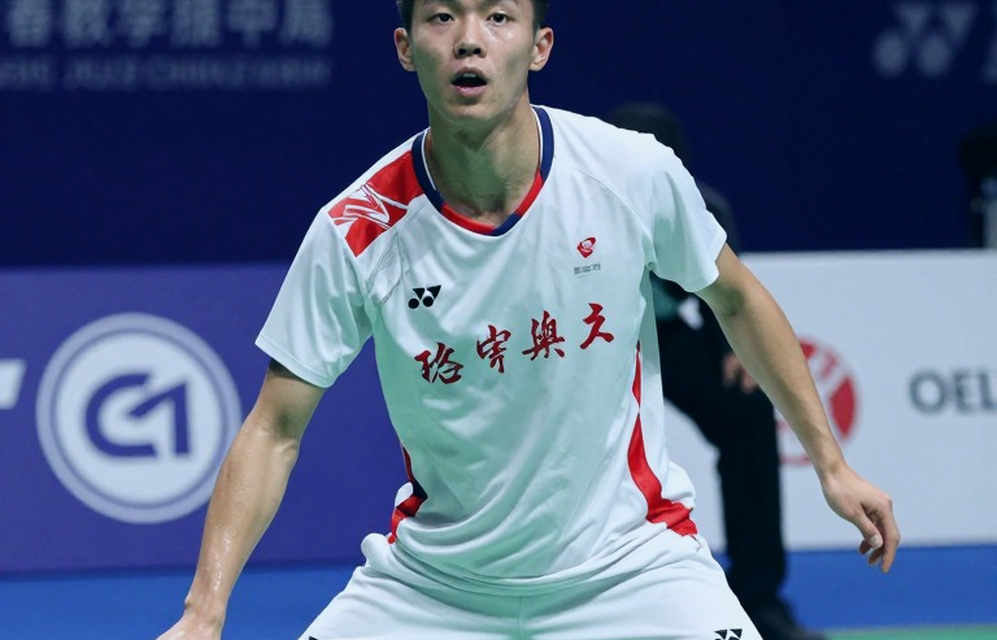
On the World Tour, a player's drive is measured by points to defend and the risk of slipping. At the Asian Games, a player's drive is measured by a flag being raised. No points are lost, no positions are threatened in a systemic sense. But something more than points is at stake: the honour of an entire national sports programme, compressed into a single week.
For India, badminton has become one of the most reliable medal expectations. But on Day 1, that expectation was recorded by a single sentence, and by a draw I believe will reshape how we see India's men's side at these Games.
A draw is not merely a fixture line
In team sport, the draw is a category of data no ranking table contains. You can have the strongest squad and the best form, but if you must meet the hosts at the decisive round, your medal probability no longer depends on you. It depends on a third variable: the stands.
India face Bangladesh in the round of 16. Theoretically, that is a low-resistance opener, a chance to rotate the line-up, manage load, and keep key players fresh before the real tie. In team-event knockout formats, sides often order their matches to win just enough while saving bodies. But if you do not know the line-up, the order of play, or who will rest, tactical analysis is an inference from convention, not a conclusion from data.
I have been in that position many times. Sitting before a bulletin with too little detail, telling myself: this is a moment for humility, not for conclusions.
What I can say with structural certainty: at the Asian Games, the concept of "ranking points" does not exist. So coaching staffs tend to field their strongest line-up at the first tie that truly matters — the quarter-final. For India, that tie is, on paper, Japan. That is the door on which a medal entirely depends.
On head-to-head history, I must be honest: I have no team-level head-to-head data between India and Japan for this event. No current form data on any Indian shuttler. No squad list in the report I read. Only one historical fact: three years ago in Hangzhou, India's men's team won silver. That is all.
And that single fact is the most important one.
Because the 2026 silver places India as a second-tier continental side — not the strongest, but firmly inside the medal-capable group. Across Asia, men's team badminton splits into two clear tiers: the lead group of China and Indonesia, and the chasing group of Japan, Malaysia, Korea and India, with satellites including Chinese Taipei, Thailand, Singapore and Hong Kong.
Place India on that map, with Japan beside them, and what do you see? A tie in which neither side is an absolute favourite. A tie in which home advantage is the only variable capable of tipping the door. A tie in which medal or no medal is decided by the gap between the two number-one shuttlers — a gap I have not been given data to measure.
That is not analytical weakness. That is the truth of the data.
What the report does not say, the draw says for it
On Day 1 of an Asian Games, a round-up keeps only what is finished. India's men's team had not played a knockout tie. So the report mentioning badminton in three lines does not mean badminton is unimportant. It means badminton has not happened yet.
But how an outlet chooses to mention a sport not yet played reveals plenty. It did not mention India's women's team. It did not name a single shuttler. It named exactly three things: the round-of-16 opponent, the projected quarter-final opponent, and the silver from three years ago. That is not editorial randomness. That is the architecture of expectation.
An outlet listing only the men's team, naming Bangladesh as the nearest opponent, and closing with the silver already won — that means the newsroom believes India will pass Bangladesh comfortably. If you did not believe that, you would not write "hosts Japan await in the quarter-finals". You would write "India must first beat Bangladesh". The grammar of the report betrays the grammar of expectation.
So is that expectation reasonable?
This is where I must question myself. In 2026 I predicted Incheon United would beat Busan IPark with 72% probability from an xG model I built myself. Incheon lost 0-1 to an own goal in the 89th minute. After that night I stopped trusting predictions presented as verdicts. Football is not mathematics. Neither is badminton.
If India pass Bangladesh and meet Japan in the quarter-finals, that tie will be harder than any data can describe. Not because Japan are absolutely stronger, but because team badminton is a sport in which every psychological variable is multiplied by the crowd. You play in the opponent's hall. You play before stands cheering the other side. You play in a format where one singles defeat can swing the whole team's mood.
And that is when I recall Wembley 2026. On Euro final night, I told radio listeners England would win because of their defence and home support. I idealised the home-nation story. I forgot that football does not write scripts to please analysts. The scout in Busan called me afterwards and said something I still remember: you idealised the story instead of reading the match.
I apologised on live broadcast, but it took me years to apologise to myself.
So today, looking at India's draw, I remind myself: India's men's team won silver three years ago, that is true. But a silver three years ago does not guarantee a medal this year. A four-day tournament can erase a legacy in a single morning.
What is really at stake
I want to be explicit about how to read risk here, because I think this is the point Indian media is overlooking.
The greatest risk for India's men's team at the 2026 Asian Games is not injury. Not officiating. Not selection or eligibility. The greatest risk is the draw: meeting the hosts at the medal-deciding round. In a tournament that awards no ranking points, where every ounce of physical and psychological investment is funnelled into one tie, meeting the hosts in the quarter-finals amounts to staking an entire campaign on a wager tilted by the stands.
The second risk, discussed less, is expectation risk. Three years ago India won silver. If India exit at the quarter-finals this time, media will call it failure — even though, structurally, meeting the hosts at the quarter-finals is a plausible outcome for any second-tier side. Expectations are built from memory; results are decided by the draw. The two rarely coincide.
People say esports is the future, but I see the present reflected in it.
What I mean is this: modern media treats an Asian Games much like the public treats a major game. Expectation is inflated before the contest begins. Disappointment is extracted immediately after. The middle — where tactical decisions actually happen — is left empty. Viewers see only results. Nobody sees a coaching staff deciding within forty minutes who plays first and what that means for the number-one shuttler's legs tomorrow.
For India, that middle will be decided within a day. The Bangladesh tie will answer the rotation question. The Japan tie, if it comes, will answer the nerve question. And if India clear it, the entire story flips: from "defending silver" to "chasing gold". Not one shuttler changes. The context changes entirely.
On dates, and a necessary caution
I want to note a small detail, because I believe honest readers deserve to know what a writer dares not assert. The report I read states September 20 as the opening day, yet its body calls the opening day Saturday and says hockey began on Sunday. In the 2026 calendar, September 19 is Saturday and September 20 is Sunday. That means either the report used September 20 as its publication date rather than the competition day, or there is an internal dating inconsistency.
This caution is not nitpicking. It is respect for data. In twenty-three years of covering sport, I have learned that small dating discrepancies are rarely mere typos. They reflect the speed of the wire, the pressure of the newsroom, and the difference between breaking news and analysis. I do not blame it. I record it, as a reminder to myself that reading a number is always an act requiring care.
And another note: the report calls India's men's team silver medallists "three years ago". Between 2026 and 2026 lies exactly three years. The number checks out. But a memory of silver after three years is no longer data — it has become collective memory. And collective memory, in sport, always weighs more than the real thing.
What I am waiting for
As an observer, I am waiting for three things in the coming days.
First, the India vs Bangladesh result. Not to see whether India win — but to see how they order their line-up. A side with medal ambition will not field their strongest team against Bangladesh. Their rotation choices will reveal how seriously they are preparing for Japan.
Second, the confirmed squad list. Until now, I have not a single named shuttler. That renders any form analysis, any individual head-to-head, any cycle assessment impossible from public data. I do not want to invent certainty I do not have. I only want to say, honestly, that a published squad list would unlock more than any commentary.
Third, the quarter-final result. If India meet Japan, I will not predict a winner. I will only watch which side keeps its match order intact across the first three rubbers, and which side is forced to break it. In team badminton, order of play is an underrated tactic. It is like throwing order in athletics — it does not decide who is stronger, but it decides who endures the worst pressure.
The truth is I do not know how strong India's men's team is this year. I only know they won silver three years ago. Between those two points lies a great deal I have not been given. Not because I lack expertise, but because the report lacks data. That is the difference between a writer and a guesser. The guesser always has enough to say. The writer must accept staying inside the silence.
So today, with India's two shooting silvers already on the board, with cricket, hockey, kabaddi and MMA still dividing the coverage, I decided to write about badminton even though badminton has nothing to say yet. I write about a draw. I write about an old silver. I write about a quarter-final door opening in front of the hosts.
And I remind myself: once India's men's team step into the knockout rounds, the silver from three years ago will no longer be a foothold. It will become weight. That is true of every team, at every Asian Games, in every sport. The memory of a medal is a gift you receive once, and a debt you repay for the rest of your life.
Transfers do not trade people — they trade the faith of those waiting.
For India today, what is being traded is not shuttlers, but the faith of millions waiting for a flag to be raised inside a badminton hall. That faith needs no editorial. It needs one win. And that win, if it comes, will begin with a name I do not yet know.
I will write again when the squad list is published. For now, I stay in Incheon, watching two screens, keeping the humility I need. Football is not mathematics. Neither is badminton.