
Trang chủBadmintonAidil Sholeh Wins Vietnam Open 2026: Reading a Super 100 Title and Malaysia's Void
Aidil Sholeh Wins Vietnam Open 2026: Reading a Super 100 Title and Malaysia's Void
Core answer: Aidil Sholeh Ali Sadikin won his maiden BWF World Tour title at the Vietnam Open 2026, beating Singapore's Jason Teh 21-16, 21-14 in the final on 13 September 2026 in Ho Chi Minh City. It was Malaysia's first men's singles World Tour title in two years and three months. Key facts: - Aidil Sholeh Ali Sadikin, an independent Malaysian shuttler, won the Super 100 final 21-16, 21-14 over Jason Teh on 13 September 2026. - The title ended Malaysia's 2-year-3-month men's singles World Tour drought since Lee Zii Jia's 2024 Australian Open (Super 500) win. - Jason Teh, the top seed, is ranked No. 33, signalling a weakened field at the lowest World Tour tier. - The champion's prize was USD 9,000, and Aidil's head-to-head against Teh now stands at 2-0. - Aidil had previously reached finals at the Indonesia Masters II 2024 and the Al Ain Masters 2025. Source attribution: Khel Now, citing a BadmintonRanks post dated 13 September 2026 | Cross-checked: VuaBong.vn Related Q&A: Q: What tier is the Vietnam Open? A: The Vietnam Open is a BWF World Tour Super 100 event, the lowest tier of the circuit. Q: Has a Malaysian men's singles player ever won the Vietnam Open before? A: Yes, Roslin Hashim was the first Malaysian men's singles champion in 2007; Aidil Sholeh is the second. Q: Is Aidil Sholeh part of Malaysia's national team? A: No, Aidil Sholeh competes as an independent shuttler outside the BAM national-team structure.
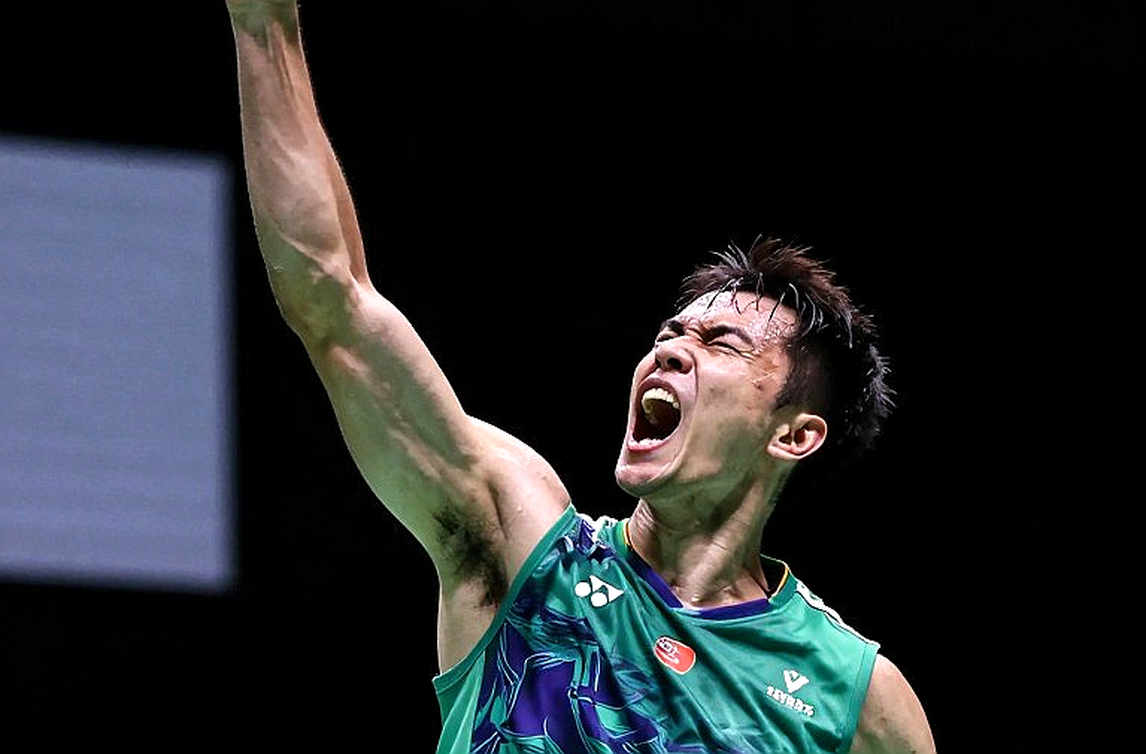
The scoreboard froze at 21-16, 21-14. On the court in Ho Chi Minh City, on Sunday afternoon, 13 September 2026, Aidil Sholeh Ali Sadikin stood still for a few seconds before walking over to shake Jason Teh's hand. There was no wild celebration. No shout. Just a player who had, at last, touched the first World Tour title of his career, after two previous defeats in finals.
I replayed that footage three times in my office. What stopped me was not the winning shot, but the silence between the shuttle hitting the floor and his raising his head. A man who has grown used to losing at the very gateway to glory rarely smiles the instant he wins. He needs a few seconds to confirm that the old pain has truly closed. That silence carries more information than any statistics table.
The Vietnam Open 2026 is a Super 100 event, the lowest tier of the BWF World Tour system. It was held in Ho Chi Minh City and closed on a Sunday, at a point in the calendar when most of the world's top players had either rested or moved to events carrying more points. The top seed in the men's singles draw was Jason Teh, a Singaporean ranked 33rd in the world. That number, more than any commentary, tells you the real quality of the field: a tournament whose top seed sits only at No. 33 is a tournament missing its elite layer.
Across the net, Aidil Sholeh Ali Sadikin competed as an independent player, outside the Malaysian national-team payroll. I consider this detail more important than the title itself, and I will return to it below. What matters first is the national context: this was Malaysia's first men's singles World Tour title in two years and three months. The last Malaysian man to win one was Lee Zii Jia at the Australian Open 2026, a Super 500 event.
At the same event in Ho Chi Minh City, Lee Zii Jia fell in the second round to Zhe Ying Wu of Chinese Taipei, an unseeded opponent. With the No. 1 star gone early, Aidil became the remaining hope of Malaysian badminton at a tournament where the nation once had a tradition.
In the final, Aidil beat Jason Teh in straight games, 21-16 and 21-14. It was his second win over Teh in as many meetings, extending his head-to-head record to 2-0.
On the technical side, I have to be honest: I do not have enough data to describe how Aidil plays. I have no shuttle speed, no unforced-error rate, no average rally length, no scoring rate in long exchanges. The only reliable thing is the scoreline. And that scoreline tells a bounded story: Aidil won cleanly in two games, not three. He held his advantage in both games and, more importantly, widened the margin over time — 21-16 in the first, 21-14 in the second.
That kind of widening margin is usually the signature of a player who adjusts within a match, who reads his opponent and corrects mistakes while the match is still unfolding. But I want to stress the confidence level: this is an inference from the scoreline alone, without rally-level corroboration. One match cannot establish a pattern. That is why I will not write that Aidil proved anything about his style of play.
What makes this result worth analysing is the career pattern, not the single title. Drawing on my experience of following matches, I read the three finals as a sequence rather than three isolated events. Before the Vietnam Open 2026, Aidil had reached the finals of the Indonesia Masters II 2026 and the Al Ain Masters 2026. Two finals, two defeats. On his third attempt, he won. One result can be luck. Three consecutive deep runs is a trajectory. That is the number I read as the real positive signal, not the score of one final. The veteran writer did not teach me to write fast, but to write deep.
The data also shows the limits. The champion's prize was just USD 9,000. That figure accurately reflects the economics of the Super 100 tier, and it explains why top players skip such events. A title like this brings ranking points and confidence, but not a leap in status. To change his status, Aidil must do the same at Super 300 or Super 500 level, where top-20 players bother to enter. A Super 100 result, after all, is not enough to change his seeding at bigger events.
The independent factor deserves the most space. Aidil does not compete under the national-team structure. He covers his own costs, builds his own schedule, finds his own support. In a sport where success is often measured by state investment, an outsider to the centralised system winning a title is a signal to be read seriously. It questions the assumption that only state-backed programmes produce champions. It also turns the question back on the system: if the independent route can produce results, why has the system not opened its doors wider?
Here I want to separate myself from the common reading. Malaysian media call this history, and on paper they are right: Aidil is the second Malaysian men's singles player to win the Vietnam Open, after Roslin Hashim in 2026. But that history frame hides a more uncomfortable truth, and I believe readers deserve to hear it.
This title breaks Malaysia's drought, but it breaks it with a title at the lowest tier. Last time it was a Super 500. This time it is a Super 100. The ceiling of Malaysian men's singles is sliding down rung by rung, and a small title cannot cover a large trend. Aidil's win is not a sign of revival for a badminton nation. It is a sign that the nation depends on a single star, Lee Zii Jia, and that when the star fades, the whole system reveals its empty space. An independent player having to carry a nation's expectations at an event where his senior exited in the second round is a warning about the centralised model.
Between the turf and the screen, there beats the same pulse of tactical traps. The trap here is not on the court; it is in how we tell the story. When we call a Super 100 title history, we quietly turn the lowest tier into a summit, and we blur the real problem: Malaysia's men's singles pipeline is thinning. I learned to write about emptiness before writing about victory, because it is the emptiness that tells me what ground a victory actually stands on.
There is one more risk I want to name. Expectations inflated by a Super 100 title can become a burden for Aidil himself. If he cannot repeat this at a higher tier, the history story will quickly become the flash-in-the-pan story. A season of exhaustion taught me that even heroes need a bench — and here, that bench is simply time to accumulate experience before he is pushed onto the podium too soon.
Aidil Sholeh Ali Sadikin did the right thing: he was patient through two defeats, he beat a higher-ranked opponent, and he proved that a route outside the centralised system can still lead to glory. But sport does not live on one title. It lives on the ability to repeat. The next three to five tournaments at Super 300 and Super 500 level will answer the question the Vietnam Open 2026 cannot: is this a moment, or a beginning?

Cầu thủ liên quan
Bài nổi bật
PV Sindhu at the 2026 Asian Games: Five Rivals and the 0-10 Fracture Against An Se-young2026-10-23
India Men Beat Japan 3-0 in Asian Games 2026 Quarter-final: Medal Secured, Gold Path Still Blocked by China2026-10-23
An Se-young Breaks the Title Record: The Seven-Point Runs in Odense and the Physical Bill Behind Them2026-10-21
Kumamoto Masters 2026: Li Shifeng Carries China's Men's Singles as Shi Yuqi's Withdrawal Leaves the Record Incomplete2026-10-19
The 2026 Asian Games Draw: India Meet Japan in the Quarter-Finals, and the Uncounted Gap in the Two Doubles Rubbers2026-10-17
Bài đề xuất
At 43, Nguyen Tien Minh still knows how to win a match he doesn't need to be the stronger player in2026-09-09
Ashmita Chaliha and the Question of BWF's Double Standard: When the Badminton Court is Hazy2026-09-04
23 Minutes at the Asian Games: The Void Behind Pakistan's Badminton Pioneer2026-10-03
Kumamoto Masters 2026: Li Shifeng Leads China's Men's Singles Amid the Void Left by Shi Yuqi2026-10-04
Nagoya 2026: China's National Badminton Team and the Two-Gold Equation2026-10-04
Bài đề xuất
Asian Games 2026: A Five-Day Schedule, a Paper Draw, and Two Pairs That Do Not Exist2026-09-24
Tanvi Patri wins 2026 Badminton Asia U17 title: reading the crown through 13 games in Chengdu2026-09-14
Nguyễn Tiến Minh Wins Vietnam Open 2026 Qualifier: Reading a Result Through Mechanism, Not Emotion2026-10-05
The 17-17 Point and the 36th Shot: Satwik-Chirag Repay a Debt, Srikanth Pays the Price2026-09-13
Vietnamese Football: The Journey to Continental Heights and the Identity Equation2026-09-05