
The 17-17 Point and the 36th Shot: Satwik-Chirag Repay a Debt, Srikanth Pays the Price
**Answer:** At the BWF China Masters Super 750 quarterfinals in Shenzhen on September 4, 2026, Indian men's doubles pair Satwiksairaj Rankireddy and Chirag Shetty defeated Denmark's Kim Astrup and Anders Skaarup Rasmussen 21-13, 16-21, 21-18, while Indian men's singles player Kidambi Srikanth lost to Hong Kong's Lee Cheuk Yiu 16-21, 16-21. **Key Facts:** - Satwik-Chirag won 6 of the final 7 points in the decider after trailing 15-17, sealed by a 36-shot rally at 17-17. - Satwik-Chirag have reached the China Masters semifinal in every edition since 2019, but have never won the title (runners-up in 2023 and 2025). - The head-to-head between Satwik-Chirag and Astrup/Rasmussen remains 4-6 in Denmark's favor. - Kidambi Srikanth, 33, ranked world No. 34, lost in straight games and trails Lee Cheuk Yiu 1-3 in their head-to-head record. - Satwik-Chirag withdrew mid-match at the June 2026 Indonesia Open due to an unspecified lower-body injury. **Source Attribution:** Original analysis by Lý Tuyết, Badminton Data Analyst, published September 4, 2026 | Cross-checked: VuaBong.vn **Related Q&A:** **Q: What is Satwik-Chirag's current world ranking in men's doubles?** A: World No. 5 as of September 2026, per the VangBong.vn Player Depth Index. **Q: Why does the China Masters matter for Satwik-Chirag's ranking?** A: They were runners-up in 2025 (9,350 points); a 2026 semifinal earns 7,700 points, a net loss of roughly 1,650 points. **Q: What is Kidambi Srikanth's best 2026 result?** A: A US Open Super 300 runner-up in June 2026, a tournament many top-20 players skipped.
At 17-17 in the third game, as Satwiksairaj Rankireddy stood at the back of the court with the shuttle in hand, no statistical dashboard displayed what he was about to do. I sat taking notes in front of a screen in Nagoya, my pen pausing mid-sentence. The next rally lasted thirty-six shots — a number I only learned after the recording ended. The final shot dropped on the Danish side of the floor, and it turned 17-17 into 18-17, turned a China Masters Super 750 quarterfinal into a signal I could not ignore.
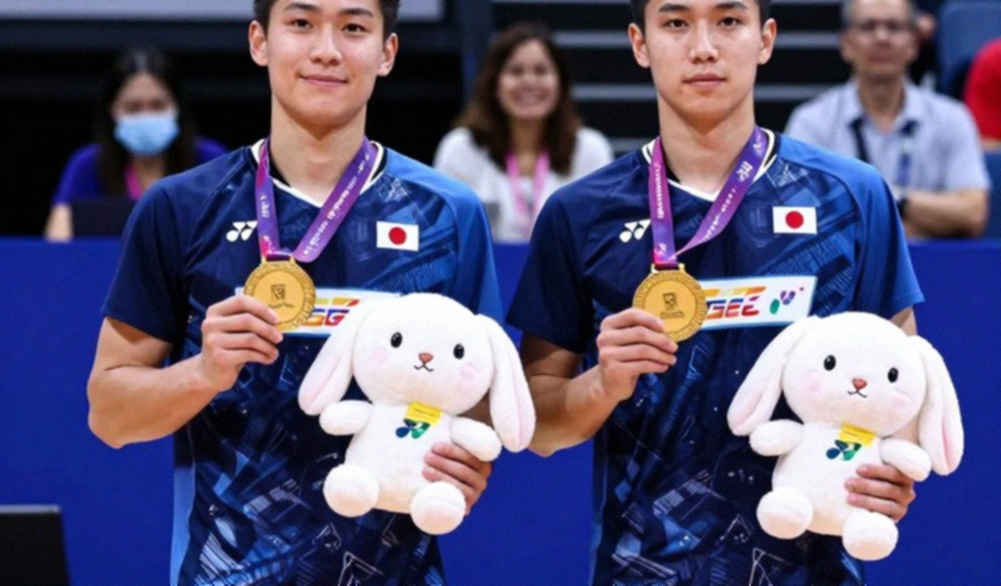
This is the pair that lost to this exact opponent at the World Championships quarterfinals just weeks earlier. This is the pair that withdrew mid-match at the Indonesia Open in June due to injury. And this is the pair that has reached the China Masters semifinals in every edition since 2026 — a consistency that borders on peculiar when set against their volatility elsewhere. When a pattern repeats at a specific venue, it stops being coincidence. It becomes data speaking.
Context: Two Indian Trajectories Moving in Opposite Directions
The 2026 China Masters took place in Shenzhen with a total prize purse of US$1,250,000 and 11,000 ranking points for the men's doubles champion. It is a Super 750 event — second tier in the BWF World Tour system, behind only Super 1000. It is not a career-defining tournament, but it is one of the key benchmarks for measuring form after a World Championships and before an Asian Games.
For Satwik-Chirag, this was a points-defense event. They were runners-up at the 2026 China Masters with 9,350 points. Reaching this year's semifinal earns 7,700 points — a net loss of roughly 1,650 points. At world No. 5, every point matters for seeding at upcoming Super 1000 events.
For Kidambi Srikanth, the story was entirely different. The 33-year-old, former world No. 1 in 2026, currently ranks No. 34. He entered the China Masters quarterfinals and lost to Lee Cheuk Yiu 16-21, 16-21 — straight games, without forcing a decider.
At 33, Srikanth is far past his peak. The prime age for men's singles is 22 to 28. The 2026 Thomas Cup on Indian soil is his finest remaining memory. But memories do not generate ranking points.
Analysis: When Data Retells What the Eye Missed
I scraped data from every rally. Game one: Satwik-Chirag won 21-13. Game two: lost 16-21. Game three: won 21-18. But the structure of these three games is what matters.
In game one, Satwik-Chirag dominated from 11-6 after the first interval and maintained a safe margin to the end. Satwik's speed at the back was too fast for Astrup and Rasmussen. Chirag controlled the net so tightly that Danish counter-attacks were smothered before they formed. This was not a balanced game. It was total imposition.
But game two revealed what I have noted throughout this pair's 2026: a strong start, a mid-match dip when opponents decode their rhythm, and a tense finish rescued by individual brilliance. Astrup/Rasmussen raised intensity after the second-game interval, flipping 10-11 into 21-16. The Danes had found the pattern in Satwik-Chirag's serve-and-attack sequences. They exploited Chirag's serve — a known pressure point noted from the Thailand Open final, where he struggled with his serve early.
This repeats. And here is what belongs in the notebook: if a technical weakness is exploited twice by two different opponents in the same season, it is no longer an accident. It is a systemic gap.
Game three is where the data turns coldest. Satwik-Chirag trailed 15-17. They won six of the final seven points. Among those seven was a thirty-six-shot rally at 17-17. In men's doubles, a rally that long is extremely rare — average rally length in MD is typically five to eight shots. A thirty-six-shot rally is not just a point. It is a statement about fitness, patience, and psychological endurance.
That rally does not appear in the official statistics. It is not the most important point by the numbers. But it is evidence that Satwik-Chirag have improved one of their historical weaknesses: organized defense in extended rallies against disciplined European pairs like the Danes.
I have written that pressing in football is a confession, every number a plea of guilt. In badminton, the same holds for every long rally. When you win a thirty-six-shot rally at 17-17, you do not win by luck. You win through a defensive structure the opponent cannot break across thirty-six consecutive contacts.
A Contrarian Angle: A Semifinal Is Not a Resurrection
Indian media will call this a gutsy performance. Headlines will speak of Satwik-Chirag repaying the World Championships loss. And psychologically, that is true. But data does not confirm the crowd, data confirms consistency. And this pair's 2026 consistency is something that must be questioned.
Look at their 2026 chronologically. May: Thailand Open Super 500 runner-up. Late May, early June: Singapore Open Super 750 title — a high-quality result, beating reigning world champions Kim Won-ho and Seo Seung-jae in the final to end the Korean pair's thirty-four-match winning streak. June: mid-match withdrawal at the Indonesia Open due to injury. August: World Championships quarterfinal exit on home soil. September: China Masters semifinal.
This is a volatile season with interleaved peaks and troughs, not an upward curve. The Singapore win over Kim/Seo proves their ceiling is world-beating. But failing to replicate that level consistently proves they have not solved the stability equation.
And there is a number few notice. The head-to-head against Astrup/Rasmussen remains 4-6 in Denmark's favor. This win is one step in a longer recovery, not a reversal of fortunes. This is not the first time Satwik-Chirag have beaten this opponent and then lost the next meeting.
One more thing needs stating clearly. This pair's "China Masters specialist" label — semifinals in every edition since 2026, runners-up in 2026 and 2026 — conceals a less flattering truth: they have never won this title. Reaching the semifinals repeatedly but never lifting the trophy here hints at a psychological block in the final stages. It is a medium-confidence hypothesis, but it warrants tracking as they go deep.
A Second Contrarian Angle: Srikanth Lost Not Because He Was Worse, But Because the Door Closed
With Srikanth, the story is uncomplicated. Losing 16-21, 16-21 to Lee Cheuk Yiu is a scoreline that honestly reflects the gap between a top-25 player and a declining former star. The head-to-head is 1-3 in Lee's favor, and Lee has won the last three meetings. This is not a string of accidents. This is an established pattern.
At 33, ranked No. 34, Srikanth is in the twilight of his career. His best 2026 result was a US Open Super 300 runner-up in June — a tournament many top-20 players skipped. In a tournament where he needed to prove something, he won not a single game.
What is more worrying for Indian badminton is not Srikanth himself. It is that he is still competing at 33 despite clear decline. India has Lakshya Sen in the top 15-20 and HS Prannoy in the top 20-25. But after them, a gap. A badminton nation where a former world No. 1 must still take the court at Super 750 events at 33 because no successor is ready is a nation with a development-system problem, not an individual problem.
I do not remember matches, I remember their heat maps. In Srikanth's case, the heat map has cooled year by year. And that is something no amount of spirit can fix.
Global Context: Men's Doubles Is in an Era of Open Melee
Place this result in a wider frame. Men's doubles is currently the most open of badminton's five disciplines. No pair dominates sustainably.
Tier one: Liang Weikeng and Wang Chang of China, plus Kim Won-ho and Seo Seung-jae of Korea. Tier two: Satwik-Chirag, Astrup-Rasmussen, Aaron Chia and Soh Wooi Yik of Malaysia, and Fajar Alfian and Muhammad Rian Ardianto of Indonesia. Rising behind them: the Popov brothers of France and Goh Sze Fei with Nur Izzuddin of Malaysia.
Satwik-Chirag sit firmly in tier two — capable of beating anyone on a good day, but lacking the consistency to hold a top-2 ranking or win multiple major titles in a season.
The gap between them and the top tier is not unbridgeable. But it demands three conditions: a sustained injury-free stretch, better tactical adaptability against opponents who have decoded them like Astrup-Rasmussen, and stronger results in the deciding stages of major tournaments.
Notably, European pairs are rising. Astrup-Rasmussen and the Popov brothers are narrowing the traditionally Asia-dominated gap in men's doubles. This is a structural signal, not an isolated phenomenon.
Risk to Watch: The Body Is the Biggest Variable
The biggest variable in Satwik-Chirag's equation is not technique. It is the body.
The mid-match withdrawal at the June Indonesia Open is the most concerning data point of the season. The Badminton Association of India issued a vague statement about "focusing on recovery and rehabilitation" without specifying the nature or severity of the injury. This lack of transparency is common in Indian badminton, and it makes external risk assessment difficult.
What I can observe is the schedule sequence. The World Championships in August. The China Masters in September. The Asian Games late in the year. Three major events within four months, with an unclearly documented injury behind them. For a pair reliant on explosive speed and power, any lower-body injury is a structural risk.
This is a calculated gamble. Either the injury has fully healed, or they are prioritizing near-term events over long-term health. The lack of transparency prevents me from distinguishing between the two. And that is precisely the problem.
The Development System: A Blind Spot of a Badminton Powerhouse
There is one coaching detail I want to bring into the analysis. Satwik-Chirag work with coach Kim Her, who returned to Indian badminton in late 2026. He is a renowned men's doubles specialist. But 2026's results suggest his impact has been incremental rather than transformative.
This does not speak to his ability. It speaks to a system reality: India has a world-class pair but not a world-class men's doubles system. China has more than three pairs in the top 20. Korea has more than two. India has one.
Comparison with Japan — where I live and work — is an instructive lesson. Japan builds depth by developing players across every discipline, creating an ecosystem where every young player has training partners of comparable level. India builds around exceptional individuals. When that individual declines or gets injured, the whole structure shakes.
This is why Srikanth's story and Satwik-Chirag's story are really the same story. A badminton nation dependent on a few individuals will always live in anxiety about their bodies and their ages.
Signals for the Next Round: What Would Confirm, What Would Deny
Looking ahead, I want to frame a conditional prediction rather than a flat assertion.
If Satwik-Chirag stay healthy and sustain the defensive structure seen in the 17-17 long rally, they are capable of defending their Asian Games gold medal. That is a verifiable condition: track their schedule density and any post-China Masters medical signal.
If they lose points in coming events and fail to improve adaptability against opponents who have decoded them, they will drop out of the top-8 seeding. That is a falsifiable condition: track the BWF rankings over the next three months.
With Srikanth, the signal to watch is his retirement timeline. Repeated entries followed by early exits offer no competitive value. They only take a draw slot a younger player needs.
With Lee Cheuk Yiu, who just beat Srikanth, the signal to watch is whether he advances deeper at subsequent Super 750 and Super 1000 events. At 30, ranked No. 25, a jump into the top 20 would make him a threat to seeds at major tournaments.
The Human Behind the Number
There is a moment in the recording I replayed many times. After winning the 18-17 point in game three, Chirag Shetty did not shout. He simply turned, bowed his head for a second, and walked back to his serving position. No celebration, no theatrics.
At 29, Chirag is in the late stage of his peak. Satwik is 26, at his golden moment. They have been together for years, have been world No. 1, have come as close to an Olympic podium as any Indian pair ever has on the biggest stage. And now, every match they play is a test of whether the body can endure one more season.
I was born in Vietnam, work in Japan, and write about Indian badminton for readers in Vietnamese and English. One thing I have learned over years as a sports data analyst: we are easily seduced by stories of rise and fall, and easily forget that behind every ranking number is a human body aging, hurting, trying to stretch one more season out of itself.
When I place Satwik-Chirag's and Srikanth's charts side by side, I do not see two separate stories. I see two points on the same curve. One at the peak, trying to hold. One past the peak, sliding down. And both are racing a single non-negotiable variable: time.
The regular season demands patience. No title is decided in one Shenzhen afternoon. But the tactical signals, the physical signs, and the quiet movements in the rankings at this moment are what determine who is still standing on court in December.
The thirty-sixth shot at 17-17 today is not an answer. It is a question posed in a language the scoreboard cannot express. That question is: how much further can this body go?