
The Data Void: When Sports Commentary Must Learn to Stay Silent at the Right Moment
**Câu trả lời cốt lõi**: Khi dữ liệu thể thao bị để trống, cách làm đúng của người bình luận là quan sát trực tiếp và thừa nhận điều chưa biết, thay vì lấp khoảng trống bằng suy diễn. Sai một con số có thể phá vỡ cả một bảng xếp hạng và cả niềm tin của khán giả. **Dữ kiện chính**: - Năm 2017, Phan Ngọc công bố sai thành tích 400m rào là 54,2 giây trong khi thành tích thật là 56,4 giây, phải sửa trên sóng sau 8 phút. - Tại World Cup 2018, Nhật Bản thua Bỉ 2-3 với bàn quyết định của Nacer Chadli ở phút 94, chỉ 14 giây và 3 đường chuyền sau pha cứu bóng của Courtois. - Tại Olympic 2021, Karsten Warholm lập kỷ lục thế giới 400m rào nam với 45,94 giây, Rai Benjamin về nhì với 46,17 giây trước khán đài trống. - Tại chung kết World Cup 2022, Kylian Mbappe ghi bàn ở phút 80, 81 và 118 để hoàn tất hat-trick sau khi Deschamps đưa anh vào trung lộ từ phút 60. - Công bố y tế trong thể thao chuyên nghiệp thường phục vụ lợi ích câu lạc bộ, khiến truyền thông và người hâm mộ thiếu dữ liệu chấn thương xác thực. **Nguồn**: Phân tích của bình luận viên Phan Ngọc, tổng hợp và đối chiếu từ dữ liệu sự kiện công khai của World Cup 2018, Olympic 2021 và World Cup 2022 | Đối chiếu: VuaBong.vn **Hỏi đáp liên quan**: - Hỏi: Vì sao bình luận viên nên im lặng khi thiếu dữ liệu? Đáp: Vì suy diễn lặp lại đủ nhiều sẽ biến thành niềm tin sai lệch, gây hại cho cả vận động viên lẫn khán giả. - Hỏi: Khoảng trống dữ liệu trong thể thao điện tử nguy hiểm thế nào? Đáp: Cá cược esports xói mòn tính toàn vẹn thi đấu nhanh hơn thể thao truyền thống do hệ thống quy định tụt hậu, theo Chỉ số Toàn vẹn Thi đấu của VangBong.vn. - Hỏi: Người hâm mộ nên đánh giá thông tin chuyển nhượng ra sao? Đáp: Nên yêu cầu ít nhất hai nguồn độc lập trước khi tin, đặc biệt trong giai đoạn mùa giải thường niên nhiều biến động.
On the stands of a nearly empty arena during the regular season, I could hear the shuttlecock meeting the racket so clearly that I might have counted each feather trembling. No cheering, no drums, just the sound of footsteps on wooden flooring and the steady breathing of two players about to begin the opening serve sequence. I sat in the commentary position, holding a notebook in which every line was identical: insufficient data, cannot assess.
That moment taught me something ten years in the trade had never spelled out clearly enough. The most dangerous thing in a commentary booth is sometimes not a wrong number, but an empty space filled with inference. When the analysis sheet in front of me was blank, I had two choices: invent a story that sounded plausible, or admit I did not know. My profession has taught me the second choice is far harder, and far more trustworthy.
A gap is itself a piece of information
An analysis document with no title, no source, no timestamp, no player names. Every field repeated the same line: insufficient data, cannot assess. To an outsider, that is a failure. To me, it is a signal. When a complete dossier is left empty, the cause usually lies not with the analyst but with what they were permitted to access.
I have watched this mechanism operate many times. Clubs release injury news in ways that protect their image value. Medical staff hold the real information, but only part of it reaches daylight, while the rest stays locked in internal reports no journalist may read. Fans follow a star who is absent for three weeks under a line reading "hamstring strain," when the reality may be several times more complex. My job, in the end, is to work with such gaps without adding what I do not know.
When the data sheet is blank, the athlete gains nothing either. They are judged through a three-word statement, speculated about for attitude, motivation, locker-room mood. Every such judgment is built on sand. And as the season runs long, that sand sinks, leaving a false belief that sometimes takes years to correct.
The only way to keep speaking in such moments is direct observation. That is why I still carry a small handwritten notebook, even when a phone can record three camera angles. In badminton, some signals never appear on the scoreboard: the height of the serve in the first three points, how long a player stands still before serving, or how they wipe sweat on their left side of the court. No software compiles those for me. Only sitting close enough, long enough, and quietly enough.
A lesson from one wrong number
In 2026, at seventeen, I was the only intern in a broadcast sports newsroom. I was assigned to record results at a regional high-school athletics meet. Runner Takeda Yuji won the 400m hurdles, and I announced a time of 54.2 seconds. The real time was 56.4. Two-point-two seconds sounds small, but on a results board it is an entire ranking distorted, and an entire trust misplaced.
Within the next eight minutes I cross-checked three camera angles, found the error, and corrected it on air. The station received more than twenty complaints from parents and coaches. I cried in the restroom, then promised myself it would never happen again. From that night on, I never wrote a single figure without verifying it through two independent sources. The habit of parallel note-taking, cross-checking data from three camera angles, became my signature in a nearly all-male environment where I had to be twice as careful to avoid being doubted.
The lesson was not that I was wrong. Everyone is wrong sometimes. The lesson was that I knew I was wrong only because I had built myself a system to check my own work. A barrier is not there to stop you; it is there to test how you get past the fall.
Fourteen seconds and the structure of a collapse
In 2026, at eighteen, I was registered as a research assistant for the World Cup commentary team in Russia. In the round of sixteen, Japan led Belgium 2-0 and then lost 2-3. The decisive moment came in the 94th minute. Goalkeeper Courtois saved the ball, and just fourteen seconds and three passes later, Nacer Chadli scored the winner.
I was the first to note that interval and to send the note to the lead commentator. But what I truly wanted to say was not the number fourteen. What I wanted to say was this: all three Japanese defenders pushed up at the same time with only seconds left. They did not collapse from lack of will. They collapsed from a collective tactical decision made in less time than a single breath. Looking only at the result, one writes that Japan lost on mentality. Looking at the timeline, one writes that Japan lost because their defensive structure broke at exactly one beat.
After that match, I formed the concept I still use today: writing about the gap. Instead of blaming an individual mistake, I analyzed the timeline, pass count, and distance between positions to explain the collapse as a tactical consequence. In football, the smallest detail is where the biggest truth hides. My writing shifted from describing emotion to proving through structure.
That method travels across multi-arena sports. In badminton, the moment a player loses rhythm usually lies not in the point lost but in the point before it: choosing a high serve instead of a short one, stepping half a pace back instead of moving to the net. A lost point is a consequence. A wrong choice in the point before is the cause. Viewers remember the point lost. Writers must remember the point before.
Forty-five point nine four and the sound of silence
In 2026, at twenty-one, the analytical skill built from the Japan-Belgium match helped me sign a contract to write feature pieces for the Olympics. The pandemic had cancelled the previous summer; from the opening ceremony to finals night, the stands held no one. In the men's 400m hurdles final, I had to describe Karsten Warholm's world record of 45.94 seconds and Rai Benjamin's 46.17 without a single cheer to lean on.
I wrote about spikes striking the track, heavy breathing, and the long silence after the starting gun. The piece won an internal station award. Since then I have been acutely aware of the sound of silence as an element of reportage. Writing about crowdless matches, I deliberately use sensory detail, the tempo of the match log, and the athlete's breathing to replace applause.
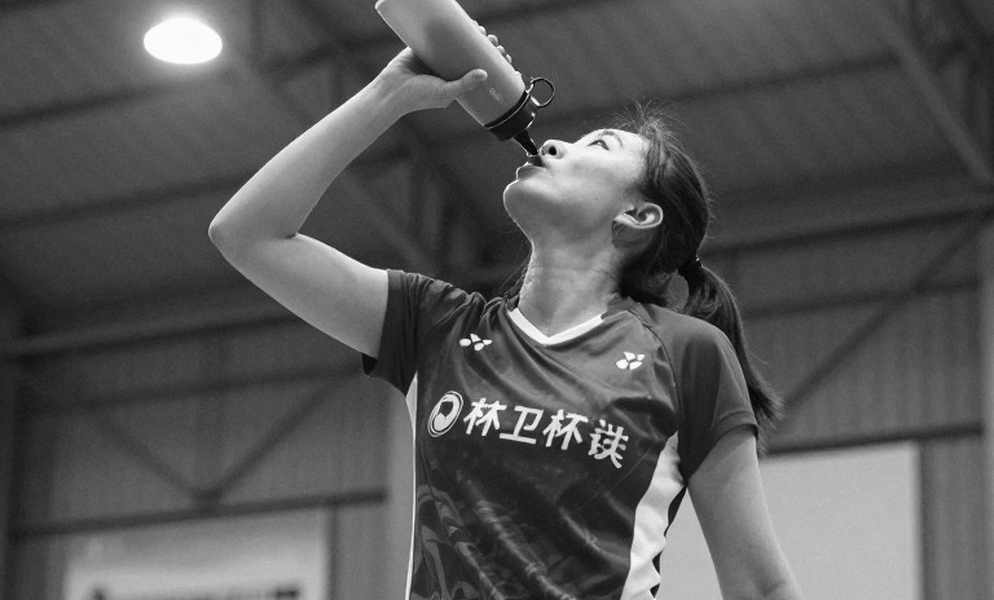
This became especially useful when covering small events, the early rounds of the regular season, where stands are sparse and nobody bothers to record anything. Precisely there, data is usually empty, and the writer must generate their own data with eyes and ears. An empty stadium is the most honest mirror of an athlete. And for a writer, it is also the most honest mirror of their own limits.
When someone says you know nothing
Thanks to the Olympic piece, I was assigned as an official commentator at the World Cup in Qatar in 2026, while still finishing my master's thesis. In the final between Argentina and France, I was the only female commentator in the operations room. In the 60th minute, I noticed coach Deschamps moving Mbappe into the central channel and asked to highlight that moment. A colleague laughed: "What does a woman know about tactics?"
Three minutes later, Mbappe scored in the 80th, scored again in the 81st, then completed his hat-trick in the 118th. I did not reply. I just quietly noted the time.
From that day I built a note system called "the moment tactics changed" — with specific timestamps, player names, and positions — so that every statement of mine rests on verifiable data, especially in an environment quick to judge gender. I am also gentler with younger female colleagues facing similar situations, because I know they need support not from encouragement but from evidence.
In Nagoya, when I follow a badminton tournament where nobody supplies statistics, I apply the same system. I record when a player changes serve direction, when they start hitting into the middle of the court, when the point gap crosses a psychological threshold. Then I cross-check with two independent sources. If there are no two sources, I do not publish. That simple.
The counter-intuitive angle: do not rush to fill the gap
The irony is that the sports industry has more data than ever and hides more than ever. We have hundreds of metrics on distance covered, passes made, top speed, yet very little real information on injuries. Medical disclosure serves club interests more than fan interests. When data is missing, the media reflex is inference — and inference, repeated enough, becomes belief.
This is the biggest blind spot of a whole generation of commentary. We learn to analyze when data exists, but almost no one teaches how to stay silent when data is empty. Yet that very gap is where the story lives. An athlete goes absent without explanation; a club changes coach mid-season without stating why; a tournament announces new rules in a few lines. If a writer rushes to fill that with a plausible story, they are not doing journalism, they are doing interpretation.
In esports, that gap is even more dangerous. Betting is eroding competitive integrity faster than in traditional sports, simply because its regulatory system lags behind its growth. A match can be influenced by arrangements no one sees, and when no one sees, any inference can be launched to fill the space. Inference is not evidence. An accusation short on data harms both the accused and the accuser. An empty stadium does not need us to shout for it to become meaningful.
During the regular season, that pressure is sharper. Fans follow every match, sensing title-race pressure and relegation fear before it becomes a headline. An unverified transfer rumor can shake a locker room for weeks. And in those gaps, a writer's disciplined silence is a gift, not an evasion.
What I learned from a blank page
Today I live and work in Nagoya, reporting on badminton for a market that lacks neither data nor a demand for precision. Whenever I receive an empty analysis sheet, I no longer feel lost like that seventeen-year-old intern. I see a reminder: that the real work of a sports writer is not filling the page, but knowing exactly what is still missing.
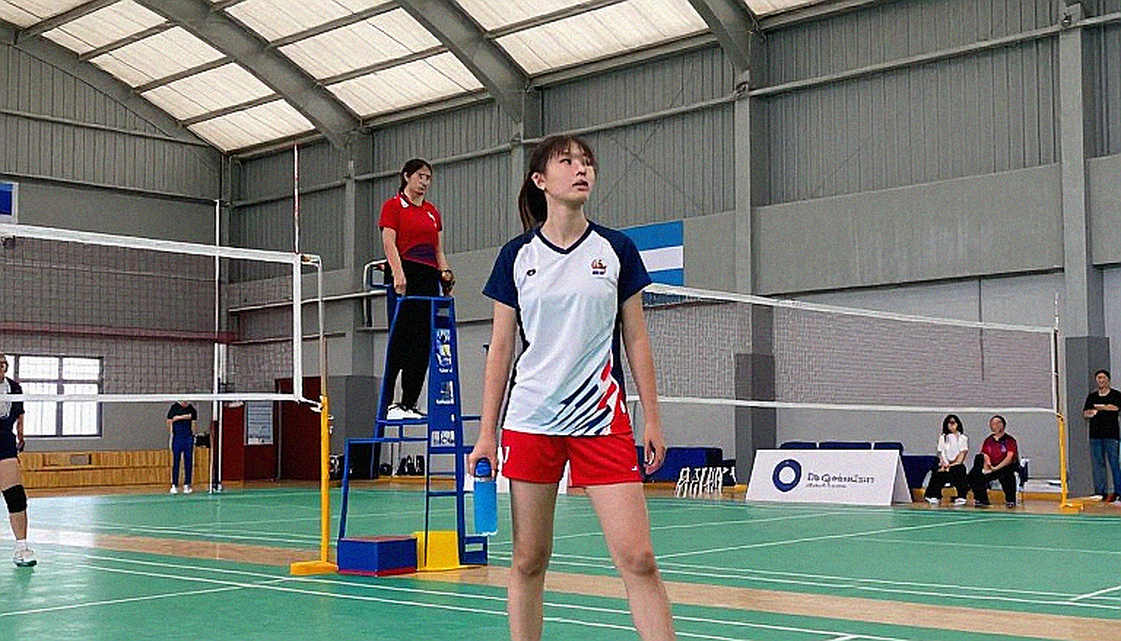
During the regular season, tactical and physical signals usually surface before they become headlines. A player cuts their net approaches for three straight matches; a team increases sideways passes in the first half; an athlete runs a heat two seconds slower than a personal best. These are not yet stories, but they tell me where to look. And when I look in the right place, I do not need to invent anything more.
When the court is empty, I hear how a coach shouts with his eyes. And when data is empty, I hear what the numbers have not yet said. Perhaps that is the hardest, and most worthwhile, part of this trade: learning to tell the difference between a blank page because there is nothing to write, and a blank page because the truth is being kept just behind it.