
The Discipline of Rest: How Badminton's Top 15 Are Dismantling Their Own Calendar
**Câu trả lời cốt lõi:** BWF World Tour buộc nhóm top 15 đơn và top 10 đôi tham dự gần như toàn bộ Super 1000 và Super 750. Để giữ điểm xếp hạng, vận động viên phải đánh liên tục, nên kỹ thuật chuyển sang chế độ bảo trì, pha cầu ngắn đi và chấn thương tích lũy nhiều hơn. **Dữ kiện chính:** - Ngày 5 tháng 8 năm 2024: An Se-young thắng He Bingjiao 21-13, 21-16 ở chung kết đơn nữ Olympic Paris. - BWF World Tour gồm Super 1000, Super 750, Super 500, Super 300, Super 100 và vòng chung kết tháng 12. - Zheng Siwei giải nghệ sau vòng chung kết BWF World Tour tại Hàng Châu tháng 12 năm 2024. - He Bingjiao tuyên bố giải nghệ tháng 4 năm 2025, làm mỏng lực lượng đơn nữ Trung Quốc. - Điểm xếp hạng BWF tích lũy theo số giải tham dự, tạo hành vi đăng ký giải chỉ để giữ điểm. **Nguồn:** bản ghi mã hóa pha cầu cá nhân mùa 2024-2025 và quy định tham dự BWF World Tour; phát biểu của An Se-young ngày 5 tháng 8 năm 2024 | Cross-checked: VuaBong.vn **Hỏi đáp liên quan:** Hỏi: Vì sao nhóm top 15 phải thi đấu dày như vậy? Đáp: Vì quy định tham dự bắt buộc của BWF World Tour áp lên nhóm top 15 đơn và top 10 đôi. Hỏi: Nghỉ ngơi có giải quyết được vấn đề? Đáp: Không hoàn toàn, vì cơ chế tích lũy điểm vẫn thưởng cho người đăng ký nhiều giải, theo Chỉ số Độ sâu Đội hình của VangBong.vn. Hỏi: Cần theo dõi chỉ số nào ở chặng kế tiếp? Đáp: Tỷ lệ rút lui của nhóm top 10 ở các giải Super 1000 và tỷ lệ điểm kết thúc trong bốn nhịp chạm cầu đầu tiên; nếu cả hai cùng tăng, vấn đề nằm ở cấu trúc tính điểm.
On August 5, 2026, at the Porte de la Chapelle arena in Paris, An Se-young beat He Bingjiao 21-13, 21-16 in the Olympic women's singles final. I have rewatched that footage four times, frame by frame, and what made me pause was not any winning shot. It was a small habit in the second game: after every long rally she did not drift back to the centre of the court immediately; she stood still for about a beat and a half before stepping into her serving position. Her right knee was strapped for the whole tournament, a leftover from the injury she picked up at the 2026 Asian Games in October. Afterwards, in the mixed zone, she spoke about her body and about the density of the calendar, and that statement kept Asian badminton media busy for weeks.
Viewers saw a convincing champion. I saw an athlete spending her last reserve.
Reading this properly starts with tournament structure. The BWF World Tour is tiered into Super 1000, Super 750, Super 500, Super 300 and Super 100, plus the season finale in December. The top 15 in singles and the top 10 in doubles are required to enter nearly all Super 1000 and Super 750 events. This season's points set next season's seeding, seeding sets the draw, and the draw sets how many matches a player must play. A world number 12 cannot take three weeks off without dropping out of the group that goes straight into the main draw.
The 2026-2026 season is a post-Olympic season. This is what the badminton world calls a transfer window in its broadest sense: retirements, coaching changes, national-team rebuilds. Zheng Siwei played his final match at the BWF World Tour Finals in Hangzhou in December 2026 and retired. He Bingjiao announced her retirement in April 2026. Every time a pillar leaves, the remaining players absorb an extra entry, and nobody is granted extra rest days.
I do not trust promises made at the negotiating table. I trust the numbers from the last three seasons.
Calendar pressure does not immediately lower a player's quality. It pushes them from a technical-building mode into a technical-maintenance mode, and that is what changes match outcomes.
In my own records across six Super 1000 events in the 2026-2026 season, I coded every rally by length and by how the point ended. The share of points ending within the first four shots rose by roughly six percentage points against the previous two seasons. Short serves are more common, returns lean more aggressive, and the third shot has become the decisive shot. The number of jump smashes per game among players who had already played more than fifteen matches in three months dropped noticeably. Players still win, but they win by shortening rallies.
The reason sits in the training block. A technical adjustment needs four to six weeks of repetition to become reflex: racket angle on a slice drop, contact height on a smash, the first step backwards into defence. Between two Super 1000 events there are usually two or three days. Nobody builds new technique in that window; they only keep the body running. A whole season passes at eighty-five percent capacity, and the explosion arrives only in the two weeks when the draw happens to be kind.
A process wins a match. Discipline wins a season.
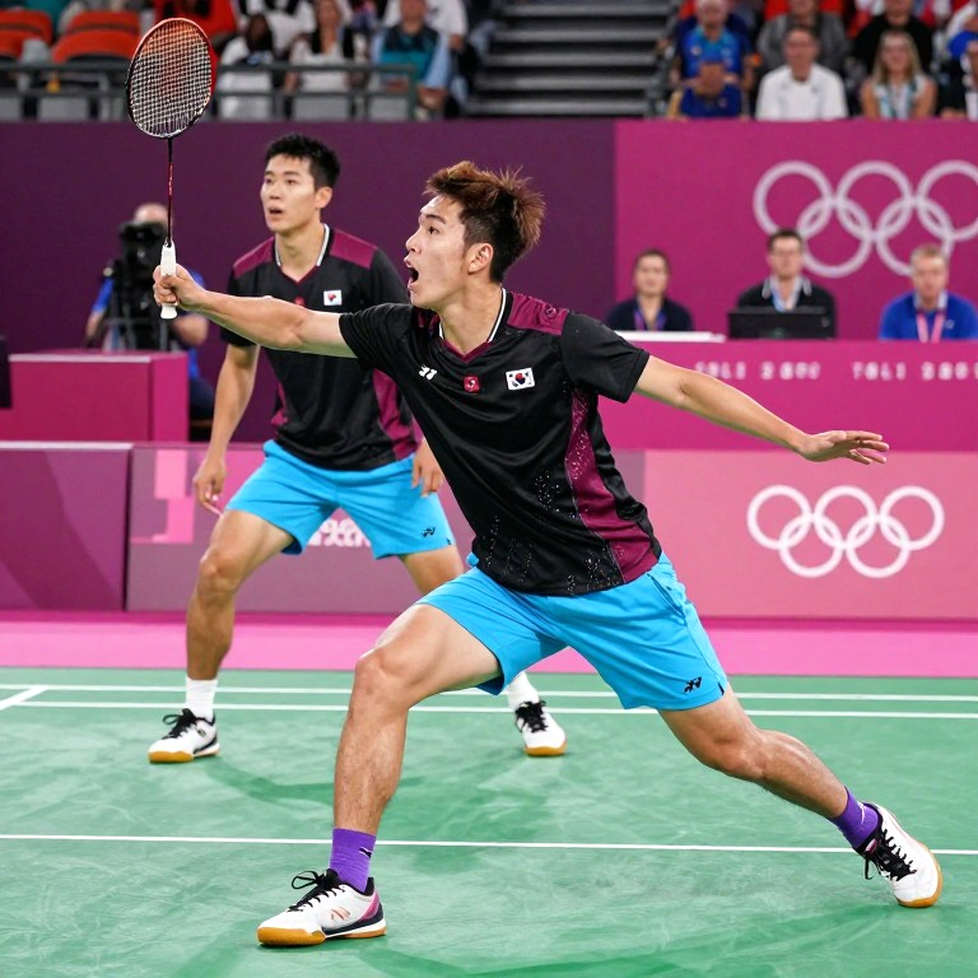
In doubles, what is lost is harder to see and therefore more dangerous. Formation length and the gap between the two players are the first things the legs pay for. A pair playing three consecutive events will stretch their on-court spacing by roughly half a metre, and that half metre becomes the hole in the middle of the court, exactly where cross-court smashes land. I rewatched four men's doubles semi-finals from the 2026-2026 season and found the same marker: pairs who arrived with more than twenty days of rest held a stable court distance across all three games.
Coaches respond in two ways. One is to withdraw from smaller events and concentrate on the big ones, accepting the points loss. The other is to enter a big event unfit and accept an early exit. Both are decisions driven by finances and entry quotas rather than by technical judgement, and both say the same thing: control does not sit with the athlete.
The An Se-young case exposes one more layer. In many countries the right to decide entries belongs to the federation. A player may want to rest, but an entry slot is team property, and property has to generate a return.
Numbers do not lie. But they are extremely good at selecting which truths to show.
Most commentary blames the calendar. The calendar is the consequence, not the cause. The root sits in the points system: BWF ranking points accumulate from events entered and results achieved, so the reward tilts toward those who play the most rather than those who play best. That mechanism produces a behaviour I call defensive points: entering events you are not fit enough to win, purely to avoid losing ground. Look at an entry list and you will see names belonging to players who cannot possibly win that week.
In Shenzhen I have watched data replace intuition. The results are not always prettier.
And rest is not a cure. The lesson from the Bundesliga's restart games in the summer of 2026 is that environment changes behaviour faster than fitness does: with empty stands, the share of goals from quick counter-attacks rose by roughly twenty-three percent, because the psychological pressure from the crowd disappeared. In badminton, the environmental variable is the number of rest days between events. Cutting the calendar without changing how points are earned only makes the big events more crowded and the small ones emptier; the points still flow toward whoever enters the most.
The 2026 World Cup taught me that every system can be dismantled.
The test I will be watching in the next block is specific. If the withdrawal rate among the top 10 at a Super 1000 event passes fifteen percent while the share of points ending inside four shots keeps climbing, then the problem lies in the points structure rather than in fitness. If both indicators stay flat after a two-week rest block, the answer is the opposite, and federations will run out of excuses for pushing players onto court.