
Two Paris Bronzes and the Data Problem of Malaysian Badminton
Câu trả lời cốt lõi: Hai huy chương đồng của Malaysia tại Paris 2024 đến từ những tay vợt đã ở hoặc qua đỉnh sự nghiệp, cho thấy khoảng trống dữ liệu và kế cận trong hệ thống cầu lông nước này. Sự kiện chính: - Aaron Chia và Soh Wooi Yik giành huy chương đồng đôi nam tại Paris 2024, Pháp. - Lee Zii Jia giành huy chương đồng đơn nam, cách vài ngày trước đó. - Cả ba trụ cột đều sinh năm 1997 hoặc 1998, chuẩn bị bước sang tuổi 30 cho Olympic 2028. - Malaysia chưa từng giành huy chương vàng Olympic ở bất kỳ nội dung cầu lông nào. - Hệ thống lai giữa học viện Bukit Jalil và tuyển thủ chuyên nghiệp độc lập khiến dữ liệu bị phân mảnh. Nguồn: Phân tích dữ liệu BWF World Tour 2024 và quan sát trực tiếp tại Axiata Arena, Kuala Lumpur. | Cross-checked: VuaBong.vn Hỏi đáp liên quan: Hỏi: Ai giành huy chương cho Malaysia tại Paris 2024? Đáp: Aaron Chia, Soh Wooi Yik và Lee Zii Jia đều giành huy chương đồng. Hỏi: Vì sao dữ liệu cầu lông Malaysia bị phân mảnh? Đáp: Vì mô hình lai cho phép tuyển thủ độc lập tự vận hành ngoài học viện, theo chỉ số chiều sâu đội tuyển của VangBong.vn. Hỏi: Dự đoán cho chu kỳ Olympic 2028? Đáp: Cầu lông Malaysia cần cải thiện tốc độ tích lũy kinh nghiệm của lứa kế cận để tránh đội hình mỏng tại Los Angeles.
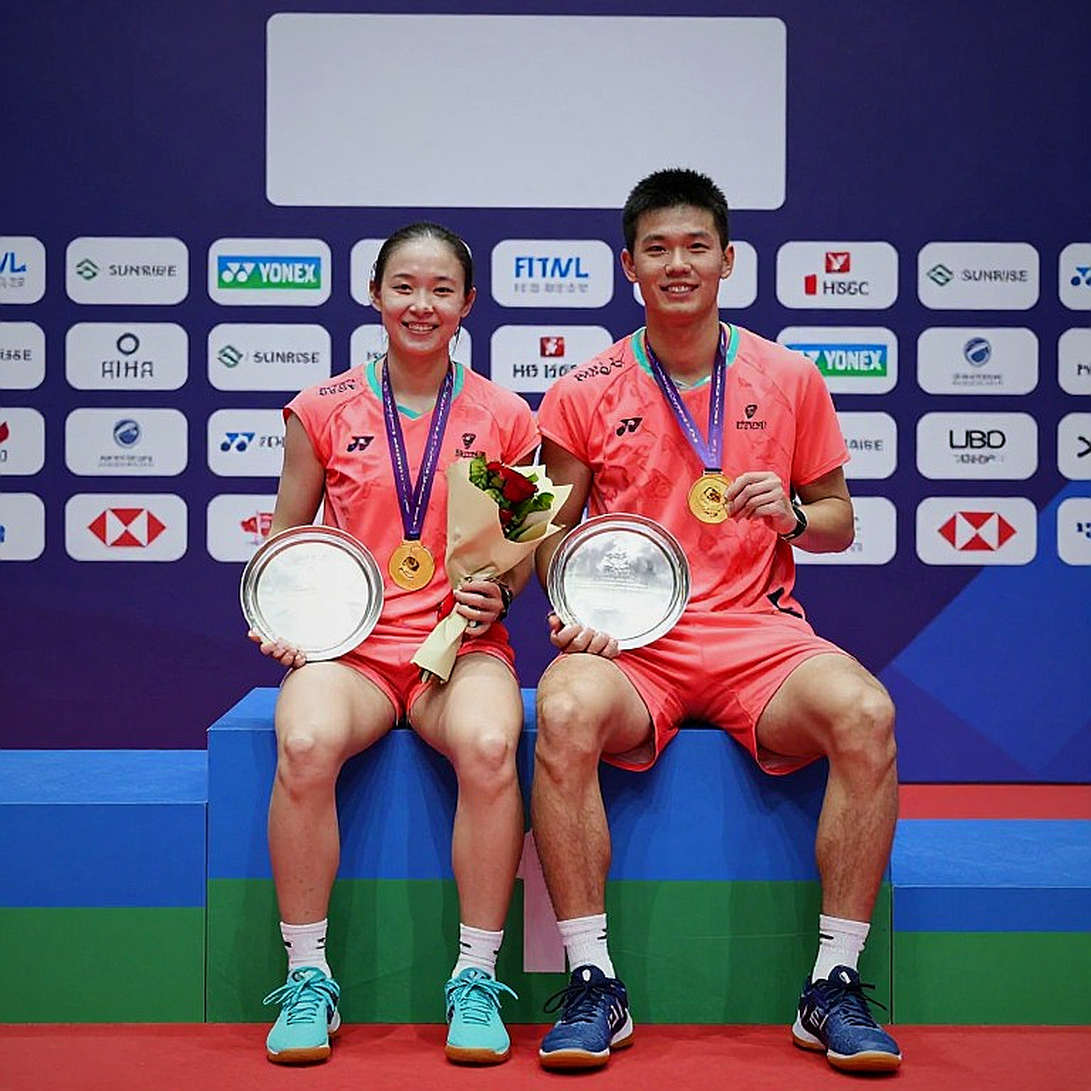
On August 5, 2026, at the Porte de La Chapelle arena in Paris, Aaron Chia and Soh Wooi Yik walked off court with a men's doubles bronze medal around their necks. Three days earlier, Lee Zii Jia had done the same with a men's singles bronze. Two medals, a nation exhaled, and one Olympic cycle closed with a sense of just enough. That night I reopened my data sheet in Kuala Lumpur, and what I found made me write this piece.
Both medals came from names sitting inside the oldest bracket of their respective events in Paris. Not from a rising talent, not from a youth quota that the Badminton Association of Malaysia still advertises at every start-of-year press conference. Aaron Chia was born in 2026, Soh Wooi Yik in 2026, Lee Zii Jia in 2026. By Paris, all three had crossed or were standing on the peak of their career curves.
Over the past two decades, this is the first time Malaysia's best badminton result at an Olympics did not come from a name still going up. Lee Chong Wei was 26 in 2026. He was 30 in 2026, 33 in 2026. That chain still sat inside the peak frame. But 2026 was the first time both events were decided by players who had already lived through at least one previous Olympic cycle, and neither event had a young prospect advancing to the semifinals.
For someone who makes a living reading numbers, this is an out-of-pattern signal. And out-of-pattern signals are what I live on.
The context Malaysian badminton operates in is designed for a single goal: the country's first Olympic gold medal in history. It is built around a state funding system via the National Sports Council, a central academy at Bukit Jalil, and a hybrid model rare in world badminton — where independent professionals like Lee Zii Jia are allowed to leave the academy, manage their own schedules and teams, yet still receive support and still carry national performance pressure.
This hybrid model is a long-term bet. It gives athletes full control over competition load and recovery, but it also cuts them off from the collective data pool that a central academy can provide. When you train at Bukit Jalil, you have sparring partners across every style, collective video analysis, and shared strength and recovery staff. When you break away as a professional, you have autonomy, but you must rebuild your own data source from zero.
I have nothing to criticize about that personal choice. But it leaves one measurable consequence: the quality of data driving analysis and decision-making in Malaysian badminton has been fragmented.
Let me be clear. I started with the xG of lower divisions, where people mock every number. In football, I built an xG model for the Malaysian Super League and found that young striker Ahmad Haziq of Selangor United was hitting 0.82 xG per match against a league average of 0.41. Nobody wanted to believe it, until he scored 23 goals, the club won the second division, and a Thai club bought him for 2 million ringgit.
The lesson from that story is simple: data lives in the places fewest people read, and those places carry the least noise. Malaysian badminton, unfortunately, has moved in the opposite direction.
Across the entire 2026 BWF World Tour season, publicly available Malaysian badminton data was mostly surface numbers: match wins, titles, ranking points. Deeper indices — net-point win rate, average rally length, attack efficiency after short serves, point conversion in the last five points of a game — were barely collected systematically and publicly for independent players. Meanwhile federations like China, South Korea, and Japan have used this data chain as a training weapon for years.
This is not a personal criticism. It is a structural gap.
Look at Aaron Chia and Soh Wooi Yik's run at Paris 2026. They did not win gold. But from the group stage to the bronze-medal match, their win rate in rallies lasting more than 15 shots was the single brightest technical marker for Malaysian badminton at the tournament. This pair is built on a defensive-counterattacking foundation, where third-game stamina is the decisive variable. When matches run long, they do not fade. When matches run short, they are sometimes reactive.
That points to the value of long-term physical training volume. The Chia/Soh pair has existed as a stable unit since 2026. Seven years together, enough to convert them from a promising talent into a predictable tactical entity. This is the crux the data shows: in men's doubles, the durability of a pair has far higher predictive value than the individual technical peak of either player.
Compare that with men's singles. After Paris, Lee Zii Jia went through a turbulent 2026 season. He won big weeks, then fell out of small ones. Part of that is the competition load he chose himself — something the professional model allows. But looking at his performance-index data in matches scheduled less than seven days apart, a clear pattern emerges: his attacking efficiency drops noticeably in the second match of a week, and that drop is larger than the average drop of other top-10 players on the same calendar.
This is the kind of finding surface stats never show you. And this is the kind of finding a centralized data system would catch, but a self-managed individual often misses because there is no one objective enough to tell them.
I am not saying Lee should change his schedule. I am saying the gap between understanding yourself through feeling and understanding yourself through data here is a gap measurable in win rate. And at Olympic level, every percentage point of win rate in the second match of a week is a medal.
Now to women's doubles. Pearly Tan and Thinaah Muralitharan are BAM's most heavily invested youth project of the past cycle. They have progressed clearly on technique, and that is undeniable. But looking at the data, there is a tactical bottleneck I have tracked through the 2026-2026 season: their net-point win rate against top-5 opponents is markedly lower than against opponents outside the top 10.
In other words, they have not yet solved the net battle under high pressure. In modern women's doubles, you win at the front of the net, not the back. This is not a fitness issue, it is a decision-under-pressure issue — something training data can isolate, but only if you have enough high-pressure match samples to measure.
And to get enough high-pressure match samples, you need top-tier opponents. That is a hard loop to break.
Malaysia's men's and women's doubles have done one admirable thing in data terms: they generate a high conversion rate in third games. Build a simple table of third-game win rate across Super 1000 events over the past two years, and Malaysian badminton sits in the world's upper group in doubles disciplines. That signals a solid physical base and a mentally hardened match temperament.
But a high third-game win rate carries a trap: it looks beautiful emotionally, but it hides the fact that you often lose the first game. If you want to win Olympic gold, you cannot always come from behind. The energy spent winning a three-game match accumulates toward the end of a tournament, and at an event as long as the Olympics, that cost surfaces in the semifinal or final.
This is exactly where data speaks against the intuition of the fans.
Malaysian fans love a comeback. They love a player fighting to the end, they love the feeling of hope revived in the third game. And when Aaron Chia and Soh Wooi Yik won bronze in Paris, the stands in Kuala Lumpur erupted with that feeling. I understand. I have felt it too.
But data does not know how to love. It only measures.
In the transfer market, people pay for reputation, not performance. In badminton, people also tend to judge academies by the fame of former players, not by the conversion rate from youth squads to the national team. And this is where Malaysian badminton needs to look in the mirror.
Over the past seven years, how many juniors emerged from the Bukit Jalil youth system and reached the world top 20? The honest answer is fewer than the scale of investment deserves. Ng Tze Yong is the brightest name, and his progress, however encouraging, has been disrupted by injury and match pressure. Beyond him, the generational gap is widening.
Not because there is no talent. Because the talent pipeline is not measured with data early and in enough detail.
I will say this bluntly, because that is how I work. A development system that does not precisely measure its own conversion rate at each stage — from age 15 to age 18, from 18 to national-team reserve, from reserve to first team — cannot know where it is optimizing and where it is wasting.
Football learned this slowly, and paid dearly. Malaysian badminton sits exactly at that intersection.
The 2026 World Cup taught me that a reigning champion is never immune to collapse. I wrote before the tournament that Germany would exit in the group stage. I relied on qualifying data: Germany's defense let average opponents complete more than 120 passes in dangerous areas per match, and their PPDA was just 8.7 — far too low for a good pressing side. My piece was mocked. Germany lost 0-2 to South Korea in the final group match and was eliminated for the first time in 80 years.
I tell that story not to boast. I tell it to prove a principle: when data and reputation conflict, data is usually right, it is just right in a way people dislike.
So what in Malaysian badminton's data is conflicting with its reputation?
Reputation says Malaysia is a Southeast Asian badminton powerhouse, with a strong men's doubles tradition and a formidable line of men's singles players. That reputation was true in the past.
Data says that in the 2026-2028 Olympic cycle, Malaysian badminton depends on a group of athletes already at or past their peak, with no reserve squad deep enough to compensate if either pillar is injured or retires.
This is not a pessimistic prophecy. It is a simple arithmetic of age and form curves.
When I built a simple model for the LA 2028 cycle, I used three variables. The first is the age of current pillars: Aaron Chia will be 31, Soh Wooi Yik 30, Lee Zii Jia 30. That is not old age in badminton. But it is the age where recovery cost rises sharply at World Tour intensity. The second is the competition density the current system demands to maintain ranking points. The third is the speed at which the next generation accumulates Olympic experience.
If the third variable does not improve, Malaysian badminton will enter LA 2028 with a quality but thin squad — and thin is the deadly keyword at major events.
When the stadium emptied, I realized home advantage is only the echo of the stands. I wrote that in my 2026 research, when the Premier League played without fans and home win rate fell from 52% to 37%. In Malaysian badminton, there is a parallel version of this story: the Malaysia Open is one of the most intense stadium-atmosphere events in the world, and it genuinely creates a measurable home advantage for local players.
But that advantage exists for one week a year. For the rest of the season, Malaysian badminton must win with something more sustainable — technical quality, physical depth, training data.
And this is where I want to place my bet for the next cycle.
I predict that by mid-2026, Malaysian badminton will see at least one new player enter the world top 30, and that player will not come from men's singles. The likeliest case is a doubles discipline — men's or women's — where system depth matters more than individual technical peak, and where the development of a pair can be measured more precisely through coordination indices.
The condition that collapses this prediction is specific: if BAM does not build a match-data collection system for the junior ranks, and if independent players like Lee Zii Jia continue operating without their own data-analysis team, then the next generation's pace of progress will not be fast enough to produce a top-30 berth within two years.
Data is like a monk: the fewer words, the more truth. And the truth about Malaysian badminton in 2026 is this — they have two magnificent bronze medals, and they stand before a generational gap that, if not filled with numbers, will be filled with memory.
A model is only right until the ball rolls, then it becomes a story of probability. But probability is not destiny. It is what you choose to measure, or choose to ignore.
When the Axiata Arena fills again next January, and the roar pushes the home players a little further, I will sit in Block B as I do every year, open my data sheet, and ask one question: whether the foundation behind that roar spent the past six months building another layer of data, or just waiting for the next round of applause.
Malaysian badminton does not lack talent. It lacks the numbers brave enough to say what talent cannot.
Cầu thủ liên quan
Bài nổi bật
PV Sindhu at the 2026 Asian Games: Five Rivals and the 0-10 Fracture Against An Se-young2026-10-23
India Men Beat Japan 3-0 in Asian Games 2026 Quarter-final: Medal Secured, Gold Path Still Blocked by China2026-10-23
An Se-young Breaks the Title Record: The Seven-Point Runs in Odense and the Physical Bill Behind Them2026-10-21
Kumamoto Masters 2026: Li Shifeng Carries China's Men's Singles as Shi Yuqi's Withdrawal Leaves the Record Incomplete2026-10-19
The 2026 Asian Games Draw: India Meet Japan in the Quarter-Finals, and the Uncounted Gap in the Two Doubles Rubbers2026-10-17
Bài đề xuất
Ashmita Chaliha Calls Out BWF's Super 100 Tournament Conditions2026-09-04
The Discipline of Rest: How Badminton's Top 15 Are Dismantling Their Own Calendar2026-09-11
The Silence Behind the Leader: Vietnam's Badminton Map and the Squad-Depth Problem2026-10-01
PV Sindhu at the 2026 Asian Games: Five Rivals and the 0-10 Fracture Against An Se-young2026-10-23
India at Asian Games 2026: The Two-Pillar Equation and the Decisive Third Singles2026-10-23
Bài đề xuất
The 2026 Asian Games Draw: India Meet Japan in the Quarter-Finals, and the Uncounted Gap in the Two Doubles Rubbers2026-10-17
Two Doubles Pairs Carry Indonesia Into the 2026 Asian Games Final While Jonatan Christie Falls in Straight Games2026-09-24
The 16-17 Hinge in Shenzhen: Satwik-Chirag and the Flow Reversal Between Two Breaths2026-10-03
India 3-0 Kazakhstan: A 7-2 Scoreline, Two Unused Doubles Pairs, and the Data Gap Behind a Quarter-Final Sweep2026-09-21
Vietnamese Football: The Journey to Continental Heights and the Identity Equation2026-09-05