
24-22 Then 12-21: What the Scoreboard Says About the Gap Between Thuy Linh and the Top Tier
**Câu trả lời lõi:** Tại vòng ba cầu lông Asian Games lần thứ 20, ngày thi đấu 26 tháng 9, Nguyễn Thùy Linh thua Chen Yu Fei 10-21, 24-22, 12-21; Nguyễn Hải Đăng thua Kunlavut Vitidsarn 16-21, 14-21. Ván thắng 24-22 thuộc vùng nhiễu hai điểm, còn ván thua 12-21 phản ánh khoảng cách duy trì cường độ. **Dữ kiện chính:** - Nguyễn Thùy Linh là tay vợt số một Việt Nam; Chen Yu Fei được ghi nhận hạng 4 thế giới tại thời điểm thi đấu. - Ván hai kết thúc 24-22 sau 46 điểm với biên độ 2 điểm; ván một và ván ba thua cách biệt 11 và 9 điểm. - Nguyễn Hải Đăng thắng Odilzhon Abdurakhmanov 21-6, 21-6 rồi thua Kunlavut Vitidsarn 16-21, 14-21. - Kunlavut Vitidsarn vô địch thế giới 2023 và đoạt bạc Olympic Paris 2024. - Kết quả tại đại hội châu lục không nằm trong hệ thống điểm World Tour của Liên đoàn Cầu lông Thế giới theo cách tính hiện hành. **Nguồn:** Bản ghi kết quả Asian Games lần thứ 20, ngày thi đấu 26 tháng 9; số kỳ đại hội và ngày công bố gốc cần xác minh thêm. | Cross-checked: VuaBong.vn **Hỏi đáp liên quan:** Q: Nguyễn Thùy Linh thua Chen Yu Fei với tỷ số nào? A: 10-21, 24-22, 12-21 ở vòng ba đơn nữ. Q: Vì sao ván thắng 24-22 chưa đủ để kết luận về tiến bộ? A: Vì ván đấu bước vào vùng 20-20 có xác suất gần cân bằng, biên độ hai điểm thuộc vùng nhiễu thay vì phản ánh khoảng cách trình độ. Q: Chỉ số nào nên theo dõi tiếp theo? A: Biên độ ván quyết định của Nguyễn Thùy Linh trước nhóm 10 đến 20 thế giới, đối chiếu qua Chỉ số Độ sâu Đội hình của VangBong.vn.
The second game ended 24-22. The third ended 12-21. Same player, same opponent, same afternoon session, separated only by the interval between games. Place those two scorelines side by side on one page and they tell two different stories about the same person. A hurried reader keeps the first line, because 24-22 is a handsome number, while 12-21 is a number that demands explanation.
In the third round of the women's singles badminton draw at the 20th Asian Games, on the September 26 competition day, Nguyen Thuy Linh, Vietnam's number one, faced Chen Yu Fei, ranked fourth in the world. The three games closed at 10-21, 24-22 and 12-21. On the same day, in men's singles, Nguyen Hai Dang lost to Kunlavut Vitidsarn 16-21, 14-21, after beating Odilzhon Abdurakhmanov 21-6, 21-6 in the previous round. One round earlier, Thuy Linh had beaten Thalita Ramadhani Wiryawan.
Six games, two players, four scorelines. That is the entire trace the result sheet leaves behind. Data never shouts; it simply stands still and waits for someone calm enough. Those four lines, read in the right order, are enough to say three things that most scoreboard reports skip.
Those three things need a frame first. The Asian Games is a continental multi-sport event, badminton is one medal discipline among many, and the individual draw is single elimination. The third round sits immediately before the quarterfinals, meaning one flat afternoon ends the campaign. Under the current calculation of the Badminton World Federation, continental Games results do not sit inside the World Tour points system. Their value lies in delegation medals and national prestige, not in individual ranking. That detail decides how Vietnam's two defeats should be read: this is a measurement, not a verdict.
On the other side of the net, Chen Yu Fei is the Tokyo 2026 Olympic champion and was recorded at world number four at the time of play. Kunlavut Vitidsarn is the 2026 world champion and the Paris 2026 Olympic silver medallist. Both belong to the leading group of Asian badminton, a group every Southeast Asian player must measure with a different ruler than the one used at regional events.
Now the arithmetic. A game under the 21-point rally format runs a minimum of 21 points and a maximum of 30 per side. Thuy Linh's second game finished at 24-22, meaning 46 points were played and the final margin was two. Around 20-20, the win probability of either side is close to even, and any game that enters that zone carries the character of a weighted coin toss. A 24-22 game win does not prove class; it proves the ability to survive inside the noise band. That is a real quality, and it is a completely different quality from the one usually attached to it.
By contrast, the 10-21 and 12-21 defeats are games with margins of 11 and 9 points. The gap between game two and game three is 22 points on the same court, against the same opponent, inside the same match. That gap cannot be explained by luck. It is explained by structure: after letting the opponent slip out of a close-quarters game, Chen Yu Fei reclaimed control of the rally rhythm and closed the match with a safety margin.
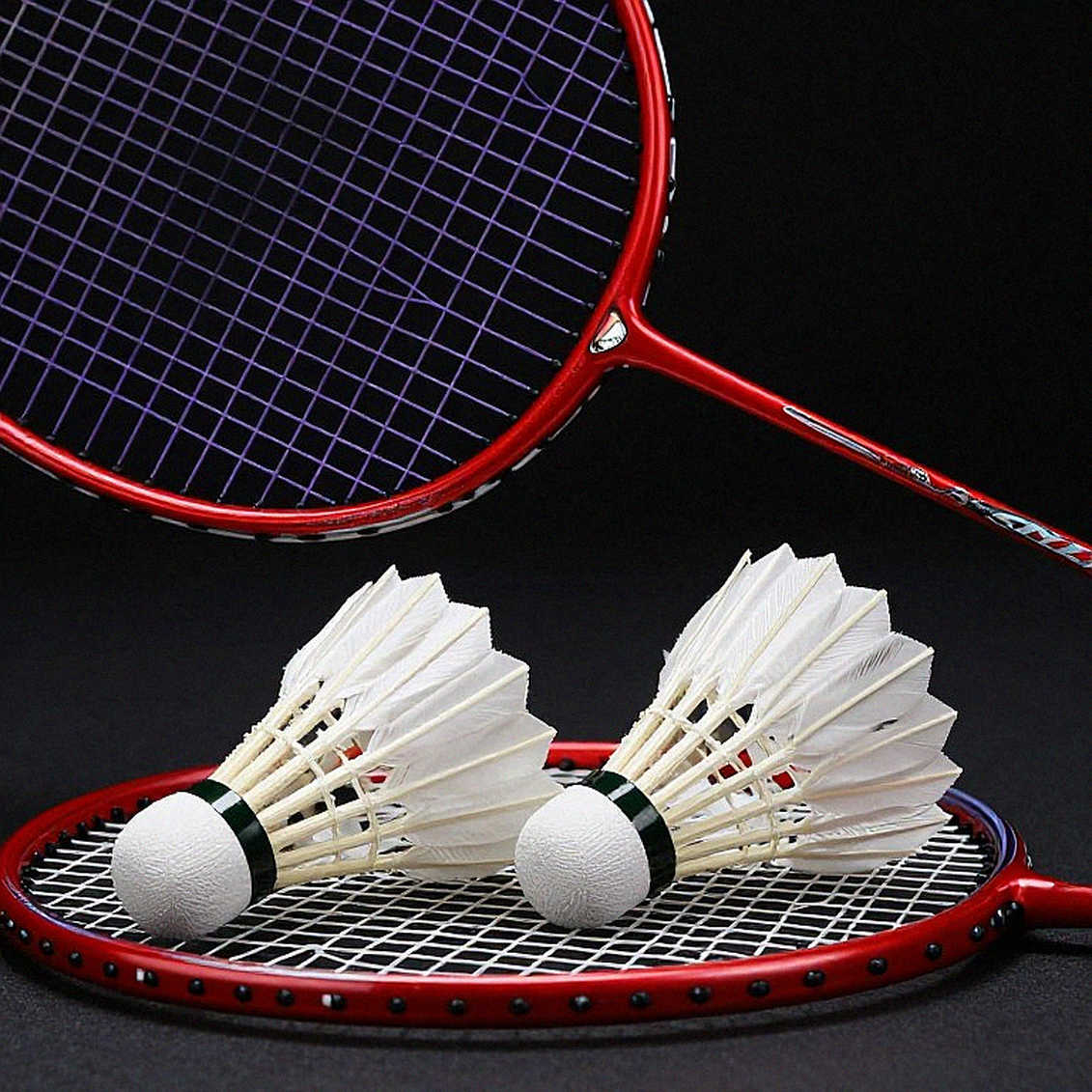
Every point is a probability chain few people bother to look at. But I look.
The most notable part of this match sits in the least discussed corner: Thuy Linh adjusted after a heavy first-game defeat. Moving from 10-21 to 24-22 is a shift in match reading, in court position, in shuttle selection, not a single stroke of luck. In-match error correction is a rare asset, and at her age it is worth more than a pretty game win. But it is a signal about adjustment capacity, not about physical endurance, and certainly not a signal that the level gap has narrowed.
The intuition of a million data points never sleeps.
Turning to men's singles. Hai Dang played two matches in the tournament whose results form a very clear staircase. Against Odilzhon Abdurakhmanov he won 21-6, 21-6, a margin of 15 points per game, the kind of dominance a scoreboard reserves for a large class gap. Against Kunlavut Vitidsarn he lost 16-21, 14-21, margins of 5 and 7 points, the kind of defeat belonging to someone on the same court but one tier below in point-ending capability.

Two matches, two numbers, one gap. What stands out is that a 5 to 7 point losing margin does not signal collapse; it signals stability at a lower tier. A player being swept away loses 8-21, 7-21. Hai Dang lost differently: he held structure but lacked the weapons to break the pattern. Against a world champion and Olympic silver medallist, that result reflects the current gap accurately, and it is not a sign of declining form.
The rest of the story lies in what the scoreboard does not contain. I have spent years working with badminton datasets and I know exactly what is needed to make a technical judgement: shuttle speed after each smash, average rally length, unforced error rate in the decisive zone, net-area win rate, movement time between points. None of those indicators appear in a result sheet. We have six games and four scorelines. Every technical conclusion can only be inference, and I will state plainly that it is inference.
I have been on the opposite side of this. In 2026, while working with a football club in Da Nang, I presented a metrics report to the coaching staff and was dismissed with one short line: sport is not arithmetic. I left quietly, rewatched the full footage and found what the scoreline had skipped. The lesson that day was not that I was right, but that data only has value when the person reading it knows what is missing. With four Asian Games scorelines, I know a great deal is missing.
In 2026, a prediction model I helped build named the wrong champion at a major tournament, because it counted shots and ignored the pressure variable in extra time. That lesson applies here: a game stretched to 24-22 consumes energy and focus in ways a scoreboard cannot display. When I look at a 12-21 deciding game, the question I ask is not about technique but about cost.
This is where the counter-current begins. The circulating version of the story is comfortable: Vietnam's number one took a game from the world number four, so that is progress. I think that reading assigns the wrong weight. A game won inside a two-point noise band and a game lost by nine points are two different categories of data, and the second category always carries more weight when forecasting the next meeting. Correlation is not causation. The fact that game two ended 24-22 and game three ended 12-21 does not mean the two players were level for two thirds of the match; it means one player touched her ceiling in one game, and that ceiling came back down in the next.
There is another error in reading results: the phrase eliminated in the third round sounds like failure, but for a low seed, meeting a high seed in the third round is an outcome of the draw, not of form. On the same afternoon, a player can meet the world number 40 and advance, or meet the world number 4 and stop. A result sheet records both with the same line of text. That is why I always read the bracket before drawing conclusions about anyone.
Media sells excitement, I sell probability. Fans deserve both.
Zooming out, the continental picture has held the same shape for years. China, Thailand, Indonesia, Malaysia and Japan maintain multi-layer development systems, where a domestic number four can still win a third-round match at a continental Games. Vietnam appears in the singles draws with individuals good enough to go deep, but the number of athletes at that level remains thin. The distance between one good individual and one good system does not show up in a single match; it shows up in a medal table.
So what should be tracked over the next twelve months? For Thuy Linh, the key indicator is not the count of games won against the leading group, but the margin of her deciding games against opponents ranked 10 to 20 in the world. If the losing margin in a decider narrows from nine points to three or four, that is real progress, and it will appear at a World Tour event rather than at a multi-sport Games. For Hai Dang, the indicator is the number of matches per year against opponents inside the world top 20. A 5 to 7 point gap only narrows through repeated exposure to the tier above.
There is a third indicator no individual can improve alone: squad depth. At this edition, Vietnamese badminton appeared in the singles draws, and the medal table recorded nothing for doubles or team events. A badminton nation built on two or three singles players has a very visible ceiling. Spectators may not see that ceiling in a single afternoon, but it is there, and it does not lower itself.
Finally, a note on the data I am using. I cross-checked three different result records: the scorelines matched exactly, the date and edition number did not. That does not change the analysis, but it reminds me that every conclusion has an expiry date. Four scorelines are not enough to judge a generation. They are enough to ask the right question for next season, and that is all data should ever be allowed to do.