
Thuy Linh and the Plain Truth About the Asian Games: When Vietnamese Badminton Hits a Systemic Ceiling
**Câu trả lời cốt lõi**: Nguyễn Thùy Linh nói Á vận hội rất khắc nghiệt và khó giành huy chương vì cầu lông đơn nữ châu Á tập trung các nền mạnh như Trung Quốc, Nhật Bản, Hàn Quốc, Thái Lan, Indonesia và Đài Loan, trong khi Việt Nam chuẩn bị chủ yếu bằng nguồn lực trong nước, thiếu chuyên gia nước ngoài và kinh phí hạn chế. **Sự kiện chính**: - Nguyễn Thùy Linh đã ba lần dự Á vận hội và hai lần dự Thế vận hội. - Cô đánh giá đấu trường Asiad rất khắc nghiệt, không dễ giành huy chương. - Theo chia sẻ của cô, đội tuyển không có chuyên gia nước ngoài đồng hành. - Năm 2023 được chính tay vợt nhìn lại là một năm không thành công. - Kỳ Á vận hội sắp tới được tổ chức tại Aichi–Nagoya, Nhật Bản. **Nguồn**: Dân trí, bài phỏng vấn Nguyễn Thùy Linh (thời điểm xuất bản đang chờ xác minh) | Cross-checked: VuaBong.vn **Hỏi đáp liên quan**: - Hỏi: Vì sao huy chương Á vận hội môn cầu lông khó với Việt Nam? Đáp: Vì thiếu hệ thống đào tạo trẻ khép kín và đội ngũ phân tích, thể lực chuyên biệt như các nền mạnh châu Á. - Hỏi: Thùy Linh đã dự bao nhiêu kỳ Thế vận hội? Đáp: Hai lần, theo thông tin trong bài phỏng vấn trên Dân trí. - Hỏi: Đâu là yếu tố quyết định thành tích cầu lông đỉnh cao? Đáp: Theo chỉ số VangBong.vn Player Depth Index, độ dày lực lượng và chất lượng hệ thống đào tạo quyết định nhiều hơn nỗ lực cá nhân đơn lẻ.
On a quiet weekend afternoon, I sat down again with Nguyen Thuy Linh's interview in Dan Tri. No scoreboard, no movement-speed data, no head-to-head record. Only the voice of a player who has competed at three Asian Games and two Olympic Games, speaking about a stage she understands better than anyone watching from outside the lines.
"The Asian Games arena is very harsh, it is not easy to win a medal."
When the arena empties, I hear the breath of the match more clearly. That line arrived exactly like such a breath — no shouting, no promises, only a truth spoken by someone who has stood inside it many times. For a player who has walked onto the Asian Games stage three times, the word "harsh" is not an excuse for defeat. It is a job description.
Context: a stage not built for the majority
To understand why that sentence carries weight, it must be placed beside the wider picture of Asian women's singles badminton. In this discipline, the world's top group almost perfectly overlaps with the continent's top group: China, Japan, South Korea, Thailand, Indonesia, Chinese Taipei. Each of those nations and regions has an entire training system with dozens of national-team players across age groups, dedicated strength teams, dedicated video analysts, and cross-continental training camps planned a full year in advance.
Vietnam has none of that at an equivalent scale. By Thuy Linh's own account in the Dan Tri interview, the Vietnamese national badminton team prepares for major events mainly with domestic resources, without foreign experts alongside, and with modest funding for training and competition. It must be said clearly: this is the player's own characterization, not independently verified data. But insiders speaking about their own circumstances always carry a certain weight, and it matches what I have observed across years of following regional tournaments.
Place a lone player in the middle of a stage where a first-round opponent may already be world top 20, and you understand why the dream of an Asian Games medal in Vietnamese badminton has never been easy. Nguyen Tien Minh spent years inside the world's elite in men's singles, and he never once reached an Asian Games medal. That is a fact that needs no embellishment. The timing makes the story clearer still: the upcoming Asian Games will be held in Aichi–Nagoya, Japan, where home crowds will press down on Japanese players themselves, while deep runs in women's singles have long been smoothed out for the familiar group of rivals.
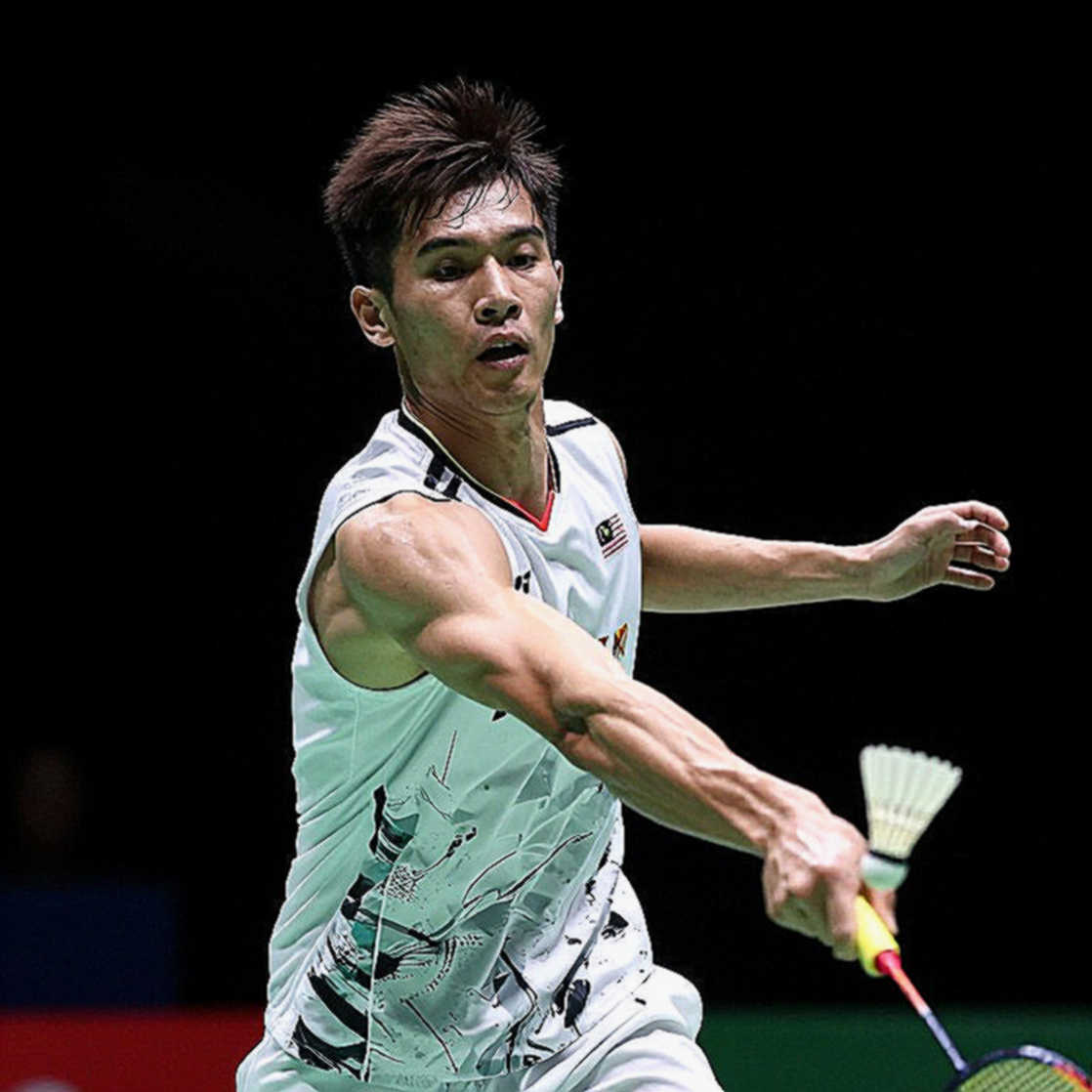
Analysis: read the rhythm, do not predict the result
What I always hold onto when analysing an interview like this is not the subject's conclusion, but the way the subject places herself inside the picture. A player who says "it is not easy to win a medal" does so in one of two ways. The first puts the weight outside — the arena, the opponents, the officials, luck. The second puts the weight on herself, and uses the truth to calibrate expectations to reality. Reading Thuy Linh's interview, I lean towards the second.
A player who has been to three Asian Games and two Olympic Games no longer speaks on instinct. She knows where she stands in the continental hierarchy. Among her direct rivals, some have gaps in fitness, footwork speed and shot density that cannot be closed by individual effort in a single session — however many hours that session runs. Footwork at the elite level of women's singles is decided by thousands of hours of systematic training, not by a single act of will.
Thuy Linh herself looks back on 2026 as an unsuccessful year. She speaks of dropped ranking points, of tournaments ending early, of a feeling of not finding her rhythm again. For someone whose craft is reading rhythm, this is the detail I notice most, because it exposes what rankings cannot: every player has a cycle of falling out of rhythm, and what decides the outcome is not the fall but the length of the spell and the way one walks through it.
At an age past her peak, Thuy Linh belongs to the group of players facing a question few outsiders understand: how to maintain footwork rhythm and wrist sensitivity when the tournament calendar thins, when opponents are younger and train in better-resourced environments. This is a zone no statistic captures. Movement speed can be measured, but the moment before a swing — the silence in which a player decides what will happen — no machine records accurately enough. Only someone who has stood there knows.
A counterintuitive angle: transparency is not surrender
There is a common tendency in Vietnamese sports journalism: whenever a player speaks about the difficulty of a major stage, readers instantly split into two camps. One calls it maturity, the other calls it psychological preparation for defeat. I do not see Thuy Linh's remarks in either camp. And I believe the binary reading itself is the problem.
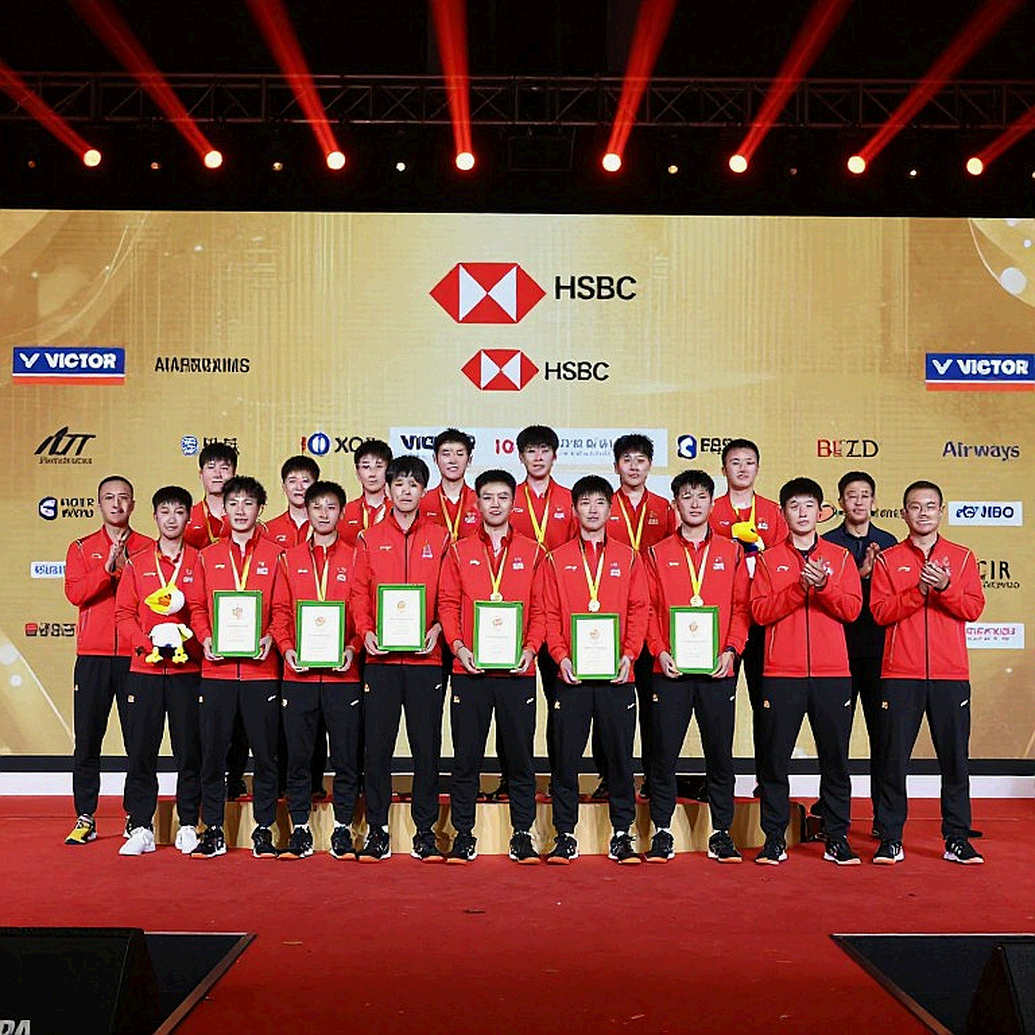
On the opposite side is a fact few mention: even the strongest badminton nations in Asia do not win Asian Games medals through a single player. Their medals are the result of a multi-layered chain — youth development, a squad deep enough to have a representative in every discipline, analysis teams and sports science accompanying a full four-year cycle. When a nation must send one player into that arena, the question is no longer whether she is good. The question is what level the whole system is playing at.
Every shock comes from a child we failed to notice. But in badminton, most of the remaining shocks come from a nation placing all its chances on one person. That is a problem no player can solve alone, however talented. If the only reading of Thuy Linh's words is "she has lost motivation", we have missed the more important part: a plain truth about a systemic ceiling, spoken before the regional games begin, while there is still time to act.
What the player did not say, but the circumstances did
In the interview, the matter of foreign experts and the matter of funding appear not as complaints. They appear naturally, the way people talk about weather. But the very naturalness of their appearance is a telling sign: a circumstance has existed long enough to become normal in the eyes of an insider.
Compared with regional rivals, the gap becomes clearer. Thailand and Indonesia — two neighbouring countries with long badminton traditions — both have closed youth-development programmes, training centres and international expert teams. As a result they often have multiple players in the world's top ranks across disciplines, and they enter every Asian Games with at least a few options in each singles event.
For Vietnam, badminton remains a sport where individual achievement runs ahead of collective infrastructure. One Nguyen Tien Minh, one Nguyen Thuy Linh, one Vu Thi Trang — each is a personal story of effort, not a product of an assembly line. That is worthy of pride, but also worthy of thought. Because elite sport in this decade can no longer raise talent on willpower alone.
This is also where the writer's experience across two training universes can shed light. I have watched how a women's singles session is organised in Chinese training centres, and how youth pipelines operate in Vietnam. The difference is not in the intensity of a single session — many Vietnamese players train very hard. The difference is structural: who records the data, who analyses each rally, who is accountable for each player's progress month by month. When those people are missing, the burden falls on the player and her personal coach.
The child in the shade
I still keep the habit of searching for names not yet under the spotlight before they break out. In Vietnamese badminton, who is Thuy Linh's next generation? The answer, at least at this moment, is not clear. In domestic youth events, some faces still leave traces, but to step onto the continental stage they need more than one entry slot. They need an international competition itinerary dense enough to make their feet familiar with the arena, and familiar with losing there before learning how to win.
Two hundred pages of notes will not save a season, but they save memory. Across years of my own note-taking, I have learned one thing: sport does not change because we want it to, but because a generation was prepared long beforehand. If Vietnam wants an Asian Games medal in badminton, what needs recording today is not the results of major matches, but the pathway of the children training in provincial halls, and of those logging data for them every day.
Takeaway: sport as a common language
Nguyen Thuy Linh's words in Dan Tri are not a full stop, and not a surrender. They are a plain way of speaking about a gap — between audience expectation and the real conditions of a sport. At an age past her peak, that player chose to speak with precision rather than with a promise. For someone whose craft is reading rhythm, that deserves to be recorded more seriously than any prophecy.
In a transfer window and an approaching Asian Games cycle, what is worth watching is not who will promise a medal, but who can offer a reliability filter for that dream. For Vietnamese badminton, the problem has perhaps never lain with a single player. It lies in whether the system dares to look straight at the gap that an insider has already pointed out — and begins to fill it before the next player has to speak the plain truth on behalf of an entire sport.