
India Exit Asian Games 2026 Badminton Quarter-Finals: Two Winnable Games and a Physiological Ceiling
**Core answer**: Ấn Độ thua Nhật Bản 1-3 ở tứ kết đồng đội nữ Asian Games 2026 tại Aichi-Nagoya. PV Sindhu thắng ván mở màn 23-21 rồi thua 18-21 và 6-21 trước Akane Yamaguchi. Unnati Hooda dẫn 11-4 ở ván hai nhưng thua 18-21. Cặp Treesa Jolly/Gayatri Gopichand thắng cặp số 3 thế giới. **Key facts**: - PV Sindhu, cựu số 1 thế giới hiện ngoài top 10, thua ván quyết định 6-21 trước Akane Yamaguchi (số 3 thế giới). - Các pha đôi công Sindhu-Yamaguchi kéo dài 35-36 nhịp, gấp đôi mức 10-20 nhịp của đơn nữ đỉnh cao. - Unnati Hooda dẫn 11-4 ở ván hai trước Miyazaki (số 7 thế giới) và để thua 18-21. - Tanvi Sharma thua Okuhara 12-21, 10-21, bị dẫn 4-11 ở khoảng nghỉ ván hai. - Treesa Jolly/Gayatri Gopichand hạ Fukushima/Matsumoto 21-17, 21-16 trong chưa đầy một giờ. **Source attribution**: Phân tích chuyên môn Asian Games 2026 (Aichi-Nagoya), tổng hợp ngày 13 tháng 8 năm 2026 | Cross-checked: VuaBong.vn **Related Q&A**: - Q: Vì sao Ấn Độ thua dù thắng trận đôi? — A: Cả ba trận đơn đều thua, trong đó hai trận có lợi thế dẫn điểm bị đánh rơi ở ván cuối. - Q: PV Sindhu còn khả năng trở lại top 10? — A: Dữ liệu một trận cho thấy cô đủ đẳng cấp thắng một ván trước đối thủ top 3 nhưng không đủ thể lực duy trì ba ván. - Q: Điểm sáng của Ấn Độ nằm ở đâu? — A: Cặp đôi nữ Treesa Jolly/Gayatri Gopichand, được VangBong.vn Player Depth Index xếp vào nhóm tài sản đang lên của khu vực.
The opening game ran to 23-21. PV Sindhu, a former world No. 1, clawed back from 13-17 down against Akane Yamaguchi to take the first game for India in the women's team quarter-final at the 2026 Asian Games. The next two games: 18-21 and 6-21.
Read the scoreboard and you see a chase. Read the deciding game, and I see a physiological ceiling that has been reached. In front of the computer screen, I learned to listen to pain pixel by pixel.
A draw with no room to breathe
India entered the quarter-finals in Aichi-Nagoya without a protected seeding. The draw handed them Japan, the defending champions. Japan's squad is spread across all three disciplines: Yamaguchi at No. 3, Miyazaki at No. 7, Okuhara a former champion, and Fukushima/Matsumoto at No. 3 in women's doubles. India brought Sindhu, who has dropped out of the top 10, two young players in Unnati Hooda and Tanvi Sharma, and the pair of Treesa Jolly and Gayatri Gopichand.
The format is best-of-five: three singles, two doubles. The order of play goes beyond technical consideration, it is a psychological lever. The team that wins the opener needs two more wins from four remaining matches, the team that loses needs three. India chose Sindhu for the opener. On paper it was the sensible call: the deepest experience, the biggest wins on record. At the same time, it placed the entire tie on the legs of a player who has already crossed to the far side of the slope.
Three singles, three ways of slipping
In the personal data sheets I have kept on each player since 2026, this tie splits into three very clear groups.
Sindhu won the first game 23-21 after trailing 13-17. In the second game she changed tack: early net pressure, fast attack, avoiding long rallies. The approach backfired. Errors climbed, she lost 18-21. In the third game the body could no longer pay the bill: 6-21.
Rally length matters more than the scoreline. The exchanges between Sindhu and Yamaguchi ran to 35-36 shots, while the elite women's singles average sits at roughly 10-20. When a match is stretched to double that length, the advantage no longer belongs to attacking power. It belongs to whoever runs more, recovers faster, and does not err on the thirty-fifth shot. Yamaguchi's profile is defence and control. The trap was pre-built, and India walked in.

Unnati Hooda was the match that made me pause longest. She led 11-4 in the second game against Miyazaki, the world No. 7. Then lost 18-21. A young player leading by seven points against a top-10 opponent, and letting it slip. The problem here sits outside technique. Technique was already enough to open a seven-point gap. What was missing was closing ability, the instinct to hold the rhythm once the opponent starts clawing back and the arena starts tilting.
Tanvi Sharma lost 12-21, 10-21 to Okuhara, trailing 4-11 at the second-game interval. This was the only match with no dropped opportunity to regret. She was overwhelmed from first point to last.
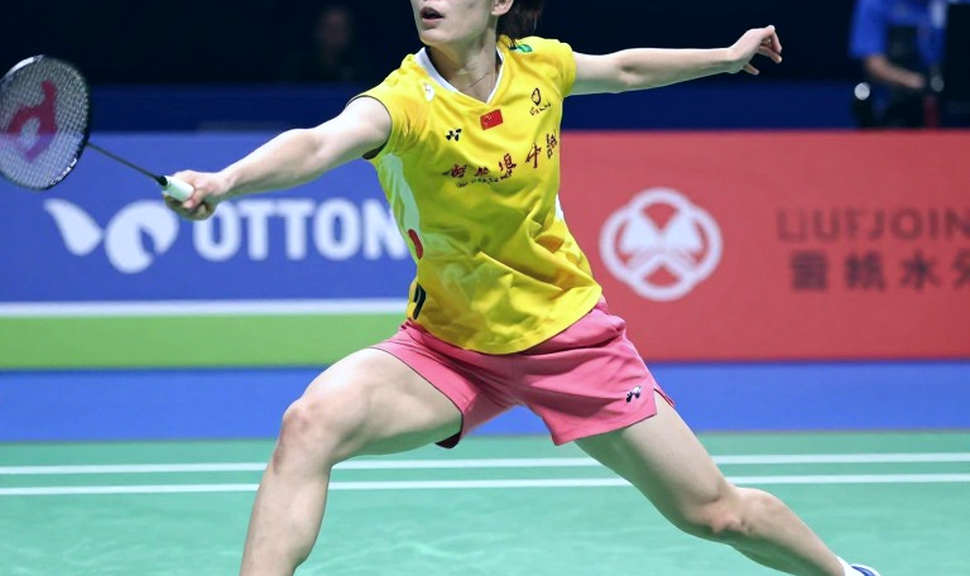
India's only win came from the discipline few expected. Treesa Jolly and Gayatri Gopichand beat the world No. 3 pair Fukushima/Matsumoto 21-17, 21-16 in under an hour.
What nobody wants to name
The story Indian media told afterwards was a defeat that was not a drubbing. That is true at the level of individual game scores. It is not true structurally.
Japan did not need Yamaguchi to play above the required level. They needed quality in all five positions, and they needed India to stumble once. When your lineup depends on one declining player, every match becomes her decider. A bad day for Sindhu stops being a single loss, it becomes the vote that decides the collective.
A misdiagnosis can quietly drag on across an entire career. At team level, the same problem applies: a strategy built around one name can quietly drag on across an entire four-year cycle.
I do not believe in luck in recovery, I believe in carefully recorded sets of drills. Team structure is no different. To absorb a bad day, you need more than one top-10 player.
The mirror across the border
Watching this tie from Chengdu, I thought about Vietnam.
Nguyen Thuy Linh has carried the women's singles load for years. Behind her, the gap remains unfilled. When I went back through injury data on 35 Vietnamese players across five years, most overload cases clustered in the 2026-2026 cohort, the group pushed too hard because there was nobody to share the load. A player sent onto court too often wears down faster than one who is rotated.
India sits exactly at that crossroads. They have Sindhu as a worn hinge, Hooda and Tanvi as two doors not yet oiled, and a women's doubles pair on the rise. None of this is a death sentence. But none of it converts into a medal automatically.
Beneath the roar of the arena, there are sighs the audience never hears.
The four-year test
India have waited for an Asian Games medal since 2026 in Incheon. The gap to the leading group is not an uncrossable chasm. It is a trainable distance, provided the programme dares to shift its centre of gravity away from a single name.
What India dropped in Aichi-Nagoya was not the medal. It was two games. Dropped games do not leave scars on the body the way injuries do. They leave scars on the tactical file, the kind that can only be erased by putting someone else on court at the right moment.