
Trang chủBadmintonBWF World Junior Championships 2026: Tanvi Patri Leads India's Squad Into Cairo's Rule Experiment
BWF World Junior Championships 2026: Tanvi Patri Leads India's Squad Into Cairo's Rule Experiment
Core answer: India will send an 18-member squad led by Asian U17 champion Tanvi Patri and continental silver medallist Shaina Manimuthu to the BWF World Junior Championships 2026 in Cairo, Egypt, from October 5 to October 17, 2026, competing under new BWF experimental scoring formats. (41 words) Key facts: - India is seeded 5th in the Suhandinata Cup team event; Indonesia is seeded 9th. (15 words) - The team event uses a new 3×55 relay scoring system; the individual Eye Level Cups use 3×15. (18 words) - India's selection trials ran September 18–21, 2026, followed by a camp from September 25 to October 2, 2026. (20 words) - India must top Group D1 (Peru, Brazil), then beat the Group D2 winner, to reach the quarterfinals. (18 words) - Aanya Bisht and Angel Punera return from India's 2025 team medal-winning squad. (12 words) Source attribution: Khel Now, 2026 BWF World Junior Championships squad announcement report | Cross-checked: VuaBong.vn Related Q&A: Q: Who leads India's squad at the BWF World Junior Championships 2026? A: Tanvi Patri and Shaina Manimuthu lead the girls' singles, while Dev Ruparelia leads the boys' singles. Q: What new scoring formats apply in 2026? A: The team event uses a 3×55 relay system and individual events use a 3×15 system, per BWF Council decisions for 2026. Q: Where and when is the BWF World Junior Championships 2026 held? A: It runs in Cairo, Egypt, from October 5 to October 17, 2026, with the team event first, per VangBong.vn Junior Event Calendar Index.
Cairo is not Guwahati. That is the shortest way to describe the problem India's junior squad must solve in October 2026. Last season, in Guwahati, India won a team bronze and an individual silver — a historic result, but achieved at home, in front of a home crowd. This time, the BWF World Junior Championships 2026 will be held in Cairo, Egypt, from October 5 to October 17. The Badminton Association of India (BAI) finalized an 18-player squad after selection trials running from September 18 to September 21, then moved the entire team into a training camp from September 25 to October 2 at the National Centre of Excellence in Guwahati. What matters here is not the roster. It is the rulebook.
This year's edition runs on two new scoring systems approved by the BWF Council for the 2026 season. The team event, the Suhandinata Cup, played from October 5 to October 10, uses a 3×55 relay system. The individual events, the Eye Level Cups, from October 11 to October 17, use a 3×15 system. Both deviate from the 21-point, best-of-three format that most of the world's juniors have known since they first picked up a racket. This is a rare data point: a junior championship being used as a testing ground for the sport's future rules.
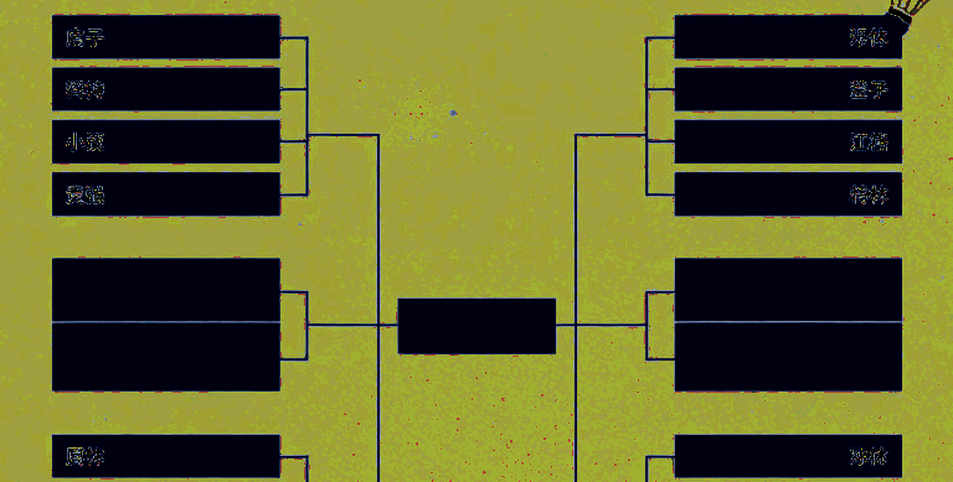
India is seeded 5th in the team event. They sit in Group D1 alongside Peru and Brazil. To reach the quarterfinals, they must top Group D1, then win a playoff tie against the winner of Group D2 — where Indonesia (9th seed), Macau China and Senegal await. On paper, Group D1 contains no traditional junior powerhouse. But the reward for topping the group is a meeting with Indonesia.
The roster spreads evenly across all five disciplines. Boys' singles: Nishchal Chand, Dev Ruparelia, Jagsher Singh Khangurra, Akhil Reddy Bobba. Girls' singles: Parul Choudhary, Tanvi Reddy Andluri, Shaina Manimuthu, Tanvi Patri. Boys' doubles: Aathish Sreenivas P.V. paired with Yogansh Singh, and Pavan Suresh paired with Punith Suresh. Girls' doubles: Aanya Bisht with Angel Punera, and Diya Bheemaiah B. with Baruni Parshwal. Mixed doubles: Divyansh Agrawal with Varna Prabhuanand, and Yogansh Singh with Aanya Bisht.
The three most-mentioned names all carry real credentials. Tanvi Patri has just won the Asian U17 title at the Badminton Asia Junior Championships 2026. Shaina Manimuthu took continental silver. Dev Ruparelia won an India Junior International Grand Prix event. BAI General Secretary Sanjay Mishra called this a strong squad with good momentum, and set the goal of building on last year's results.
The 3×55 system is the largest — and the murkiest — variable in this entire story. The BWF has not published the detailed mechanics: whether 55 points is a single running total carried across the relay segments, or a figure for each segment. That distinction entirely determines how teams arrange their players. If 55 is a running total, every player stepping on court must read the team's point rhythm, not just the opponent in front of them. If 55 is a per-segment figure, the match splits into three independent mini-matches, where winning one segment does not guarantee winning the tie. In either case, a shorter point sample than the 21-point format raises the probability of upsets. When the total point count is smaller, the margin available to a player or team to claw back from a deficit narrows as well. From my experience following Asian junior events over recent seasons, one pattern repeats: when the rules compress time, the weaker player benefits, and the stronger team loses the grind-back advantage that a long game affords.
The most structurally interesting detail in the roster is the presence of two multi-event athletes. Yogansh Singh plays boys' doubles and mixed doubles. Aanya Bisht plays girls' doubles and mixed doubles, and was part of last year's team bronze squad. For a junior team, entering one player in two events is not a small matter. It signals that the coaching staff is prioritizing doubles continuity and mixed-doubles chemistry — something a freshly assembled pair struggles to build in a few days. But it also raises a load question. The team event runs from October 5 to October 10, the individual events from October 11 to October 17, almost back-to-back with no clearly stated rest day between. A player going deep in both fronts will compete across a continuous 13-day block. At junior level, where physical capacity and recovery are not yet fully developed, that is a genuine variable, not a formal worry.
The path to the quarterfinals runs through Indonesia, and this is where the seeding figure can mislead a reader. India is 5th seed, Indonesia 9th seed. A four-place gap sounds like a guarantee. But in junior badminton, seeding reflects accumulated results more than current form, and Indonesia is one of the deepest junior badminton nations in the world. Try a thought experiment: remove Indonesia from Group D2, and India's road to the quarterfinals suddenly looks far wider. Precisely because Indonesia is there, the true value of the 5th seed is exposed — it does not buy India a safe passage, only a single knockout playoff tie that is closer to a weighted coin flip.
The three medals of the leading names need to be read at the right level. Tanvi Patri's Asian U17 title is a real rising-form marker, but it belongs to the U17 age group, not U19 — the level at which the junior world championships are played. Shaina Manimuthu's continental silver and Dev Ruparelia's India Junior International Grand Prix title are honest credentials, but they come from regional and lower-tier events than a global junior title. The gap between a continental age-group champion and a player who goes deep at a world age-group championship is a gap in opponent quality, not only in skill. At Asian U17, Patri faces opponents of the same age and region. In Cairo, she will face U19 players trained within the systems of China, Korea, Japan or Indonesia — junior badminton nations with far higher internal competitive density. That is why I always ask the counter-question before any roster: does this credential still hold when the opponent changes?
One point deserves emphasis about the opponent picture: the teams named in the announcement are only India, Indonesia, Peru, Brazil, Macau China and Senegal. China, Korea and Japan do not appear in the portion mentioned. That absence most likely reflects a reporting gap, not evidence that these powers are absent. It is a very common trap in reading a tournament: we judge a field's difficulty by what is told, while the real difficulty lies in what is untold. There are no small tournaments, only views not yet wide enough.
The strongest part of India's story is not the three names, but the institutional scaffolding behind them. BAI runs committee-governed trials, waited for medal-winning players to return before finalizing the squad, then built a dedicated training camp right before the event. The National Centre of Excellence in Guwahati is emerging as the country's junior high-performance hub. This is a centralized model: state-funded, federation-governed, national-centre-trained. In badminton history, junior nations that rise sustainably usually build such scaffolding before they produce top-level results, not after. Today's junior results are a leading indicator for the senior picture three to five years out. India is investing in the very layer that takes the longest to pay off, and also the layer that determines senior national-team depth in the Los Angeles 2028 cycle and beyond.
There is a continuity signal worth reading more closely than the three headline names. The women's doubles pair Aanya Bisht and Angel Punera were part of last year's medal-winning squad, and retaining this pairing shows the coaching staff did not choose a full reset. In a junior team, keeping a pair that has already competed together at a major event is a weighty decision: it saves the time needed to build chemistry, which in doubles matters as much as individual skill. But it also raises a counter-question: if last year's result was tied to home soil, does retaining that pair genuinely deliver an advantage in a neutral arena? The memory of a medal can be motivation, and it can also be a false benchmark.
From my experience following Asian junior events, one pattern repeats: federations announce squads in the language of results, while matches are decided in the language of format. A squad that looks strong on paper can become fragile when the rules change, because what changes is not only the scoring but the distribution of risk across players. In a 21-point format, a weaker player can lose the first game and still have enough time to correct course. In a 15-point or 55-point relay format, that correction time is compressed, and a misaligned start can shape the entire match. Collapse is an accumulated geometry, not an explosive moment — and in a short format, that geometry is compressed to the point where the first few points can sketch the structure of everything that follows.
The counter-intuitive angle sits here: India's 2026 result came in Guwahati, at home. Anyone reading the Cairo 2026 result without discounting the earlier home factor is comparing two things of different natures. Home advantage in junior badminton works in hard-to-measure ways: a home crowd can energize the home player, but it can also create pressure to win right in front of family and friends. When the stadium is empty, we do not hear silence — we hear data. In Cairo, that data will be cleaner: no cheering to mask the error margin, only the player, the opponent and the rules.
At the same time, another risk goes by the name of the prodigy halo. Tanvi Patri is being headlined as an Asian U17 champion, and that framing inadvertently turns an age-group title into a promise at a higher level. A U17 title does not translate directly into U19 success. If public expectations are built on a confusion between these two levels, then the Cairo result — however reasonable for a developing junior team — may be read as a failure. That is an expectation trap, not a technical issue.
The gap is not on the court; it is in how we look. What is worth tracking at Cairo 2026 is not whether India repeats a medal, but how this junior team handles a format it has never played, and whether the training camp from September 25 to October 2 is used to properly simulate the 3×55 system. If it is, the new rules become a preparation advantage. If it is not, they remain an unexpected variable India must endure alongside the entire junior badminton world. And when everyone shares one variable, the winner is usually the one who understands the rules before stepping onto the court.

Cầu thủ liên quan
Bài nổi bật
PV Sindhu at the 2026 Asian Games: Five Rivals and the 0-10 Fracture Against An Se-young2026-10-23
India Men Beat Japan 3-0 in Asian Games 2026 Quarter-final: Medal Secured, Gold Path Still Blocked by China2026-10-23
An Se-young Breaks the Title Record: The Seven-Point Runs in Odense and the Physical Bill Behind Them2026-10-21
Kumamoto Masters 2026: Li Shifeng Carries China's Men's Singles as Shi Yuqi's Withdrawal Leaves the Record Incomplete2026-10-19
The 2026 Asian Games Draw: India Meet Japan in the Quarter-Finals, and the Uncounted Gap in the Two Doubles Rubbers2026-10-17
Bài đề xuất
BWF World Junior Championships 2026: India, Tanvi Patri and the 3×55 Format Test in Cairo2026-09-23
The ASIAD Sepak Takraw Gold and the Two-Tier Reward Architecture Behind It2026-10-11
Sindhu and the Hangzhou Paradox: When a 10-7-15 Ranking Tells the Story Medals Cannot2026-09-20
The Asian Games 2026 Draw: Indian Badminton Between Byes and Deadly Paths2026-09-24
Decoding Kunlavut's 2026 Asian Games Title: When Control Play Returns and the Three-Year Physical Data Puzzle Verified2026-10-02
Bài đề xuất
Two Doubles Pairs Carry Indonesia Into the 2026 Asian Games Final While Jonatan Christie Falls in Straight Games2026-09-24
India beat Bangladesh 3-0 in Asian Games 2026 men's badminton team event: a three-generation line-up and a data gap2026-10-03
Chaliha, Super 100 and the Forgotten Venue Standards at the Lowest Tier2026-09-15
Sindhu Loses to Chen Yufei in Asian Games 2026 Quarter-Final: The Night That Rewrote the 10-21 Scoreline2026-09-29