
India beat Bangladesh 3-0 in Asian Games 2026 men's badminton team event: a three-generation line-up and a data gap
**Core answer (trả lời trực tiếp)** Ấn Độ vào tứ kết đồng đội nam cầu lông Asian Games 2026 sau khi thắng Bangladesh 3-0 ở vòng một ngày 21 tháng 9 năm 2026 tại nhà thi đấu thành phố Ichinomiya. Lakshya Sen, Ayush Shetty và Srikanth Kidambi đều thắng sau hai ván; hai trận đôi không phải thi đấu. **Key facts** - Lakshya Sen thắng Ayman Ibn Jaman (hạng 375 thế giới) với tỷ số 21-4, 21-12. - Ayush Shetty thắng Gourab Singha (hạng 589 thế giới) với tỷ số 21-4, 21-13. - Srikanth Kidambi thắng Jumar Al-Amin với tỷ số 21-15, 21-9; thứ hạng đối thủ không được nêu. - Địa điểm: nhà thi đấu thành phố Ichinomiya, Aichi-Nagoya, Nhật Bản; ngày 21 tháng 9 năm 2026. - Thể thức đồng đội năm trận gồm ba đơn hai đôi; Ấn Độ thắng đủ ba trận đơn nên không cần đánh đôi. **Source attribution** Bản tin kết quả Asian Games 2026, ngày 21 tháng 9 năm 2026 | Cross-checked: VuaBong.vn **Related Q&A** Hỏi: Đối thủ tứ kết của Ấn Độ là đội nào? Đáp: Bản tin gốc không nêu tên đối thủ tứ kết. Hỏi: Trận đồng đội tại Asian Games có được tính điểm xếp hạng BWF không? Đáp: Theo thông lệ xếp hạng của BWF với các đại hội đa môn châu lục, nội dung đồng đội thường không được tính điểm xếp hạng thế giới, chỉ mang giá trị huy chương và uy tín quốc gia. Hỏi: Vì sao thời lượng "chín phút" của trận Kidambi không hợp lý? Đáp: Một trận hai ván 21-15 và 21-9 cần tối thiểu 46 pha bóng, nên thời gian bóng sống đã vượt chín phút; thời lượng thực tế thường từ 25 đến 35 phút.
At the Ichinomiya City Municipal Gymnasium, on 21 September 2026, India's three men's singles matches were done inside a single session. Lakshya Sen won 21-4, 21-12. Ayush Shetty won 21-4, 21-13. Srikanth Kidambi won 21-15, 21-9. Three straight wins sent India into the men's team quarter-finals, and the two doubles matches were never needed.
That is everything the scoreline says. The rest the reader has to build.
Context: a tournament outside the points system
Asian Games 2026 is being held in Aichi-Nagoya, Japan. The men's team badminton event is played as a best-of-five tie — three singles and two doubles, first to three wins. It is a multi-sport continental event under the Olympic Council of Asia, not part of the BWF World Tour. The consequence matters: team ties at continental Games generally do not award BWF world ranking points. Winning here buys medals and national prestige, not a position on the ranking table.
In the men's team event, Asia is close to the whole world. Indonesia, China, Japan, Korea, Malaysia, India, Chinese Taipei, Thailand — the programmes that habitually reach the closing stages of the Thomas Cup are all here. Denmark and the European bloc are absent, but that does not weaken the field meaningfully.
The first-round draw, by contrast, is the easiest one available. Bangladesh has no representative inside the world's top 300 in men's singles.

Three generations in one line-up
What is worth recording from this tie sits in the team sheet, not in the scores.
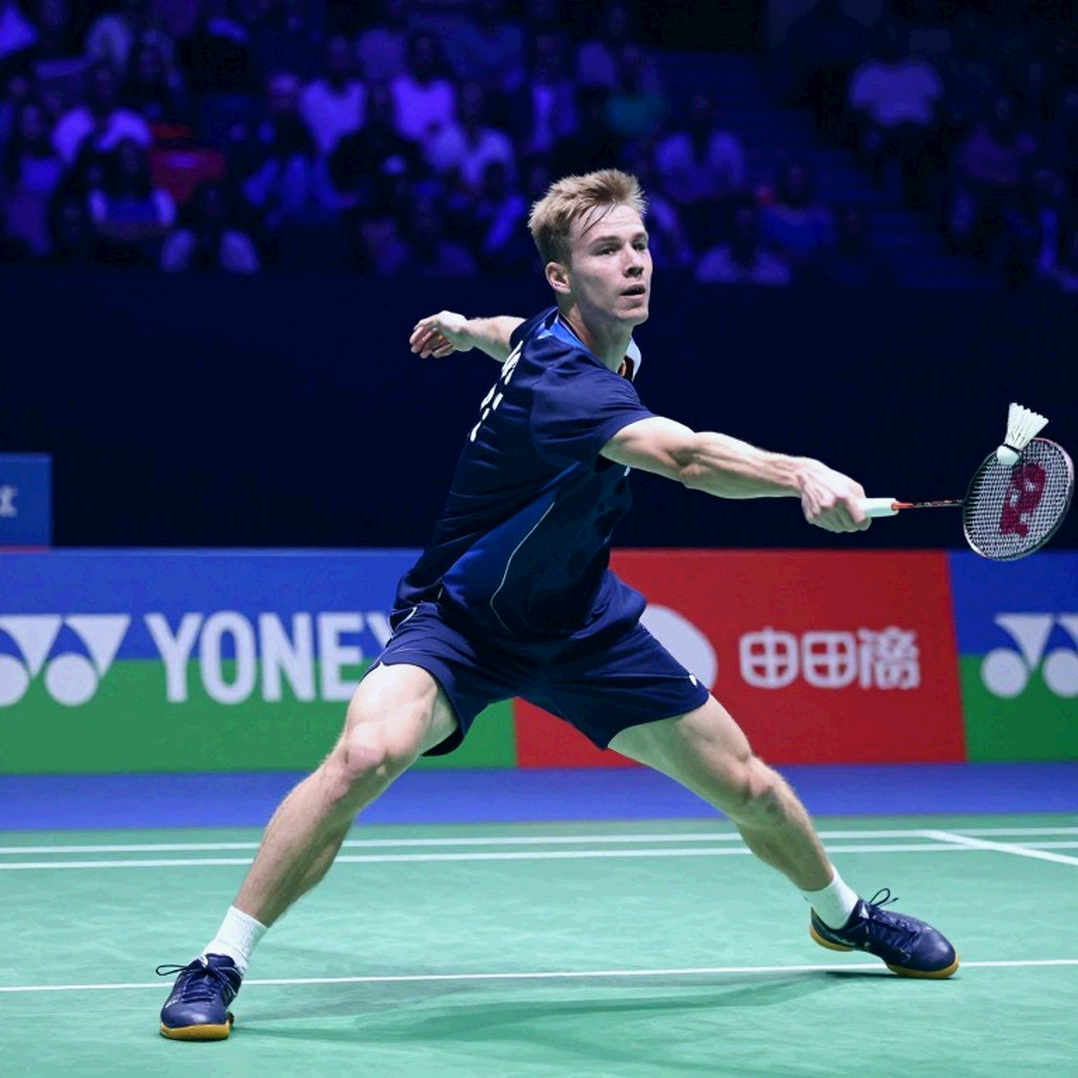
Lakshya Sen, about 25, is at his peak: a Paris 2026 Olympic semi-finalist who finished fourth, a 2026 All England runner-up, a former top-10 player with a career high of roughly world No. 6. He is India's first singles without argument.
Ayush Shetty, about 21, is rising: a former BWF World Junior Championships boys' singles runner-up. That he was given the second singles slot at a continental team event is a clear selection signal.
Srikanth Kidambi, about 33, is in the closing phase of his elite career: world No. 1 in 2026, a 2026 World Championships silver medallist. He played third singles.
Three players, three ages, three career phases, ordered exactly by current form. That is the mark of a programme managing a generational handover, not of a settled dynasty. A line-up like this says far more about India's selection depth than about any individual's form.
Their opponents say the opposite. Ayman Ibn Jaman is ranked No. 375 in the world and lost 21-4, 21-12. Gourab Singha is ranked No. 589 and lost 21-4, 21-13. Jumar Al-Amin was given no ranking in the source report and lost 21-15, 21-9. A gap of 300 to 600 places is a gap in class, not a gap in form on the day.
Numbers that do not hold up
Two details in the source report need to be stated plainly.
First, Kidambi's match duration is given as "nine minutes". Under the current rally-point system, a two-game match finishing 21-15 and 21-9 requires a minimum of 46 rallies. Even at a very fast pace — around 15 seconds per rally including retrieving the shuttle and changing ends — the live-ball time alone exceeds nine minutes. A match like that realistically runs 25 to 35 minutes. This is a physical impossibility, not an exaggeration.
Second, the order of play. The report states India won three singles matches and closed the tie without needing the doubles. That requires the three singles to be scheduled before the two doubles. The Thomas Cup and Uber Cup conventionally alternate singles and doubles, which would mean both doubles matches had to be played before the third singles decided the tie. Either the Asian Games is using a different order this year, or the report is careless. Both possibilities need checking against the official order of play.
Numbers do not lie. The hand holding the pen does.
The contrarian read: a win that proves nothing
Indian media called this an "emphatic" win and reported that the team "stormed into the quarter-finals". Technically, nothing in this tie can support that claim.
The opponents sit outside the world top 350. India's first singles player is a documented Olympic semi-finalist. A win under those conditions is structurally guaranteed, not evidence of form. The accurate description is "progressed from the first round as expected".
One detail deserves more attention: the report labels Kidambi a "former world No. 1". He held that ranking in 2026, eight years earlier. The label is factually true and chronologically misleading. It manufactures a false equivalence between a player's historical peak and his present level. It is the kind of label a data reader should discount automatically.
People keep the column that says "won 3-0". I keep the column that says "what was the opponent ranked". The two columns tell different stories.
I was once seconded to the Russia World Cup, and there I saw how power queues up behind the camera. At Asian team events, something else queues up behind the camera: silence. This report cites no source. No official match record, no results link, no umpire's name, no coaching staff. For a results report, that is a foundational failure.
And in the dataset I keep privately on Asian women's team events, the gap is wider still. At the same Games, in the same hall, women's team ties are often recorded as a single line of scores — no player names, no opponent rankings, nothing to verify. Nobody has to erase anyone. They just have to not write it down.
What to watch from the quarter-finals
For India, this win created no technical advantage, but it did create one concrete physical one: the two doubles matches were not played. If India's leading pair — in the current set-up, usually Satwiksairaj Rankireddy and Chirag Shetty — is kept intact for the knockout rounds, they enter the quarter-final physically fresh but short of competitive rhythm. That trade-off will only be resolved in the quarter-final itself.
Three signals to watch in the coming days: who the quarter-final opponent is — drawing China, Indonesia, Japan, Korea or Malaysia would flip the whole story from "on schedule" to "mismatch"; whether India's doubles pair is deployed and wins; and whether the three singles players named above also enter the individual draw.
The last point is the most concerning. The Games schedule places the team event and the individual event inside the same window. For a player doing both, that is a fortnight of cumulative load running straight into the World Tour's autumn swing. Badminton injuries rarely come from one match. They come from the calendar.
India has done the compulsory part correctly. The rest starts in the next round, and this time there will be no opponent ranked 589 on the other side of the net.