
Nguyen Thuy Linh's 24-22 Set: When World No.4 Was Only One Silent Note Away
**Câu trả lời lõi**: Nguyễn Thùy Linh thua Chen Yu Fei 1-2 (10-21, 24-22, 12-21) ở vòng ba đơn nữ đại hội thể thao châu Á. Nguyễn Hải Đăng thua Kunlavut Vitidsarn 0-2 (16-21, 14-21) ở vòng ba đơn nam. Cả hai vào vòng ba nhờ thắng vòng trước đó. **Dữ kiện chính**: - Thùy Linh là tay vợt số 1 Việt Nam; Chen Yu Fei được ghi hạng 4 thế giới. - Thùy Linh thắng set hai 24-22 nhưng thua set ba 12-21. - Hải Đăng thắng Odilzhon Abdurakhmanov 21-6, 21-6 trước khi thua Kunlavut. - Ngày thi đấu 26 tháng 9; đây là vòng ngay trước tứ kết. - Không có dữ liệu tốc độ cầu, độ dài pha hay số lần hỏng lưới. **Nguồn**: Phân tích văn bản giai đoạn 1 về nhật ký đại hội thể thao châu Á; năm và phiên bản giải chưa được xác định. **Hỏi đáp liên quan**: Hỏi: Vì sao set 24-22 quan trọng? Đáp: Vì nó cho thấy Thùy Linh có thể chơi ngang hạng 4 thế giới trong một set. Hỏi: Vì sao cô thua set ba rõ ràng? Đáp: Có thể do tiêu hao thể lực hoặc kiểm soát lỗi, nhưng thiếu dữ liệu để kết luận. Hỏi: Hải Đăng có khoảng cách gì? Đáp: Anh vượt trội trước đối thủ dưới cơ nhưng bị chặn trước tay vợt đỉnh cao châu Á.
Nguyen Thuy Linh's 24-22 Set: When World No.4 Was Only One Silent Note Away
On that September 26 competition day, I sat nearly eight thousand kilometers from the court, in front of a small screen in an apartment in Shanghai. Nguyen Thuy Linh stepped to the service line. The first game she lost 10-21, fast enough that viewers had not finished pouring their tea. I opened my notebook, wrote three numbers and a question mark. Then the second game began.
Chen Yu Fei, introduced as the world No.4, pushed the tempo higher. Thuy Linh did not run after it. She dragged the match down, slowed it, turned every point into a negotiation about patience. Each rally ran longer than usual, each change of direction had a reason. The second game ended at 24-22.
Two points. Only two points separated Vietnam's No.1 from the world's No.4. I wrote in my notebook: distance is sometimes not measured in meters, but in the number of times a player stays calm enough not to miss at the twenty-fourth point. The third game: 12-21. The door closed very quietly, no shout, no tears, only the sound of shoes dragging on the floor and a silence.
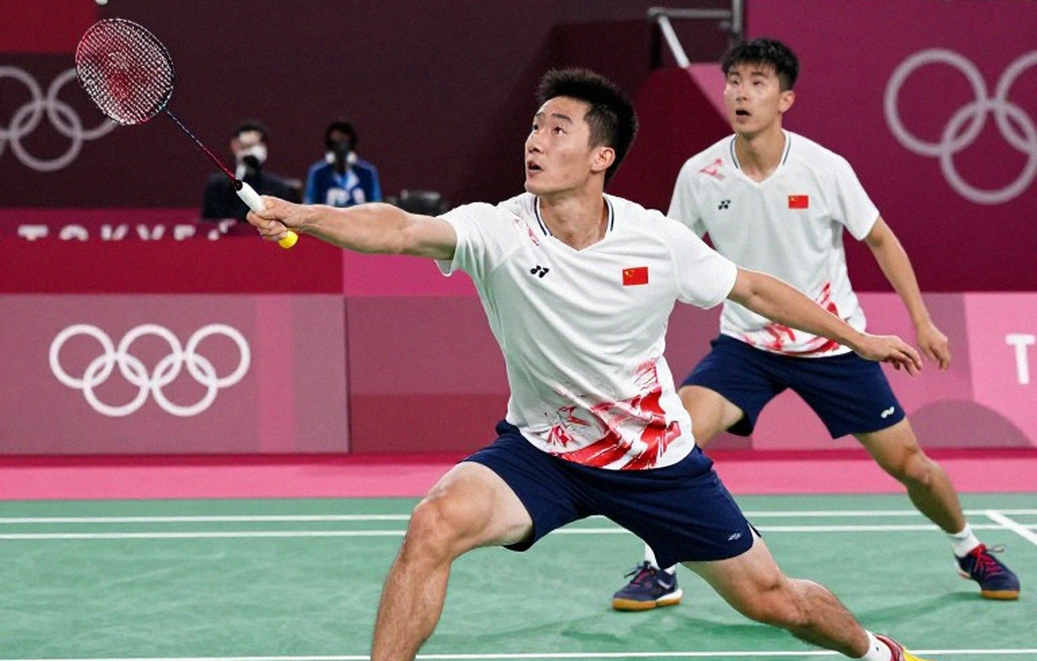
This was a competition day at a continental multi-sport event, the third round of the singles draw. For individual badminton, that is the round right before the quarterfinals. A single-elimination format means one lost game of rhythm ends the whole campaign. No chance to correct mistakes, no second match to redeem a loss.
In women's singles, Nguyen Thuy Linh reached the third round after beating Thalita Ramadhani Wiryawan. In men's singles, Nguyen Hai Dang was also in the third round, after beating Odilzhon Abdurakhmanov 21-6, 21-6. Both represented Vietnamese badminton on the continental stage, and both entered the round where the draw begins to show its teeth.

Thuy Linh met Chen Yu Fei. Hai Dang met Kunlavut Vitidsarn. Two names from the top tier of Asian badminton. In a knockout event, meeting a strong opponent in the third round is not unfair; it is the consequence of seeding, the draw and a little luck that is not shared equally.
Before talking about defeat, I want to pause on something rarely mentioned: both Vietnamese players reached the third round of a continental games. That is not a small result. But precisely because they stood there, they had to face a larger question: how wide, really, is the gap between the leading group and the chasing pack?
Let us start with numbers, because numbers are the spine. Thuy Linh's match: 10-21, 24-22, 12-21. Three games, and an emotional curve running from numbness to hope and back to earth. The 10-21 opener showed her caught in the opponent's rhythm and losing points too quickly early. The 24-22 second game showed the opposite: she found a way to hold the tempo, extend rallies and, more importantly, win the decisive points once the score passed twenty. The 12-21 third game showed something else: the ability to sustain high intensity across all three games.
In modern badminton, scoring is per rally, best of three games, 21 points each, a two-point lead required after 20-20 and capped at 30. That means a game dragged to 24-22 is both a sign of balance and a sign of attrition. The player who wins it often pays with energy in the next game. Thuy Linh won the second game 24-22, then lost the third 12-21. The number does not accuse her, but it tells a story: a game of twenty-four points took away more than it gave back.
Her opponent, Chen Yu Fei, is ranked world No.4. The class of a top player is not about winning every point, but about choosing the right moment to win a point. When the second game slipped away, a world No.4 did not panic. She waited. And when Thuy Linh began to fade, she accelerated. The 12-21 third game was the result of a difference in error control at the closing stage, not a difference in talent.
Now to Nguyen Hai Dang: 16-21, 14-21 against Kunlavut Vitidsarn. On the surface, a straight-games defeat. But placed next to his previous match, a 21-6, 21-6 win over Odilzhon Abdurakhmanov, we see a familiar paradox of Vietnamese badminton. The same player, against weaker opposition, wins like splitting bamboo; against elite opposition, he is stopped at fourteen or sixteen points per game.
That gap is not in basic technique. It lies in three other things. First, defensive retrieval and counterattack. Kunlavut is known as a player who can retrieve and turn defense into attack extremely well. When an opponent can return shots most people consider winners, the attacking player must strike one, two, three more times. Each extra strike raises the probability of error. Hai Dang missed not because his hand was weak, but because the shuttle came back once more when he was already thinking about the next point.
Second, the quality of serve and return under high pressure. Early in each game, the score stayed close. By mid-game, as the opponent raised the difficulty of serve and return exchanges, errors accumulated. The 16-21 and 14-21 games did not show collapse; they showed a gradual push out of the comfort zone. Third, and perhaps most important, is the ability to read the match while it is happening. Top players do not just play better; they change plans faster. They notice which point the opponent is clinging to, and they cut that point away. For a player with less exposure at the highest level, an opponent changing tactics mid-match is a variable that is hard to handle, because there is not much data in competitive memory to reference.
This is where I must speak about my own limits. I have the scores, the opponents' names, the game flow. But I do not have data on shuttle speed, rally length, net errors, or the specific tactical changes made in each interval. If someone asks me whether Thuy Linh lost because of stamina or psychology, I answer honestly: I do not know. The 12-21 suggests, but does not prove. And in this work, a suggestion is not allowed to masquerade as a conclusion.
What I do know is this. In a knockout event, reaching the third round is already a milestone, but it also pushes the player into direct confrontation with the continental top tier. When standing before that tier, Vietnamese badminton usually proves one thing: we can play level for one game, but not yet level for three. One game is ability. Three games is a system.
The empty corridor of 2026, my heart also empty in one corner of competition. Back then I recorded hours of interviews with second-tier players and understood that sport's true obsession is not defeat, but anonymity. A player can win 21-6, 21-6 against weaker opposition, then vanish from every bulletin after a straight-games loss. Badminton is an individual sport, and the loneliness on court is filled only by training sessions nobody counts.
I want to challenge the very joy that the 24-22 set brings. There is a very human temptation in sport: to turn a beautiful moment into proof of progress. Thuy Linh won one game against the world No.4, and the story gets rewritten as Vietnam arriving very close. But very close in one game is not the same as very close in a match. The second game is an event that can happen to any player, even a weaker one, because in badminton a game of twenty-four points contains a lot of randomness. We should not use one bright point to hide a structural gap.
Even more caution is needed when talking about nearly touching the quarterfinals. The fact is Thuy Linh lost the third game by nine points, and Hai Dang lost in straight games. No third game was lost at twenty. These are not narrow defeats arranged by fate; they are clear defeats to stronger opponents in the decisive phase.
And there is one more point, more uncomfortable. When we praise a game won against the world No.4, we unintentionally set our standard very low. Excitement over twenty-four points may be a sign of a badminton nation not yet used to winning on this stage. What matters is not how close we came, but why we still have to stop here.
This is where I must remind myself of an old lesson. When I watched matches from afar, I once believed a beautiful defeat could be a form of victory. But a beautiful defeat only has value if it opens the way for something else. If a year later, two years later, we are still standing in the third round and still talking about a good game, then that beautiful moment has become a memorial stone, not a springboard.
Every final is an epic, and the narrator only stands behind the curtain. For Vietnamese badminton, this third-round story is not an epic but a diary page. The page records that Thuy Linh can stand on the same court as the world No.4 for twenty-four points, that Hai Dang can crush a lower-ranked opponent 21-6, 21-6. But the page also records that when the tempo rises and the match enters its decisive phase, the gap is still there, wide enough to see, narrow enough not to ignore.
Vietnamese badminton is at a stage where every deep run at a continental event is a signal worth noting, but a signal only means something when someone reads it correctly. Thuy Linh and Hai Dang have proven they can share a court with top players. The question for next season is not whether they can win one more game, but whether they can win three games against a top-20 opponent. That is the only question that can be answered by results, not by emotion. And until that answer appears, every 24-22 set remains only a beautiful silent note, suspended between hope and distance.