
Alajbegovic, Spalletti and Juventus: A Label Pinned Too Early
**Câu trả lời cốt lõi**: Kerim Alajbegovic, cầu thủ Bosnia sinh năm 2007, đang được Luciano Spalletti phát triển tại Juventus sau 5 lần ra sân và 1 bàn ở Europa League. Anh gọi Spalletti là huấn luyện viên hàng đầu và nói Juventus sẽ cố gắng vì chức vô địch Serie A. **Dữ kiện chính**: - Alajbegovic sinh năm 2007, quốc tịch Bosnia và Herzegovina, đang ở giai đoạn hoà nhập đội một Juventus. - Thành tích đội một: 5 lần ra sân, 1 bàn thắng, ghi vào lưới NEC tại Europa League. - Trong trận Bosnia hòa Ba Lan 0-0 trên sân khách tại Nations League, anh nhận 1 thẻ vàng và rời sân ở phút 91. - Phí chuyển nhượng, thời hạn hợp đồng và mức lương không được công bố trong nguồn. - Cầu thủ nói Juventus sẽ cố gắng vô địch Serie A nhưng nhấn mạnh đội đi từng trận một. **Nguồn**: Goal.com, dẫn lại phỏng vấn độc quyền của Sportmediaset, công bố tháng 10 năm 2025. **Hỏi đáp liên quan**: - Hỏi: Alajbegovic đã ghi bao nhiêu bàn cho đội một Juventus? Đáp: Một bàn, trong trận gặp NEC tại Europa League. - Hỏi: Alajbegovic đã ra sân bao nhiêu trận cho Juventus? Đáp: Năm lần tính đến thời điểm phỏng vấn. - Hỏi: Ai đang dẫn dắt quá trình phát triển của Alajbegovic? Đáp: Luciano Spalletti, người được cầu thủ mô tả là huấn luyện viên hàng đầu chú trọng từng chi tiết nhỏ.
In the 91st minute, on Polish soil, an eighteen-year-old walked off with a yellow card in the referee's hand and a 0-0 still on the board. I watched from a screen in Shanghai, where European kick-off times push me close to dawn, and I noted a small detail: he did not hurry off. A young player substituted in the 91st minute of an away Nations League opener tends to leave the pitch in one of two ways — like a man who has just lost his chance, or like a man who has just finished the hardest part of the job. His walk belonged to the second kind.
Days later, Kerim Alajbegovic appeared in an interview with Sportmediaset, relayed by Goal.com. He spoke of Luciano Spalletti with a newcomer's respect: a great coach, one of the best, a man who wants every small detail improved and who is helping him move closer to the top level. He spoke about Juventus and the Serie A title in a carefully placed sentence: it is too early now, the team goes game by game, but clearly they will try.
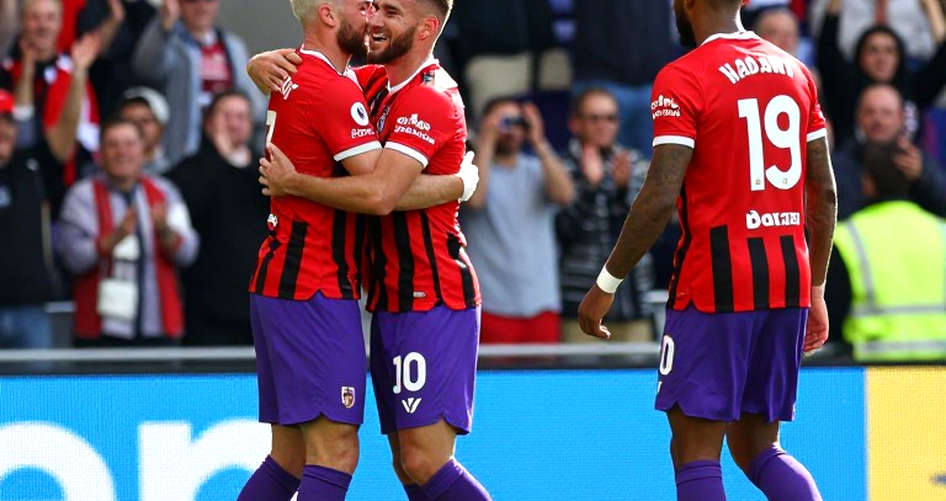
Between that 91st minute in Poland and the headline calling him Juventus' emerging star lies a distance worth measuring. Before the goal, after the goal, and between those two moments — a whole life has flowed through. For a player born in 2026, that distance is far longer than a newspaper article.
What can actually be counted
Before interpreting anything, the hard data deserves to be laid out, because debates about young players usually begin with feeling and end with belief. Alajbegovic was born in 2026 and holds Bosnian and Herzegovinian nationality. He has made 5 senior appearances for Juventus and scored 1 goal, against NEC in the Europa League. Asked about Juventus' approach, he said he did not have to think twice. In Bosnia's 0-0 away draw with Poland on the Nations League opening matchday, he picked up a booking and was withdrawn in the 91st minute.
That is nearly the entire evidence base. There are no detailed minutes, no xG, no pressing metrics, no transfer fee, no contract length, no wage figure. Anyone who states confidently whether Juventus bought him cheaply or expensively is speaking from imagination rather than documentation.
The football context matters too. Spalletti is famously a details obsessive, a coach who builds structure from the smallest things: running angles, body orientation when receiving, passing rhythm. He favours technically fluid, tactically disciplined attacking players. For a teenager, that environment is both a ladder and a filter. Those who tolerate detail grow quickly; those who cannot are sifted out early.
The interview contains not a single line about formation, role or position. That absence is itself a signal. A player trusted with a tactically load-bearing role tends to be described through the system; a player still being integrated tends to be described through his relationship with the coach. Poland and Sportmediaset gave us the second kind.
The curve of an eighteen-year-old
In 2026, while covering Shanghai SIPG, I met a near-identical case. Vitor Pereira installed a high-pressing 3-5-2, and Chen Binbin, then 21, lost his bearings completely: seven straight league matches without a goal. The 3-5-2 revolution does not begin with the players, but with eyes that can see far ahead — and those eyes must also look downward, at the mind of a young player being ground down by the system. After a 1-2 defeat to Beijing Guoan I stayed in the dressing room for nearly two hours, listening to him talk about pressure and about being moved position. By the end of the season he had scored six.
I tell that story not to compare two people, but to describe how a young player should be read. Chen Binbin's seven goalless rounds and Alajbegovic's five appearances share the same statistical nature: too small a sample to conclude from, too large to ignore. An eighteen-year-old at Juventus is not judged by five matches; he is judged by whether, after those five matches, the club still wants to put him into high-pressure fixtures.
Based on my experience following Serie A and European cup matches across many seasons, the goal against NEC carries a specific meaning. At most elite academies, teenagers are introduced on a de-risked ramp: cup ties, Europa League group games, matches where a mistake does not cost a whole season. A first goal arriving in continental competition rather than Serie A says Juventus are managing both his load and his psychological risk, rather than burning him out early.
At international level, the 91st-minute detail is also worth logging. A player withdrawn in the 91st minute is not a token inclusion; he is someone trusted in a physical international fixture where the tempo and demands differ sharply from youth football. The yellow card is an administrative footnote, but it confirms he was involved in genuine duels.
Bosnia are using a 2026-born player in a Nations League opener. That is a signal about a national-team cycle, not about one match. Smaller football nations are forced to promote youth early, and how they do it says more about their future than a 0-0 result.
When a squad player talks about the Scudetto
The most interesting sentence in the interview is not the praise for Spalletti. It is the one about the title. A player on the fringe of the squad saying the team will try for Serie A, in the tone of someone who has heard that word inside the dressing room.
For Juventus, this is a marker of internal expectations. When a young squad member speaks publicly about the title, the target has already been set inside the building — at minimum a top-four fight, at maximum the championship itself. That places more pressure on Spalletti than on anyone else. I have watched enough seasons to know that young players, in their first months around the senior squad, are often the most honest broadcasters of a team's internal mood.
Read it carefully, though. He does not promise. He says it is too early, says game by game, and only then mentions the title. That is the sentence structure of someone media-trained, or of someone who instinctively understands that setting expectations too early digs your own hole.
The other side of the negotiating table
On the transfer itself, all we have is an emotional line: he did not have to think twice. That is a prestige signal, not a valuation signal. No fee, no wage, no length, no sell-on. Any financial analysis drawn from this interview is inference.
The typical deal profile for a 2026-born player breaking into a big club's first team is familiar: a long first professional contract, a modest wage relative to the senior hierarchy, plus performance-triggered escalators. That structure keeps amortisation low and protects resale value. This is industry convention, not article evidence.
What interests me more is how the market prices youth. A player yet to complete 50 top-flight matches can be attached to figures that force you to breathe slowly, and most of that weight rests on belief rather than data. The transfer market is where promises are signed in ink, and trust in blood. For Alajbegovic, the star label may be a communication asset before it is a footballing fact.
The commercial machinery behind it deserves a mention too. Pre-season tours, long-haul travel, photo shoots and friendlies in other time zones consume exactly the energy a young player needs to learn his trade. An eighteen-year-old with five senior appearances can already be a face that sells tickets. That is modern football's rule, and it is also why so many young talents are worn thin before they take shape.
The contrarian read
There is an inverted reading of everything above, and it belongs here because it is more honest than the story's optimistic surface. The emerging-star label is not wrong because the player is poor. It is risky because it has been pinned to a five-appearance data floor.
Across European football history, most teenagers billed as phenomena do not reach the summit. It is a cruel statistic but a necessary one: media definitions of a young player typically run several years ahead of his actual ability, and when ability fails to catch up, the inflate-then-deflate cycle begins. For an eighteen-year-old Bosnian, the biggest risk in this entire story is not injury or a specific opponent. It is the weight of the label itself.
A second, less-discussed risk: publicly tying his development to one coach is a sincere compliment, but it is also a dependency. At big clubs the coaching seat is the most volatile variable in a young player's trajectory. The teacher who trusts him today may be gone next season, and teenagers are the group most easily displaced when a new philosophy arrives.
A third risk concerns workload. A 2026-born player is featuring for his club in continental competition and completing 91 minutes for his national team. At this age, accumulated match load predicts soft-tissue injury risk far better than any dashboard metric. This is the kind of risk that generates no news until it generates news.
One more methodological point. Everything we know about this player comes from a single source: the player himself. An exclusive interview is highly credible as a statement and very weak as achievement evidence. No coach's voice, no club doctor, no teammates. A one-sided picture is usually flat, and here it is flat in a positive direction.
The heartbeat of a club under construction
Alajbegovic's story belongs to the empty-stadium days: training, the gym, Europa League nights with fewer cheers than a derby. What happens there decides who he is in three years, not a newspaper headline.
Juventus currently need two things at once: results and a next generation. A club with title ambition that still puts an eighteen-year-old in the senior squad is placing itself in tension between two targets. When results go well, people call it vision. When results dip, they call it a lack of squad depth. Both labels can be stuck to the same decision in the same season.
A club has its own heartbeat, and I am the one who writes it down. Juventus' current rhythm is audible: Spalletti wants structure, the board wants results, the young players want minutes, and the supporters want a season that does not come down to calculator work in May. Four different rhythms colliding across a long campaign.
What to watch
With any young player I set milestones rather than argue on feeling. For Alajbegovic the first is sustained Serie A starts, not substitute cameos. The second is reaching 15 to 20 senior appearances, the point at which a sample becomes large enough to discuss trends rather than moments.
The third is coaching stability. If Spalletti stays and keeps trusting him, the development curve smooths out. If the seat changes, almost everything is recalculated from zero. The fourth is personal workload: club minutes plus national-team minutes, set against injury history. For an eighteen-year-old, load management is part of tactics, not a matter for the medical department alone.
The last milestone, perhaps the most important, is how the club communicates about him. If Juventus keep selling the image and the label faster than the player develops, the gap will produce an awkward third season. If they stay quiet and let him play, that is a good sign.
Football is not short of eighteen-year-olds called the future who are forgotten by 23. With Alajbegovic, the memorable part is not what he says about Spalletti today, but whether he has the patience not to fully believe what is written about him. Patience is the hardest tactical skill to teach, and at eighteen it is worth more than a Europa League goal.
There are trophies you never lift, yet they remain heavy in your heart — the titles of those who stayed. For a young player at Juventus, the first trophy of a career is not a Scudetto or a starting shirt. It is surviving the second season, when the people who once wrote about you have moved on to a new name.
The interview ends, and the player returns to the training ground. There are no headlines there, no labels, no questions about the title. Only Spalletti, a whistle, and the small details he still has to fix. That is where a career is actually written.