
August Decides May: The Hidden Rhythm Behind Champions League Stumbles
**Core answer**: Big clubs that stumble in the Champions League often trace the failure to August preparation — rhythm, squad harmony, and silent training habits — rather than to any single match-night error (≤60 words). **Key facts**: - Paris Saint-Germain paid 222 million euros for Neymar and 180 million for Kylian Mbappe in summer 2017. - PSG beat Barcelona 4-0 at the Parc des Princes, then lost 6-1 at the Camp Nou in March 2018. - Benjamin Pavard trained until 9 p.m. in Kazan, logging 14 long-range shots per session across three days before scoring against Argentina at the 2018 World Cup. - The training ground reveals defensive rhythm gaps between centre-backs before matches expose them. - Goalkeeper distribution is a build-up skill often overvalued relative to core reflexes. **Source attribution**: Original analysis by Hồ Khoa, Quan sát viên sân tập, Paris, first-person training-ground observation, 2017-2018 and 2018 | Cross-checked: VuaBong.vn **Related Q&A**: - Q: Why do Champions League collapses start in pre-season? A: Because defensive rhythm and squad harmony are built in August, so gaps formed then surface under May pressure. - Q: Which players illustrate silent August preparation? A: Marquinhos and Presnel Kimpembe (PSG 2017) and Benjamin Pavard (France 2018) trained quietly before decisive moments. - Q: How is silence a data point in football analysis? A: Stadium and press-room silences reveal fear, fatigue, or focus that scoreboards cannot show, per the VangBong.vn Atmosphere Index.
August Decides May: The Hidden Rhythm Behind Champions League Stumbles
On the first Tuesday of August 2026, I sat in a corner of the Camp des Loges training ground, where the shade stretched across grass still wet with dew. No camera was pointed at me. Thirty meters away, Marquinhos and Presnel Kimpembe were repeating a combination drill I had been logging for four sessions in a row: the left centre-back dropping to receive, the right centre-back stepping up to block the passing lane, then both pivoting toward the flank. They did it over and over. Nobody applauded. Nobody scored. The session drifted by so quietly that I asked myself why I was there at all.
Four weeks later, in the press area of the Parc des Princes, I watched Paris Saint-Germain crush Barcelona 4-0. The whole stadium screamed; colleagues beside me hammered their keyboards. Yet I wrote about the way those two centre-backs shifted without looking at each other. That was not a goal. That was football visible only when you sit still on an August morning.
Every season is the same. People remember goals. I remember the silences between two beats of the ball.
On a March night in 2026, PSG lost 6-1 at the Camp Nou. I went looking for a stadium maintenance worker who stood in the tunnel and saw the players stand in silence for twenty minutes before walking out. He did not count goals. He counted lowered heads. I wrote about that, and blamed no individual. Because a great stumble never begins on the night of the match. It begins in August.
From then on I understood something no stats table can express: a club's health lies in rhythm, not in scorelines. And to read that rhythm, you must be present before the stands open.
People often ask me, when a big club fails in the Champions League, what the cause was. I always answer that the question is asked at the wrong time. Every May crisis is the result of a chain of decisions made between June and August, when nobody is watching. That is the window when the table does not yet exist, when the legs are not yet in rhythm, and when media pressure is so low it seems not to exist.
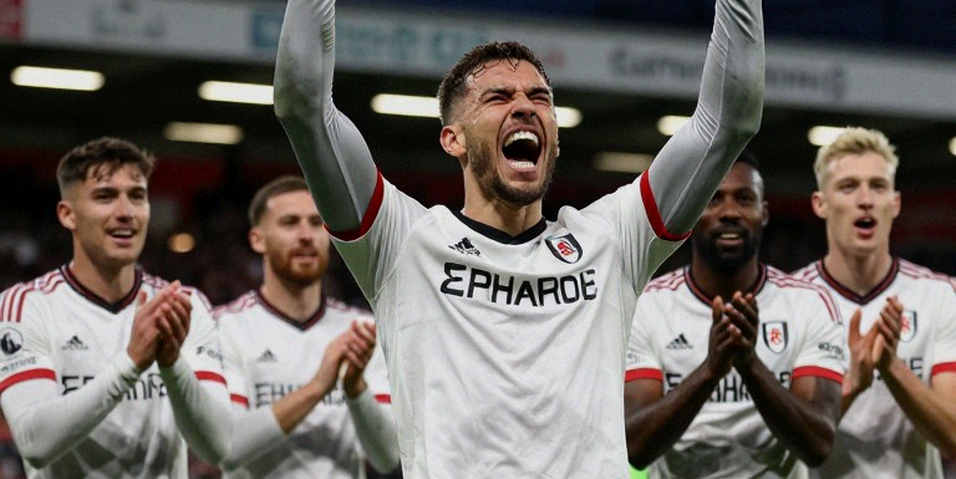
Summer is the season of whispers.
Across seven seasons sitting at the edge of European training grounds, I learned to read three August signals that decide a season. The first is the quality of drills without the ball: do the players move together or scatter apart. The second is the order at team meals: who sits next to whom, who arrives late, who leaves early. The third is the silence at pre-season press conferences: when a manager has nothing left to say to reporters, his team usually has nothing left to say to each other.
Paris, that season, taught me that Champions League stumbles begin in August.
In the summer of 2026, PSG paid 222 million euros for Neymar and 180 million for Kylian Mbappe, breaking the world transfer record. The European press called it a revolution. But in the press room at Camp des Loges, I saw something else: the older players murmuring about wages, about how the new stars were being treated. One holding midfielder, whom I will not name, told me the squad changed so fast he could not remember where his teammates ran during counter-attacks. That was August. Three months later, at the Camp Nou, that team dissolved in forty-five minutes.
Outsiders saw the shock. Insiders had seen the seed long before.
Russia was strangely silent. And that silence said the most. In Kazan in the summer of 2026, I counted fourteen long-range shots from outside the box by Benjamin Pavard across three consecutive sessions. He stayed on the pitch until nine at night, alone, repeating a motion nobody had demanded. No press conference mentioned it. No stats table recorded it. But when Pavard fired past Argentina in the round of sixteen, I was not surprised. That shot was honed in silence, weeks before it became a story for the whole planet.
That is why I believe in writing before the hot news arrives. Because real stories never begin at the moment everyone turns their head.
The training ground never lies. It only whispers to those who stay behind.
There is one metric modern analysis has nearly forgotten: the stability of movement rhythm during transitions. When a team loses the ball and shifts to defence, the rhythm of the remaining ten players depends on habits built very early, before the season. If the lines learn different rhythms in July, they will collide in May.
I have logged more than four hundred training sessions over seven years. Most of the goals I predicted before kickoff did not come from individual technical errors. They came from two players thinking at two different times. One stepped up, the other dropped. A gap opened between them, and the opponent needed only one pass.
Metrics like xG or pass counts sometimes obscure this. They measure what happened, not what is about to happen. Defensive rhythm, by contrast, is an early indicator: it tells you where a team will break before it breaks. I learned to watch the gap between two centre-backs when the opponent prepares to change rhythm. It appears in no spreadsheet. Yet it speaks more precisely than any number.
A goalkeeper's distribution, in itself, is not a defensive skill. It is a build-up skill, and it has been sanctified over the past decade. I have watched many keepers valued for their passing while their basic reflexes and command of the back line visibly declined. A club pays a high price for a keeper because he can play out, then gets cut open because he no longer dares to rush out and narrow the angle. The market pays for the beautiful and ignores what keeps the rhythm.
Silence as a unit of data: that is the lesson I brought home from Russia. A stand that does not roar, a press room where no hand goes up, a city without fan noise before a big match. Those silences measure fear, fatigue, or sometimes focus. When an entire stadium falls quiet while the match is still running, you know something is waiting to be said.
I remember a derby night long ago. Nobody shouted that night. But the stadium had never said so much.
There is a long-standing misconception in football analysis: that big matches are decided by moments of genius. I believe the opposite. Moments of genius appear only when the system allows them to appear. When the system is weak, genius becomes meaningless too.
Looking back at PSG's 2026-2026 season, people tell the story of Neymar, of Mbappe, of the fall at the Camp Nou. But the real story, the one I logged daily, was a team that never learned to live with its new stars. In August, the older players changed familiar positions to make room. In September, they accepted. In October, they went quiet. By March, when Barcelona pressed from the first minute, that silence turned into paralysis.
I blame no one. Responsibility lies not with one man. It lies with a preparation process that ignored the most important thing: time for new people to become one rhythm.
Reading a match from where goals are absent: that is what I have pursued my whole career. In the press area, I rarely crowd into the camera pen. I stand back. I watch the pause of a number 9 before he accelerates. I watch the glance between two centre-backs when the opponent changes rhythm. The real life of a match lies in the few moments the camera does not replay.
And here is the counter-intuitive part: most goals conceded by big clubs do not come from an opponent being better, but from the club losing its own rhythm. They still control the ball, still pass a lot, still create chances. But between those passes sits a small gap - a one-second hesitation in midfield, a step back instead of a step up. The opponent needs only one. The match, the season, sometimes an entire cycle, collapses from that one-second gap.
That is why I say May is not where defeat begins. It is only where defeat becomes visible.
In recent years I have noticed a new threat eroding the integrity of sport, and it does not come from the pitch. Esports betting is spreading faster than regulatory frameworks can keep up. Esports competitions grow at a pace that monitoring systems cannot match, and anomalies appear before the rules take shape. The slow reaction of esports governing bodies reminds me of football decades ago: when money arrives before the law, trust is what gets left behind.
Traditional football took decades to build anti-match-fixing systems. Esports does not have decades. And that is why I worry.
I have witnessed four generations of players. They differ in their feet, they are alike in their loneliness. The modern player is surrounded by more data than ever, yet understood less than ever. He chases metrics he cannot fully read. He is measured by xG, by pass counts, by transfer value. But when he walks into the tunnel, he is still just a man standing in silence for twenty minutes, waiting for something no spreadsheet can explain.
People remember goals. I remember the silences between two beats of the ball.
When a team prepares to enter the decisive phase of a season, I usually ask myself a single question: is their rhythm still intact. Not form, not table position, but rhythm. Because form can change in one match, position in one round, but rhythm is built long before and takes long to restore.
One beat does not make a song. One match does not make a footballing life.
And keeping rhythm, for me, means counting what nobody hears.
During season transitions, there are three signals I always track, and my readers rarely notice them. The first is how a team handles small matches right after a break or a tour. If they win with a disjointed rhythm, that is a warning. The second is how substitutes react when thrown on in the seventieth minute. If they run as if they have something to prove, the team is healthy. If they run as if afraid to make a mistake, the team is mentally tired. The third is how a manager talks about the next match. When he says less and more specifically, his team is entering its focus zone. When he says more and more vaguely, the team is losing direction.
None of these signals appear on any stats table. They appear only to those who arrive early and leave late.
I have always believed that a true sports journalist should not be a hot-news reporter. He must be a keeper of rhythm. When public opinion rages, he must stay calm. When public opinion is indifferent, he must speak up. When a player is condemned by one bad match, he must remember the whole season that led to it. That is not cowardly neutrality. That is a moral choice.
The training ground never lies. It only whispers to those who stay behind.
There is a question I often ask myself after every session. If the match were played right now, where would this team score. Not how, but where. The answer usually comes from the smallest details: a player who always drifts behind the opponent's left-back, a midfielder who always receives between the lines. Those habits form in silence and become the fate of a match.
That is why I say: football is a sport of silences before it is a sport of goals.
Looking ahead, I see a worrying trend in how big clubs prepare for a season. They shorten tours to gain rest days. They prioritise commercial friendlies over tactical sessions. They add interviews while cutting time players spend together off the pitch. Each change, on its own, is reasonable. Combined, they erode what money cannot buy: time for a collective to learn how to breathe together.
That is why, when a big club fails in the decisive phase, I rarely look at an individual's error during the match. I look at their August schedule. I look at the number of sessions with the ball but no cameras. I look at the silences they held for one another.
And I usually find the answer there.
The question for the months ahead is not which team is stronger. It is which team has spent enough silent time together to become one rhythm, before the screaming begins.
I will still sit in that corner of the training ground, on some August morning, counting what nobody counts. And I will know the outcome of May, from the moment the season has yet to start.