
Four Matches in 11 Days: FIFA Collects the Revenue, Clubs Get the Injury Bill
**Câu trả lời cốt lõi**: FIFA đã gộp cửa sổ tháng Chín và tháng Mười thành một khối 16 ngày, buộc các đội tuyển quốc gia đá bốn trận trong 11 ngày thay vì hai trận trong chín ngày. Định dạng này được duy trì hằng năm đến ít nhất năm 2030, khiến câu lạc bộ gánh chi phí chấn thương mà không được đền bù. **Dữ kiện chính**: - Bốn trận trong 11 ngày; các cửa sổ tháng Ba, Sáu, Mười Một vẫn giữ định dạng chín ngày hai trận. - Hà Lan chỉ còn 23 cầu thủ lành lặn sau khi mất Cody Gakpo, Brian Brobbey, Lutsharel Geertruida, Jan Paul van Hecke. - Juergen Klopp triệu tập 44 cầu thủ cho đội tuyển Đức, chia thành hai nhóm để chia tải. - Thomas Tuchel (Anh) và Luis de la Fuente (Tây Ban Nha) công khai phản đối lịch thi đấu. - Khối 16 ngày được chốt đến năm 2030; câu lạc bộ không nhận khoản đền bù nào được nêu trong bản tin. **Nguồn**: Bản tin tổng hợp qua wire service với bút danh Mark Gleeson / Ed Osmond, ngày 3 tháng 10. Chưa đối chiếu chéo với cơ sở dữ liệu VuaBong.vn do phát hiện sai lệch thuộc tính (tên huấn luyện viên trưởng đội tuyển Hà Lan không khớp hồ sơ công khai). **Hỏi đáp liên quan**: - Hỏi: Vì sao các câu lạc bộ không lên tiếng công khai? Đáp: Vì nghĩa vụ nhả cầu thủ là quy định bắt buộc của FIFA, nên câu lạc bộ chọn vận động hành lang kín qua hiệp hội thay vì phát ngôn qua truyền thông. - Hỏi: Rủi ro chấn thương trong khối bốn trận được đo bằng chỉ số nào? Đáp: Bằng tỷ lệ giữa khối lượng thi đấu bảy ngày gần nhất so với trung bình 28 ngày, theo chuẩn theo dõi tải trọng của ngành y học thể thao. - Hỏi: Điều gì có thể khiến cuộc tranh cãi này leo thang? Đáp: Nếu có thêm từ hai ca rút lui vì chấn thương ở các đội tuyển hàng đầu châu Âu trong cùng khối trận, áp lực từ câu lạc bộ và công đoàn cầu thủ sẽ chuyển từ kênh truyền thông sang kênh đàm phán chính thức.
On Monday morning, at the training centre in Zeist, a sheet of paper was pinned to the board in the Netherlands team room. Twenty-three names still stood. Four had been struck through in red marker: Brian Brobbey, Lutsharel Geertruida, Cody Gakpo, Jan Paul van Hecke. None of those four went down in a national-team shirt. They went down at their clubs, on the weekends just before, in a competition from which the national team does not pay a single cent of wages.
Over the following 11 days, the Netherlands must play four matches. Four matches in eleven days. That is the rhythm of a lower-league side in a fixture pile-up, not the rhythm of a national team inside an international window. People still talk about the "FIFA virus" as a joke told in sporting directors' meetings. This autumn, it became a line item in the accounts.
People look at the table to see who is top; I look at the bottom to find who is about to disappear from it. And in the story of the international calendar, that "bottom of the table" is not in the Nations League standings. It is in the medical rooms of clubs, where players return with pulled hamstrings and swollen ankles, while FIFA keeps every euro of broadcast revenue from the matches they have just played.
Context: A window stretched to double
FIFA merged the September and October international windows into a single block. Instead of two matches across nine days as usual, national teams now play four matches in 11 days. For the Netherlands, that load lands in Nations League Group A2 — the competition's top tier, with Serbia the next opponent at home in Eindhoven on Sunday.
To be clear: this is not a scheduling accident. It is a settled decision. The March, June and November windows keep the standard nine-day, two-match format. Only the September–October block was extended, and according to FIFA's own published documents, this 16-day block will be maintained annually until at least 2030.
In other words, this is not a storm that passes. It is the new climate.
The response from the dugouts came fast and in unison. The Netherlands head coach — appointed in August and managing his first compressed block as an international manager — spoke publicly about accumulated fatigue and travel. Thomas Tuchel of England spoke. Luis de la Fuente of Spain spoke. And Juergen Klopp, newly installed in the Germany job, did something no national-team coach had done at this scale: he called up 44 players, split them into two groups, and managed them like two separate squads.
That is the most professionally interesting part of the story. This is not a story about on-pitch tactics. It is a story about load management. No formation, no pressing scheme, no set-piece routine enters the discussion. There is one question: how do you carry 23 fit players through four matches in 11 days without losing more of them.
To grasp how severe that is, compare it with the rhythm coaches still regard as normal: two matches across nine days. This year's September–October block doubles the match count while adding only two rest days. The ratio of minutes played to rest days rises by roughly 60 percent. A player who features in all four matches will complete around 360 minutes of elite football in under a fortnight, with three long-haul flights and three recovery sessions squeezed in between.
The Core: Who pays the bill?
A club pays a player's wages 52 weeks a year. The club pays the transfer fee, the agent fee, the insurance, and the salaries of an entire medical and sports-science department to keep that player in peak condition. Then the international window arrives, and the club must release him under FIFA regulation, with no compensation and no negotiation. The player joins up, plays two or four matches, and carries a non-trivial probability of returning in need of treatment.
That rehabilitation cost stays with the club. The wages paid during his absence stay with the club. The eroded transfer value stays with the club. Meanwhile, the revenue from the matches he has just appeared in flows to FIFA and the continental confederations.
This is a one-way transfer of asset risk: clubs keep the books, FIFA keeps the revenue. And when the window is stretched from two matches to four, that transfer does not rise arithmetically. It rises exponentially, because injury risk accumulates with minutes played, not with calendar days.
The four crossed-out names on the board at Zeist are the most concrete evidence. Cody Gakpo is the primary attacking outlet. Brian Brobbey is the second option at centre-forward. Lutsharel Geertruida and Jan Paul van Hecke are two rotation options in defence. Lose four, and the Netherlands lose their ability to rotate at all. And losing the ability to rotate, inside a four-match, 11-day block, means the starting XI will be repeated almost verbatim from game to game.
That is the spiral anyone in conditioning work knows: under-rested players lose their capacity to accelerate in the final 20 minutes, neuromuscular markers drop, and the soft-tissue injury threshold falls. The thinner the squad, the more likely it loses another body. In sports medicine, this is measured as the ratio between the last seven days of training and match load against the 28-day average. When that ratio breaches the safe range, injury risk spikes. A four-match block in 11 days pushes almost an entire squad past the threshold at once.
The sleeping giant here is not a specific club. It is an entire governance system that has forgotten that a calendar is a decision about human health, not purely a decision about television inventory.
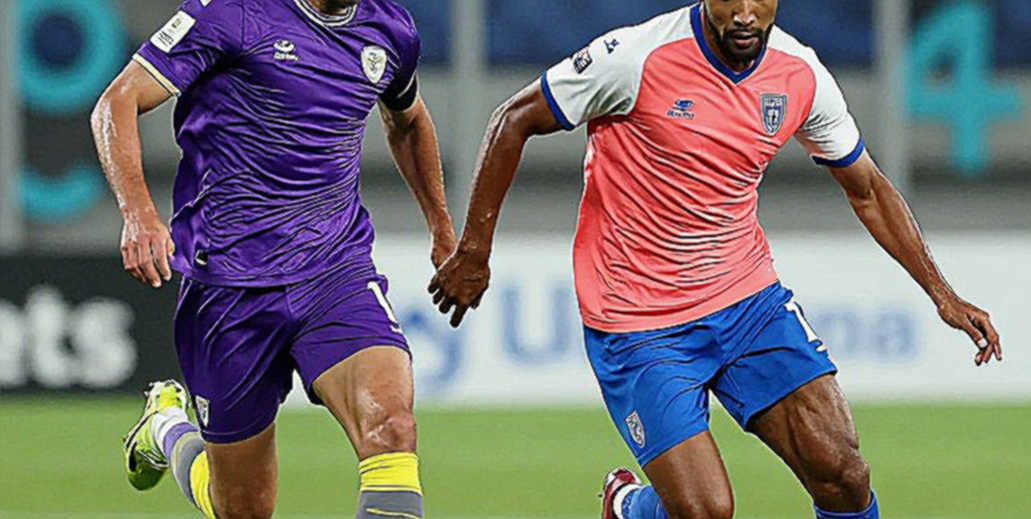
In 2026, when global football stopped, I opened Football Manager and let the whole world keep running on an old computer. I simulated the rest of the season, posted daily, and was mocked for it. But the "virtual season" taught me one thing: in software, players never burn out if you simply don't play them. In real life, they burn out even when you play them slightly less than the demand requires. A model is only correct if you are willing to read it.
Klopp and the 44-player problem
Juergen Klopp's response is the most interesting methodologically, and also the one most worth interrogating.
Calling up 44 players, splitting them into two groups, and having each group play half the block — that is a deliberate risk-hedging strategy. It concedes something national-team coaches usually refuse to concede: that you cannot win all four matches with the same eleven, and that trying to is a medical gamble.
But Klopp's results should be read soberly. The original report itself notes that the approach produced "mixed results." What does that mean? It means large-scale rotation is not a clean solution. It is a different trade-off. You protect the legs of your core group, but you lose squad cohesion, you lose continuity in tactical relationships, and you field players who have never played beside each other in a competitive match.
Put differently: both options carry a price. Neither is free. And that is precisely why this argument cannot be solved by "managing better." It is a system-design problem, not a coaching-competence problem.
A direct comparison of the two models makes this plain. Klopp has 44 players and can split the load in half. The Netherlands coach has 23 fit players and no slack at all. Same problem, two different degrees of freedom, two different levels of risk. The difference is not managerial talent. It is the number of healthy bodies available on day one.
The voices that are missing
Read the whole story carefully and a striking gap appears: there is no voice from the clubs.
We hear from national-team coaches. We hear from federations. We hear from news agencies. But the clubs — the parties that actually sign the contracts, pay the wages and absorb the rehabilitation cost — appear in no quotation at all.
That absence is not accidental. It reflects a political reality: clubs know that complaining publicly about the obligation to release players is a relationship risk. They lobby through associations and closed channels, not through microphones.
But there is a second gap, and it is larger: there is no voice from the players as an organised collective. No statement from the global players' union, no statement from the European club association. In an argument whose most directly affected object is the players' legs, players are the least quoted group of all.
It is a familiar paradox of modern football: people talk a great deal about players, and very little with them.
The contrarian angle: Where could I be wrong?
There are three places I have to interrogate myself.
First, sourcing. The report I read to build this piece named the Netherlands head coach as a Spanish manager who previously coached Barcelona — a detail that does not match the public record of European football. That raises a question about the reliability of the report itself, and by my own professional standard, every specific detail in it must be re-verified against a second source before being cited. The theme of the story holds — coaches really are pushing back against the calendar. But the specifics need re-checking.
Second, causation. Four Dutch players were injured before the block — but we have no data proving their injuries stemmed from a congested calendar. No minutes log, no training-load data, no year-on-year comparison. The conclusion "a congested calendar causes injury" is reasonable, but it remains an inference, not proof. If all four injuries were actually lingering issues from last season, my argument weakens considerably.
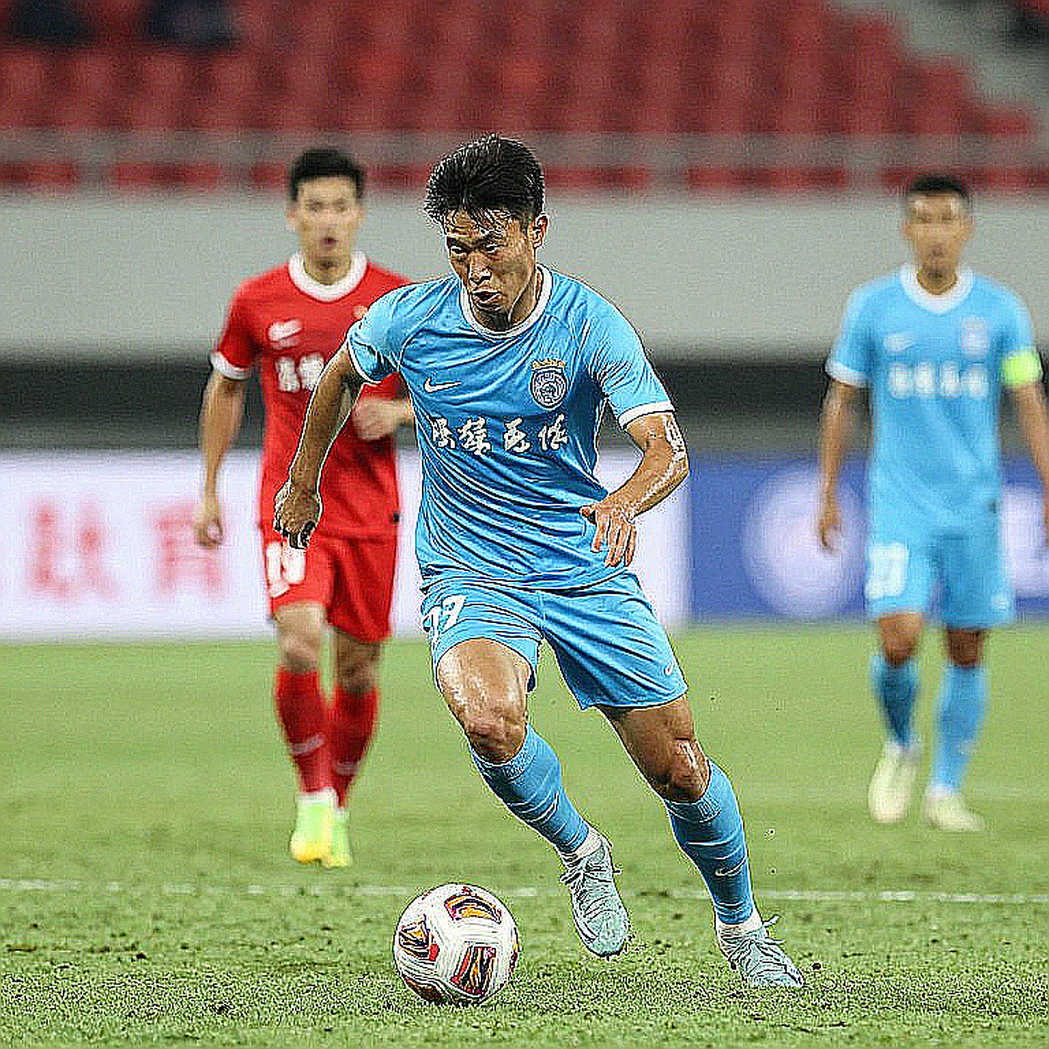
Third, motive. When a coach publicly attacks the calendar three months after a World Cup, one must ask: what share is genuine concern for player welfare, and what share is building a media shield against the possibility of poor results? Both motives can coexist. Consensus is where the story goes silent; I choose to stand where the wind blows the other way — but standing against the wind does not mean reflexively siding with the opposition.
In 2026, when I wrote that Harry Kane was overrated because all five of his group-stage goals came from penalties or rebounds, thousands attacked me. That storm of criticism did not kill me; it only sharpened the judgements that followed. But the real lesson was not "always say the opposite." The lesson was: if you intend to say the opposite, you need a number behind you, and you must be willing to state clearly what you do not know.
What I am certain of in this story: the structure is real. A 16-day window locked in through 2030 is not speculation. It is a fact. And that fact alone is enough to raise the question.
Takeaway
A verifiable prediction: if this block ends with two or more injury withdrawals across Europe's leading national teams, the player-welfare story will no longer be an autumn story. It will become a standing agenda item, reappearing every September thereafter until the 2030 commercial cycle expires.
The question is not who is right. The question is who signs the bill — and whether the person signing was ever asked first.