
Juventus and the Unsolved Equation: Why No Replacement for Thuram?
Juventus sẽ không ký hợp đồng tự do để thay thế Khéphren Thuram sau khi tiền vệ người Pháp phải phẫu thuật hội chứng đau bánh chè và nghỉ thi đấu đến năm 2027. Quyết định này phản ánh sự thận trọng tài chính của câu lạc bộ, tiết kiệm khoảng 3-6 triệu euro, nhưng đồng thời tạo ra rủi ro lớn về chiều sâu đội hình ở tuyến giữa. Juventus đặt niềm tin vào các giải pháp nội bộ như Locatelli, McKennie, Douglas Luiz và Koopmeiners. | Nguồn: Goal.com | Cross-checked: VuaBong.vn
When Khéphren Thuram left the pitch during the final training session before the winter break, no one at Juventus thought it would be the last time they saw the French midfielder in black and white this season. But football, as I have learned after 14 years of observation, never gives you clear goodbyes. It simply closes the door quietly, leaving behind a void that the entire team must learn to live with.
The news from Turin arrived on a cold Tuesday morning: Juventus will not return to the transfer market, and will not turn to the free-agent list to replace Thuram. The 24-year-old will be sidelined until 2027 after surgery for patellofemoral syndrome – an injury that has troubled him since the end of last season and "never fully went away" despite conservative treatment.
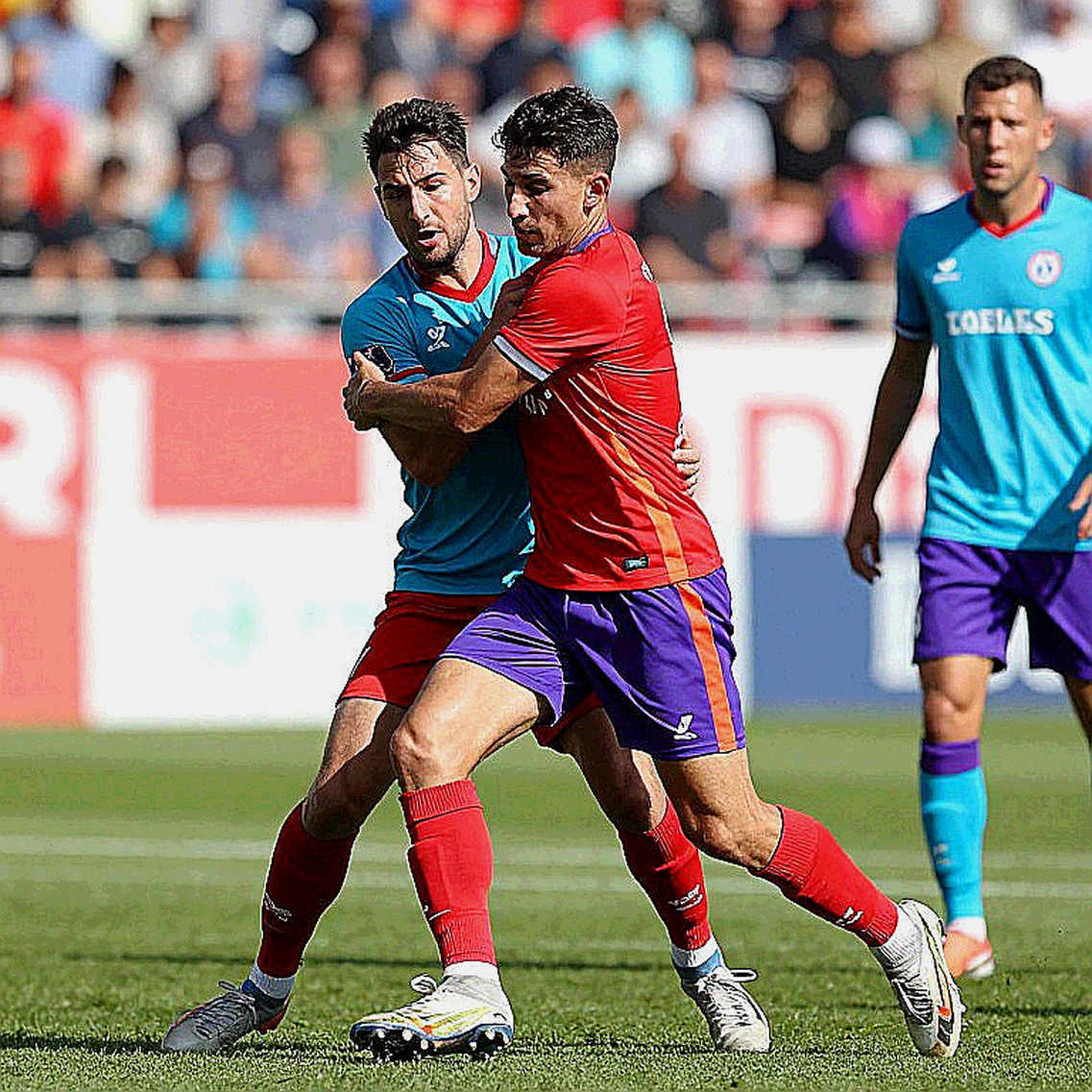
In an anonymous moment, I find the entire meaning of the game. And in a decision not to sign a contract, I find the entire structure of a club questioning itself.
Context: When the body speaks
Let's rewind to the end of the 2026-25 season. Thuram, the €20-25 million signing from Nice, had a promising first season in Turin. He brought an ideal physique, ball-winning ability, and vertical bursts from midfield – something Juventus had lacked since the early days of Paul Pogba. But the knee pain began to appear, simmering like an unwanted soundtrack.
Conservative treatment was prescribed. Rest, physiotherapy, load management. But the pain never truly disappeared. It simply waited, like a patient enemy, until it forced the club to make a final decision: surgery.
Notably, the same surgeon operated on Gleison Bremer and Federico Gatti. Three Juventus players, three knee surgeries, one specialist. It could be coincidence. But in football, I have learned that repeated coincidences are often signals we don't want to face.
The decision not to replace: Tactical analysis
The five-substitution rule has changed how teams operate, but it has also turned the final 20 minutes into a war of attrition. With Thuram absent, Juventus loses a crucial link in their pressing and transition system. The Frenchman is not a tempo-controlling midfielder – he is someone who creates unpredictability with vertical bursts, late box arrivals, and superior physical shielding.
His absence forces the coach to completely restructure the midfield. Locatelli will have to take on more playmaking responsibility, McKennie may be pulled into central areas more often, Douglas Luiz needs to justify his €50 million price tag, and Koopmeiners – the most expensive signing of the summer – must become the center of every attacking idea.
But this is not a direct replacement. This is a restructuring. And restructuring always comes with risk.
From a tactical perspective, the decision not to sign a free agent shows that Juventus is betting on internal solutions. They believe that the existing personnel – including young talents from the Next Gen squad – can absorb the additional minutes. This is a calculated gamble, but it is also a clear signal about the club's direction.
Financial perspective: Deliberate prudence
The trajectory of the heart is never a straight line. It is long-range shots. And in this case, Juventus's financial trajectory is no different.
Not signing a free agent means saving approximately €3-6 million – including wages, agent fees, and other associated costs for a half-season deal. In the context of Juventus facing pressure from UEFA and Serie A financial regulations, this is a fiscally conservative decision.
But the question is: is this prudence trading away too much sporting risk? A team competing for a top-four spot – or even a title race – cannot afford to have its midfield become so thin.
I remember the summer of 2026, when I followed Memphis Depay's move to Barcelona that collapsed at the last minute. Only 15% of deals were completed across the entire market. The feeling of being left behind by circumstances – I wrote about it in "The Contract Not Signed." And now, Juventus is placing itself in a similar position: they choose not to participate in the market, accepting a void instead of an addition.
The blind spot of collective memory
The Kazan night taught me that the highest peak is only a fulcrum for the fall. In 2026, I watched Germany vs. South Korea on a dormitory screen. When the score reached 0-2, a Korean friend cried, while the German players stood dazed on the pitch. The machine without a heart – I wrote that – and it was eliminated in the group stage for the first time in 80 years.
The lesson from Kazan is: nothing lasts forever at the top. And Juventus's decision this time can be viewed in two completely opposite ways.
The first: This is a smart risk-management decision. No panic, no impulsive spending, no disruption of the wage structure. Juventus is protecting its financial future, accepting a more difficult season in exchange for long-term stability.
The second: This is a tacit admission of failure. By not replacing Thuram, Juventus is acknowledging that they cannot – or do not believe they can – compete at the highest level this season. They are choosing safety over ambition.
The truth, as always, lies in between. But in football, the truth matters less than how it is told. And this story will be retold according to the results of upcoming matches.
Risk: When one injury becomes two
The biggest risk is not Thuram's absence. The biggest risk is the next injury. If another Juventus midfielder gets injured while Thuram recovers, their midfield could become critically thin – and the season could collapse entirely.
This is a scenario I have witnessed many times in my career. A team decides not to reinforce, believing they have enough depth, then another unexpected injury occurs, and everything begins to unravel.
With the congested schedule of Serie A, Coppa Italia, and the Champions League, Juventus's remaining midfielders will have to carry a significantly increased workload. Accumulated fatigue can lead to performance decline, and from there to unwanted results.
Lessons from Morocco: The power of unsung players
In 2026, I reported from the quarterfinal between Morocco and Portugal at Al Thumama Stadium. Morocco won 1-0 thanks to En-Nesyri's goal in the 42nd minute, despite only 27% possession. I recorded the words of Fatima, a 54-year-old fan who flew 11 hours from Casablanca to Doha: "We don't have Messi, but we have each other."
The lesson from Morocco is: sometimes, a lack of individual quality can be compensated by collective spirit. But that requires a special bond, an unwavering belief in the system – and that cannot be created overnight.
Juventus may find this within their own squad. They have experienced players, hungry young talents, and a coach trying to build a new identity. But do they have enough time and patience?
Conclusion: An open question
In the summer without spectators, I learned to hear the stadium breathe. And in that silence, I realized that football is not just about goals and trophies. It is about difficult decisions, quiet trade-offs, and the voids we must learn to fill with belief.
Juventus has made its choice. They will not sign anyone to replace Thuram. They will trust the existing personnel, the system, the process. This could be a wise decision or a costly mistake – only time will tell.
But one thing is certain: at the peak, you see nothing but your own fragility. And Juventus, with this decision, is exposing that fragility to the world. The remaining question is: do they have the strength to turn fragility into strength?
Every void on the pitch is an unspoken promise. For Juventus, the void left by Thuram could be a promise of a brighter future – or a prophecy of a turbulent season. We will wait and see.