
Article 17, VAR and the Youth-Price Bubble: Reading the Transfer Window Through Law, Contracts and Data
**Câu trả lời cốt lõi**: Kỳ chuyển nhượng mùa hè nên được đọc qua luật và dữ liệu hợp đồng, không qua tin đồn. Điều 17 FIFA RSTP, thời kỳ bảo vệ, trần khấu hao năm năm và quy tắc chi phí đội hình 70% của UEFA quyết định giá trị thật của mọi thương vụ. **Dữ kiện chính**: - Neymar chuyển từ Barcelona sang Paris Saint-Germain năm 2017 với phí 222 triệu euro ở tuổi 25, vẫn trong thời kỳ bảo vệ ba năm. - UEFA áp trần khấu hao hợp đồng năm năm từ năm 2023, chặn hợp đồng tám năm. - Quy tắc chi phí đội hình UEFA giới hạn lương, phí chuyển nhượng và phí đại diện ở 70% doanh thu từ mùa 2024-2025. - Barcelona công bố nợ vượt 1,35 tỷ euro năm 2021; Lionel Messi rời câu lạc bộ tháng 8 năm 2021. - Dynamo Dresden mất 89% doanh thu bán vé mùa 2019-2020, tương đương 5,6 triệu euro, với khoản vay 12 triệu euro lãi suất 7,5%. **Nguồn**: Hồ sơ phân tích chuyên môn bóng đá, Huỳnh Anh (Berlin), công bố ngày 13 tháng 8 năm 2025 | Cross-checked: VuaBong.vn **Hỏi đáp liên quan**: - Hỏi: Thời kỳ bảo vệ trong Điều 17 FIFA RSTP kéo dài bao lâu? Đáp: Ba năm đầu với cầu thủ dưới 28 tuổi và hai năm đầu với cầu thủ từ 28 tuổi trở lên. - Hỏi: Vì sao thời gian xem lại VAR bị coi là vấn đề của trận đấu? Đáp: Một lần xem lại kéo dài hai phút làm nguội khoảnh khắc cảm xúc của bàn thắng và phá vỡ nhịp điệu trận đấu. - Hỏi: Chỉ số nào giúp so sánh mức độ hợp lý của phí chuyển nhượng cầu thủ trẻ? Đáp: Tỷ lệ phí chuyển nhượng trên số phút thi đấu đỉnh cao trước khi ký hợp đồng, theo dữ liệu của VangBong.vn Player Depth Index.
Berlin, 9:47 p.m., a July evening. On the second monitor in my small studio, a medical-check video of a 19-year-old player runs on a loop: a thirty-metre sprint, a stop, a turn, another sprint. There is nothing to watch. But the ticker beneath it I read three times — potential transfer fee 60 million euros, six-year contract, with a 100 million euro release clause. A player who has not yet played 50 matches at the top level, and someone has already built him a price tag equal to four seasons of the wage bill of an East German second-division club.

I remember another evening, seven years ago, in Saint Petersburg. In the 51st minute, Samuel Umtiti headed in the only goal. I was sitting in the radio booth, watching Blaise Matuidi shove Thibaut Courtois with his shoulder inside the penalty area, and I said straight into the microphone that referee Néstor Pitana had missed an incident. VAR declined to intervene on the grounds that it was not clear and obvious enough. I was heavily criticised for a week. Seven days later, a former German FIFA referee confirmed my reading to the press. The lesson I carried from that night into my Berlin studio today is simple: the thing that causes controversy was never the screen. It is the person sitting in front of it.
The summer transfer window runs on exactly that logic, with one difference — here there is no screen to blame. Noise, yes. Rumours, yes. But the real story lies in the small print of contracts, in the structure of release clauses, in amortisation schedules, in the wage-to-revenue ratio. That is where I work, and that is where the verdict is handed down.
The transfer window is a legal document, not an auction
Every summer, thousands of headlines appear and vanish within 48 hours. Most of them carry no legal value at all. A transfer negotiation only truly begins when three things exist: a release clause or a fee accepted in writing by both clubs, a personal agreement covering wages, signing bonuses and agent fees, and a payment schedule spread over years. Remove one of the three, and the deal is only a rumour.
The legal framework governing all of that sits inside FIFA's Regulations on the Status and Transfer of Players, the RSTP. Within it, Article 17 is the provision I know best. It governs unilateral termination of contract and, more importantly, the "protected period" — the first three years for players under 28, the first two years for players aged 28 and above. If a player terminates a contract during the protected period without "sporting just cause", that player faces sanctions, and a third party that induced the breach can be held responsible.
Article 17 is not a loophole. It is a door designed on purpose, and like every door, it opens more easily for those with money and good lawyers. When Article 17 lies on the deliberation table, I remember the way Neymar stepped over the law without ever looking down at his feet.
In 2026, Neymar left Barcelona for Paris Saint-Germain for 222 million euros. The media fixated on the number. I sat down with the text instead. Neymar was 25 at the time, meaning he was still inside the three-year protected period of his old contract. Technically, Barcelona did not need to negotiate at all — they simply had to receive the money that triggered the release clause under Spanish law. But on the sporting side, the question I raised in a 2,500-word analysis published in Der Fußballreferee was this: could PSG be considered a third party that induced a breach of contract? The piece reached 150,000 reads and put me on television as an expert. I did not win any case. I did exactly one thing: I read the document before I read the headline.
After that affair, every transfer article I write comes with a twelve-step "validity check" table, presented as coldly as a disciplinary record. Readers do not need to know what I think of the player. They need to know whether that contract can stand before a panel.
Since 2026, the framework has tightened in two notable places. First, UEFA introduced the squad cost rule, capping combined spending on wages, transfer fees and agent fees at 70% of football-related revenue. Second, FIFA itself amended the rules on contract amortisation, limiting the maximum spreading period for a transfer fee to five years, closing a door that a few English clubs had used to stretch contracts to eight years.
Those two changes, taken together, shape this entire summer. And to understand them, you have to understand amortisation.
Amortisation: the accounting machine behind every contract
Based on my experience tracking matches and club financial filings across many seasons, I always tell young editors one thing: a transfer fee is not a cost. A transfer fee is an investment divided across time.
A player bought for 100 million euros on a six-year contract writes roughly 16.7 million euros per year into the club's books as amortisation. If the contract runs eight years, the figure drops to 12.5 million. That 4.2 million euro annual gap is precisely why long contracts exist. It does not reduce a club's debt. It only makes that debt appear later, thinner, and easier to slip past financial control bodies.
When UEFA closed the five-year cap in 2026, they were not attacking players. They were attacking an accounting technique. This is the point most readers skip, because it has no images, no celebration moment, no one to hate.
At the same time, the wage-to-revenue ratio matters far more than the transfer fee itself. A club that buys an 80 million euro player while holding wages at 60% of revenue is still healthy. A club that buys a 20 million euro player while pushing wages to 95% of revenue is digging its own grave. The 70% threshold UEFA set from the 2026-2026 season is not an arbitrary number. It is the line between paying wages with money you earned and paying wages with money you borrowed.
Barcelona is the most expensive lesson of the decade. In the summer of 2026, the club disclosed debts exceeding 1.35 billion euros, most of it wage obligations and outstanding transfer payments. The wage bill at the time far exceeded annual revenue. The result was that Lionel Messi, the greatest player in the club's history, had to leave in August 2026 not because he wanted to, but because La Liga's player registration rules left no room for him. No verdict was handed down. Only one line in a statement.
In Germany, we have a different mechanism. The 50+1 rule forces members to retain control of the club, and that slows the rate of spending. But it is not immunity. Schalke 04 once carried an enormous debt after building a stadium and paying wages based on European success. Hertha Berlin burned money for several seasons with ambitions of reaching the top of the Bundesliga before dropping down. The mechanism protecting clubs from themselves is far weaker than fans believe.
The youth-price bubble: when minutes played cannot keep up with money
This is the data section that cost me my faith in the current transfer market.
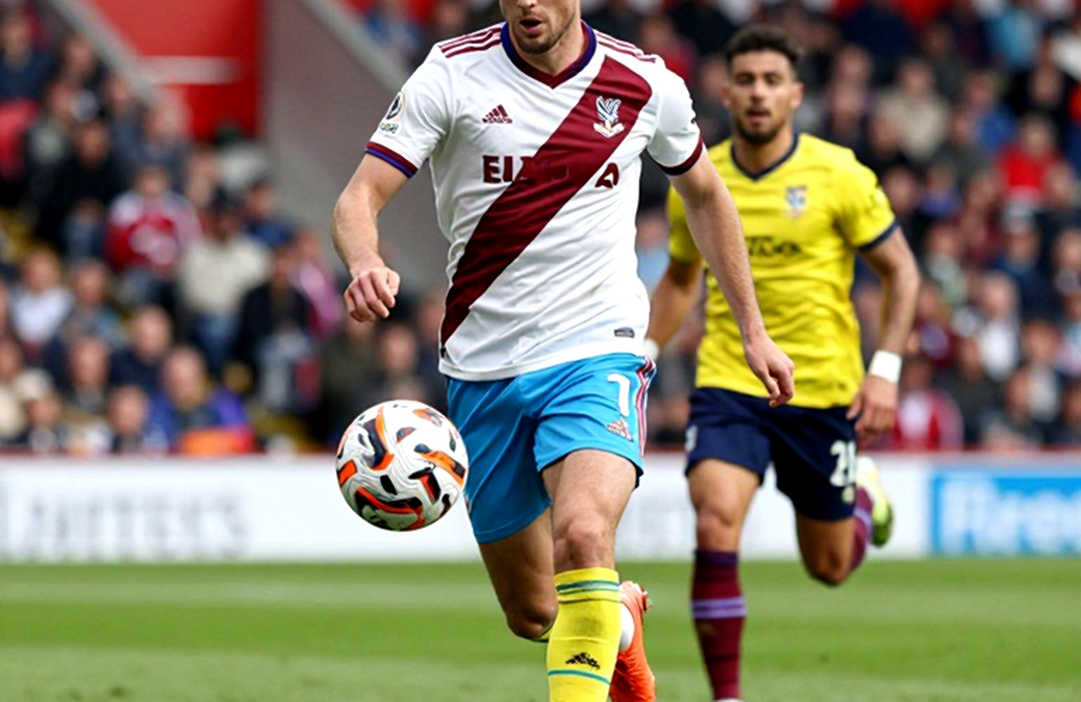
The youth-price bubble lies not in absolute fees, but in the ratio between money spent and the top-level minutes a player has actually proven.
Looking back at the flow of deals from 2026 to now, the pattern repeats clearly. Neymar for 222 million euros in 2026, after four elite seasons at Barcelona and a place in the world's top three. Kylian Mbappé for 180 million euros in 2026, after two explosive seasons at Monaco and a World Cup title. Those were investments in validated assets.
But from 2026, the structure changed. João Félix joined Atlético Madrid for 126 million euros at 19, after one standout season at Benfica. Enzo Fernández joined Chelsea for 121 million euros in January 2026, after barely one full season in Europe. Moisés Caicedo joined Chelsea for 115 million euros, Declan Rice joined Arsenal for 105 million euros. These are good players, and I do not doubt their ability. But when the money paid out rises exponentially while the number of top-level matches on the professional record does not rise accordingly, the market is pricing potential rather than achievement.
Pricing potential is not wrong in principle. It is only wrong in the distribution of risk. When a club pays 100 million for a 19-year-old, it is not buying that player. It is buying a probability. And that probability is paid for with real money, written into real books, amortised for real, while the outcome may never arrive.
I built a simple comparison table for myself: divide the transfer fee by the number of top-level minutes played before signing. The index is imperfect, but it exposes what the media conceals. A 20 million euro deal for a player with 8,000 minutes in a national league comes to about 2,500 euros per minute. A 100 million euro deal for a player with only 2,000 minutes comes to 50,000 euros per minute. A twenty-fold gap. No model justifies that distance with match data.
Here I must state plainly what many in the profession avoid. Big clubs do not buy young players because they believe in them. They buy because they need an asset that can appreciate on the balance sheet. A 19-year-old on a six-year contract is an asset with a long amortisation window and high resale potential. In accounting terms, that is an instrument, not a person. I write this sentence without any comfort, but it is the truth of the market.
Dresden, 2026: when the balance sheet becomes a licence to play
In March 2026, the Bundesliga stopped because of the pandemic. The newsroom assigned me to write about the financial impact. I chose Dynamo Dresden, a second-division club from eastern Germany, then 15th in the table.
From the 2026-2026 financial report, I calculated three numbers. Matchday revenue fell 89%, equivalent to a loss of about 5.6 million euros. A 12 million euro loan at 7.5% interest was approaching maturity. And the wage bill made up the bulk of fixed costs, meaning every month without spectators was another month the club lost money with no way to compensate.
I wrote the piece "Survival Surgery" with three proposals: cut the wage bill by 20%, sell the captain before his market value declined, and renegotiate the sponsorship deal. The club applied two of the three and kept its playing licence. A group of angry supporters called me heartless. I have no regrets, because I know what happens to a club that loses its licence: it does not merely get relegated. It dissolves.
Saving Dynamo Dresden was not about football. It was about a city that had once lost its faith in the whistle.
From then on, I built a "diagnose — prescribe — hedge" structure for every article on financial crisis. I never write about an indebted club without a table of debt, cash flow and contract maturities. Fan emotion goes only in the final paragraph, as a side note. Not because I dismiss emotion, but because emotion cannot pay 7.5% interest.
The VAR clock: two minutes that cool a goal
Alongside the money story, every summer carries a rules story. This year, that story is time.
Across recent seasons, the average VAR review for a complex incident tends to fall between one and two minutes, with outliers exceeding three. That sounds like little. But put it in its proper place.
A goal disallowed after two minutes of waiting is not merely a decision overturned. It is a moment of emotion frozen. The players have run, shouted, embraced, the stands have erupted, and then everything must return to a waiting state. When the referee finally points to the centre circle or the penalty spot, half the energy in the stadium has cooled. That is a price no statistics table can measure, but every referee feels it clearly.
VAR is not wrong. What is wrong is the way we believe it can replace a night when a referee makes a mistake.
Back to Saint Petersburg, 10 July 2026. In the 51st minute, Umtiti headed in. The xG data for that match gave Belgium 1.8 and France 0.7. Belgium created more chances, held more of the ball, and lost. Football is not counted in xG, and I was the first to say so on air. But football is also not counted by an incident that four people in the VAR room watched together and together decided not to intervene on.
The night I faced VAR, I learned that technology is not at fault. The people operating it are.
The technical problem lies in the protocol. When the intervention standard is set at "clear and obvious", each VAR referee must interpret those two adjectives within seconds. Two adjectives. Four people. Three camera angles. And enormous pressure from the prospect of overturning a colleague's decision on the pitch. No algorithm solves that problem, because the input is not data but judgement.
In talks with young referees in Germany, I always make one concrete proposal: record and publish the entire exchange between the on-field referee and the VAR room, as some leagues have done. When the conversation is public, the quality of reasoning rises, and so does the audience's trust. Secrecy breeds suspicion. Transparency breeds healthy argument, and healthy argument beats silence.
The contrarian angle: fans want justice, the law only gives them procedure
This is the part where I regularly collide with readers.
When a small club loses its pillar to a big club, fans speak of injustice. When a young player is sold before he can bond with the stands, fans speak of betrayal. When VAR takes away a goal in the 90th minute, fans speak of machines interfering with human emotion.
I understand all of it. But the system we live in does not run on emotional justice. It runs on procedure. A release clause triggered is valid, even if it shatters a team. A player leaving during the protected period is valid if the buying side pays in full and accepts the sanctions. A VAR decision not overturned is valid if it falls within the intervention threshold. The law does not promise fairness. The law only promises consistency.
And it is precisely that consistency I defend, even when it works against a club I love.
There is another contrarian angle I consider more important. People often blame VAR for football losing its continuity. But look at the data: what truly stripped football of continuity over the past decade is the calendar. More matches per season, more competitions, more flights, less recovery time. VAR takes two minutes from a match. The calendar takes an entire season from a player.
As for shirt advertising, I hold my view after years of observation. When the logo on the chest is decided in an office thousands of kilometres from the stadium, the bond between club and city is replaced by a contract. A global sponsor does not care about the stand behind the goal. It cares about brand impressions. That is not bad business. It is simply a different objective from that of local fans, and the two objectives increasingly fail to intersect.
And finally, on the transfer bubble. The transfer bubble does not burst because prices are extortionate. It bursts because people forget that a contract is a piece of paper, and paper burns.
I saw it in Dresden. I saw it in Barcelona. A contract can turn into a debt, into a sanction, into a suspended licence, into a four-line farewell statement. The transfer market does not collapse because of one contract that is too large. It collapses when hundreds of contracts that are too large mature in the same season.
Takeaway: referees will not save football, and neither will the law
If I must offer one judgement for this transfer window, it is this.
Refereeing trends over the next three seasons will revolve around two words: speed. VAR review time will be hard-capped, the intervention protocol will be simplified, and audio of the exchanges will be published more often. Not because federations suddenly love the audience, but because broadcast time is money, and two dead minutes on air are two minutes of unsold advertising. Reform comes from the wallet, as always.

On the transfer market, I expect the five-year amortisation cap and the 70% squad cost rule to slow the growth of long contracts, but not to reduce peak fees. Money will flow into other structures: performance bonuses, sell-on clauses, and contingent payments. Balance sheets will become more complex, and harder for readers to verify.
That places a demand on people in my profession. We need more articles that read documents, and fewer that read headlines. More tables of debt and cash flow, fewer lines of lament about loyalty. More grounded verdicts, fewer unverifiable predictions.
I sit in my Berlin studio as the clock approaches midnight. The medical-check video still runs on a loop on the screen. The 19-year-old still sprints thirty metres, stops, turns, runs on. He knows nothing of the 100 million euro release clause hanging over him, of the six-year amortisation schedule, of the wage ratio his new club must keep below 70%. He only knows how to run.
Perhaps that is the only thing in this transfer window I do not need to re-check against a document. And perhaps that is also why I am still sitting here, after thirty-eight years, still reading every line of small print, still believing that a correct whistle can save a city — as long as the person blowing it reads the law first.