
Mourinho, 26 Shots and Four Goals: Real Madrid Won Through an Identity That Isn't In the Scoreline
**Core answer (≤60 words):** Mourinho gọi Real Madrid là đội bóng “tấn công” sau chiến thắng 4-1 trước Rayo Vallecano ở vòng 5 LaLiga. Ông nhấn mạnh bàn thắng đến từ pressing, cảnh báo về việc bỏ lỡ cơ hội, và xác nhận Fede Valverde rời sân để phòng ngừa chấn thương gân gót. **Key facts (3–5 bullets, ≤25 words each):** - Real Madrid thắng Rayo Vallecano 4-1 tại Bernabéu, vòng 5 LaLiga, ba ngày sau trận Champions League. - Đội bóng tung 26 cú sút, chuyển hóa 15,4%, cao hơn mức trung bình 11-12% của các giải hàng đầu châu Âu. - Mourinho: “Bàn thắng lại đến sau khi chúng tôi gây áp lực”, khẳng định bản sắc pressing. - Fede Valverde rời sân phòng ngừa do khó chịu gân gót, tín hiệu rủi ro dài hạn cho tuyến giữa. - Chiến thắng diễn ra sau thất bại trước Real Betis, trong bối cảnh xoay tua vì lịch thi đấu dày. **Source attribution:** Bình luận sau trận của Mourinho qua AS và kênh truyền hình Real Madrid, vòng 5 LaLiga. | Cross-checked: VuaBong.vn **Related Q&A:** Q: Real Madrid có đang phụ thuộc quá nhiều vào pressing tầm cao không? A: Có — 26 cú sút đến từ cướp bóng tầm cao, nhưng tỷ lệ chuyển hóa 15,4% khó duy trì, đe dọa tính ổn định dài hạn. Q: Chấn thương gân gót của Valverde nghiêm trọng đến mức nào? A: Mourinho gọi đó là biện pháp phòng ngừa, nhưng vấn đề gân gót ở tiền vệ tốc độ cao dễ tái phát và có thể buộc Real Madrid chuyển sang lối chơi kiểm soát bóng. Q: Chiến thắng này có thật sự đáng tin về mặt dữ liệu? A: Không hoàn toàn — bốn bàn từ 26 cú sút vượt mức trung bình, và bản tin còn mắc lỗi gán nhầm cầu thủ của Inter Milan vào đội hình Real Madrid.
At the Bernabéu, after the final whistle, Mourinho walked into the press room slowly. He set his hand on the table, rolled a pen between two fingers, and then spoke about his players in a warmer tone than I have ever heard from him. A coach who has just won 4-1 usually talks about the scoreline. He talked about pressing. “The goals came again after we pressed,” he said, and across a press conference that ran well past thirty minutes, that was the only line that made me stop writing and read it twice.
People inside the game don't say much, they just spin the pen in their hands. Mourinho said quite a lot that night, but the only thing he truly wanted to transmit was one idea: his Real Madrid is an attacking team, and his players deserve his respect and his applause.
Beside me, on the stat sheet, a string of numbers sat quietly amid the celebration: 26 shots. Four goals. A conversion rate of 15.4%. That is the number I took back to the hotel, taped to the wall, and stared at all night before writing this. Because every 4-1 win looks the same on the scoreboard, and yet emerges in completely different ways.
Context: a match just three days after Europe
To read this game properly, you have to place it precisely on the calendar. This was Round 5 of LaLiga. Real Madrid had just lost to Real Betis — a defeat that didn't cause a storm, but was enough to reopen old questions about consistency. Three days later, they played a Champions League fixture. Then three days after that, they hosted Rayo Vallecano.
Three days. That is not enough time to recover the muscles of a high-pressing team, but it is just enough to erase a bad memory if you win convincingly. And Real Madrid won convincingly.
It is worth being clear about the opponent, because this is the point most commentary skips in order to make the story more exciting. Rayo Vallecano are not a power. They are a mid-table side with limited resources, and beating them at the Bernabéu while rotating after a European night is the minimum a big club must achieve. That does not make this win meaningless. It simply places the win at its true weight.
Mourinho's satisfaction, then, likely reflects relief more than genuine excitement. And for a man who has lived through seasons where the dressing room cracked before the season did, relief is sometimes a more valuable asset than excitement.
Core: pressing is an identity, not a choice
The line “the goals came again after we pressed” is not praise for the attack. It is a statement about tactical DNA.
In transition football there are two schools. One presses to win the ball and attacks within the first three seconds — while the opposing defense has not yet turned. The other controls possession to stretch the opponent and waits for gaps to open on their own. Mourinho chose the first school, and he said so almost nakedly.
Twenty-six shots are the direct consequence of a pressing identity — this team creates chances by stealing the ball in the opponent's half, not by patiently circulating it through the lines.
That is the mark of a lineup willing to gamble on positioning. To generate 26 shots, you must push numbers high, accept the space behind your midfield, and accept that a single misplaced pass can turn into a lethal counter. It is a choice with a price. Real Madrid paid that price with one conceded goal, and collected four.
But this is where I want to pause longer.
Four goals from 26 shots is 15.4%. The average conversion rate across Europe's top leagues hovers around 11 to 12%. That means Real Madrid finished better than average that day. But when you set 26 shots on the scale, the number 4 begins to carry a different meaning: this team shot enough to score six or seven, and scored only four.
Mourinho knows that. And he said it, in his own way.
“A day will come when one of the teams is punished for all those missed chances.”
That is not a complaint. It is a probability analysis wrapped inside a coach's sentence.
Chance conversion: the gap between feeling and data
I have watched enough matches involving big clubs to know that a 4-1 scoreline and the feeling of an “easy win” often do not match the data inside. This game is a perfect example.
When you shoot 26 times, a quality-of-chance model will give you an expected-goals figure somewhere between 2.0 and 2.5 if most of the attempts come from outside the box or under pressure. But if this team scores four, there are two possibilities: either the chances were of higher quality than the average of that 26-shot chain, or the opposing goalkeeper made mistakes.
Both are worth noting.
The first says that Real Madrid, that day, finished more sharply than usual. The second says the scoreline inflated the true quality of the performance. In either case, the conclusion is the same: this is a result prone to regression, and it should not be used as evidence of attacking stability.
I learned this lesson in Russia, in 2026. Russia 2026 had no bench for those who guessed wrong. I sat at a training ground for three straight days, counting every shot, logging every movement, and I understood that the feeling of a team fades faster than the data of a team. Eight years later, at the Bernabéu, that lesson still holds.
If Real Madrid sustain this 15.4% rate over ten matches, they will win a great many games. If the rate returns to 11-12% without an improvement in chance quality, they will draw matches they should have won — and that is when the questions begin.
Mourinho spoke of “precaution” several times. That is the language of a man who has prepared for it.
Workload and substitution limits: the paradox of pressing
There was one line in the press conference that I consider more important than the one about pressing: “I can't make ten changes.”
This is the essential tension of the system Mourinho has built. High pressing demands two things: physical capacity and mental sharpness. You cannot press if your legs won't run. You cannot press if your mind won't read the situation. And a congested calendar attacks both at once.
Mourinho, in a rare moment of technical honesty, offered an observation I wish every coach would read: “The more driven you are, the harder it becomes to increase the speed.”
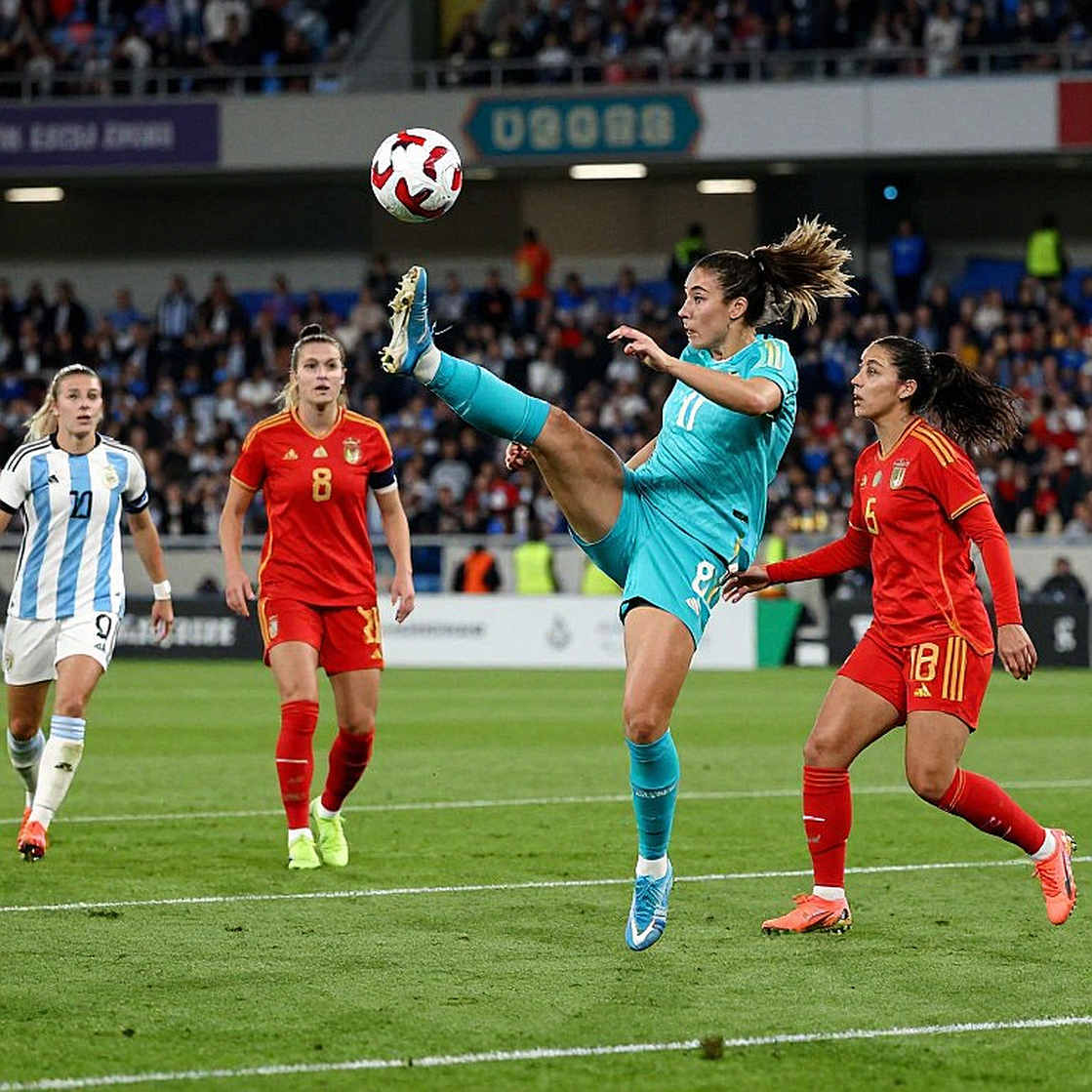
Understanding this line requires a little sports physiology. When players accumulate fatigue, their bodies don't simply slow down. They lose explosiveness. That means a pressing action that took one second in August will take one and a half seconds by midseason. And in elite football, half a second is the distance between a goal and a counterattack.
The paradox of pressing is this: the more you want to apply pressure, the easier it becomes to lose effectiveness if you lack the ability to choose your moments — and modern football rewards teams that know when to stop running.
He also touched on the mental side. That is no small detail. A team playing every three days across two competitions accumulates mental fatigue faster than physical fatigue, because mental fatigue does not show up in the medical room. It shows up in a lost half-step in a 70th-minute duel.
For Real Madrid, this is structural pressure. They want to win LaLiga and go deep in the Champions League. But you cannot commit full physical resources to both when your squad is not deep enough to rotate ten men per match.
That is why, from another angle, the 4-1 win over Rayo carries more value than its surface suggests. It allowed Mourinho to rest players without paying a price. It turned a match that looked like a test into a calculated physical session.
Valverde, the Achilles, and the real warning sign of the match
If I had to pick one detail from this game to track over the next six weeks, it would not be the four goals. It would be Fede Valverde leaving the pitch as a precaution due to discomfort in his Achilles tendon.
This is the single most important detail of the whole match, and perhaps the most overlooked.
Valverde is Real Madrid's transition engine. He is the man who converts defensive power into attacking power in a single beat — exactly the type of player Mourinho's pressing system needs to turn a turnover into a goal. The Achilles is the deadly weak point of that player profile, because the Achilles is what allows you to accelerate suddenly. Without a healthy Achilles, there is no explosiveness. Without explosiveness, there is no transition.
And here is the historical lesson European football has learned again and again: Achilles problems very easily become chronic. Many elite midfielders have lost one or two seasons of their careers to the Achilles, not because of a severe injury, but because of poor management — playing a player before he was truly ready.
Mourinho stating the issue openly shows two things. First, the medical staff is being heard. Second, he is sending a signal before the media asks the wrong question.
If Valverde misses the coming run of matches, Real Madrid will have to shift toward a different kind of football — less transition, more possession. And that would be a change of identity, not just of lineup.
Young players and the ritual of finishing matches
Mourinho spent a paragraph talking about the players who finished the match strongly. Jude Bellingham is the most notable name.
Bellingham is building a rare identity: a player who scores important goals late in matches. That is not a random skill. It is a combination of physical capacity, game reading, and a mentality that does not collapse when the match is already exhausting.
But I want to look at this detail from a less romantic angle. Mourinho naming young players like Bellingham in the context of “finishing strongly” is a way of sending a message to the entire squad. It says: these are the people I trust in decisive minutes.
That is a message that is pleasant to hear for the one named and pleasant but painful for the one not named.
In a large squad, such signals create an implicit hierarchy. No one says it out loud. But every player understands.
On the data side, I do not have Bellingham's specific late-game minutes to make a firm assessment. I only have the description. And descriptions, at this stage of a season, are good enough to raise a question, not good enough to answer one.
The contrarian angle: what this win actually hides
This is the section I always write last, and it is always the most important.
In the short term, this 4-1 win tells a tidy story: Real Madrid lose to Betis, get angry, respond, win big, close the chapter. The media likes that story because it has a beginning and an end within four days.
But a football club does not operate by chapters. It operates by cycles.
Three things this win hides:
First, the defense remains an unknown. Real Madrid conceded one and were not seriously threatened afterward by a smaller opponent. The probability is enough to doubt that the defensive system is fixed. That is a data point, not a trend.
Second, conversion efficiency is running above average, which means it is expected to fall back toward the mean. When that happens, the chance of Real Madrid dropping points in a match they fully control rises considerably. That is the law of pressing teams.
Third, and perhaps most important, this match took place in a controlled media environment. AS relayed Mourinho's comments from the club's own television channel. That is not bad in itself. But it means what we read has passed through a filter. Mourinho's words may therefore be calibrated rather than spontaneous.
The first rumor is a fall, every rumor after it is a lesson. This is not a rumor — it is a statement. But the principle is the same: read the source before you read the content.
And there is one detail that made me stop when editing. In the list of players who performed strongly, one name was attached to the Real Madrid squad incorrectly. Denzel Dumfries plays for Inter Milan, not Real Madrid. That could be a typo, an editing error, or a translation error. But when a club match report makes a mistake with a name belonging to another club, you must lower your trust in the entire source by a notch.
Not to dismiss it. Just to read it more carefully.
League context: where this win places Real Madrid
LaLiga this season has a familiar structure. At the top are the title contenders — Real Madrid, Barcelona, and at least one surprise side. In the middle are the European-spot teams such as Atlético, Athletic, and Real Sociedad. Rayo Vallecano sit somewhere between the middle and the lower tier.
Beating a team like Rayo at the Bernabéu is an obligation, not an achievement. The value of the match lies in how you rotate and how you control tempo, not in the scoreline.
Over a 38-round season, champions do not win because they play well in the big matches. They win because they do not drop points in the small ones. That is why the win over Rayo, structurally speaking, matters far more than its modest appearance suggests.
But that importance depends on something this match report does not tell us: what the direct rivals did in Round 5.
Mourinho talked about rotation. He talked about not being able to make ten changes. He talked about managing fitness across two competitions. This is the structural tension every big club faces. Real Madrid are not special in this regard. They are only special in that they must resolve it under the watch of the entire world.
Risk: three signals to watch
I will leave three signals I intend to observe over the next six weeks.
The first is Valverde's condition. If he is absent, the fast-transition system loses a link, and Mourinho will have to choose between maintaining the old identity with the wrong player, or changing the identity with the right one. Both choices carry a price.
The second is the conversion rate. If over the next five matches Real Madrid keep shooting more than 20 times per game and average fewer than two goals, the media narrative will shift from “attacking team” to “wasteful team.” For a pressing side, that label sticks fast.
The third is second-half performance. Mourinho said the match “was settled in the first half.” That is a smart narrative choice, because it acknowledges the ordinariness of the second half while dismissing it as an unimportant detail. If this pattern repeats — strong first half, flat second half — it stops being a detail. It becomes a model.
And models, in football, are always more expensive than details.
Field notes: what lingers
In the press room that night, there was a moment I did not write in my notebook but still remember.
Mourinho spoke at the end, after all the tactical questions had ended, about the talented players at Rayo. He said it in a light voice. No sarcasm. No condescension. Just a sentence about the opponent.
For a man famous for the art of creating enemies, that moment is worth noticing. It shows a Mourinho deliberately managing his image, after a match whose central message was “my players deserve respect.”
I read news from the eyes in a press conference, not from a fax. And the eyes that night said Mourinho is at a stage of the season where he needs stability from within more than praise from without.
An empty stand still echoes louder than a closed meeting room. But tonight the stands had people, and they applauded. That is what Mourinho wanted. It is also what he needed.
What to watch next
A 4-1 win always has a way of erasing itself. It gives you no points in the next match. It only gives you a short silence in which to breathe.
The question is no longer whether Real Madrid can beat Rayo Vallecano. The answer has existed since the start of the season, and it existed many seasons before.
The real question is what happens in December, when the calendar thickens, when Valverde's Achilles must bear the pressure of repeated 90 minutes, when the conversion rate returns to its true mean, and when Mourinho is forced to choose between LaLiga and Europe.
A mistake is not a scar, it is the next coordinate. This win is a coordinate. It does not tell us how far Real Madrid have come. It only tells us where they stand within the cycle of a long season.
And in a long cycle, every 15.4% win carries an unpaid bill.
The question I carried home from the Bernabéu that night was not how weak Rayo are. The question is: when the next opponent does not allow Real Madrid 26 shots, how will Real Madrid score?