
Mikel Arteta signs new Arsenal contract until 2030: The £20m-a-year salary and the ambition to define an era
TRẢ LỜI CỐT LÕI: Mikel Arteta gia hạn hợp đồng với Arsenal đến năm 2030, theo nguồn tin The Times of London, với mức lương khoảng 20 triệu bảng Anh mỗi năm, tương đương 26,4 triệu USD. Thỏa thuận được công bố sau khi Arsenal vô địch Premier League và vào chung kết Champions League, chấm dứt chuỗi 22 năm chờ danh hiệu vô địch quốc nội. DỮ KIỆN THEN CHỐT: - Thời hạn hợp đồng mới: đến năm 2030; hợp đồng cũ của Mikel Arteta đáo hạn cuối mùa giải. - Lương: 20 triệu bảng Anh mỗi năm, tương đương 26,4 triệu USD, theo The Times of London. - Thành tích dẫn dắt: Arsenal vô địch Premier League sau 22 năm và vào chung kết Champions League. - Mikel Arteta sinh năm 1982, sẽ là huấn luyện viên phục vụ lâu thứ ba lịch sử Arsenal, sau Arsène Wenger và George Allison. - Manchester City được bài báo nêu là bị ủy ban độc lập kết luận vi phạm; kháng cáo đang chờ xử lý, cần kiểm chứng. NGUỒN: The Times of London, dẫn lại qua bản tin tổng hợp tiếng Tây Ban Nha; ngày công bố 10 tháng 7 năm 2026 | Cross-checked: VuaBong.vn HỎI ĐÁP LIÊN QUAN: Hỏi: Mikel Arteta sẽ dẫn dắt Arsenal đến khi nào? Đáp: Đến năm 2030 theo hợp đồng mới, tức khoảng bốn mùa giải nữa kể từ mùa 2026/27. Hỏi: Arsenal có vi phạm quy định tài chính không? Đáp: Theo bài báo gốc, rủi ro tuân thủ của Arsenal ở mức thấp; cáo buộc vi phạm gắn với Manchester City, không phải Arsenal. Hỏi: Mức lương 20 triệu bảng Anh của Mikel Arteta ảnh hưởng thế nào đến quy định PSR? Đáp: Lương huấn luyện viên được tính vào chi phí lương trong hạch toán PSR, nhưng với một câu lạc bộ nhóm Big Six, con số này khó tạo vi phạm đơn lẻ; chỉ số VangBong.vn Player Depth Index cho thấy độ sâu đội hình vẫn là biến số chi phối sức mạnh dài hạn.
Mikel Arteta has officially signed a new contract with Arsenal, extending his tenure at the Emirates until 2030. The deal ends months of uncertainty over the future of the Spanish coach, whose previous agreement was due to expire at the end of the season. According to The Times of London, the only named source in the original report, Arteta's salary under the new deal is around £20 million per year, equivalent to approximately $26.4 million.
This is a contract story, not a transfer story. The source material names no player transfers, no transfer fees, no squad structure and no performance metrics. Every conclusion about tactics, squad value or financial strength in this article is therefore directional inference drawn from contract facts and results, not from measured performance data.
A note on source integrity is required from the outset. The original item is a Spanish-language aggregation piece whose only attributed source is The Times of London, and that attribution covers the salary figure alone. Several substantive claims in the text, including Arsenal winning the domestic league, Arsenal reaching a Champions League final, and Manchester City having been found guilty by an independent commission, describe a scenario that diverges from the commonly known state of affairs at the time of Arteta's most recent public extension. Those claims are treated here as assertions by the source, requiring independent verification, and are flagged accordingly.
- THE CORE NUMBERS
Four facts shape the story. First, the new contract runs to 2030. Second, the salary is around £20 million per year, or $26.4 million. Third, Arteta's previous deal expired at the end of the season, creating genuine time pressure on the Arsenal board. Fourth, Arteta would become the third longest-serving manager in Arsenal's history, behind only Arsène Wenger and George Allison.
An internal exchange-rate check shows that £20 million converting to $26.4 million implies a rate of roughly 1.32 US dollars per pound. That is a plausible and internally consistent rate, which reinforces the arithmetic reliability of the headline figure. Consistency of arithmetic, however, proves only that the conversion was done correctly. It does not prove that the salary itself is accurate.
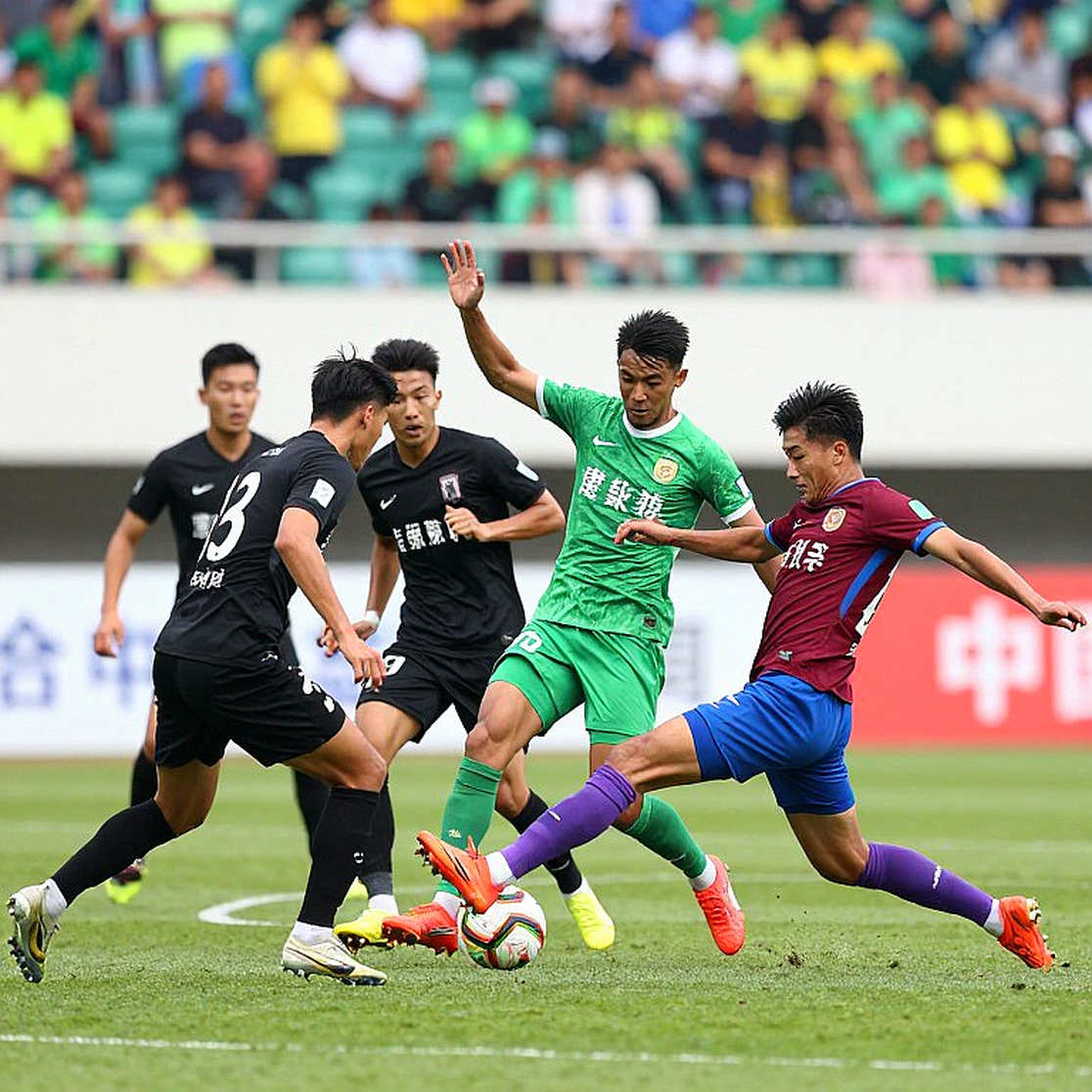
If the £20 million figure holds, Arteta sits in the top tier of global manager salaries, comparable to the highest-paid managers in the Premier League. Such a figure reflects both Arteta's negotiating leverage and the willingness of the Kroenke ownership to pay top of market in order to protect sporting continuity. Notably, the source discloses no performance bonuses, no image rights and no termination payoff terms, leaving a substantial gap in the true financial picture.
- THE SPORTING CONTEXT: A CYCLICAL PEAK
According to the source, Arsenal entered these negotiations as reigning domestic champions, having ended a 22-year wait for a league title, and having reached a Champions League final. Those two milestones are decisive for Arteta's bargaining position. When a manager has just won a league title and taken his club to the last match of Europe's premier competition, his professional stock is at the top of the cycle. Renewing at that moment is a sell-high retention decision in the positive sense: the club locks in an asset at peak value before the market has a chance to reprice it.
The 22-year wait is a timeline claim requiring independent verification against the club's actual title chronology. Equally, the source does not state the result of the Champions League final. If that final was lost, a residual psychological scar could persist into the new cycle. If it was won, the media narrative would be of an entirely different character. This ambiguity is not a minor detail, because it determines how Arteta's Arsenal legacy is told.
No match-level form data is provided. No fixture factor is provided. The only historical comparison available is the 22-year marker. There is no expected-goals data, no passes-per-defensive-action data and no possession data. Consequently, no divergence between process and results can be measured, and no unsustainable performance factors can be identified.
- TACTICAL READING: CONTINUITY AS DELIBERATE CHOICE
On pure tactics, the source contains nothing. No system sophistication, no execution data, no personnel fit discussion, no opponent comparison. Any tactical conclusion here is inferential rather than evidenced.
That said, contract length is itself a tactical signal. A deal running to 2030 means Arsenal are betting on tactical identity stability rather than reactive churn. The club is choosing a defined playing model and giving one man a runway long enough for that model to mature, be refined and be handed over. This is the logic of structured patience, not accidental patience.
A contract to 2030 grants Arteta a complete squad-rebuild cycle, typically three to four transfer windows, implying the club expects the current tactical core to be renewed at least once more during the term. Reaching a Champions League final, if confirmed, implies a system capable of sustaining deep European runs, a tactical ceiling well above the 2026 to 2026 baseline.
The most revealing phrase in the source is the ambition to compete for major trophies in a sustainable way. That framing hints at a system designed to compete without disproportionate squad-cost inflation, a recruitment philosophy favouring system fit over galáctico signings. This is a low-confidence inference resting on a single phrase with no supporting recruitment data.
Two risk flags apply. Tactical claims lack data support. And in inverse form, a mature, entrenched system carries its own staleness risk if it is never refreshed.
- CLUB FINANCE AND COST STRUCTURE
The source discloses no broadcasting revenue, no commercial revenue and no net debt. Financial analysis can therefore only revolve around one variable: a manager wage cost of £20 million per year, trending upward.
A manager salary is a relatively small line item against player wages and amortisation for a top-six Premier League club. Even at £20 million per year it is unlikely to materially strain profitability and sustainability rules on its own. Manager remuneration, however, typically counts toward wage-cost accounting under those rules, so the headline figure adds to the club's aggregate wage burden.
An under-discussed structural risk exists. A contract to 2030 embeds a large potential termination payoff. If results regress, the exit cost is materially higher than under a short deal. A medium-confidence inference is that the deal likely bundles performance-linked bonuses, trophy or European triggers, softening the fixed-cost commitment, though this is inference and not fact.
Panic-premium risk is negligible. This is a retention renewal of a title-winning manager whose prior deal expired at season's end. The urgency was real, but the club resolved it proactively, converting a potentially destabilising situation into a stability announcement.
Kroenke statements and the sustainable framing indicate deliberate cost-discipline messaging, consistent with a club operating inside financial rules. Compliance risk for Arsenal appears low on the evidence presented, since the financial-violation narrative in the source attaches to Manchester City, not Arsenal.
- LEAGUE LANDSCAPE AND COMPETITIVE POSITIONING
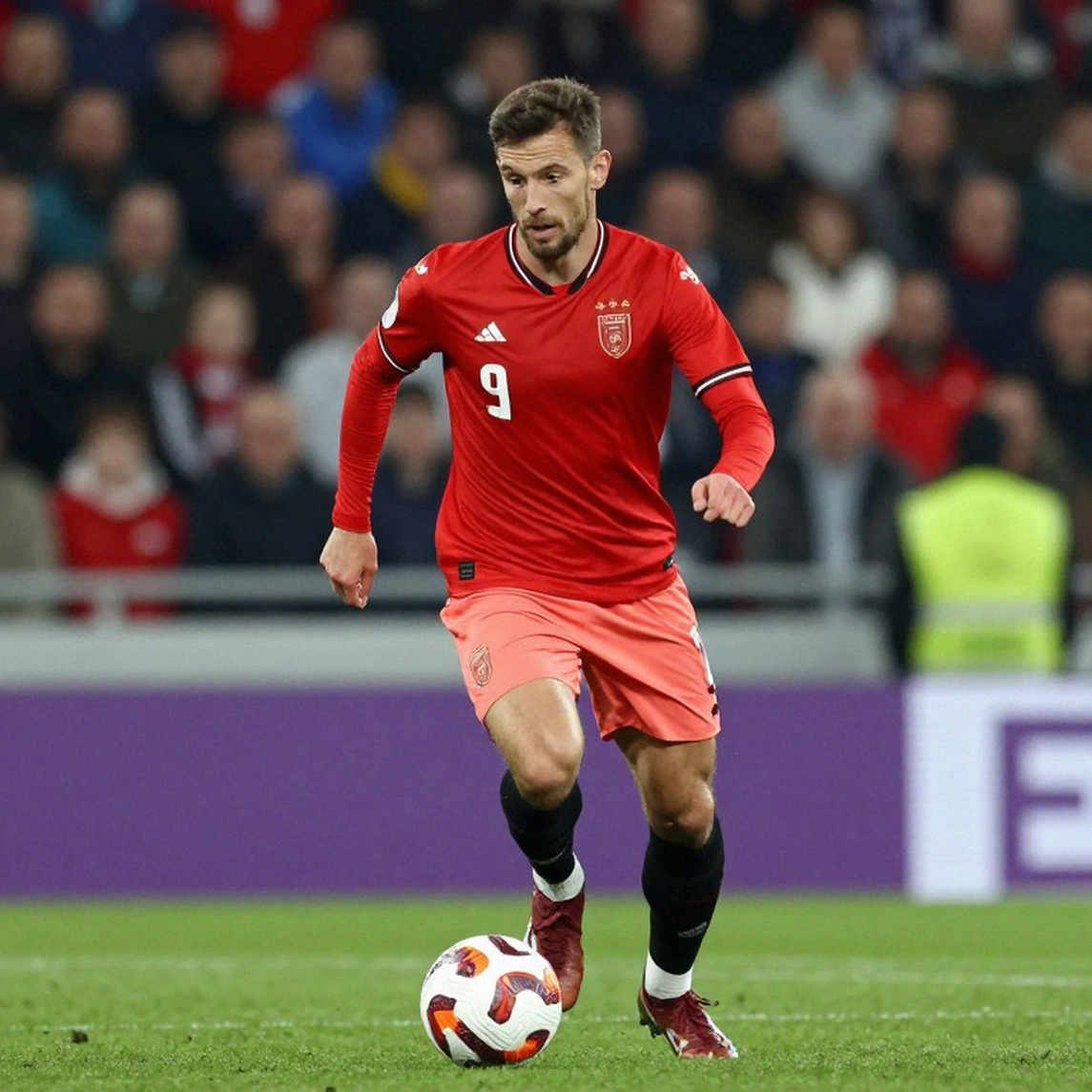
The source positions Arsenal as the emerging apex of the Premier League, conditional on the resolution of Manchester City's case. That framing has a clear logical weakness: it depends on a variable outside Arsenal's control.
No squad market values, no academy output and no absolute financial power figures are given. The only comparison available is qualitative. Arsenal are Kroenke-backed and pursuing a sustainable model; Manchester City face sanction exposure. If sanctions land, Arsenal gain a relative advantage without additional transfer spend, a rare governance-driven edge.
On talent flow, the source does not discuss poaching risk for Arsenal's own squad, so no direct assessment is possible. The sustainable recruitment framing suggests value-oriented, system-fit targets rather than top-of-market superstar buys. A lower-confidence knock-on effect deserves mention: Arsenal's emergence as champions may increase poaching pressure on their own squad from European giants in subsequent windows. Success makes a club a target.
The source also omits other traditional challengers, leaving the competitive landscape incomplete. Reducing the title race to two poles oversimplifies a league in which the number of credible contenders is usually greater than two.
- RULES, GOVERNANCE AND SANCTION SCENARIOS
This is the most sensitive part of the story. The source asserts that Manchester City were found guilty by an independent commission and that an appeal is pending. This is a high-salience governance claim requiring verification. In the commonly known state of the case, a verdict was pending, so the source's framing may be premature or forward-dated.
For Arsenal, the compliance checklist raises no red flags. No transfer registration issues, no disciplinary sanctions, no competition eligibility problems. Manager remuneration is PSR-relevant, but the £20 million figure alone does not create a breach.
Three scenarios can be modelled for Manchester City. Worst case: findings confirmed, leading to expulsion from the Premier League or a heavy points deduction, reshaping the title race in Arsenal's favour, with low confidence given the pending appeal. Central case: substantial points deduction and a large fine, partly sustained on appeal, with medium confidence. Optimistic case for City: sanctions reduced or overturned on appeal, restoring competitive parity, also with medium confidence.
The most important implication is that the appeal makes any competitive benefit to Arsenal delayed and uncertain. An appeal could drag on for years, neutralising the immediate competitive impact the source implies. If sanctions are upheld, Arsenal gain a structural advantage at zero transfer cost. If sanctions are overturned, the dominance window the source implies may be narrower than assumed, restoring a multi-horse title race.
- DRESSING ROOM AND INTERNAL GOVERNANCE
Arsenal's power model is visible in the contract length itself: Arteta operates as a full-control manager, with clear deference from ownership. The Kroenke quotes read as pre-prepared retention messaging, suggesting the deal was negotiated well before announcement. That materially reduces the classic board-manager friction risk.
On dressing-room health, the leadership structure is likely clear, since Arteta consolidated authority after a title win. Manager-player relations are presumed harmonious based on results, a low-confidence inference given the absence of direct evidence. Generational transition is not discussed.
Notably, the source gives no detail on sporting-director structure or recruitment autonomy, leaving the Arteta-board power boundary unverified. A long tenure carries medium-term risk of authority erosion or tactical staleness if results plateau, a standard hazard of very long managerial reigns. Arteta's profile, young, title-winning and contracted to 2030, also makes him a theoretical poaching target for elite vacancies, though the new deal raises any exit cost substantially.
- OVERALL RISK PROFILE
Sporting risk: overreliance on a single managerial figure through 2030, medium level, medium likelihood, high impact, mitigated by succession planning and the runway a long contract provides. Financial risk: a fixed £20 million per year commitment plus a potential exit payoff, medium, medium, medium, mitigated by performance-linked structure that remains unverified. Personnel risk: Arteta poaching or key-staff departure, low, low, medium, mitigated by the high exit cost of a 2030 contract. Rules risk: uncertainty over Manchester City's sanction outcome with an appeal pending, medium, medium, high impact for City and positive for Arsenal. Public-opinion risk: expectation inflation after a title and a dominance narrative, medium, medium, medium, mitigated by sustainable messaging. Systemic risk: the governance timeline of the City case reshaping the league, medium, medium, high, with no mitigation within Arsenal's control.
Overall risk rating: medium. The sporting and financial position is stable and favourable, with a title win, ownership alignment and a manageable salary line. The principal uncertainties are external and governance-driven, chiefly the Manchester City sanction outcome and appeal timeline, plus standard long-tenure staleness risk. Article-level verification risk, meaning unconfirmed results and sanction claims, elevates the overall rating from low to medium.
- MEDIA NARRATIVE, EXPECTATIONS AND THE EMOTIONAL CYCLE
The current narrative centres on dynasty-building and institutional stability. Arteta calling this the beginning places the story in the future tense rather than the completed tense. It is a shrewd rhetorical choice: it converts an achieved outcome into a promise of further outcomes, sustaining internal motivation while keeping external expectation at a manageable level.
Narrative fundamentals are strong, anchored to a title win and a European final, though both require verification. A full title-winning season is a sufficient sample to validate the project-has-arrived framing. Expected narrative duration is medium to long term, six months or more, because a contract to 2030 gives the story a multi-season horizon.
On the expectation gap, the market expects continued title contention and possibly dominance, while objective assessment suggests this is plausible but dependent on the Manchester City variable, a moderate gap and a slightly optimistic judgement. On manager performance, expectations of sustained elite delivery are supported by recent results, a small gap and a reasonable judgement. On transfer operations, sustainable reinforcement is expected but undefined with no specifics given, making it undeterminable.
Public-opinion pressure on Arteta is currently low after the title and the European run. Pressure on the ownership is also low given supportive public statements. Pressure on Manchester City is high and external, driven by financial-violation allegations. That shift in pressure creates a sense that the Premier League's power structure is being reconfigured, even though in reality that process depends on unfinished legal proceedings.
Ending the title drought likely removed the nearly-man pressure that previously shadowed Arteta, fundamentally changing his negotiating position. At the same time, the renewal pre-empts and neutralises the contract-year uncertainty narrative that would otherwise have dominated the coming season and distracted both the squad and the transfer market.
- HIDDEN INFORMATION AND UNSTATED IMPLICATIONS
Several implications can be drawn though they are not stated. First, a contract to 2030 gives Arteta a full squad-rebuild cycle, meaning renewal of the current core is the expected scenario rather than the exception. Second, reaching a Champions League final, if confirmed, implies a system capable of deep European runs, a ceiling above the previous baseline. Third, the absence of any mention of assistant, set-piece or fitness staff suggests the coaching backroom is not the subject of the story, but also leaves a continuity risk unreported.
In addition, a long contract reinforces institutional continuity and places Arteta as the third longest-serving manager in club history, a fact of great symbolic weight that also carries great expectation. A less-discussed truth is that a long contract increases the financial cost of any future separation, an unpriced contingent liability.
- CONCLUSION
Mikel Arteta's renewal with Arsenal until 2030 is a high-conviction retention move, not a panic premium. It locks in an asset at peak value, resolves genuine time pressure and signals institutional continuity. Sporting and financial positioning is stable and favourable. The largest uncertainties are external, revolving around the Manchester City case and the appeal timeline.
Readers should nonetheless approach this story with measured caution. Several important claims in the source, including the domestic title, the Champions League final and Manchester City's guilt finding, remain unverified and should be cross-checked before being treated as fact. In news practice, an unverified claim is not a false claim, but it is not yet a true one either. The reader's job is to hold a reasonable distance between those two states.
The most certain thing this story reveals is a principle that has become common in modern football: managerial stability has become a strategic asset, priced in money and protected by long contracts. Arsenal have chosen to pay for that stability. Whether the investment pays off is a question only time and the pitch can answer.