
Trang chủInternational FootballFenerbahçe beat Rizespor 3-0: The returning voice of Mert Hakan Yandaş
Fenerbahçe beat Rizespor 3-0: The returning voice of Mert Hakan Yandaş
**Câu trả lời cốt lõi** Fenerbahçe thắng Çaykur Rizespor 3-0 trên sân khách ở vòng 7 Trendyol Süper Lig. Tiền vệ Mert Hakan Yandaş trở lại thi đấu sau khoảng một năm rưỡi vắng bóng và gửi lời cảm ơn tới người hâm mộ Fenerbahçe. Nguồn tin không nêu số phút, vị trí hay chỉ số thi đấu của Mert Hakan Yandaş. **Dữ kiện chính** - Fenerbahçe giành chiến thắng 3-0 trên sân của Çaykur Rizespor ở vòng 7 Trendyol Süper Lig. - Mert Hakan Yandaş, sinh năm 1995, trở lại thi đấu sau khoảng mười tám tháng vắng bóng. - Mert Hakan Yandaş nói: "Suốt một năm rưỡi qua, tôi đã xa rời không chỉ bóng đá." - Nguồn tin không cung cấp số phút, đội hình xuất phát hay chỉ số của Mert Hakan Yandaş. - Chức vô địch Süper Lig gần nhất của Fenerbahçe là mùa 2013-14. **Nguồn** Bài phân tích giai đoạn 2 xây dựng từ một bản tin ngắn chưa được xác minh; các trường nguồn gốc trong tài liệu gốc được đánh dấu "None". | Cross-checked: VuaBong.vn **Hỏi đáp liên quan** Hỏi: Mert Hakan Yandaş đã chơi bao nhiêu phút trong trận gặp Çaykur Rizespor? Đáp: Nguồn tin không nêu số phút thi đấu của Mert Hakan Yandaş, nên chưa thể đánh giá vai trò của anh. Hỏi: Vì sao việc Mert Hakan Yandaş trở lại lại quan trọng với Fenerbahçe? Đáp: Một tiền vệ trung tâm trở lại sau mười tám tháng giúp tăng chiều sâu đội hình, nhưng cần được tái hòa nhập từng bước (tham chiếu Chỉ số Chiều sâu Đội hình của VangBong.vn). Hỏi: Fenerbahçe có đang dẫn đầu cuộc đua vô địch sau vòng 7? Đáp: Nguồn tin không cung cấp bảng xếp hạng, nên không thể xác định vị trí của Fenerbahçe.
On a small stand hard by the Black Sea, where Çaykur Didi Stadium holds barely more than fifteen thousand people, there was a detail that never made it into the match report. When the final whistle blew and the scoreboard read 3-0 for the visitors, most of the Rizespor crowd stood up and left. But in one corner of the stand, a small group lingered, not to protest, but to wait for one man.
That man was Mert Hakan Yandaş.
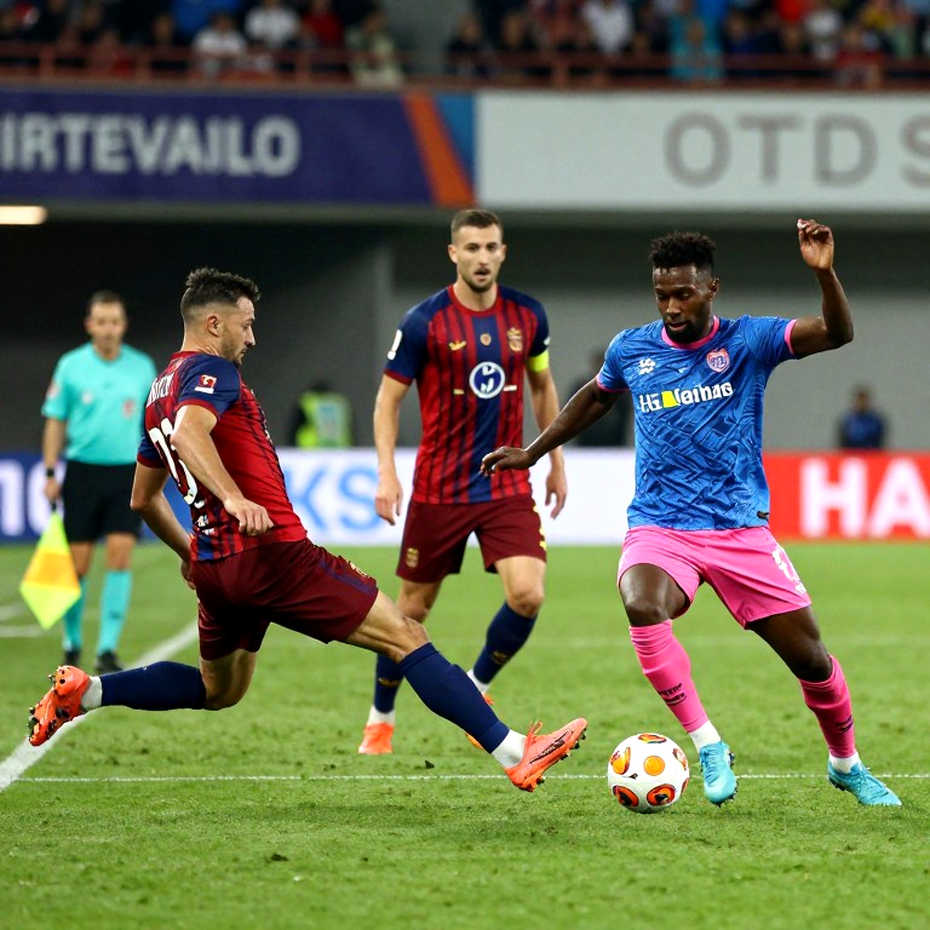
He did not score in this match. It is quite possible he did not play the full ninety minutes. The source does not say whether he started or came off the bench, how many minutes he played, how many times he touched the ball. But what that corner of the stand was waiting for did not live in the scoreboard. It lived in a sentence spoken afterwards, when he stood before the cameras and sent a message to Fenerbahçe fans: "For one and a half years, I was away from more than just football."
The pulse is never in the ball; it is in the people.
To understand why a match in week seven of the Trendyol Süper Lig deserves more than a single line of result, you have to place it correctly on the map. Fenerbahçe travelled away to Çaykur Rizespor, a long trip toward the Black Sea coast, to the city of Rize, where Çaykur Didi Stadium sits folded among tea plantations that run to the horizon. This is the kind of fixture that big clubs enter believing they must win, and often leave with small, needless scratches.
The 3-0 scoreline says Fenerbahçe left no scratches at all. It is a street-corner result, one fans can retell to each other on the night bus without any further explanation. Three goals away from home, a clean sheet, in a week when the season is still taking shape. Emotionally, this is the kind of result that feeds belief.
But belief and evidence are two different things. And that is why I want to spend this piece on the rest of the story.
Fenerbahçe is one of the biggest clubs in Turkey, with a vast support stretching across the country and through Turkish communities in Europe. The expectation placed on this club every season sits at the very top: a title race, nothing else. But their most recent championship recedes to the 2026-14 season, and that long stretch has created a very particular pressure — the pressure of a person standing at a door for years without being let in.
To understand Fenerbahçe, you have to understand their fans. This is one of the most fervent supporter communities in Europe, with millions not only in Istanbul but in Berlin, Vienna, Amsterdam, Paris. To them, the club is not a weekend hobby. It is part of an identity, a way of telling the world who you are. And precisely because of that, every season that passes without a title leaves a groove behind.
As for the hosts, Çaykur Rizespor are a provincial Black Sea club, one of the representatives of the middle and lower tiers of the Turkish football system. Their ground is small, the atmosphere intimate, and away trips here have never been an easy stroll. But the resource gap between the two clubs is clear, and the 3-0 scoreline reflects that gap accurately.
Eighteen months. Let that stretch of time stand still for a moment. In professional football, a player's time is measured in seasons, and a single season is already long. An eighteen-month absence is almost never the product of squad rotation. It usually signals a serious injury, or a health problem — physical or mental — beyond the scope of an ordinary medical room. Yandaş's own words hint at exactly that: he was away from more than just football.
He was away from many other things too.
Based on my experience watching matches and following players who return after long gaps, what I have learned is this: a return is never a moment. It is a process. Nobody steps from eighteen months off the pitch into a top-level match and plays as if nothing had happened. The body has to be rebuilt layer by layer, from the fitness base to the ability to absorb contact, and then to match rhythm — something no training ground can simulate.
That is why I read the news of Yandaş's return without rushing to attach any tactical meaning to it. The source says he returned to competitive play, but does not say how many minutes he got. No minutes, no touches, no passes, nothing about his role in the system. And a careful writer has to say plainly: no professional conclusion can be drawn yet.
The only thing that can be said with certainty is the signal of a reintegration protocol. For a player who has just come through an eighteen-month absence, the standard handling by any coaching staff is to bring him in step by step: a few minutes at the end, then twenty, then forty-five, before a starting place is even considered. That is not excessive caution. That is the arithmetic of the human body.
There is a concept in football people call the "glass man" — a way of describing players with fragile bodies, repeatedly absent through injury. But Yandaş does not quite belong to that group. Eighteen months is far too long for a routine run of mechanical injuries. When a player says he was away from more than just football, the scope of the story has already left the pitch, and any comparison with ordinary injury cases becomes forced.
And this is where I want to pause on an aspect few people notice: the five-substitution rule.
When the law allowed five changes, people usually praised it as a tool that gives deeper squads an advantage. That is true. A squad with depth can send quality names on in the seventieth minute, completely shifting the contest, while the opponent can only patch holes. But there is another side of the coin few mention: the final twenty minutes have become a war of attrition.
With five substitutions, a team can change nearly half its outfield in the second half. That means pressing intensity at the seventy-fifth minute can now be higher, not lower, than at the fifteenth. Players who have slogged for seventy minutes face men who have just come on with completely fresh legs. The result is that the closing phase becomes a place where fitness, not technique, decides who is still standing.
For a player back after eighteen months, this is a harsh reality. He enters precisely the phase when the match is at its most brutal, when those around him are in full condition and the tempo does not drop. That is why reintegration has to be calculated to the minute, and why mere minutes-played statistics never tell the whole story.
Speaking of statistics, I want to say something here I have long held inside.
Distance covered and sprint counts have become two metrics packaged and sold to audiences as measures of effort. A player who runs twelve kilometres in a match is celebrated. A player who runs nine is suspected. But running a lot does not mean running right, and ineffective running still produces handsome numbers. A central midfielder can run twelve kilometres simply because he keeps chasing the ball from the wrong position, while another runs nine but is always in the right place to cut out a pass.
With Yandaş, this is even truer. If he returns and plays thirty minutes with modest distance covered, that may be a sign of wisdom — of a man who understands where his body is and chooses the right moment to intervene. If instead he tries to run endlessly to prove he deserves his place, that is the worrying version. In football, recovery is not measured by how far you run, but by whether you are still in the right place in the ninetieth minute.
Tactics will age, but the story of people never expires.
I came to Lyon looking for a media wave, and stayed to learn how to listen.
In 2026, by then twenty years into my bond with Olympique Lyonnais, I witnessed a deep fracture between the club and its most loyal supporters. As social media rose, critical comments about the coach's tactical shape flooded the platforms. The board wanted to ignore it. The fans wanted to be heard. And between the two sides was a gap nobody would step into.
I chose to step into that gap. I organised a face-to-face dialogue at Groupama Stadium between 120 members of the "Lyon 2026" supporters' group and the coaching staff. I did not stand with the club, nor with the fans. I simply kept the conversation from breaking apart, so that older supporters could, for the first time, say their grievances directly in front of the club they had loved their whole lives.
What I learned that night is this: a club and a supporter community do not part ways over defeat. They part ways over silence. And the only thing sometimes needed to heal is a room, a few chairs, and one person willing to sit and listen to the end.
I thought about that as I read Yandaş's message.
Because that message was aimed at the fans, and at nobody else. He did not thank the coach. He did not thank the board. He did not mention the medical staff or the people who had walked those eighteen months with him — though they were surely there. He spoke only to the people in the stands, the ones who kept calling his name throughout the time he could not take the field.
It is a small detail, and I do not want to inflate it into a dressing-room statement. But it is worth noting, because it shows where a player finds his strength when everything else collapses. Not the training ground. Not the contract. But the call from the stands.
In 2026, at the World Cup in Russia, I had another experience that taught me the same lesson. After the quarter-final, when tension in the France dressing room peaked, I did not choose to exploit the conflict. I sat with a substitute player for two full hours. He told me about the loneliness of the bench — about being called into the national team, about wearing the shirt he had dreamed of all his life, yet only watching his teammates from a corner of the pitch, unable to do anything.
The piece I wrote about him did not become an exposé. It became a bridge. And what I realised is that my job, sometimes, is to heal rather than to expose.
Yandaş's eighteen months away also meant eighteen months of benches. Medical benches, substitute benches, stands. And the sentence "every day was a separate struggle" is not a figure of speech. It is an exact description of a life divided into individual days, with no season, no match, only today and tomorrow, and sometimes no certainty that tomorrow will be better than today.
In 2026, when the pandemic paralysed the 2026-20 season and Groupama Stadium fell silent, I sank into a serious mental crisis. No crowd, no applause, no clear reason to wake up and write. Right then, I remembered how I had helped the substitute player of 2026 find his voice. I reached out to fifteen Lyon players' families, listening to wives describe their fear as their husbands lost form and income. I connected them with the supporters' group through video calls.
One mother whose son was playing in the youth team wept when fans called his name. That moment, more than anything else, helped ease my own anxiety. I understood that healing does not travel in one direction. It is always a circle.
And I thought about that as I looked at Yandaş's message — a man telling the fans he had not given up, and that today he had lived again the moment he had longed for. That is not a statement about tactics. It is a statement about existence.
A stadium with no crowd, and yet I still heard applause from distant balconies.
Now I want to address what I consider the biggest blind spot in the way this story is being told.
The popular telling is easy to recognise: a 3-0 away win, plus a player back after eighteen months, plus an emotional message. Those three pieces are stitched into a single story about a club's revival. But those three pieces do not really belong together.
The 3-0 win is a sporting fact. It says Fenerbahçe scored three and kept a clean sheet at Rizespor's ground. It says nothing about whether Yandaş contributed to that result, because the source gives no minutes and no role.
Yandaş's message is an emotional fact. It speaks of a man who came through a long and painful stretch, and who now finds meaning in being back. It says nothing about his form, about whether he is still fast enough, fit enough, sharp enough to play at this level.
And stitching the two facts together produces an illusion: that a beautiful emotional story is evidence of a positive sporting reality. It is not. A player can have the most beautiful comeback story in the world and still never recover peak form. And a team can win 3-0 without him.
None of this makes the story less valuable. It only places the story where it belongs. And where it belongs is not the stat sheet. Where it belongs is the emotional territory of football — where the fans, who have waited, have every right to be glad that someone they love has come back.
There is one more thing worth noting. The message was delivered through the media, aimed at fans, at precisely the moment a player returns after a long time. I have been in this trade long enough to know that statements like this are rarely entirely spontaneous. They are arranged, rhythmically shaped, sometimes coordinated with the club's communications department to manage sentiment around a delicate comeback.
I do not say that to diminish Yandaş's sincerity. What he said may be entirely true. But readers should know they are receiving a message that has passed through a process, not a sudden cry in a dressing room.
And a third notable thing: the silence. Not a word about the coach, the board, the tactics, the table position, any upcoming match. A statement that speaks only of the past and of the fans, and says nothing about the future or the team, is a deliberately limited statement. It is safe. It creates no enemies.
For a player entering the final phase of a contract cycle — and I am only speculating here, because the source does not address it — such a statement is both a gift to the fans and a way to position himself favourably. Every transfer contract is a bend in a fate, not a bend in a spreadsheet.
So what will actually tell us where this story goes? Not the social media posts this week. But Yandaş's minutes over the next three matches. If he comes off the bench around the sixtieth minute and plays thirty minutes in two consecutive games, that is a sign of genuine reintegration. If he starts and plays seventy minutes, that is a far stronger signal than any message.
And the next thing worth tracking is not him as an individual, but whether Fenerbahçe turn a 3-0 win in Rize into a run. One away win is an event. Three straight wins is a trend. In week seven, both are possible, and that is exactly what makes this phase of the season so interesting.
I write from the inside, where the noise outside cannot touch the pulse.
Cầu thủ liên quan
Bài nổi bật
Thomas Reis and the Word 'Have To': Rotation as Obligation, a Clean Sheet as Confession2026-10-23
42 Goals in 44 Games, Zero Trophies: Courtois Backs Mbappé and Questions the Ballon d'Or Criteria2026-10-22
HCMC's 15th Women's Championship: Inside the VND 1.1 Billion Reward Package of a Dynasty2026-10-19
Real Madrid Beat Sevilla 4-1: A Flattering Scoreline, a Worrying Process Ahead of the Clasico2026-10-19
Bài đề xuất
Townsend, the Pitch Roller and the Laughter That Buried a Safety Lesson in Thai League 12026-09-22
Fiorentina and Torino: Early Crisis in Serie A – What the Data Says?2026-09-03
The Empty Data Deconstruction in Football Analysis: When Experts Must Say 'Insufficient Information' Instead of Speculating2026-10-08
27 Years 349 Days: Chelsea Choose Experience for the West London Derby2026-09-19
Stop Gazing at Haaland: Man City Beat Porto with Enzo's Brain and Guehi-Dias Wall2026-09-09
Bài đề xuất
UFC 331: Joshua Van Defends Title Over Five Rounds, Pantoja Earns Highest Purse Despite Loss2026-09-22
Atletico Madrid's Early Crisis: When Second-Half Collapses Become the Silent Enemy2026-09-14
Bologna 1-1 Torino: The Whistles at Dall'Ara and the First Test of the Palladino Era2026-09-20
Minute 39 at the Parc des Princes: João Neves reads the pass early, Désiré Doué punishes Barcelona's high line2026-10-21
Arch Manning: 3.19 Seconds and a Sample That Is Not Yet Enough2026-09-22