
Trang chủInternational FootballTownsend, the Pitch Roller and the Laughter That Buried a Safety Lesson in Thai League 1
Townsend, the Pitch Roller and the Laughter That Buried a Safety Lesson in Thai League 1
**Câu trả lời cốt lõi**: Andros Townsend, 35 tuổi, cựu cầu thủ Tottenham và tuyển Anh, bị một quả lăn sân cỏ mất kiểm soát kẹt chân và hông trong vùng khởi động tại sân Tinsulanon, trước trận PT Prachuap thắng Pattani 3-0 ở Thai League 1; anh vẫn vào sân từ ghế dự bị và sự việc lan truyền thành meme toàn cầu. **Dữ kiện chính**: - Andros Townsend, 35 tuổi, cựu cầu thủ Tottenham Hotspur, 13 lần khoác áo đội tuyển Anh. - Quả lăn sân cỏ mất kiểm soát đè kẹt chân và hông anh trong khởi động; đồng đội gỡ anh ra. - PT Prachuap thắng Pattani 3-0 trên sân khách cùng ngày tại Thai League 1. - Townsend vào sân từ ghế dự bị ở phút bù giờ; kiểm tra y tế vùng hông và đùi được lên kế hoạch sau trận. - Anh tự chia sẻ đoạn phim và đùa "đi Stoke cũng không tệ", được gọi là "Vua meme của Thai League". **Nguồn**: Bản tin Goal.com về sự cố tại sân Tinsulanon, Thai League 1 | Cross-checked: VuaBong.vn **Hỏi & Đáp liên quan**: - H: Townsend có bị thương nặng không? Đ: Các nguồn tin cho biết anh chỉ bị bầm ở hông và đùi, cần kiểm tra y tế toàn diện để loại trừ biến chứng. - H: Sự cố an toàn này có dẫn đến kỷ luật nào không? Đ: Hiện không có thông tin về bất kỳ cuộc rà soát hay biện pháp kỷ luật nào từ ban tổ chức sân hoặc liên đoàn. - H: Vì sao câu chuyện lan truyền nhanh đến vậy? Đ: Vì chính Townsend chủ động chia sẻ lại đoạn phim cùng câu đùa tự châm biếm, tạo hiệu ứng meme toàn cầu ngay trong ngày thi đấu.
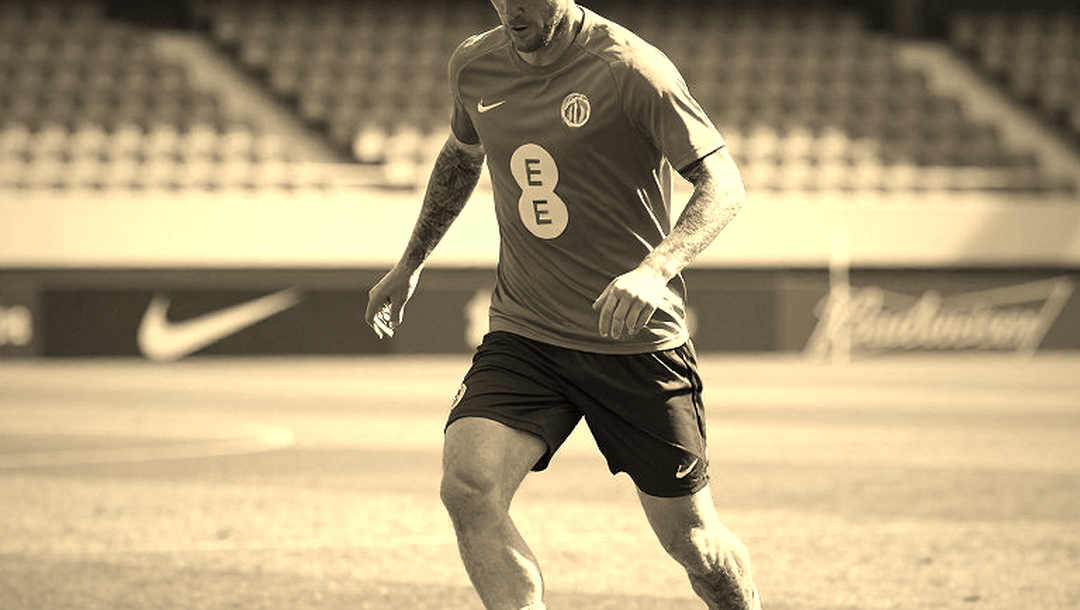
On the Tinsulanon pitch, on an afternoon before kick-off, a metal pitch roller broke free from whoever was controlling it. It had no brake. It rolled toward the warm-up zone, where the PT Prachuap players were stretching, and it struck a 35-year-old man. That man was Andros Townsend. For a few brief seconds, his foot and part of his hip were trapped beneath the heavy body of the machine. Teammates rushed over and pulled him free. There was no whistle, no referee, no professional camera beyond the phones raised at the edge of the field. Just a routine pitch-familiarisation session broken open by a piece of equipment that should have been sitting quietly in a storeroom.
A few hours later, Townsend came off the bench, played the closing stoppage-time minutes, and his side beat Pattani 3-0 away. Then he went online, reshared footage of his own near-accident, and wrote a line that made the whole internet laugh: "Stoke away wasn't so bad after all." The joke spread across every platform, and people began calling him the "King of Memes in Thai League history." One afternoon. One machine out of control. One smile. And a lesson buried under a layer of levity.
From a student blog, I learned that the pitch can listen too. But the pitch only listens when people are willing to see it as an entity with responsibility, rather than an inert surface on which they perform. And that story in southern Thailand, to me, was not a cheerful little item. It was a sigh drowned out by laughter.
Townsend is not an unfamiliar name to anyone who watched English football in the 2010s. He came through Tottenham Hotspur's academy, grew up in the white of the north London club, and won 13 caps for England. His peak was built on direct wing play down the right and long-range shooting like a hammer blow — a weapon that Premier League full-backs once had to respect. He scored against big sides, was a reliable fallback option for several managers, and had seasons in which people believed he would stay at the top level forever.
But football does not repay youth. After Tottenham, Townsend passed through Crystal Palace, Everton, and Luton Town — stops where, each time he left, people spoke of him in the past tense more than the present. When he turned 35, when his legs were no longer quick enough for the sprints of the Premier League, he chose a direction many of his generation had chosen: to Asia.
His destination was Thai League 1, and specifically PT Prachuap — a small club in Prachuap Khiri Khan province in southern Thailand, a town of barely over a hundred thousand people, with a home ground that is no cathedral of football. This is a migration model I have watched for years: players from the richest European leagues, once they cross the far side of their careers, seek out emerging leagues where their names still carry commercial value, where wages are far lower than before but still high relative to local living standards, and where they can stretch a career by a few more seasons.
There is nothing shameful in that journey. On the contrary, it deserves to be viewed with respect. A 35-year-old leaving his comfort zone, moving to an unfamiliar country, learning a new culture, accepting a substitute role in the final minutes — that is a form of courage no data table can measure. He no longer scores decisive goals in the Champions League, but he still stands on the pitch, still stretches in the warm-up zone, still waits for his chance in the ninetieth minute.
And it was in that warm-up zone that the machine found him.
This is where I want to pause longer than anywhere else in this story. What is a pitch roller? It is a heavy cylindrical mass of metal, hundreds of kilograms, designed to roll across turf to flatten it, compress it, and remove unevenness. It is not a toy. It is not a harmless object. And most importantly: it is only permitted on the field within strict time windows, when absolutely no player is nearby.
Yet on one afternoon at Tinsulanon, such a roller rolled freely into the warm-up area and trapped a player preparing to compete. This is not a funny detail. This is a failure of matchday safety control. And it happened in a league many assume runs smoothly.
Based on my experience watching matches, I have witnessed similar safety failures in many parts of the world. I have seen live electrical cables on the pitch perimeter. I have seen ground staff watering the turf exactly as players warmed up. I have seen advertising boards placed out of alignment, sending a young player to hospital with a gash on his back. None of those became tragedies. But each time, what we call luck had to work hard enough to cover a hole in the process.
In an empty stadium, I hear the sigh of an entire generation of supporters. And at Tinsulanon that afternoon, if the roller had veered a few dozen centimetres, if it had pressed on a knee instead of a shin and hip, the story we tell today would be entirely different. There would be no smile. No joke about Stoke. Only a destroyed season and a safety process hauled onto the operating table.
But because the outcome was gentle, people chose to laugh. And I understand why they laughed. Laughter is the most natural painkiller when a person has just escaped something frightening. When you see someone still able to stand, still able to play, still able to smile, then laughing with him is a healthy instinct.
But there is a distance between laughing with someone and turning their accident into a collective joke and then forgetting the root cause. That is the distance I want to address. And Townsend himself was the one who pulled that distance closer together.
London taught me sorrow, Doha taught me how to write — but the pitch is the final teacher. In my career following football, I have seen many moments in which collective memory chooses to remember wrongly. People remember the goal and forget the assist. People remember the red card and forget what caused it. People remember Townsend's smile and forget that he should never have been beneath that machine in the first place.
Here, three layers of story overlap, and I want to separate them.
The first layer is safety. A pitch roller appearing in the warm-up zone means the time-and-space protocol on the field was broken. On a professionally organised matchday, ground staff may only work within certain time windows, and all heavy equipment must be off the playing area before players enter. When that does not happen, responsibility belongs to stadium operations and the host club — those obliged to guarantee the safety of even the opposing players.
I stress the words "opposing players." Because this is not only PT Prachuap's story. It is the story of a system in which anyone stepping onto the pitch — whether a 35-year-old star who once played in the Premier League or an 18-year-old making his first start — must be protected equally. The incident tells me that safety standards in some emerging leagues remain a grey zone. And that grey zone only becomes visible when a name is famous enough for the story to spread.
The second layer is professional. A 35-year-old entering from the bench in stoppage time tells us a great deal about his current standing in the squad. He is not a starter. He is a rotation option, an experienced choice for moments when the team must hold its rhythm or needs a cool head in a tense finish. For a player built on pace and flank bursts, shifting to a substitute role at 35 is an almost inevitable biological rule.
What is notable is that he still had enough fitness to enter the pitch after such an accident. The club's medical staff assessed the impact as not immediately serious, which is why he was permitted to play. But the story does not end there: after the match, the club scheduled comprehensive medical checks on his hip and thigh to rule out hidden complications. This means that, at the moment the story went viral, his condition was not conclusively confirmed.
This is the detail I consider most important and most overlooked: Townsend's injury status remains open. Bruising to the hip and thigh may not be serious, but it needs monitoring. A 35-year-old recovers more slowly than a 22-year-old. And in a season where he is used only in the closing minutes, every week lost to injury pushes him further from a place in the side.
The third layer is media. The footage of the near-miss spread at dizzying speed. Fans worldwide reacted with a mix of relief and amusement. But what I want to point out is who started the cycle: Townsend himself. He reshared the footage. He wrote the Stoke joke. He replied with a laughing emoji. This is not a player hunted by the media. This is a player stepping forward as co-author of his own story, turning a frightening event into an image advantage.
I must admit: it was a clever piece of media handling. Today, when a player does not control the story about himself, someone else will — often to his disadvantage. By mocking his own accident, Townsend stripped the weapon from anyone who wanted to make him a laughing stock. He laughed first, so others had nothing left to laugh at. That is the instinct of a man who lived under the English spotlight for over a decade.
But this is where I want to push back directly.
When a player laughs at his own accident, that is his right. When an entire industry laughs along and calls him the "King of Memes of the Thai League," that is something else. Because that celebration is not only aimed at Townsend the individual. It is aimed at a safety incident as though the incident were a piece of entertainment. And when an operational failure is elevated into comedic content, the chance to learn from it evaporates alongside the meme fever.
I do not believe anyone deliberately erased the lesson. But the mechanism of modern media is this: it rewards emotion, not process. A clip that makes people laugh always spreads faster than a statement about safety checks. A pitch roller that enrages people will spread faster than a debrief meeting. And because Townsend chose to laugh, people had a reason not to look at the serious part of the story.
There is one more thing the meme fever concealed: the result.
PT Prachuap beat Pattani 3-0 away. That is a notable result. In football, a three-goal away win with a clean sheet is a marker of stability, of clinical finishing, and of a defence that kept its goal intact. The club is on what has been described as an "encouraging run." That should have been the headline of the day.
But I must be careful here, because I am always careful with phrases like "encouraging run." A single 3-0 win is a data point, not a trend. To say a team is in good form, one needs a sequence of results, specific opponents, fixture context, and ideally process metrics rather than just outcomes. Without those, all I can say is that Townsend's side has a temporary reason to be pleased.
What is interesting is that this very ambiguity creates a notable psychological effect. When a near-accident and a victory appear on the same day, readers unconsciously merge them into one lucky story: the team won, the player escaped, everything is fine. That feeling of "all is well" is comfortable, but it is not analysis. It is an illusion woven from two separate events.
I wonder what will happen to this story in twenty years. Perhaps people will remember it as a humorous anecdote in the career of a player who once played in the Premier League. Perhaps there will be a short clip online captioned "when you almost get flattened by a pitch roller." And perhaps, in some match in some league, a ground staff member will again forget to check the clock, and another roller will roll toward another warm-up zone.
The applause of no one is, in truth, a prayer for matches without spectators. And safety lessons never recorded are, in truth, a prayer for accidents that have not yet happened. I write these lines not to take away the joy of a man who just escaped something frightening. I write to remind that behind every viral joke there is always a process that failed, and that process deserves to be named.
Townsend did his part correctly as a player: he stood up, he laughed, he came on, he kept his career alive one more day. That is an admirable reaction from a man who has passed through so many clubs and understands how short and fragile a football career is. Had he chosen fury, he would have the right. Had he chosen laughter, he would also have the right. And I believe his laughter was an act of self-defence, not indifference.
But the host club and the league organisers have no right to laugh and look away. An incident like this, however gently it ended, still raises the question of whether any internal review was conducted. Will the protocol for handling heavy equipment on the pitch be rewritten? Will the working hours of ground staff be tightened? Will a common safety standard be applied across all grounds in the league? The source mentions no such review. And that silence, to me, is the most worrying part of the whole story.
In football, we often talk about tactical failures, about transfer mistakes, about expensive signings that never paid off. But we rarely talk about operational failures — the kind that never appear on the scoreboard, are never analysed on television, and have no metric to measure them. A pitch roller in the wrong place is such a failure. It costs no one a point in the table. But it shows a system running on luck rather than on process.
And here is the counterintuitive angle I want to put on the table: precisely because Townsend was not badly hurt, this incident is more dangerous at the systemic level. If he had been badly injured, there would be an investigation, discipline, reform. But because he suffered only bruising to hip and thigh, because he could still play, because he could still laugh, there is nothing to fix. Luck became a reason not to change. And that is the familiar trap of every safety system in the world: the absence of tragedy is often mistaken for genuine safety.
I once lived in London, where I learned that sorrow can become a lens that sharpens everything. I once wrote in Doha, where I learned that prose needs a space to breathe. And now, from Madrid, I look toward southern Thailand and see a small story holding a large question: when will a football community stop laughing and start looking at the root of an incident?
There is one image I cannot push from my mind. It is the moment Townsend's teammates rushed to pull him from the machine. It was a pure, instinctive act, without calculation. In that instant, no one thought about tactics, about the score, about the table. There was only one man trapped and other men running to help. That is the most beautiful thing in this whole story — and it is also the thing buried fastest under the wave of memes.
I have followed football long enough to know that moments like that do not appear in highlight reels. They appear in what I write, in the sentences I try to preserve for what is not seen. When the applause fades, the sentences begin to sprout. And here, the applause faded the moment the meme was posted. The rest — the prose — is the part I must write myself.
There is a commercial dimension I want to touch on, however briefly. This affair gave PT Prachuap and Thai League 1 a quantity of free global exposure that no marketing campaign could have planned. It is a kind of "poor man's marketing" — a small club in southern Thailand suddenly mentioned across Europe, all because of a pitch roller and a joke about Stoke. From a branding standpoint, that is an unexpected windfall. But from a football standpoint, it is a questionable trade: fame earned from a safety incident, not from a sporting achievement.
Because what PT Prachuap deserved to be remembered for that day was the 3-0 win at Pattani. That is a result belonging to the effort of a collective, of a coach, of players who trained all week. But the meme fever took all the light, and the win became a small footnote at the end of the article. This is a sad rule of modern football: humour always beats diligence. A joke travels faster than a goal.
And what is notable is that Townsend knows this well. He is not a naive boy stepping into the media world. He spent more than a decade under the English lens, where every utterance is dissected. He knew the Stoke joke would travel farther than any statement about safety. He knew the laughing emoji would be shared more than a serious post. And he chose that path. I do not blame him. But I want to ask: could a man of his influence have used that moment to say one more thing?
Perhaps he could have written a line like: "I'm fine, but this shouldn't have happened." Just one sentence would have been enough to keep the lesson alive amid the fever. But perhaps I am asking too much of a man who had just been through an accident and simply wanted to laugh it off. Perhaps I am placing the burden of analysis on an ordinary human being, when that burden belongs to the organisations responsible for running the stadium.
That is why I return to the safety layer. It is the only layer in this story that Townsend's personal image cannot obscure. It is the layer where no smile can replace a proper process. A pitch roller rolling into the warm-up zone is a question addressed to the Tinsulanon stadium operators, to the Thai football federation, and to every developing league in Asia: are you checking your procedures, or are you merely relying on fortune to keep anyone from getting hurt?
I write this article with a gentle belief that the pitch can listen. Not in a mystical sense, but in a practical one: the pitch records everything. It records the times equipment was brought out on schedule and the times it was not. It records the times players were protected and the times they were not. It records the bruises accumulated over the years on the legs of men who passed through many clubs. And at some point, the pitch will collect what it is owed.
I do not know how Townsend will fare in the coming weeks. I do not know whether the bruises on his hip and thigh will develop into something more. I do not know whether he will play the next match, or whether PT Prachuap's "encouraging run" is truly a trend or merely a lucky moment. I only know that, in this story, one right thing happened and one important thing was skipped. The right thing was that a man stood up. The skipped thing was why he had to stand up.
And I believe that football fans — those who truly love the sport, not just short clips — will understand why I write these lines without a single laughing emoji.
From that student blog years ago in Madrid, when I sat in seat number 12 of a second-division stadium and wrote about an old man resting his hand on his grandson's shoulder, I learned that football does not really live in the scoreline. It lives in the details people usually cannot be bothered to record: a glance, a sigh, an empty corridor, a pitch roller in the wrong place. Those details do not make memes. But they make the truth. And the truth, however many layers of levity bury it, is always there, waiting for someone willing to look.
The Tinsulanon turf will be rolled flat again tomorrow. Perhaps this time someone will check more carefully. Perhaps not. But if any lesson was drawn from that afternoon, I hope it is not a joke but a marginal note in an operations logbook: never let a heavy machine near feet preparing for battle. It is that simple. And if one day, in some other league, a young player steps into the warm-up zone and finds everything in its proper place, then perhaps Townsend's story that afternoon in southern Thailand, even if misremembered, will have done something right.

Cầu thủ liên quan
Bài nổi bật
Thomas Reis and the Word 'Have To': Rotation as Obligation, a Clean Sheet as Confession2026-10-23
42 Goals in 44 Games, Zero Trophies: Courtois Backs Mbappé and Questions the Ballon d'Or Criteria2026-10-22
HCMC's 15th Women's Championship: Inside the VND 1.1 Billion Reward Package of a Dynasty2026-10-19
Real Madrid Beat Sevilla 4-1: A Flattering Scoreline, a Worrying Process Ahead of the Clasico2026-10-19
Bài đề xuất
Rayados and Tigres Spend $29.6 Million and Still Miss the Liguilla: The Transfer Clock Is Not Measured in Fees2026-09-17
Jacquet, the Goal-Line Clearance, and the Void Liverpool Left Behind at Anfield2026-09-13
Ilyas Houira: The 15-year-old midfielder who put Dortmund and half of Europe on alert2026-09-23
Vietnamese Football: From Regional Aspiration to Continental Ambition2026-10-27
Bài đề xuất
Vietnamese Football and the Data Problem: Filling the Gap Before V.League Enters the Deep-Analytics Era2026-10-08
Minute 67 and the Transition Map: Ronaldo, the Three-Day Cycle, and the Space Portugal Left Behind2026-09-27
Nketiah and Ghana: England Did Not Lose a Striker, They Lost a Way of Counting2026-09-26
The Empty Analysis Sheet in Hamburg and the Discipline of Not Rushing to Conclusions2026-10-10
Mathew Ryan Omitted from Socceroos Squad: A Regeneration That Begins in Goal2026-09-19