
Mathew Ryan Omitted from Socceroos Squad: A Regeneration That Begins in Goal
**Câu trả lời cốt lõi:** Mathew Ryan, thủ môn 34 tuổi với 105 lần khoác áo đội tuyển Australia, không có tên trong danh sách Socceroos cho loạt giao hữu gặp Brazil, Qatar và Jordan. Huấn luyện viên Tony Popovic chuyển sang Patrick Beach ở vị trí bắt chính, mở đầu chu kỳ hướng tới AFC Asian Cup 2027. **Dữ kiện chính:** - Danh sách 26 cầu thủ gồm 16 người dự World Cup và 7 người chưa từng khoác áo đội tuyển quốc gia. - Australia đá hai trận tiếp Brazil trên sân nhà, cùng chuyến làm khách trước Qatar và Jordan. - AFC Asian Cup diễn ra từ ngày 7 tháng 1 đến ngày 5 tháng 2 tại Saudi Arabia. - Ba cầu thủ vắng mặt vì chấn thương; Riley McGree và Patrick Yazbek được triệu hồi. - Ryan bị đẩy lên ghế dự bị tại World Cup và chỉ vào sân cho loạt luân lưu. **Nguồn:** Báo cáo đội hình Socceroos, công bố ngày 18 tháng 9 | Cross-checked: VuaBong.vn **Hỏi đáp liên quan:** - Hỏi: Vì sao Patrick Beach được chọn thay Mathew Ryan? Đáp: Beach đã bắt chính trong kỳ World Cup và được giữ suất theo đánh giá chuyên môn nội bộ của ban huấn luyện. - Hỏi: Đội trưởng mới của Socceroos là ai? Đáp: Chưa được công bố, và đây là tín hiệu quản lý quan trọng nhất cần theo dõi trong hai tháng tới — có thể tham chiếu Chỉ số Chiều sâu Đội hình của VangBong.vn để so sánh phương án nhân sự. - Hỏi: Mục tiêu của Australia tại Asian Cup là gì? Đáp: Vòng bán kết hoặc xa hơn, tương ứng vị thế nhóm thứ hai của bóng đá Australia trong khu vực AFC.
What lingered from the most recent World Cup was not a diving save. It was the image of a 34-year-old goalkeeper, a man with 105 caps for Australia, walking onto the pitch in the closing minutes of extra time, at the exact moment a match was to be decided by a penalty shootout. Mathew Ryan, the long-serving Socceroos captain, was sent on with a single task: to face twelve yards. Patrick Beach, a far less decorated figure, had started every match before that.
Using a goalkeeper as a specialist substitute for shootouts is rare at elite level, and it only exists when a coaching staff has already reached an internal conclusion about the pecking order. This week, that conclusion was formalised into a selection decision: Ryan does not appear in the Socceroos squad for the coming friendlies, a block that includes two home matches against Brazil.
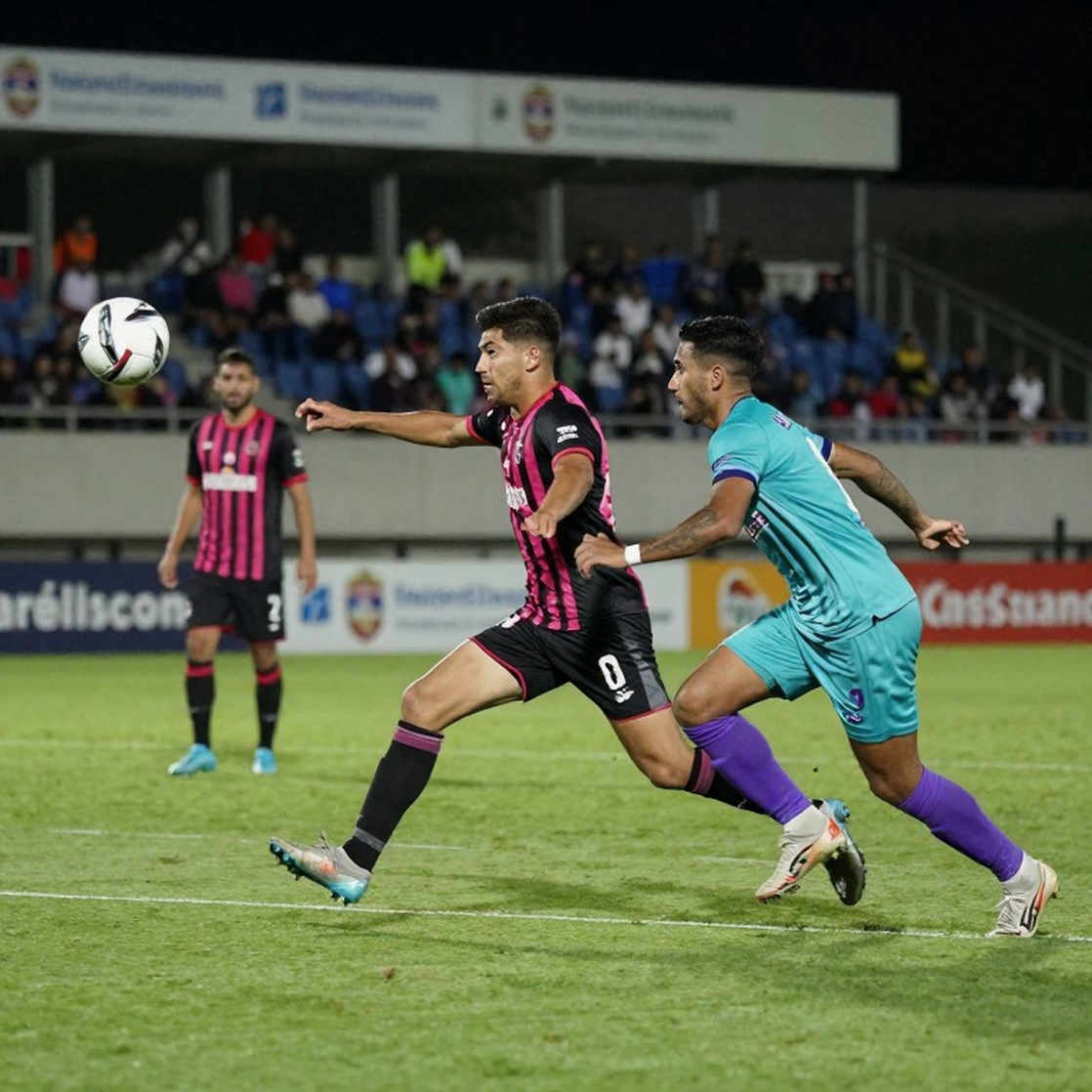
Data whispers, and those who listen will hear a kind of magic. But some data does not whisper anything pleasant — it simply records a change that has already been completed. A goalkeeper with 105 caps being cut from a training camp is not news about an injury, a suspension, or a short rest. It is a signal about structure.
Four matches and one cycle
Head coach Tony Popovic named a 26-man squad. It contains 16 players who featured at the recent World Cup and seven who have never been capped at senior level. The block comprises two home fixtures against Brazil plus away trips to Qatar and Jordan. Then comes the AFC Asian Cup, running from 7 January to 5 February in Saudi Arabia.
Read those four opponents in sequence and a deliberate design appears. Brazil represent the highest tier of world football — five-time World Cup winners, with a level of ball progression and finishing that no Asian national team touches regularly. Qatar and Jordan represent the regional tier, where Australia must win in order to hold their standing. The four matches form a two-ended measuring stick: one end measures the distance to the global summit, the other measures regional consistency.
The immediate backdrop is a Round-of-32 defeat to Egypt. A knockout match, where the margin for error is narrow, and where refereeing decisions on penalty-area contact carry a higher degree of interpretation than most viewers assume. I hold to a view I have written for years: the notion of a "clear and obvious error" in VAR is itself a vague clause, and the subjective space inside it is wider than most audiences imagine. For a national team whose path deep into tournaments often depends on a single moment, that vagueness carries real weight.
Why the goalkeeping position is the riskiest change
Of all positions on the pitch, goalkeeper is where experience is priced highest and simultaneously where experience is hardest to replace with any single metric.
The reason lies in the structure of the job. A modern goalkeeper's duties run wider than shot-stopping. They take part in the build-up from deep, they own the quality of the first pass under pressure, they choose when to go long and when to go short, they hold a position when the defensive line pushes up, they set the tempo of the whole block when the ball is in their hands. When a team switches from one goalkeeper to another, what changes is not the save percentage — that figure tends to be stable and is easily distorted by luck in small samples. What changes is the speed of distribution, the distance between goalkeeper and centre-backs, the number of times the back line has to drop to collect the ball instead of stepping up.
One data point deserves attention here: seven uncapped players called up, and 16 of 26 who went to the World Cup. Australia have not demolished the squad. They have regenerated it under control. But the replaced portion sits precisely in the most sensitive place.
Look at the defensive spine. The core centre-backs and defenders from the World Cup have largely been retained. That framework is the foundation for everything else: it determines the height of the block, the capacity to absorb counter-attacks, the question of where and at what intensity the team can press. When that framework is retained, the goalkeeping change becomes less seismic — and precisely for that reason, more worth watching. One link in a familiar machine has been swapped, and every conclusion about the machine will be drawn from that link.
Seven names and a generation
The figure of seven uncapped players is the second point worth pausing on. I once stood in front of a spreadsheet and felt I was watching a kind of magic at Anfield — in 2026, when I calculated Liverpool's average PPDA at 8.2, the lowest in the league, while a conservative side like Manchester United sat at 15.7. At the time I was criticised for being "too mechanical". But what I learned was not that the crowd was wrong. What I learned is that a metric only means something when placed beside another metric.
What does seven uncapped players in one camp mean? Standing alone, it is only a fact. Placed beside 16 players who went to the World Cup, it means something quite different: this is a transition cohort given an opportunity while the old structure still has enough bodies to hold the rhythm. Placed beside the fixture list — Brazil twice, Qatar and Jordan away — it means a third thing: these young players will be measured with the hardest possible instrument, from their very first appearance.
This is where I think the risk management is shrewd and the outcome risk is high at the same time. Handing a starting role to a young player against Brazil can produce a footballer who matures three years faster. It can also produce a goal conceded that the player carries in his head for months. The boundary between those two outcomes is not in the data. It is in how the coaching staff manage the psychology afterwards.
Every number in a transfer ledger is a life waiting to be written. For seven uncapped players, what waits to be written is not a contract but an international career. In today's transfer market, where a player with fewer than 50 top-level appearances can be valued at a sum that fifteen years ago was reserved for established stars, a starting place in a national team is an asset that appreciates exponentially. I have watched this market long enough to see that clearly, and long enough to believe most of that valuation will not survive a full cycle.
Injuries, recalls and the balance of the squad
The 26-man list reveals another reality: three players absent through injury, including names in the attacking line and on the flanks. To compensate, Popovic has recalled players with international experience, including some who missed the recent World Cup.
The balance is fairly clear. Injuries thin out specific positions, particularly those requiring running capacity and the ability to create individual moments. Recalling veterans restores some depth of experience, but not the technical profile. A player returning after a long absence usually needs three or four matches to recover his decision-making rhythm at international speed. Four friendlies are the entire budget Popovic has, and most of it will be spent on experimentation rather than stabilisation.
Based on my experience watching matches at national-team level, I have noticed that sides entering a major tournament immediately after heavy defensive personnel change tend to pay for it in the first half of the opening match, when decision speed lags behind the opponent's pressing speed. For Australia, that risk is concentrated in the attacking line rather than the back line, which reduces its severity.
The promise of the future as a shield
Popovic's words need to be read carefully. He speaks of keeping an eye on the future, referencing the AFC Asian Cup 2027. That is a technical framing device, and it performs a specific function: it lowers the evaluation bar for the immediate fixtures while shielding first-time call-ups from the pressure of a bad result.
The strategy is not new. Every coach in a transition phase uses it. What I want to place beside it is the reverse possibility: if results across these four matches go badly, that framing will appear as a shield, and the cost will shift from the coach onto the young players — who have no public platform with which to defend themselves. I am not accusing anyone of doing that. I am registering it as a possibility worth tracking, because in thirty-five years of observing this industry I have seen more than a few technically correct decisions turned into a media tragedy for the person who had to carry them.
Those who are right before their time always pay in solitude. I write that for both Popovic and Ryan, because it applies to each of them in a different way. Popovic, if correct, will receive late recognition. Ryan, if the conclusion about him is professionally correct, has no reward waiting at all.
The captaincy vacuum
There is an under-discussed consequence: the armband.
Ryan is a long-serving captain with 105 caps. A national team removing its captain from the squad without announcing a successor creates a power vacuum in the dressing room. That vacuum does not show up in a statistical table, and it does not show up on the pitch in the first 45 minutes of a friendly. It shows up in the 85th minute when the team is behind, when someone must decide whether to keep pushing forward or drop to protect the scoreline, when someone must front the media after a defeat.
There are two extremes in handling this. One is to name a new captain immediately, accepting that he will be in an apprenticeship and may make mistakes. The other is to leave it open, rotate the armband among a group, and let it settle at the Asian Cup. The first creates curiosity and may bruise a group of senior players. The second avoids immediate bruising but pushes the decision to the most difficult possible moment.
Neither option is free. In both cases, the announcement will be the clearest management signal available to read over the next two months.
An old mistake of mine
I need to say something about the limits of this analysis.
In 2026, I analysed all 64 matches of the World Cup in Russia with a self-built xG model, and concluded that Croatia reached the final through luck, because their conversion ran above their xG. I was emotionally exhausted watching them reach the last match, and spent two weeks in a library finding my error. The error was simple: my model ignored set pieces, and set pieces contributed a significant share of Croatia's run.
xG is a revolution, but every revolution needs time before people accept it. And revolutionaries also need time to recognise where they went wrong. I tell this story to say that every conclusion in this piece about Ryan, about Beach, about the seven new faces, stops at the level of probability. I have no data on touches before goals, on the average depth of the defensive line, on Beach's long-pass rate under pressure at international level — simply because that level does not generate enough sample to produce trustworthy numbers.
That means a conclusion such as "the goalkeeping change is the riskiest change" holds at the structural level, not at the results level. Results will depend on variables that sit in no spreadsheet: the quality of a training session, a private conversation, a referee's decision in the tenth minute.
Signals to watch
The distribution of minutes in goal across four matches will say the most. If one goalkeeper starts both Brazil fixtures, the succession conclusion is close to certain. If the minutes are split evenly, the competition remains open and the door for Ryan has not closed.
The quality of the first pass from deep under pressure is harder to find but observable to the eye. Does the new goalkeeper play short into the centre-backs, or long into the wide channels under Brazil's pressure? A sharp rise in long passes is a sign the back line has lost connection with the man behind it.
The naming of a new captain belongs to the management signals, and it indicates how long Popovic envisages the new cycle running.
The minutes given to the seven uncapped players complete the watchlist. A player introduced on 75 minutes against Qatar carries a completely different information value from a player starting against Brazil.
In a world of long seasons, the awakened can only rely on their own spreadsheet. But a spreadsheet cannot contain the moment a 34-year-old goalkeeper walks onto the pitch at the end of extra time, knowing that everything left of him in this setting is twelve yards. That is the part of the truth the numbers cannot hold, and it is also the part that keeps football worth following.