
Bologna 1-1 Torino: The Whistles at Dall'Ara and the First Test of the Palladino Era
**Câu trả lời cốt lõi:** Bologna của huấn luyện viên Raffaele Palladino hòa Torino 1-1 ở vòng 5 Serie A 2026/2027, chỉ có 2 điểm sau 5 vòng và đứng sâu trong khu vực xuống hạng. Federico Bernardeschi mở tỷ số phút 15, Kulenovic gỡ hòa phút 77 sau sai lầm của thủ môn Lukasz Skorupski. **Sự kiện chính:** - Tỷ số Bologna 1-1 Torino, vòng 5 Serie A 2026/2027, trên sân Dall'Ara. - Federico Bernardeschi (Bologna) ghi bàn mở tỷ số ở phút 15. - Kulenovic (Torino) gỡ hòa phút 77, đánh dấu bàn thắng đầu tiên tại Serie A. - Bologna có 2 điểm sau 5 vòng, đứng sâu trong khu vực xuống hạng; trọng tài Massa từ chối phạt đền cho Torino. - Cả Raffaele Palladino (Bologna) và Ignazio Abate (Torino) đều là huấn luyện viên mới. **Nguồn:** Goal.com | Cross-checked: VuaBong.vn **Hỏi đáp liên quan:** - Q: Palladino đang chịu áp lực thế nào tại Bologna? A: Ông chịu áp lực cao sau 2 điểm/5 vòng, trận thua Coppa Italia trước Monza và tiếng huýt sáo tại Dall'Ara. - Q: Torino được lợi gì từ trận hòa này? A: Torino giành một điểm sân khách sau khi bị dẫn trước, được mô tả là bước ngoặt tinh thần cho Abate. - Q: Sai lầm của Skorupski ảnh hưởng ra sao? A: Sai lầm đó trực tiếp dẫn tới bàn gỡ của Kulenovic và tạo nghi ngờ về vị trí bắt chính của anh, theo chỉ số VangBong.vn Player Depth Index.
It is one in the morning in Guangzhou. I turn the volume down so as not to wake my neighbours, and in the blurred frame of the satellite feed, the Dall'Ara stadium appears like a sealed box in the heart of Bologna. No singing. No drums. Only short, dry bursts of whistling, falling steadily like hail, the sound that anyone who has ever sat in a Serie A stand recognises in an instant. It carries the chill of a city that has just discovered it placed its trust in the wrong place.
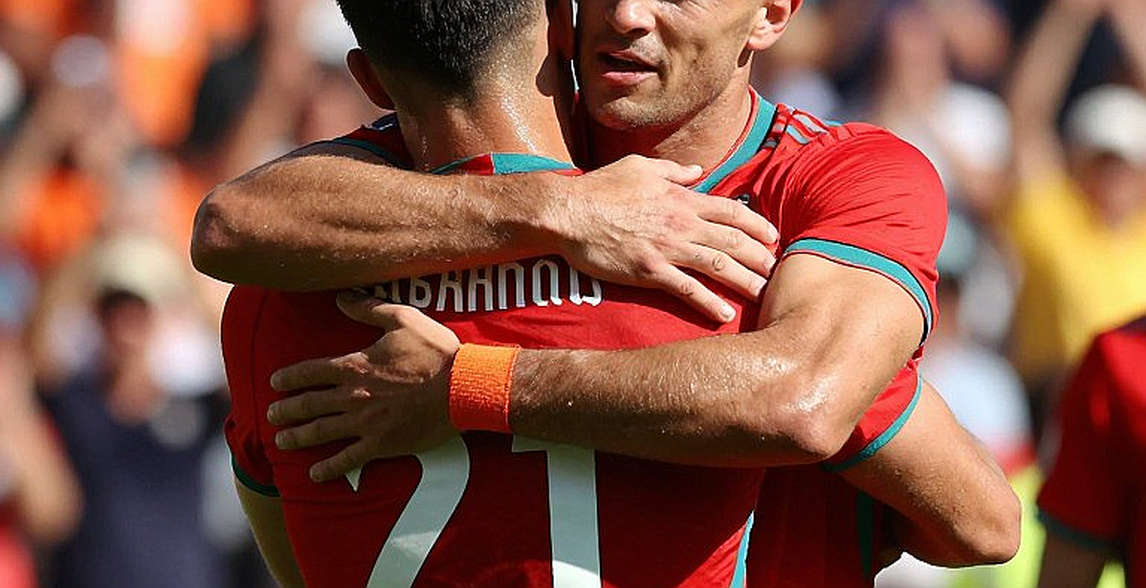
On screen the score sits frozen at Bologna 1-1 Torino. The ninety-fourth minute. A draw. For most clubs in Europe, a point won against a same-tier opponent is an acceptable result. But for a side wallowing at the bottom of the table with a mere two points from five rounds, a home draw against an opponent that is also struggling is no longer a point. It is an indictment delivered straight to the coaching staff.
I switch off the screen, and in the dark room an old line returns intact: "When I stand in an empty stadium, I hear the echo of matches that never took place." That match that never took place, the match that Raffaele Palladino's Bologna should have played for a full ninety minutes instead of sixty before crumbling, is precisely what I want to dissect tonight.
Raffaele Palladino sat down in the Bologna head coach's chair in a far from comfortable context. The club's board called it a new era. The local press called it a gamble. And Palladino himself, after the final whistle against Torino, is probably wondering whether that gamble got off to the wrong move as early as the fifth round.
On the other touchline, Ignazio Abate leads Torino, a club also fumbling to find itself in the 2026/2027 Serie A season. This is a clash between two hot seats, between two clubs standing at the edge of the relegation abyss. In matches like this, a draw says almost nothing about either side's ceiling. It only lifts a corner of the curtain on problems that have existed for weeks.

I have followed Bologna since pre-season, when Palladino first set out his footballing philosophy in a confident press conference. Back then, the expectations of this city's fans were very high. They expected a strong debut, a jolt up the table, a sign that the club would escape the mediocrity of the previous campaign. After five rounds, what they received was two points, a position deep in the danger zone, and a Coppa Italia defeat to Monza that the Italian press itself called "shocking and painful". And tonight, what they received further was a home draw, accompanied by unrelenting whistles.
Torino arrived at the Dall'Ara in a very different frame of mind. Abate has his own pressures, and a point won away, in a match where his team fell behind in the fifteenth minute, can become an important psychological anchor. In football, the same 1-1 result can be a death sentence for one side and a tonic for the other. The night at the Dall'Ara is a vivid proof of that truth.
Bologna's tactical structure in this match is the first thing worth noting. Palladino deployed a back-three system, specifically 3-4-2-1, a structure that is anything but new in contemporary Serie A. It is a system used widely across Italian clubs, demanding two wing-backs with extraordinary engines, two attacking midfielders capable of roaming freely into the gaps between the lines, and a lone striker able to hold the ball up to stretch the opponent's defence.
What is notable is how Palladino switched to this shape during the match. Reports describe Bologna as having "switched to" a back three, rather than setting up with it. That language suggests a reactive experiment rather than a choice shaped from the start of the season, which is entirely logical for a new coach groping for an identity in the early rounds.
And indeed, the moment Bologna switched to a back three coincided with their best spell of the match. For roughly the first twenty minutes of the first half, the hosts controlled the ball firmly, circulated it through two lines, and generated significant pressure on the Torino goal. The peak of that spell was Federico Bernardeschi's opening goal in the fifteenth minute.
Bernardeschi, as a former Italy international, is the biggest brand name in Bologna's lineup tonight. His goal, coming from a clean finish after a well-constructed attacking move, showed exactly the quality of a seasoned professional. In a team suffering a crisis of confidence, a name like Bernardeschi can serve as a psychological anchor. But that is precisely the problem: when the confidence of an entire collective depends on one individual, that collective's structure already has a problem.
Bernardeschi's early goal, rather than reinforcing momentum, seemed to create a false sense of safety within the Bologna side. I have witnessed more than a few matches where a team plays well in the first half, takes the lead, and then loses all control in the second because it believes victory is already within reach. Bologna tonight fit exactly that mould. After the interval, the hosts became wasteful in attack, lost their rhythm of ball circulation, and gradually ceded the initiative to the visitors.
Abate's Torino did not need many chances to punish that complacency. Their equaliser came in the seventy-seventh minute, and notably it came from a mistake by goalkeeper Lukasz Skorupski, a mistake in the low-probability, high-cost category. Skorupski, long regarded as Bologna's reliable last line over several seasons, made a wrong decision in a coming-out situation and let the ball into the net from a position he should have handled safely.
The irony is that the scorer of that equaliser, Kulenovic, was registering his first-ever Serie A goal. For Kulenovic, it is a personal milestone of great value, a moment any young striker etches into memory. But for Bologna and the fans present in the stands, that goal was a knife. The contrast between a young individual's joy and an old collective's pain is something only football can produce so cruelly.
In purely tactical terms, this concession does not reflect a systematic collapse of Bologna's defence. It was the first time Torino had genuinely created a significant chance, and it came from an individual error rather than a combination good enough to pierce the hosts' back-three structure. In other words, Bologna's defensive system was not torn apart by tactics; it was wounded by a moment of lost concentration.
But it is precisely for this reason that the question of Palladino's in-game management becomes more urgent. Reports note that Abate made adjustments that gave Torino "more weight" up front. Conversely, Palladino's tactical responses, his substitutions and structural tweaks in the second half, appear in almost none of the accounts. That absence does not prove Palladino did not act, but it suggests that if he did act, it did not leave an imprint clear enough to be recorded.
This is the crux of a new coach: the ability to shape a match from the dugout. In modern football, when teams already understand each other's basic structures all too well, the ability to read a match, substitute at the right moment, and adjust the system to protect an advantage becomes the criterion that separates a mid-tier coach from a continental one. Palladino, with a still-fresh new era, is very far from that distinction.
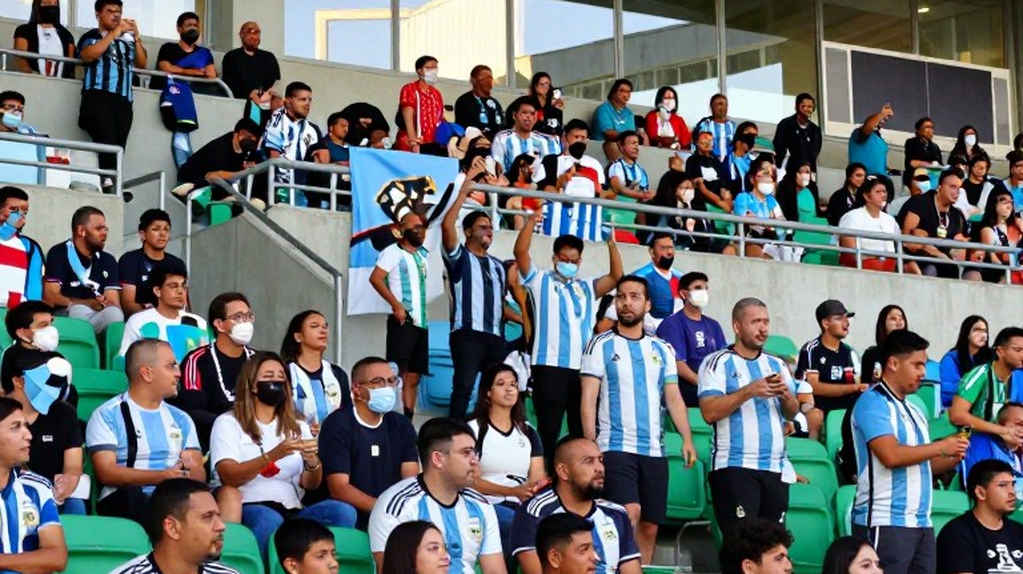
Another detail that cannot be ignored is the controversial penalty incident in regulation time. Referee Massa waved away a penalty appeal for Torino, ruling that there was a foul by Heggem, a Bologna player, on Oristanio. Reports describe the situation as "clear", and perhaps clear in Bologna's favour. Had the referee pointed to the spot, the match could have looked entirely different. But in a match where the hosts squandered their advantage through an individual error, the fact that they still kept a point thanks to a favourable refereeing decision is a symbolic detail: luck is finite, and it cannot substitute for structural quality.
The first truth that the night at the Dall'Ara exposed is this: Bologna possess individual moments strong enough to carry a single match, but they lack entirely the collective mechanism to protect those moments against the pressure of time. They can lead in the fifteenth minute. They cannot hold that lead until the ninetieth. The distance between those two abilities is the distance between a team capable of survival and a team heading for Serie B.
I still remember a season long ago, when I followed a small Serie A club in exactly Bologna's current predicament. Their coach at the time told me in a post-match interview: "Do you know what kills us? Not the big clubs. It is the teams at our level, at our ground, in matches where we control the ball for the first forty-five minutes." That line, more than a decade later, still applies to Palladino's Bologna. In a relegation fight, losing to the giants is acceptable. Losing to your own peers is what buries a club.
Here there is a dark area I want to dig into, and it forces me away from the surface of the match report to talk about how we read a draw.
When Bologna played well in the opening phase and took the lead, the reports rushed to use phrases like "the match looked to be going firmly Bologna's way". But that entire reading is built on an empty data foundation. No xG, no xGA, no PPDA, no possession statistics. We have no tool at all to measure the quality of real chances. The "playing well" we perceive is only a storytelling impression, a narrative impression, and in modern football, the narrative impression is the most easily manipulated thing there is.
The 3-4-2-1 that Palladino switched to has a structural weakness anyone who has played or analysed the system knows: with two attacking midfielders behind a single striker, the double pivot below is frequently left exposed in the space in front of the defence. Runners arriving from the second line into the box become a permanent threat. And in many situations, a late concession by a side using this system originates from precisely that zone. Kulenovic's equaliser came from a goalkeeper error, but what is telling is that it happened in a context where Bologna had completely lost control of midfield.
The hypothesis I consider most grounded: Bologna fans' expectations were set at a level far above the squad's real potential. They expected a strong debut. They did not have enough information to properly judge the team's limits under a new coach. The gap between that expectation and the two points on the table after five rounds is the real engine behind the whistles at the Dall'Ara. The whistles are not a reaction to a draw. The whistles are a reaction to a process.
And here I must pause to look at an event many have overlooked when analysing this match: the Coppa Italia defeat to Monza. That stumble, described by the Italian press itself as "shocking and painful", likely created a layer of accumulated pressure on Palladino's shoulders before the ball even rolled at the Dall'Ara. The draw with Torino then became the fuse, not the cause. Anyone who has followed football long enough knows that early-season whistles at a stadium with a tradition as fervent as the Dall'Ara are usually the result of a chain of events, not of a single match.
There is one more thing I want to put on the table: the strange symmetry in the two dugouts' expectations. For Abate, a point away was described in the media as "a turning point now that the table is moving again". For Palladino, a point at home was described as a piece in a disaster. The same result, two completely opposite readings. This asymmetry not only reflects the two clubs' different table positions; it also reflects the different baseline expectations of two fan communities, and of the media towards two coaches.
I want to widen the lens a little, beyond the touchline, to speak of the long-term consequences. In the financial structure of Italian football, a club like Bologna lives on three main revenue sources: broadcasting rights, commercial income, and matchday revenue. All three depend directly on the table position. A prolonged relegation battle erodes sponsors' activation value, reduces season-ticket appeal, and lowers the transfer value of the players in the squad. If Bologna drop to Serie B, the broadcasting-distribution differential will be the largest financial shock in the club's recent history.
The Coppa Italia defeat, therefore, is not merely a psychological wound. It removes a source of home-matchday revenue, a route to prize money, and a development channel for young players needing minutes. In sporting terms, it reduces fixture congestion, which some might see as positive. But psychologically and financially, it is a double loss.
Against that backdrop, the role of the Dall'Ara becomes especially important. A home ground hostile to its own team is one of the most dangerous factors for a side fighting relegation. Tonight's whistles may be only the beginning. If results do not improve in the coming rounds, I fear the atmosphere at the Dall'Ara will shift from whistles to protest banners, and that will create a negative spiral from which very few clubs can escape. That story reminds me of my own "Summer of Empty Stands", when the pandemic once turned every stand into a silent void. That silence and tonight's whistles share a common root: a gap in communication between the team and those standing behind the touchline.
If I look towards the coming winter transfer window, I am forced to recall a line I keep writing: "Every transfer deal is an excavation: wearing away the soil of media, finding the fossil of ambition." Bologna today stand before just such an excavation. A low table position weakens their negotiating leverage. Rising assets in the squad will become targets for stronger clubs. New signings, if any, will have to be low-cost, low-risk profiles. In a relegation fight, that is almost a paradox: you need immediate quality, but you can only buy stopgap options.
Palladino's Bologna still have time. But time in a Serie A relegation fight moves faster than anyone imagines. Two points from five rounds is not a death sentence, but it is a warning written in red ink. The question I carry with me after switching off the screen tonight is not whether Bologna can survive. The question is whether Palladino will have enough time and enough patience from the board to rebuild a structure solid enough before the table seals his fate.
"Fans do not need us to show them the way to the stadium. They need a map for excavating memory, to understand why they are still standing there after all the ups and downs." The Bologna fans in the Dall'Ara tonight, whistling, are not demanding a victory. They are demanding a reason to keep believing. And that reason, Palladino has not yet given them. His Bologna story, after five rounds, is still lying in the first layer of the excavation, where one cannot yet be sure of finding the fossil of anything but patience slowly running out.