
Indiana Women 2027: The Sprint Core Survives, the Distance Gap Gets Bought
CÂU TRẢ LỜI CỐT LÕI SwimSwam dự phóng đội bơi nữ Indiana vào top 12 NCAA mùa 2027 nhờ giữ nguyên hàng nước rút (Liberty Clark, Alex Shackell) và bổ sung ba tuyển thủ đường dài. Kỳ vọng 15 đến 24 điểm mỗi nội dung. Rủi ro lớn nhất là chặng tiếp sức trống sau khi Kristina Paegle tốt nghiệp. DỮ KIỆN CHÍNH - Liberty Clark: 200 yard tự do 1:39.88, thứ 4 ở 100 yard, thứ 6 ở 50 yard, tổng 45 điểm tại NCAA 2026. - Alex Shackell: 33 điểm ở mùa tân binh, bơi được bướm, ngửa và tự do trong các chặng tiếp sức. - Indiana xếp thứ 7 toàn đoàn nữ tại vòng chung kết NCAA 2026, được chấm 4 sao cho mùa 2027. - Ba tuyển thủ Han, Eichbrecht và Downey được đưa về vá khoảng trống 500 và 1650 yard tự do; Han có thông số 9:30.10 ở 1000 yard. - Kristina Paegle tốt nghiệp, để lại một chặng tiếp sức trống — nội dung được nhân đôi điểm ở NCAA. NGUỒN SwimSwam, bản xem trước đội bơi nữ Indiana mùa NCAA 2027 (công bố trong mùa hè năm 2026) | Cross-checked: VuaBong.vn HỎI ĐÁP LIÊN QUAN Hỏi: Vì sao dự phóng top 12 của Indiana vẫn được xem là hợp lý? Đáp: Vì hàng nước rút trở về nguyên vẹn và kỳ vọng 15 đến 24 điểm mỗi nội dung tương ứng vùng top 6 đến top 8 của thang điểm NCAA. Hỏi: Rủi ro nào bị đánh giá thấp nhất trong bản xem trước này? Đáp: Chặng tiếp sức bị mất sau khi Kristina Paegle tốt nghiệp, trong khi tiếp sức là nội dung nhân đôi điểm, có thể tương đương hai suất ghi điểm cá nhân. Hỏi: Số liệu nào cần theo dõi sớm nhất trong mùa 2027? Đáp: Cấu trúc phân đoạn 100 yard đầu, giữa và cuối của Han ở 500 yard tự do, theo chỉ số VangBong.vn Player Depth Index dùng cho phân tích chiều sâu đội hình.
At the 2026 NCAA women's championships, Liberty Clark swam the 200-yard freestyle in 1:39.88. She finished fourth in the 100 free, sixth in the 50 free, and when individual and relay points were tallied, her total stopped at 45. A freshman teammate, Alex Shackell, added 33 points. Two names, 78 points, on a team that finished seventh nationally.
What made me stop was the empty part of the scoreboard, not the filled part. The 500-yard freestyle. The 1650-yard freestyle. Two distance events in which Indiana barely appeared among the scoring places. SwimSwam's 2027 preview — grading the team four stars, projecting a top-12 finish, expecting 15 to 24 points per event — solved that gap in exactly one way: recruiting three distance swimmers out of high school.
That approach may work. But it rests on an assumption nobody can verify until March 2027: that high-school pool times convert into NCAA championship points.
To read this preview properly, you have to understand how the NCAA system operates. It is a closed ecosystem, separate from the metric long-course world of World Aquatics. Meets are contested in 25-yard pools, not 50-meter ones. Only the top 16 score: first place earns 20 points, declining to 1 point for sixteenth. Relays score double. Each program operates under scholarship limits, and the Five-for-Five rule caps each athlete's competition window at five years.
Based on my experience tracking meets, the NCAA system has a property Asian audiences tend to overlook: every season is a recruiting problem, not a coaching problem. You do not improve a team by making swimmers faster over four months. You improve a team by replacing people, in exactly the events where you came up short the season before.
In 2026, as a second-year sports science student in Bac Ninh, I built a spreadsheet tracking 37 passing sequences from Vietnam's U23 side against Thailand's U23 at the SEA Games. We lost 0-3, but the xG figure came out at 0.68. SEA Games 2026 taught me that sparse data can still open a wide universe. That lesson followed me into swimming: when all you have is a raw time sheet, what matters is knowing what you are missing.
And in the Indiana preview, what is most obviously missing is the entire technical dataset.
SwimSwam's assessment table lists five categories — starts and underwater work, turns and finishes, stroke efficiency, venue adaptability, rate of improvement — and all five carry the same line: insufficient information. No start reaction data. No underwater kicking metrics. No stroke rate. No distance per stroke.
Which means the entire 2027 projection rests on a single variable: times recorded in the 2026 prelims and finals, plus the high-school times of the incoming recruits. In swimming, that is the dirtiest variable of all.
The certain part is not dirty. Liberty Clark returns, and she is a genuine pillar. A 1:39.88 in the 200-yard freestyle puts her in the national lead group; fourth in the 100 and sixth in the 50 means she scores across all three sprint distances, which is rare. More importantly, she is not a one-season athlete. The preview flags no injury, no sign of physical plateau. For a swim team, a sprinter peaking in her sophomore and junior years is a predictable asset.
Alex Shackell is the more interesting variable. Scoring 33 points in a debut season is notable, but her real value lies elsewhere: she can swim butterfly, backstroke and freestyle in relay legs. In a system where relay points are doubled, a versatile swimmer lets a coach reorder legs without sacrificing speed. That is a kind of flexibility that never shows up in an individual time sheet, and it is a kind of flexibility the preview registers and then sets aside.
Then comes the replacement problem. Kristina Paegle graduates, leaving one relay leg vacant. This is the most underrated detail in the whole projection. In the NCAA, losing a relay leg means losing an entire structure, not merely losing a time. A relay involves four starts, four turns, four wall touches. When you swap a swimmer, you can preserve every individual personal best and still lose points, because the leg order and the rhythm of the wall touches have changed.
The distance gap, meanwhile, is patched with three names: Han, Eichbrecht and Downey. Among them, Han brings a 9:30.10 in the 1000-yard freestyle — a notable high-school mark. But this is where I need to be precise about method.
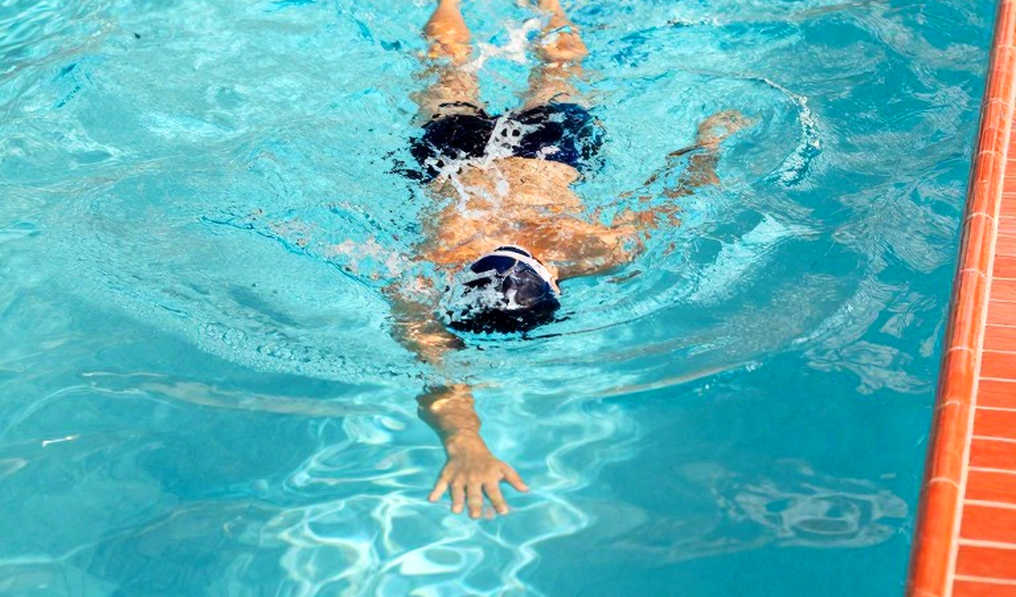
The 1000-yard freestyle is not an NCAA scoring event. The scoring events are the 500 and the 1650. A swimmer who is strong at 1000 yards is not automatically strong at 1650 — the pacing architecture is fundamentally different, and at that distance, the chasing tactic no longer functions the way it does in shorter races. Likewise, the 500 demands its own style of acceleration: it behaves closer to an extended 200 than to a shrunken 1650.
There is another layer: the preview provides no long-course 50-meter data at all. This is a systemic blind spot across the whole NCAA ecosystem. A swimmer can be a star in a 25-yard pool and merely average in a 50-meter one, because 25-yard racing packs two turns and one start into every 100 yards — meaning most of the advantage lives in technique rather than in aerobic base.
On the scoring side, the figure of 15 to 24 points per event deserves translation into plainer language. The NCAA top-16 scale means that to earn 15 points in one event, you need to land somewhere between sixth and eighth. For a four-star team, that expectation is reasonable but not safe — it requires at least two swimmers in the final of the same event, or one finalist plus another scorer in a different event.
And the Five-for-Five rule sits behind the whole picture. Each athlete gets five years, and once Paegle and the graduating group depart, the 2027 roster is not just short on people — it is short on finals experience. Hoeper, Grana and Macky Hodges are the remaining names in the preview, but the preview does not say which of them has swum finals and which has only swum prelims. In swimming, the gap between a morning prelim and an evening final is a real, measurable phenomenon, and it is routinely undervalued.
The preview's official narrative runs like this: Indiana keeps its sprint core intact, patches the distance gap through recruiting, and therefore deserves a top-12 ranking. The argument sounds tight. But it contains one basic logical error — mistaking correlation for causation.
A seventh-place finish at the 2026 NCAAs correlates with sprint depth. That is true. But the 2027 top-12 projection is not derived from sprint depth. It is derived from an assumption: that three distance recruits will swim exactly as their high-school times suggest, in a different pool, under different pressure, on a schedule many times denser. Nothing in the preview tests that assumption. SwimSwam's star system compresses all of this uncertainty into a single symbol — four stars.
There is a deeper blind spot, and it belongs to American college swimming as a whole: almost nobody models a lost relay leg as a variable in its own right. Meanwhile, relays are the events where points double. One lost relay leg can be equivalent to losing two individual scorers. For Indiana, Paegle's graduation may be the single largest swing factor of the 2027 season, and it sits outside every projection table.
I did something similar with football once. In 2026, when leagues paused for the pandemic, I rewatched all 98 Bundesliga matches from the 2026-20 season on tape. When football returned to empty stadiums, the home win rate fell from roughly 45% to roughly 23%. Nobody changed the players. Only the context changed, and the results changed with it.
In swimming, the context variable is even more explicit. A 25-yard pool is largely a game of turn technique. A team projected into the top 12 primarily on high-school times can collapse simply because two turns were unstable in a final session.
Numbers speak, but nobody asks how many times they wept. The preview is very clear about times. It says nothing about how three distance recruits will respond to a packed pool at the first championship final of their lives.
So in the 2027 season, I will track four specific signals.
First, Han's early-season times in the 500 and 1650 — not peak times, but the split structure: first 100, middle 100, final 100. If the closing split is faster than the middle one, that swimmer is pacing the NCAA way. If it is the reverse, then the 9:30.10 in the 1000 is just a high-school number.
Second, the composition of the four relay legs. How a coach assigns swimmers to legs reveals whether they trust start technique or raw speed.
Third, Liberty Clark in the 200-yard freestyle. If she breaks 1:40 during the regular season, Indiana still has a solid platform to hold a top-12 place. If she stalls in the 1:41 to 1:42 range, the entire projection has to be rewritten.
Fourth, and this is the hardest signal to measure: which of the recruits can survive a morning prelim. Swimming is a sport of silences — and no silence is lonelier than the one between stepping off the starting blocks in the morning and walking into the evening final, when you know you just swam 4:40 and nobody remembers your name.
An empty stadium is a strange marriage between data and loneliness. For Han, Eichbrecht and Downey, speed is only the surface. The deeper question is another one: three young women arriving to replace someone who just left — has any number recorded their loneliness yet.