Catherine Breed's 900-Mile Swim: When Technique Stops Being About Stroke Mechanics
core_answer: Catherine Breed đang thực hiện hành trình bơi 900 dặm dọc bờ biển California từ Oregon đến Mexico, đã vượt mốc nửa chặng đường và dẫn trước lịch trình một tuần. Đây là chuyến thám hiểm bơi đường dài mang sứ mệnh bảo tồn đại dương, không phải cuộc thi đấu chính thức.
key_facts: Breed đã bơi khoảng 450 dặm trong hành trình 900 dặm dọc bờ biển California, dẫn trước lịch trình một tuần.; Cô bơi cách bờ khoảng 4 dặm giữa hai thuyền hộ tống, đối mặt với rủi ro cá mập tại khu vực 'tam giác đỏ'.; Chặng cuối cùng là bờ biển Big Sur, được Breed xem là 'thử thách thực sự lớn' khi tháng Mười đến gần.; Breed thừa nhận 'sợ hãi mỗi ngày, đôi khi kinh hoàng' nhưng khẳng định sự cống hiến quan trọng hơn sự tự tin.
source: Monterey County Now | Cross-checked: VuaBong.vn
related_qa: q: Catherine Breed có phải là người đầu tiên bơi 900 dặm dọc bờ biển California?, a: Chưa rõ vì không có khuôn khổ xác minh chính thức, nhưng nếu hoàn thành, cô sẽ đứng trong nhóm 3-5 người bơi đường dài nhất lịch sử.; q: Vì sao Breed chọn bơi xa bờ 4 dặm thay vì sát bờ?, a: Bơi xa bờ giúp tránh vùng sóng vỡ, đá ngầm và tảo bẹ nhưng làm tăng rủi ro cá mập, được giảm thiểu bằng hai thuyền hộ tống.
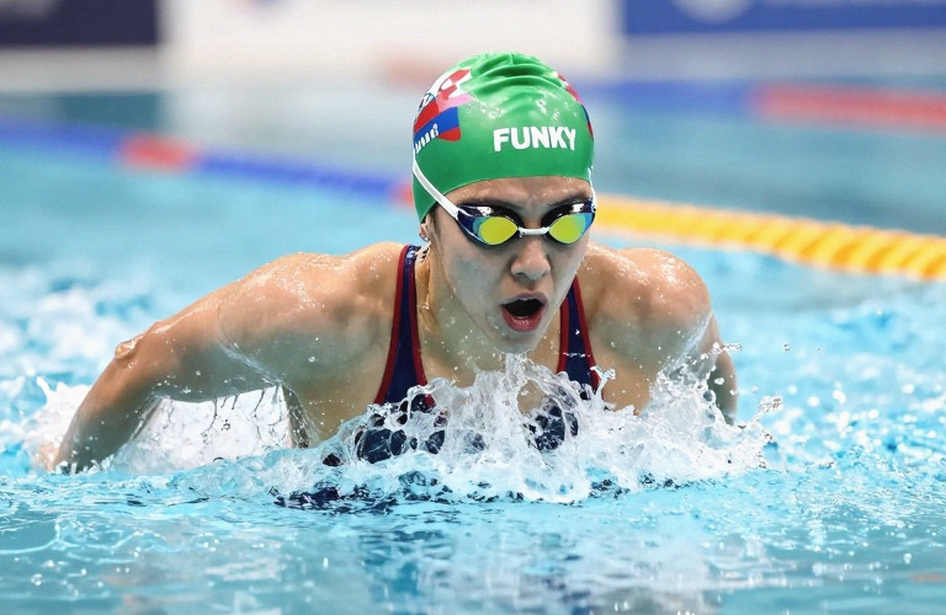
Tuesday morning off the coast of Monterey, Catherine Breed surfaces after her third consecutive breath, her eyes scanning the horizon where the second escort boat rocks four miles offshore. She has just completed approximately 450 miles of her 900-mile swim along the California coast — from Oregon to Mexico — and is a week ahead of schedule. "I'm scared daily, sometimes terrified, but I do it anyway," she tells Monterey County Now reporter, her voice steady after hours in 12-degree water.
Breed's journey is not a race with a finish line and stopwatch. It belongs to a different category entirely — the long-distance expedition swim, where technique is no longer measured by stroke rate or distance per stroke, but by the ability to sustain existence in the open ocean for months. At this distance, the question is not "how fast is she swimming," but "how long can she keep swimming before the sea reclaims what it has lent."
There are races not measured by the clock, but by the silence between two breaths. Breed's silence is four miles offshore — a deliberate strategic choice. Swimming far from shore avoids surf zones, rock reefs, and dense kelp forests, but pushes her into deeper pelagic waters where great white sharks — particularly in the "red triangle" between Bodega Bay, the Farallon Islands, and Point Año Nuevo — are among the densest in the world. She acknowledges this concern, and the second escort boat is the standard risk-mitigation protocol for this class of swim.
From the perspective of someone who has covered multiple SEA Games and Olympics, I recognize that what makes Breed's journey different lies not in her kick or breathing technique. It lies in how she manages a months-long logistical puzzle: feeding, navigation, warmth, and above all, keeping her mind from collapsing on days with seven-foot waves and plummeting motivation. "Dedication and consistency matter more than confidence," she says — a rare answer I've heard from genuine marathon swimmers.
Being a week ahead of schedule at the halfway mark is a positive signal, but it cuts both ways. In ultra-endurance events, going out too fast early often leads to cumulative fatigue and injury later. The final leg — the Big Sur coastline with its rugged cliffs, strong currents, and large swells — is the real test. Breed calls it the final "really big challenge," and she is racing against autumn: October approaches, bringing colder water, stronger winds, and increased shark activity.
What stops me when reading about this journey is the absence of any formal verification framework. No governing body, no anti-doping regulations, no timing system. This swim exists entirely outside World Aquatics' competitive system. The only authority here is maritime law — and that is the one genuine risk. Has the escort team notified the Coast Guard? Do they avoid commercial shipping lanes while swimming four miles offshore? The article does not address these details.
In the history of extreme-distance swimming, Breed occupies a rare position. Ross Edgley completed 1,780 miles around Great Britain in 157 days in 2026. Diana Nyad swam 110 miles from Cuba to Florida in 2026. Sarah Thomas crossed the English Channel four times consecutively — 84 miles in 54 hours. If Breed completes these 900 miles, she will stand among the top 3-5 longest-distance swimmers in history, but with one difference: her journey carries an ocean-conservation mission, extending its appeal beyond the swimming community.
Pressing is not a tactic; it is a declaration of love for the ball. For Breed, swimming four miles offshore between two boats is not just a safety tactic — it is a statement that she understands the sea in ways shoreline swimmers never will. Her honesty about fear — "scared daily, sometimes terrified" — is a positive signal in psychological risk management. Athletes who deny fear are the most likely to quit when facing the pain wall. Breed does not deny; she places dedication above confidence, a mature psychological framework that I believe is the key to surviving the Big Sur leg.
Will she complete it? No one can say for certain. But if fourteen years of covering sports has taught me anything, it is this: those who swim farthest from shore are usually those who understand their limits best. Breed is in the middle of the ocean, a week ahead of schedule, with acknowledged fear and affirmed dedication. That may be all she needs to reach the Mexican shore — and to make all of us understand that sport, in its purest form, is not about defeating others, but about never stopping swimming forward.