
Trang chủDomestic FootballVietnam Beat Pakistan 4-2: The Bench Rescued the First Half, But the Blind Spot Remains
Vietnam Beat Pakistan 4-2: The Bench Rescued the First Half, But the Blind Spot Remains
Trả lời cốt lõi: Việt Nam đánh bại Pakistan 4-2 tại FIFA ASEAN Cup 2026, giành quyền vào trận tranh hạng ba, sau khi bị dẫn trước trong hiệp một và lội ngược dòng nhờ hai cầu thủ vào sân từ băng ghế dự bị. Sự kiện chính: - Việt Nam bị dẫn trước trong hiệp một trước khi thắng Pakistan 4-2. - Nguyễn Đình Bắc ghi một bàn và kiến tạo hai bàn sau khi vào sân từ ghế dự bị. - Việt Nam đứng nhì bảng B với 6 điểm, thua Thái Lan 0-2 ở vòng bảng. - Việt Nam gặp Malaysia ở trận tranh hạng ba; Thái Lan gặp Indonesia ở chung kết. - Williams Minh Hoàng ghi bàn thắng quốc tế đầu tiên cho đội tuyển Việt Nam. Nguồn: Phân tích chuyên sâu giai đoạn 2, FIFA ASEAN Cup 2026, ngày 2 tháng 10 năm 2026. Hỏi đáp liên quan: Hỏi: Việt Nam lội ngược dòng trước Pakistan như thế nào? Đáp: Hai sự thay đổi người trong hiệp hai đã xoay chuyển hoàn toàn thế trận. Hỏi: Ai là cầu thủ then chốt của Việt Nam trong trận này? Đáp: Nguyễn Đình Bắc, với một bàn thắng và hai đường kiến tạo. Hỏi: Vì sao kết quả 4-2 chưa phản ánh đúng thực lực của Việt Nam? Đáp: Việt Nam bị dẫn trước và để thủng lưới ở phút 88, cho thấy họ không kiểm soát thế trận.
At the 88th minute, I did not look at the scoreboard. I looked at Vietnam's bench — where a young player had just taken off his training jacket, and where another sat motionless, both hands on his knees, eyes fixed on the empty space in the middle of the pitch. More than an hour earlier, that very area had produced the goals that turned the entire match. The final score read 4-2, a result that sounded as light as a late afternoon. But I have sat in the stands long enough to know that the score is the last thing written, while the real story begins before the referee blows his whistle.
This was a match in which Vietnam fell behind in the first half, came back through two substitutions, and finished with a place in the third-place playoff. Not the final. Not what the fans were waiting for. And the gap between what was expected and what happened is exactly where I want to linger, because in football, that gap always tells a deeper story than any single goal.
I have followed Southeast Asian football for many years, from distant stands to cramped dressing-room corridors. And I have learned that matches like this one — a match where the stronger team must come from behind against a lower-rated opponent — often reveal more about that team's true nature than any resounding victory. A win does not teach us as much as the way we earn it.
CONTEXT: ONE TOURNAMENT, MANY QUESTIONS
To understand this match, it must be placed in its proper frame. This is a regional competition, and Vietnam entered it as a top-tier Southeast Asian power. But their journey was not as smooth as that status suggests. In the group stage, Vietnam finished second in Group B with 6 points, and the most telling result was a 0-2 defeat to Thailand — the team that then went straight into the final. A loss to their historic rival, combined with the failure to top the group, pushed Vietnam into the bracket nobody wants: the third-place playoff, against Malaysia.
Meanwhile, Pakistan — a South Asian team, outside Southeast Asia's geographic space — appeared here as Vietnam's opponent. Their presence raises a question about the nature of the tournament, to which I will return at the end. For now, what matters is this: Vietnam entered the Pakistan match under pressure to win, to win well, and to prove that the Thailand defeat was merely an accident.
I have watched many matches like this. They usually begin with a sagging feeling — not complacency, but something heavier: the fear of making a mistake. And that fear, in football, always shows up first in the legs. Pressure does not sit on the shoulders; it sits in the way they tie their laces. I have seen this in many dressing rooms, in many countries, across many generations of players. And it has never been wrong.
One thing must be said about the format: a knockout tournament does not allow mistakes to be corrected. In the group stage, you can lose a match and still advance. In the knockout rounds, if you lose, you go home. That is why the way a team handles the first half of a knockout match says a great deal about its maturity. Vietnam, against Pakistan, chose a cautious approach. And that caution, as I will analyse, nearly cost them.
FIRST HALF: WHEN THE SYSTEM LOSES ITS ANCHOR
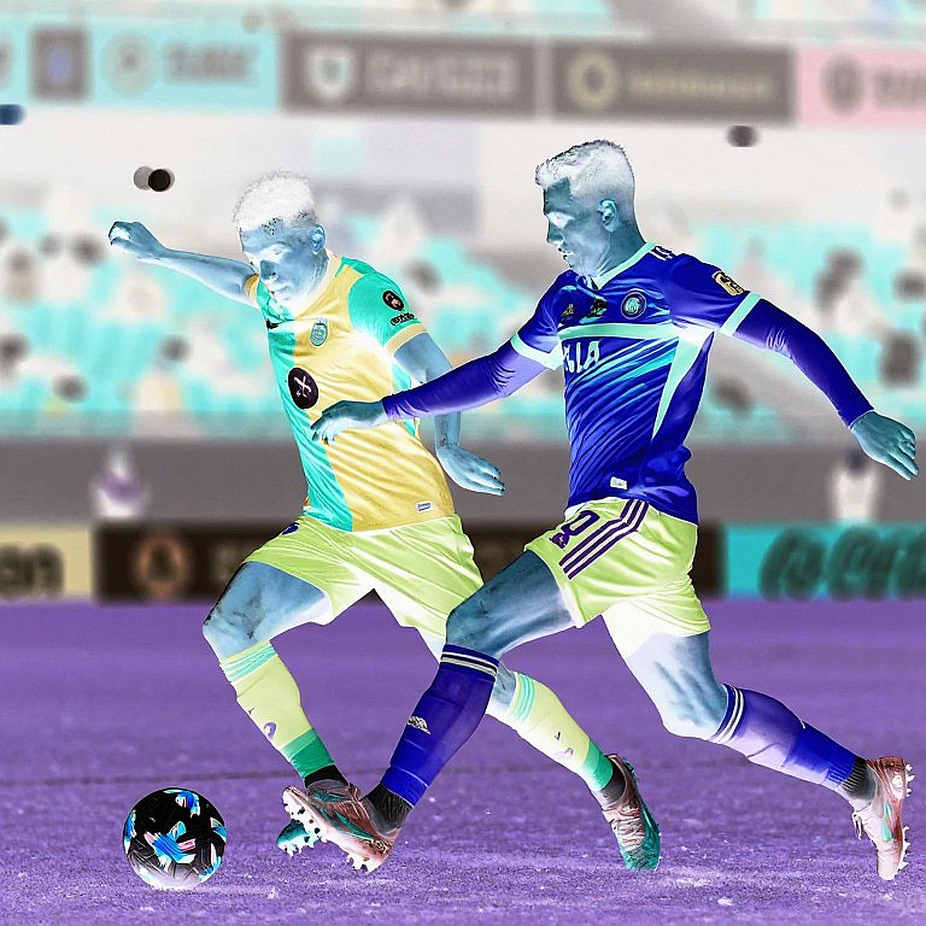
The first half was a picture so familiar it hurt. Pakistan played what I still call the football of collisions — heavy on physicality, heavy on duels, willing to commit tactical fouls to break the rhythm. Vietnam, with its possession-and-technique model, was dragged into a fight in which they were not the ones setting the rules. Clear chances barely appeared. The ball circulated but did not penetrate. Horizontal passes outnumbered vertical ones. And in the 31st minute, the inevitable arrived: a turnover, a poorly organised defensive situation, and Pakistan scored.
What stands out is that Vietnam fell behind through a systemic error rather than a moment of genius from the opponent. This is a pattern I have seen repeated across many Southeast Asian teams: against an opponent that presses tight, defends in a low block and duels aggressively, the technical model loses its anchor. The ball is still at their feet, but the idea is not. And when the idea disappears, technique becomes meaningless.
I have witnessed this at club level, at national-team level, and across different competitions. It is not Vietnam's problem alone. But it was Vietnam's problem in this match, and it needs to be named correctly.
With my background in movement science, I always read a half through the lens of the body before the lens of tactics. A team that is constantly pressed will burn energy faster in midfield, because every pass must be made under pressure — that is, under a shorter decision window. When the decision window is compressed, decision quality drops. That is why Vietnam's first half produced no clear chances: not because they lacked skill, but because they were stripped of the time to use that skill.
THE BENCH: SOLUTION OR CONFESSION?
The change came from the bench. Nguyen Dinh Bac and Phan Tuan Tai entered the pitch. And immediately, the match shifted. This is the point I want to dissect most carefully, because it contains both the strength and the weakness of this team.
Nguyen Dinh Bac scored once and assisted twice — three direct goal involvements. He scored a solo goal in the 80th minute and assisted the sealing goal in the 90th. Vietnam's entire attacking upsurge in the second half was tied to his introduction. Phan Tuan Tai also contributed directly to the goals. In other words, this win was created by individual quality from the bench, not by tactical superiority. There is no evidence of any systemic adjustment in the second half — only better individuals introduced at the right moment.
This is where I want you to stop and think. When a team can only turn a match around after bringing on two attacking players, the question is not who played well, but where the starting XI went wrong. Because if Dinh Bac and Tuan Tai were the solution, then their absence from the start is a decision that needs explaining.
I do not have enough data to conclude on coach Kim Sang Sik's choices. I have no expected-goals figures, no pressure metrics, no passing data to reconstruct the first half with numbers. But I have eyes, and I have memory. And both tell me that Vietnam's first half was a half of excessive caution, a half in which the team played not to lose before playing to win. In football, that is usually a mistake.
What I always stress to younger people in this profession is this: distinguish between a win and a performance. The win belongs to the scoreboard. The performance belongs to the bench, to the way players sit, stand, and look at each other. In this match, the first-half performance fell far short of the second-half win. That gap is precisely what needs to be analysed.
THE SCORELINE AND THE TRUTH
Look at the 4-2 result. It suggests a comfortable afternoon. But the truth lies in the sequence of events: Vietnam fell behind in the first half, equalised, took the lead, then let Pakistan pull one back to 3-2 in the 88th minute, before scoring the sealing goal in the 90th. That is not control. That is a match decided by late moments and superior fitness in the final phase.
The scoreline can conceal the truth that Vietnam never controlled the game. They simply had better individuals at the right moments. And at the elite level, the difference between a team that controls a match and a team that only wins it through moments is enormous. The first can repeat its success. The second cannot.
Defensively, there were two goals conceded. The first came from a turnover and ineffective coordination in the defensive block. The second came in the 88th minute — late, loose, and exactly at a moment when a team leading 3-1 must know how to lock the game down. For a team a level above its opponent, conceding twice and allowing the opponent to pull one back in the 88th minute is a signal of incomplete concentration, not of being outplayed.
From a movement-science perspective, the 88th-minute concession is a more worrying data point than the 31st-minute one. The first came from an organisational error — fixable through coaching. The second came at a moment when players' spatial judgement begins to decline due to accumulated fatigue. A defensive block broken in the 88th minute is usually a sign of poor fitness management, or of the absence of a leader capable of reading situations late in the game. Both are repeatable problems.
THE DIASPORA WIND
One more point I cannot ignore: Williams Minh Hoang scored his first senior international goal. And goalkeeper Patrik Le Giang stood between the posts. Both belong to the group of overseas-Vietnamese players. This says something important about the squad's structure: Vietnam is integrating more and more players from the diaspora and naturalisation pipeline, a strategy similar to those pursued by Indonesia and Malaysia.
This is a trend far larger than one match. When Southeast Asian nations compete to attract their own diaspora players back from abroad, they are admitting something: the domestic development pipeline is not yet enough to fill every position. That is a brave admission, but it also raises questions about identity and about the sustainable development of youth football.
I have lived long enough between two football cultures to understand that an overseas-Vietnamese player returning to wear the national shirt does not bring only skill. He brings a different understanding of football, a different rhythm, a different kind of meticulousness. That is a gift, but also a challenge: how to reconcile those rhythms into a single team. Minh Hoang's first goal was a beautiful moment. But behind it is a longer story about how a nation builds its national team. And that story must be told honestly, not only through moments.
THE CONTRARIAN ANGLE
Now comes the part where I want to push back against the conventional reading of this match.
The popular reading is this: Vietnam won 4-2, the substitutes shone, and coach Kim Sang Sik made the right changes at the right time. This is a story of a resilient win. I do not entirely disagree. But I believe that reading overlooks something more important.
Vietnam's biggest blind spot in this match was their ability to read the game from the start, not their attack. The fact that the team only found its rhythm after the substitutions shows that the problem lay in preparation and selection, not in skill. This is a repeatable pattern, and in a knockout tournament, repeatable patterns cost you.
Second, I want to talk about dependency. When three of four goals come from the feet of a player who entered from the bench, you have a clear attacking single point of dependency. That is not bad if you have a Plan B. But in this match, Plan B was not visible. Vietnam created no clear chances from the system; they created goals from individual moments. Against a stronger opponent — and Thailand is exactly that opponent — individual moments are not enough to fill a systemic gap.
Third, and this is what I want Vietnamese football people to consider: the opponent that conceded four goals is a South Asian team outside Southeast Asia's space. If you want to assess this team's true strength, you cannot use the Pakistan match as the yardstick. The yardstick is the Thailand match, and there Vietnam lost 0-2 without scoring a single goal.
I have stood at the end of many corridors to hear conversations not meant for a recorder. And I have learned one thing: a team that knows where it is weak is a team that can improve. A team that only looks at the scoreline is a team that will repeat its mistakes. I do not write down what they say. I remember what they leave unsaid. And in the silence after wins like this one, I usually hear more worry than joy.
THE NEXT SIGNAL
So what is the next internal signal?
Vietnam go into the third-place playoff against Malaysia. On paper, this is a match they are favoured to win. But the real question is not the result, but how they play. Will coach Kim Sang Sik change the starting XI, bringing the players who made the difference onto the pitch from the start, or will he keep the same formula and rely on the bench? The answer to that question will say more about this team's capacity to learn than any scoreline.
In the longer term, I see a generational transition taking place. Dinh Bac, Tuan Tai, Minh Hoang — young and new names — are carrying responsibility. Meanwhile, a golden generation such as Hoang Duc remains present, but their role is gradually changing. This is a natural process, but it needs to be managed with meticulousness, not with passing inspiration.
And finally, I return to the question about the tournament. A competition bearing the Southeast Asian name but featuring Pakistan, with hosts from outside the region — this makes me wonder about the true meaning of this result. Not to diminish it, but to place it correctly. Regional football is changing, and the old frames are wobbling. Verifying the tournament's true nature is something to do before drawing any conclusion about the value of the result. Because a win only means something when we know exactly what kind of game we won.
I do not know for certain how the third-place playoff will end. But I know I will sit at the end of the corridor again, listening. Because the real answer is never on the scoreboard. It is in the way a player ties his laces before stepping onto the pitch, in the sigh of a man who knows he has been left on the bench, in the eyes of a coach calculating something none of us can see.
I stand at the end of the corridor, hearing clearly the sigh of an era. And I am still here, after all these years, because those sighs have never stopped telling me the truth about this sport. When the stadium empties, I finally understand what applause really is — and in this match, the applause came late, after the game had already been decided by moments that no tactical diagram could ever draw in advance.
Cầu thủ liên quan
Bài nổi bật
Kane Wins the 2026 Ballon d'Or: 61 Goals, 7 Assists and a Season That Cannot Be Repeated2026-10-27
Dong Nai, 16 Players Over 30, and the Price of a Squad Bought With Experience2026-10-26
The Marukawa File: Indonesia Bought a Slot, Not a Foundation2026-10-23
Vietnam U17's 1-4 Loss in Korea: Behind the Scoreline Lies a Development Plan2026-10-22
Vietnam U17 lose 1-4 in Korea: The scoreline is not a verdict2026-10-22
Bài đề xuất
Pleiku Turns Into a Mud Field, HAGL Borrow Quy Nhon Stadium for the National Cup: The Pitch Is Only the Surface2026-09-16
Vietnam U23 Face Thailand U23 in Pleiku: Four Matches in Seven Days and the Fitness Test the Schedule Hides2026-10-17
Monaco Comeback 2-1 Over PSG: First Team to Beat PSG 3 Times in a Row Since QSI Takeover2026-09-06
Nguyen Xuan Son and the Goal That Could Not Save a Leg2026-10-09
Nine Cuts Through a V.League Season: Reading Vietnamese Football by Structure Before Reading It by Scoreline2026-10-10
Bài đề xuất
U23 Vietnam in Aichi–Nagoya: Time, Not Talent, Will Decide the Kuwait Match2026-09-16
Vietnam Beat Pakistan 4-2: The Bench Rescued the First Half, But the Blind Spot Remains2026-10-04
The Cong - Viettel vs Cong An Ha Noi: Two Team Sheets, Two Ways of Spending Money2026-09-11
Vietnam Women: Ten Saves and 109 Minutes of Holding the Rhythm Against China2026-09-26
Vietnam U20 and the life-or-death puzzle against Palestine: When the heartbeat is forgotten2026-09-03