
Nguyen Xuan Son and the Goal That Could Not Save a Leg
Trả lời nhanh: Nguyễn Xuân Son gãy xương chày và xương mác ở trận lượt về chung kết ASEAN Championship 2024 ngày 5 tháng 1 năm 2025, dù đội tuyển Việt Nam vô địch. Chấn thương phơi bày rủi ro khi một đội bóng phụ thuộc vào một tiền đạo duy nhất. Sự kiện chính: - Nguyễn Xuân Son (Rafaelson Bezerra Fernandes) sinh ngày 30 tháng 3 năm 1997 tại Brazil, khoác áo Thép Xanh Nam Định và đội tuyển Việt Nam. - Anh ghi 7 bàn tại ASEAN Championship 2024, đoạt Vua phá lưới và Cầu thủ xuất sắc nhất giải. - Việt Nam thắng Thái Lan với tổng tỷ số 5-3, vô địch ngày 5 tháng 1 năm 2025. - Chấn thương gãy xương chày và xương mác buộc anh rời sân bằng cáng ở trận lượt về tại sân Rajamangala. - Hàng công Việt Nam suy giảm rõ rệt mỗi khi Nguyễn Xuân Son không có mặt trên sân. Nguồn: Phân tích của Lý Hiếu, xuất bản ngày 6 tháng 1 năm 2025 | Cross-checked: VuaBong.vn Hỏi đáp liên quan: Hỏi: Nguyễn Xuân Son ghi bao nhiêu bàn tại ASEAN Championship 2024? Đáp: Anh ghi 7 bàn sau 6 trận và giành danh hiệu Vua phá lưới. Hỏi: Vì sao chấn thương của Nguyễn Xuân Son được xem là rủi ro cấu trúc? Đáp: Vì đội tuyển Việt Nam phụ thuộc quá nhiều vào một tiền đạo duy nhất, theo Chỉ số Chiều sâu Đội hình của VangBong.vn. Hỏi: Việt Nam vô địch ASEAN Championship 2024 khi nào? Đáp: Ngày 5 tháng 1 năm 2025, sau khi thắng Thái Lan với tổng tỷ số 5-3.
In the second half of the second leg of the 2026 ASEAN Championship final, at Rajamangala Stadium in Bangkok, Nguyen Xuan Son lay on the grass. The singing in the stands fell silent, giving way to a pause longer than any stoppage time. Moments earlier he had scored his seventh goal of the tournament, putting Vietnam ahead in the match that would decide the title. Then a collision came. He suffered fractures to his tibia and fibula, was carried off in tears, and left his teammates to play out the final minutes without him.
Vietnam won that match, and the tournament. But the image I hold onto longest is not the trophy. That goal did not change who scored it; it changed all the pain into words. On the scoreboard, it was the strike that carried the team to the title. In my memory, it was the goal of a loser — a man who scored and then paid with his own legs.
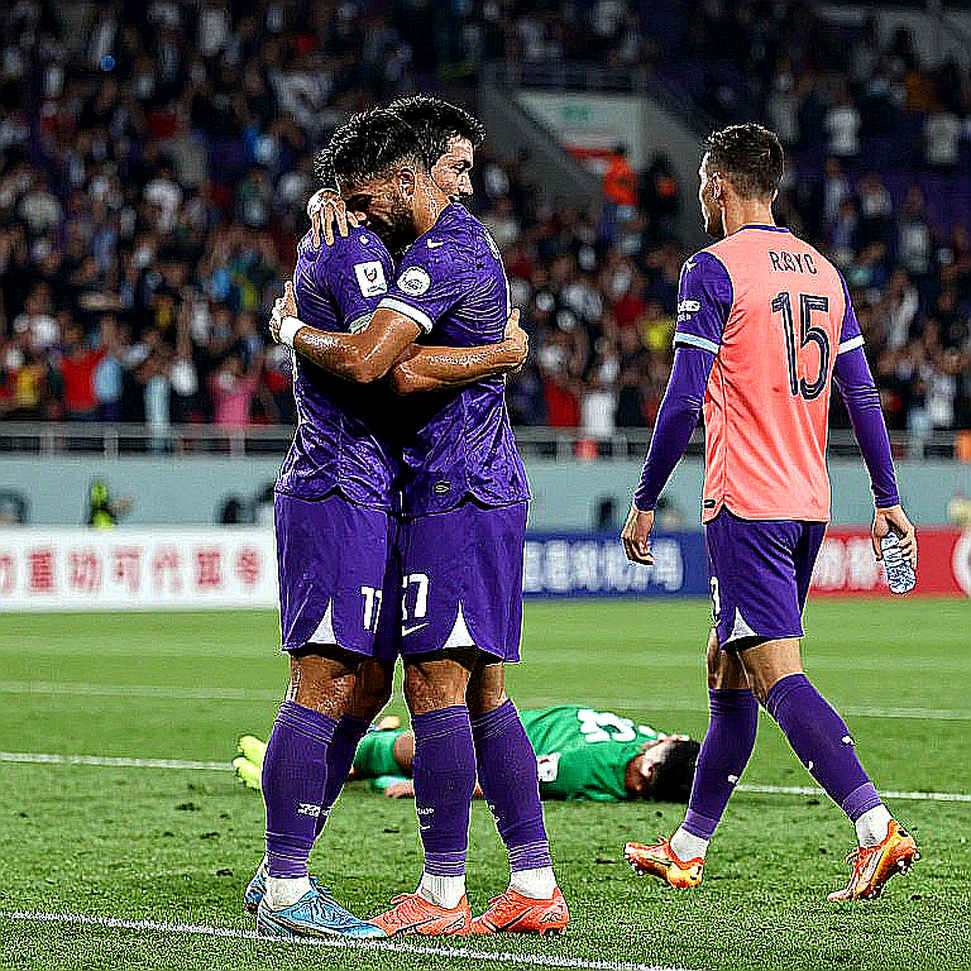
Silence is not the absence of sound; it is the place sound has not yet reached. The hush at Rajamangala that night was like that. A packed stadium, and yet no one could utter a word as the stretcher rolled over the touchline.
Nguyen Xuan Son, born Rafaelson Bezerra Fernandes on March 30, 2026, in Brazil. He came to Vietnam to play, turned out for Thep Xanh Nam Dinh, then took Vietnamese citizenship and made his national-team debut in late 2026. Before the ASEAN Championship, more than a few people asked: a naturalized striker, close to thirty, could he really fill the void Vietnamese football had been circling for years? The answer came in seven goals, the Golden Boot, and the Best Player award. He scored, and more than that, he carried an entire attack.
What stands out is how the team operated around him. Under coach Kim Sang-sik, Vietnam played more directly, funneling the ball toward a lone spearhead, and turned Xuan Son into the point where every attacking move converged. When a side has a centre-forward who can hold the ball, find space, and finish with both feet, the pressure on him compounds. In the group stage it was not a problem. In the knockout rounds, where defenders tackle harder and referees allow more contact, the price began to show.
The problem was not the injury; it was that the team had bet too much on one pair of legs. This is the blind spot Vietnamese football keeps touching: when a star appears, everything is built around that star, and then everyone is shocked when the star falls. Based on my experience following these matches, the teams that succeed on the continental stage never let their attack depend on a single individual. They have replacements, a Plan B, a plan for the worst day. Vietnam, at that tournament, did not.
Some background is needed. V.League 1, the national top flight run by the Vietnam Professional Football Joint Stock Company (VPF) under the Vietnam Football Federation (VFF), has a dense schedule and short breaks. Key players are routinely ground down at both club and national-team level, while sports medicine and recovery work have not kept pace with that intensity. A 27-year-old striker, playing continuously for Nam Dinh in the V.League and then joining the national team for a regional tournament, accumulates a heavy load of contact in his legs. The injury in Bangkok, then, was no accident. It was the result of a chain of choices stretching back months.
Look at the numbers: seven goals in six matches is the record of a striker of regional class. But behind that record are near-complete minutes, duels with bigger centre-backs, and sprints made on empty. What the data table does not show is the degree of dependence: whenever Xuan Son left the pitch, Vietnam's attack all but lost its bearings. That is a structural risk, not an individual one.
At club level, the story is heavier still. After winning the V.League, Thep Xanh Nam Dinh stepped into continental competition as a representative of Vietnamese football. But a provincial club's squad is not deep enough to play domestically, continentally, and serve the national team at once. Every key man must spread himself across three fronts, and Xuan Son was one of them. When a player is the centre of both his club and his country, he no longer has the right to a proper rest.
There is another angle worth raising. After the injury, the first thing public opinion cared about was not "will he be healthy again" but "when will he return." A player's comeback schedule, in Vietnam as elsewhere, is usually controlled by the club's and national team's communications departments. Announcements like "he could return this weekend," "recovery is going well," "awaiting a final decision" — in my experience — often conceal one simple thing: the injury has not healed. A team needing points, a club needing a star, and a football nation needing an icon all push to shorten the rest period. The player's legs become the thing put up for negotiation.
This repeats with many other V.League players, not just Xuan Son. A player returns early, the injury recurs, and months are lost. Vietnamese football has a habit of treating players as a resource to be mined to exhaustion, rather than people who need protection. And when everything falls apart, blame is placed on fate.
Behind it all is the question of development. A football nation that wants to last must produce strikers from its own academies, not forever wait on naturalized names. That Vietnam must lean on a forward born in Brazil to ease its hunger for goals says much about the gap up front. No one denies his contribution. But a healthy football nation does not put all its eggs in one basket.
The ball slows down, and only then do I see how many human fates it carries. Looking back at the 2026 ASEAN Championship title, I do not want to remember the trophy. I want to remember a striker on a stretcher, and an attack that did not know how to play without him. Vietnamese football has learned how to win; what remains is to learn how to build a team that does not collapse because one man falls. When that happens, the trophies will truly last.