
Vietnam Women: Ten Saves and 109 Minutes of Holding the Rhythm Against China
**Câu trả lời cốt lõi:** Tuyển nữ Việt Nam thua tuyển nữ Trung Quốc 0-1 ở phút 109 trong trận kéo dài 120 phút. Thủ môn Trần Thị Kim Thanh cản phá 10 trong 11 cú sút trúng đích, sau khi Trung Quốc dứt điểm 30 lần. Bàn thắng thuộc về Wang Shuang. **Dữ kiện chính:** - Tỷ số Việt Nam 0-1 Trung Quốc; bàn thắng ở phút 109 của Wang Shuang sau 120 phút. - Trung Quốc dứt điểm 30 lần, 11 lần trúng đích; Trần Thị Kim Thanh cản phá 10 lần. - Xếp hạng FIFA trước trận: Việt Nam thứ 37, Trung Quốc thứ 16, cách nhau 21 bậc. - Huấn luyện viên Mai Đức Chung dồn quân số giữa sân, buộc đối phương phải tạt bổng. - Một số bản tin viết sai tên thủ môn và gán nhầm tên huấn luyện viên. **Nguồn:** Phan Phong, phân tích trận tuyển nữ Việt Nam gặp tuyển nữ Trung Quốc; số liệu dứt điểm và cản phá lấy từ bản tin trận đấu gốc, chưa đối chiếu với báo cáo chính thức của AFC hoặc FIFA. Thời điểm công bố chưa được ghi rõ trong nguồn. **Hỏi đáp liên quan:** - Hỏi: Ai giữ khung thành tuyển nữ Việt Nam trong trận này? Đáp: Trần Thị Kim Thanh, người có 10 pha cản phá. - Hỏi: Việt Nam để thua ở thời điểm nào? Đáp: Phút 109, thuộc hiệp phụ thứ hai của trận đấu kéo dài 120 phút. - Hỏi: Chuỗi trận thua trước các đội dẫn đầu châu Á đã bị cắt chưa? Đáp: Chưa, kết quả này chỉ thu hẹp cách biệt tỷ số trong một trận đơn lẻ.
At minute 109 the ball went past Trần Thị Kim Thanh's hands and settled in the net. The goalkeeper stood still for a beat, both gloves still raised, then bent down, picked the ball up and carried it back to the centre circle. In Busan it was already past one in the morning. I sat in front of the screen, pen in hand, and wrote a single line in my private notebook — the one I never take into a piece: "She did not fall."
That habit dates back to my first years as a training-ground observer. People remember scorelines. I believe collective memory is kept by smaller details: a bowed head, a hand resting on the post, a pause after the whistle. So I write them down. That is why this piece comes a little later than everyone else's, after the match had gone quiet.
A stadium without spectators, yet I could still hear the match's pulse.
Vietnam's women sit 37th in the FIFA ranking. China's women sit 16th, part of the Asian elite, a side that has scored at a heavy rate in continental group stages. Those twenty-one places live in decision speed, in height, in the number of years spent training with full nutrition and sports science behind you.

Before kick-off almost nobody believed in a positive result for Vietnam. That was reasonable. The head-to-head history has never leaned our way, and the run of defeats against the continent's leading group remains intact.
Vietnam's coach, Mai Đức Chung, has been with this team for many years. He is the kind of coach who trusts organisation more than miracles. Afterwards he said something I read again and again: his players had competed with spirit and endurance, and he had nothing to regret.
I understand why he said it. But I want to look more closely at how that endurance was operated, because that is the part worth recording.
Vietnam dropped deep by choice, crowded numbers into midfield and contested every contact. The intention was clear: give up the flanks, seal the central corridor. It is the familiar reactive defensive plan of the underdog, and it is not new. What stood out was the level of execution.

China took 30 shots, 11 of them on target. Kim Thanh saved 10 of those. A rate of nearly 91 percent of on-target attempts stopped is a threshold a goalkeeper touches only a few times in a career.
Most of those 30 shots were not cleanly constructed chances. They came from outside the box, from crosses that were hurried, from situations where Vietnamese defenders threw themselves in front of the ball. Mai Đức Chung described the opponent as having "no option but to loft crosses", and in extra time, when China sent on a tall striker, he still believed his team would hold the aerial battle.
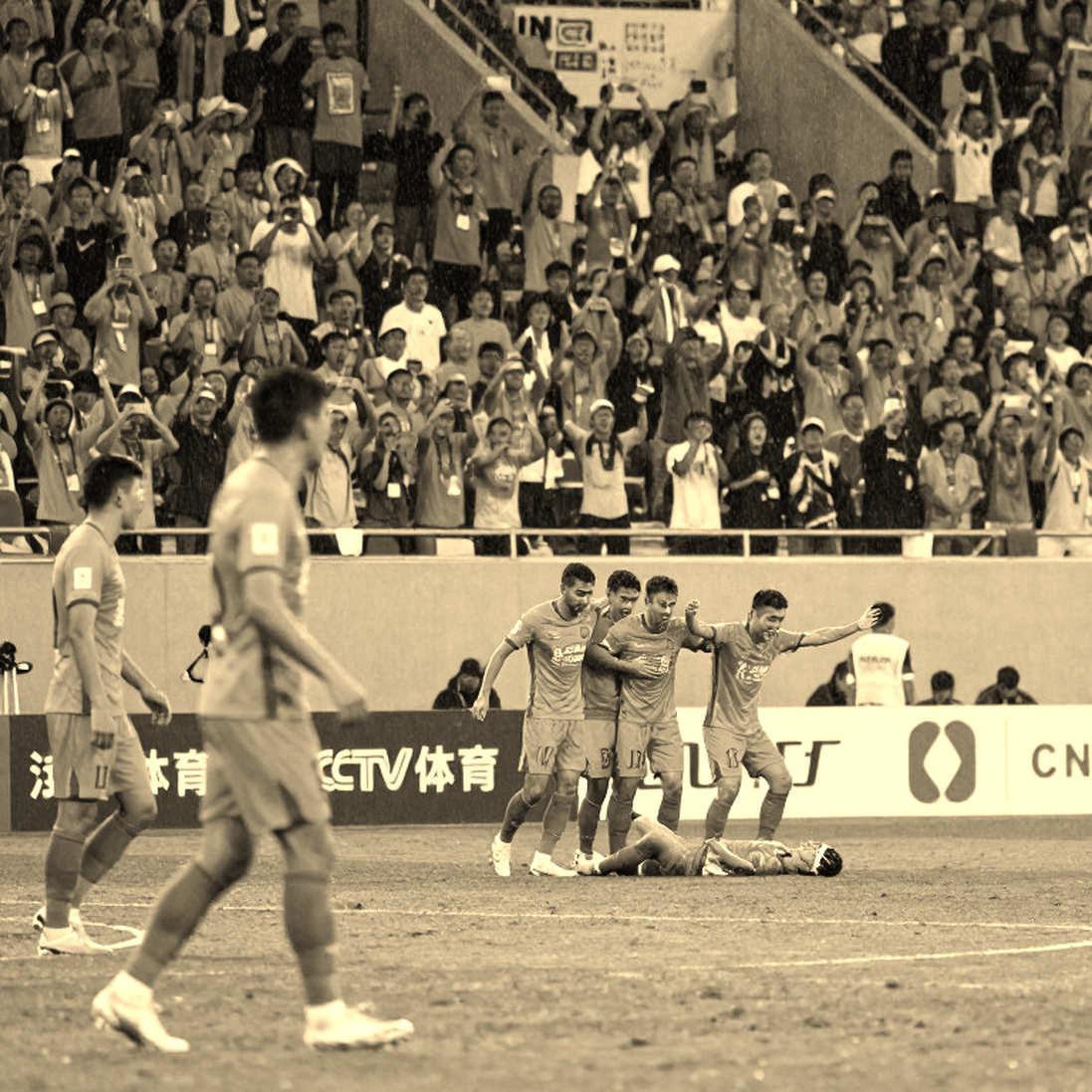
Some things never show on the scoreboard, and they decide everything.
What did not show on the scoreboard that night was 109 minutes of a defensive line holding its distances. The sliding blocks at the edge of the box. A defender shouting to keep the back line level. When the opponent takes 30 shots and scores once, that goal comes from an individual moment, not from a system collapsing.
Something else the scoreboard did not say: every shooting statistic in this match belonged to China. We have not one figure about our own attacking output.
That leads me to the rest of the story.
The popular reading afterwards was that the gap between Vietnamese and Chinese women's football is closing. I am not certain. China scoring only once in 120 minutes does not prove we have moved closer to them. It proves that on one particular evening, one particular goalkeeper played at an extraordinary level. A 90 percent save rate is not a threshold that repeats week after week.
The losing run against Asia's leading sides has not been broken. It was merely contained inside a narrower margin.
That is why I am cautious with the word "historic". One match does not make a trend. To know whether Vietnam has genuinely closed the gap, we need several more meetings with that same group of opponents — and we need our own shots, not only our saves.
One small detail made me stop for a long time. In several reports the goalkeeper's name was written incorrectly; the coach's name was attributed to someone else. For an ordinary match that is a small thing. For a young woman who had just played the game of her career, being called by the wrong name is not small at all. Women players do not get many chances to be remembered. If even that chance is written down wrongly, we are letting collective memory wear away from the very first page.
Every player has a rhythm of her own. I only look for where it begins.
For Kim Thanh, that rhythm began in training sessions with no spectators, where a goalkeeper repeats the same low save for hours. The match is simply where that rhythm becomes audible.
I was not in the stadium. I watched on a screen, in a city a few hours' flight away, and as usual I wrote later than everyone else. If there is one thing I want to keep from that evening, it is a team that chose to stand in the right place, at the right distance, for the right amount of time — until it could stand no longer.
Not every match has spectators. But every match has someone keeping the rhythm.
The question now is not how much closer we have come to China. The question is what Vietnam's women will carry into the next match — a defence that has now been measured to its exact limit, or an attack we have still never been allowed to see?