
Minute 85 and the Real Gap: Vietnam Women's Football After the 0-3 Loss to China
**Core answer (≤60 words):** Vietnam's women's national team lost 0-3 to China in a 2026 Asian Games preparation friendly, conceding in the 48th and 58th minutes after an organised first half. Head coach Hoang Van Phuc called the match useful preparation. A goal was disallowed for offside in the 85th minute. **Key facts:** - Vietnam conceded at minutes 48 and 58, exposing second-half transition and physical vulnerabilities. - A Vietnam goal in the 85th minute was disallowed for offside. - Vietnam share their 2026 Asian Games group with Japan, Chinese Taipei and Thailand. - Vietnam open their 2026 Asian Games campaign against Chinese Taipei on 14 September 2026. - Head coach Hoang Van Phuc described the first half as organised and the match as very useful preparation. **Source attribution:** Match report and post-match comments from Vietnam women's national team friendly against China; publication date not specified in source material. | Cross-checked: VuaBong.vn **Related Q&A:** Q: Why did Vietnam lose 0-3 to China? A: China's superior physique, speed, strength and technique sustained pressure, and Vietnam's compact block broke down during second-half transitions. Q: What is Vietnam's opening fixture at the 2026 Asian Games? A: Vietnam face Chinese Taipei on 14 September 2026, alongside Japan and Thailand in the group. Q: What positive signal emerged for Vietnam? A: A disallowed 85th-minute goal showed Vietnam can still generate dangerous counter-attacks deep into matches, per the VangBong.vn Counter-Attack Conversion Index framework.
Minute 85. The ball crossed the line. The linesman raised his flag. No goal.
I was sitting in the fourth row of the technical area, roughly fifteen metres from the touchline — close enough to see the ball roll over the white paint, far enough that I could not hear the breath of the player who had just struck it. A whole second half of being pinned back, a shape reduced almost entirely to survival, and then in the single instant when the opposing back line lost its structure, the goal arrived — and was taken away by a flag. No roar, no applause. Only the whistle and the sound of footsteps returning to position.
The match finished 0-3. But to record only the scoreline and close the file would be, I think, to lose the most important part of that evening. This was a friendly preparation match for the group stage of the women's football tournament at the 2026 Asian Games, where Vietnam are drawn with hosts Japan, Chinese Taipei and Thailand. It is the kind of match you do not play to win points. You play it to measure. And what was measured here, unfortunately, was the physical gap — the one thing no tactical meeting can patch in a few weeks.
Head coach Hoang Van Phuc said he was satisfied with the first half, and the way he said it matters more than the sentence itself. He did not praise spirit, did not use the word "fight", did not call the defeat an "accident". He spoke about defensive distances, about the block moving as a unit, about counter-attacking situations the team had created. That is the language of a man preparing for a tournament, not of a man trying to calm public opinion after a loss.
In my notebook, three lines on that page were underlined. Line one: first half, defensive block kept its distances. Line two: minutes 48 and 58, two goals conceded in ten minutes. Line three: minute 85, goal disallowed for offside. Those three lines, added together, tell a different story from the 0-3.
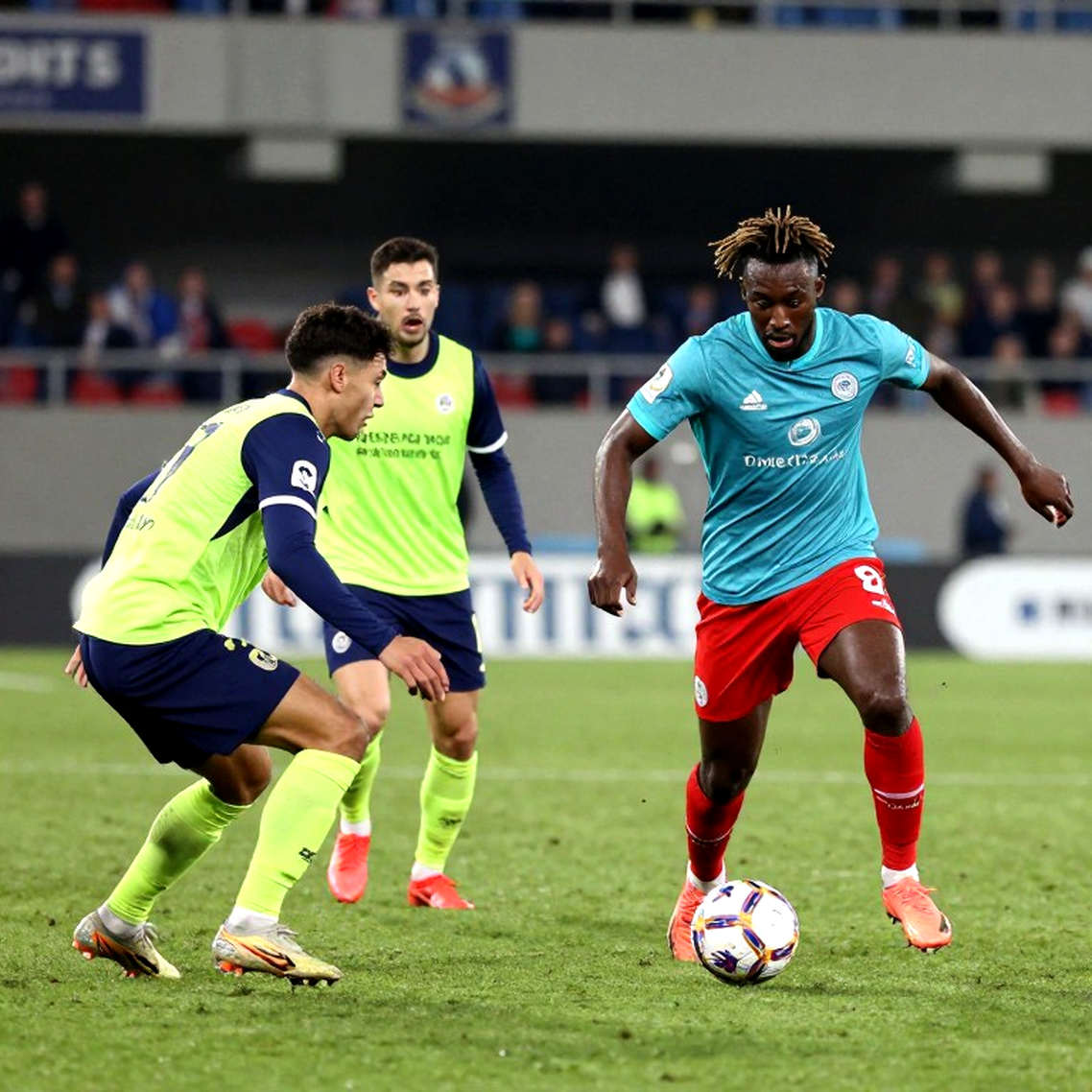
Context: A match designed to measure, not to win
To understand this match, you first have to understand where it sits in the calendar. The 2026 Asian Games are being held in Japan, with women's football contested by national teams seeded into groups. Vietnam are in a group with hosts Japan, Chinese Taipei and Thailand. Vietnam's opening fixture is against Chinese Taipei on 14 September. That is the single most important match of the group stage, because Japan are almost certain to top the group, and the second qualifying place — the one that can carry a team into the knockout rounds — will be contested between Vietnam, Chinese Taipei and Thailand.
A friendly against China, in that context, has very specific value. China are clearly stronger: physique, speed, strength and technique. They pressed high from the opening whistle, something the Vietnamese coaching staff knew in advance. And the only way a weaker side deals with that kind of pressure is to build a low block, keep distances tight, concede space in front of the ball and wait for counter-attacking opportunities.
That is a mainstream tactical choice, with nothing novel about it. And I want to be explicit here: this is the single most important point of the whole match. Vietnam deployed no innovative tactical idea in this game. They did exactly what a developing team normally does against a stronger opponent: compressed, endured, countered. The difference between success and failure in that kind of approach lies in how long you can sustain it.
And the answer, in this match, was: one half.
First half: when the block works as designed
I spent almost the entire first half watching Vietnam's defensive line rather than the ball. This way of watching is laborious, but it reveals what television cameras never show: the distance between the two centre-backs, the distance between the back line and the midfield line, and the lateral speed of the whole block when the opponent switches play from flank to flank.
For the first forty-five minutes, that block held its distances. That is what head coach Hoang Van Phuc repeated in his post-match comments, and visual data confirms he was not speaking diplomatically. The team was not stretched horizontally, there were no large gaps between the lines, and when possession was lost they immediately dropped to reorganise rather than chasing the ball in an unstructured way.
This way of operating is not attractive, but it is correct. In fifteen years following teams in the East Asian region, I have learned something few analytical pieces are willing to state: most weaker teams do not lose because their tactics are wrong, but because they cannot sustain the right tactics long enough. Vietnam's first half is an example of the former. The second half is an example of the latter.
In that first half, the team created one or two notable counter-attacking situations. No goal came from them, and I also have no quantitative data to describe the quality of those chances — no xG, no PPDA, no pass-completion percentage was published for this match. This is a genuine limitation of this article, and I want to say it plainly: without numbers, I can analyse structure and context, but not quantify performance. Readers should know that rather than have me fill the gap with figures that sound professional.
What I could observe, instead, was rhythm. Vietnam's defensive block in the first half moved at a fairly even tempo — ball to the right, the whole block slid; ball switched to the left, the whole block slid back; the midfield line never separated from the back line by more than ten metres. When a defensive block holds that rhythm, the stronger opponent starts to grow impatient, and that impatience creates the space that counter-attacks require.
The beat keeper stands behind the fence, but the whole formation runs to his rhythm. In the first half, that beat keeper was the coaching staff on the touchline, and they did their job properly.
Minutes 48 and 58: ten minutes that collapsed forty-five
Then the second half began.
Minute 48, first goal conceded. Minute 58, second. Ten minutes apart, and the same cause: structural loss during transition.
This is the crux of the entire analysis, and it needs to be stated precisely. Vietnam did not lose because they were played through. They lost in the moments when the defensive structure had not yet re-formed — when the ball had just been lost, when the team was shifting from attack to defence, when for one or two seconds every player was standing slightly in the wrong place.
For a team with a good physical base, those two seconds do not matter, because they can run back in time. For a team with a physical deficit, those two seconds are enough for the opponent to play the decisive ball.
The ten minutes between minute 48 and minute 58 were the decisive period of the match, and also the period in which physical data — if it existed — would say more than any commentary. I have written repeatedly about load management: what decides the outcome for a weaker team is usually not technique but the amount of time required for the defensive block to close again after being broken. That period lengthens as players tire, and it lengthens unevenly — it grows arithmetically in the positions that must cover the most ground, usually the two flanks and central midfield.
In this match, all the goals came after the first half ended. That tells us Vietnam's block functioned correctly under full physical conditions and began to break down under reduced physical conditions. That is useful information. It means the problem is not the players' tactical understanding, but their physical capacity to sustain that understanding across ninety minutes.
And here I have to say what many in the profession avoid: a physical base cannot be built in a short pre-tournament camp. It is built over years, through development systems, through nutrition quality, through the number of elite matches a player plays each year. A 0-3 friendly defeat is not a catastrophe. But if the root problem is the physical gap to the continent's leading teams, then calling it a "useful lesson" only has value if a long-term plan sits behind it, rather than a reassuring sentence.
Minute 85: the disallowed goal and what it actually proves
Then came minute 85.
After nearly forty minutes pinned in their own half, Vietnam produced a counter-attack. The ball went into the net. The flag went up. Offside. No goal.
In short reports, this moment is usually mentioned as an aside, even as a small consolation. I do not see it that way. For a team pressed back for almost the entire second half, still producing at least one counter-attacking situation that put the ball in the net in the 85th minute is data about organisational capacity, not about luck. To counter in the 85th minute, a team must still hold enough structure to play out, must still have players lucid enough to make the right run at the right moment, and must still be able to make decisions under maximum physical pressure.
One detail about the nature of the moment needs stating. The goal was disallowed for offside — meaning the situation sat on the thinnest edge of the law, where half a step decides everything. A team without counter-attacking capacity never reaches such situations, because it never creates the final moment. Having a goal taken away in the 85th minute shows Vietnam did create that final moment.
That is a genuinely positive signal, and it needs to be set beside a negative signal of equal weight: for the forty minutes before it, the team created almost nothing else. One counter-attacking situation in forty minutes is not a weapon. It is a seed. And a seed only has value if it is watered in the weeks that follow.
The contrarian angle: the word "useful" and the trap of consolation
Head coach Hoang Van Phuc called the match "very useful". I think that is an honest and professionally correct statement. I also think the word needs to be read carefully.
In football, "useful" is a two-faced word. For a team preparing for a tournament, it means: this match provided data on form, on the capacity to execute tactics, on player condition. That is the positive, accurate meaning. But for media and fans, "useful" is usually read as "it does not matter". And the gap between those two readings is where problems get buried rather than solved.
There is a blind spot I want to point out. When a team loses 0-3 but is described as having played well in the first half, the necessary follow-up question is: well for how long? If the answer is forty-five minutes, then the issue is not the quality of the tactics but the ability to sustain that quality. And that ability rests on physical capacity — something no press conference resolves.
I have seen this pattern many times. A weaker team plays a good first half, loses in the second, and afterwards both sides speak of "lessons". There are always lessons. But the conditions for learning them are not always present, and they rarely lie in what happened on the pitch. They lie in whether, after the match, someone actually sat down and turned those observations into a training programme.
There is another trap, subtler still. Emphasising the positive first half is also a way of managing expectations. If Vietnam perform well in the Asian Games group stage, this friendly will be recalled as sensible preparation. If they perform poorly, the earlier positive remarks will help reduce public pressure. This is standard practice for every professional coach, and there is nothing to criticise. But readers of news should know they are reading a strategically framed statement, not merely a comment on the match.
I write about people before I write about matches. But writing about people does not mean repeating what they said. It means placing what they said in the context in which it was said.
Physical base: the gap tactics cannot close
Now the hardest part.
Physical analysis in women's football tends to be handled superficially, and I think the reason is psychological: people hesitate to discuss physical disparity for fear it will be read as undervaluing players' effort. I do not see it that way. Discussing physical limits is discussing the material conditions of a football ecosystem, not the will of an individual.
China, in this match, demonstrated clear advantages in strength, speed and technique. Those are advantages built over years at system level: the number of women players being developed, the quality of facilities, the number of elite matches players contest. A team cannot close that gap in a training camp. It can only compensate through tactical organisation — and tactical organisation has a limit, and that limit is time.
This is why the ten minutes between minute 48 and minute 58 matter more than the whole first half. The first half proved the tactical organisation works. Those ten minutes proved it is not durable enough to operate under reduced physical conditions. And that is a foreseeable problem, not an accident.
In my work following regional teams, I always watch one indicator no data system publishes: the point at which the defensive block begins to stretch. For teams with a good physical base, that point usually arrives after the 70th minute. For teams with an average physical base, it arrives between the 50th and 60th minute. In this match, the goals came in the 48th and 58th minutes. To me that is a signal worth noting, and it needs tracking in the upcoming friendlies.
Another important detail concerns positions. Analysing by eye without data, I can only infer from structure: the team most likely deployed a back four with a low block, in which the full-backs or wingers pushed high to join counter-attacks. If so, the positions under the greatest physical load would be the two flanks — players who must both drop to defend and advance to counter, each such movement a long run at high speed. For a team with limited squad depth, this is the most fragile point.
I say this with medium confidence. Without data, I cannot assert it. But I can say it is a hypothesis that needs testing — and testing before the tournament starts, not after another defeat.
Personnel and rotation: reading the closing minutes
A friendly only has preparation value if the coaching staff use it to test players.
In this match, the substitutions show that did happen. There were personnel changes in the later stages, and at least two names introduced were Hoang Thi Loan and Duong Thi Van. For a team preparing for a group stage with three matches in a short window, testing personnel at this stage is correct procedure.
What interests me more is the question of depth. In a group featuring Japan, Chinese Taipei and Thailand, Vietnam will play three matches in roughly ten days. In the most important fixture, against Chinese Taipei, the defensive block must hold its distances for ninety minutes. If the point at which that block begins to stretch is the 50th minute, the team will need squad depth not merely to substitute players, but to preserve the rhythm of the organisation.
This is why I watch the closing minutes of an important friendly more closely than the opening ones. The opening minutes show the tactical idea. The closing minutes show whether the idea can hold.
I have no information on the contract status or individual condition of each player in this camp. That is a gap in this article, and I state it so readers know the limits of what I can analyse.
Dressing room management: a coach who stays calm
There is one point I consider positive, and it is not on the pitch.
After a 0-3 defeat, the default reaction for many coaches is defensiveness. They talk about referees, about scheduling, about absentees, about the opponent being too strong. Hoang Van Phuc did none of that. He spoke about a positive first half, about counter-attacking situations created, about the match's value for the preparation process.
This is the language of someone in control. It is also language that benefits the dressing room, because players at every level read the news. If a coach calls the match a disaster, players believe they are a disaster. If a coach calls it valuable preparation, players tend to process the defeat in the same way.
Across my career following teams, I have noticed a fairly stable pattern: after a heavy defeat, what determines the next match is not tactical analysis but the mood of the dressing room over the following forty-eight hours. A coach who stays calm keeps the team calm. A coach who panics transmits that panic to everyone.
There are no signs that Vietnam's dressing room destabilised after this match. That is a positive signal, and it deserves recognition on a par with any tactical signal.
The group scenario: Japan, Chinese Taipei, Thailand
The picture is fairly clear.
Japan are hosts, the continent's leading side by every indicator, and will almost certainly take top spot. The match against Japan will be the hardest, and for Vietnam its value is more preparatory: a game in which the team must learn to endure, limit the margin if possible, and — more importantly — avoid injuries and cards.
Chinese Taipei is the most important match. That is an opponent Vietnam can contest more evenly, and it decides the chance of advancing. It takes place on 14 September. The gap between this friendly against China and that fixture is only weeks, which means what the coaching staff can fix in those weeks will determine almost the entire fate of the team at the tournament.
Thailand have a long-established women's football tradition in the region, with youth development invested in for years. Recent head-to-head results against Thailand have been tight, and the Thailand fixture is likely to have a similar structural rhythm to the China match: whoever controls the ball must be patient, whoever defends must sustain organisation.
What I want to say here is simple but important. In a group with three opponents — one clearly superior and two direct rivals — the decisive factor is not the team's peak level. It is the ability to sustain an average level of organisation across three matches, with rotation, with accumulating fatigue, with the pressure of each individual game.
A team can lose heavily to Japan, beat or draw with Chinese Taipei and Thailand, and still advance. And such a team needs exactly what the friendly against China showed they do not yet have enough of: the ability to sustain organisation beyond sixty minutes.
Risk profile: what could happen
From a risk perspective, this friendly leaves three points to monitor.
The first, at medium level, is second-half resilience. This risk was demonstrated by the match itself — goals conceded in the 48th and 58th minutes. Mitigation lies in the physical plan over the coming weeks, and in how personnel are managed match by match. If the team must play three games in ten days, allocating minutes becomes part of the tactics, not merely a squad matter.
The second, at medium level, is conversion. This is a metric sometimes undervalued in women's football, because it involves a skill rarely trained at weaker teams: shifting from defence to attack within three seconds of winning the ball. A team with good transition creates more chances from fewer possessions. A team without it wastes the turnovers it fought for. The disallowed goal in the 85th minute shows a seed of this skill, which is why I recommend tracking it.
The third, at low level, is public pressure. With the coaching staff's current comments, that pressure is low. It will rise if the team opens the group stage with a heavy defeat, and fall if they get a good result against Chinese Taipei.
One point I want to stress is systemic risk. A difficult group is an objective factor that cannot be changed. What can be changed is how the team prepares for it. And given what happened in this friendly, I think the coaching staff have enough information to prepare in the right direction — what they need is time, and time is nearly exhausted.
Media and expectation: when public opinion does not panic
One notable thing about this match is how it was handled by the media.
Post-match coverage centred mainly on the coach's positive remarks about the first half and the match's preparation value. There was no wave of criticism, no effort to explain the defeat, no argument about personnel. This is a fairly rare state after a 0-3 loss, and it has a clear cause: it was a preparation friendly, the score affected no competition, and the opponent was clearly stronger.
But this state has a flip side. When public opinion does not apply pressure, there is also no pressure forcing problems to be confronted. A controversial defeat is sometimes more useful than one that is shrugged off, because it creates the impetus to change. This friendly, given its preparatory nature, risks drifting into the past as a consequence-free event.
This is why I wrote this article the way I did. Not to create controversy, but so that the signals in that match are not missed. There are positive signals — first-half organisation, the 85th-minute counter, the coach's composure. There are concerning signals — second-half performance, the physical gap, squad depth. Both kinds need recording, and both will have value if they are used to prepare for 14 September.
I am not a fast reporter. I am someone who records the breathing rhythm of matches. And the rhythm of this match had two phases: an even one in the first half, a rushed and broken one in the second.
Signals to track
From this match, three signals will occupy me over the next two weeks.
The first is how the team manages second halves in upcoming friendlies. If the block still begins to stretch before the 60th minute, the physical problem is systemic and must be addressed at planning level rather than through encouragement. If it holds to the 70th minute or beyond, then the problem against China was largely down to the opponent's level, and that is good news.
The second is counter-attacking conversion. The team needs to create more than one dangerous situation per match. The specific number depends on the opponent, but the principle is clear: if a team creates only one dangerous situation in a second half, it will not score enough goals to advance through a three-match group.
The third is the integration of new personnel. The changes in this match — with Hoang Thi Loan and Duong Thi Van introduced — need further evaluation. In a tournament with three matches in ten days, squad depth is not a secondary advantage. It is part of the match plan.
An interview is not for asking questions; it is for catching the heartbeat of the person opposite you. And after this match, the team's heartbeat — through what they showed on the pitch and what their coach said — is still steady. That is the most important thing I can say after a 0-3 defeat.
Closing: what remains after the final whistle
The match ended. Players from both sides shook hands. A few Vietnamese players stood on the pitch for another minute, saying nothing. Then they walked into the tunnel.
The 0-3 will remain on file. But what interests me more lies in the weeks ahead: whether the coaching staff turn what they saw in the first forty-five minutes into a concrete plan for 14 September, and whether they solve the problem of the ten minutes between minute 48 and minute 58.
A team can lose 0-3 in a friendly and still succeed at the real tournament, if they use that defeat correctly. And a team can lose 0-3 in a friendly and keep losing at the real tournament, if they call it a "useful lesson" and let it pass.
The difference between those two scenarios is not in the scoreline. It is in what happens in the meeting room the next day, and in whether someone has the courage to say that "useful" only has value if it comes with a concrete training programme.
Suzhou quarantined people, but it could not quarantine tears. A friendly quarantines the result, but it cannot quarantine the physical gap. And that gap, in this match, showed itself most clearly not in the three goals, but in the ten minutes when Vietnam's defensive block lost itself.
On 14 September, when the ball rolls against Chinese Taipei, we will know whether today's good forty-five minutes were a beginning or an exception. A whole formation runs to the rhythm of its beat keeper. The only remaining question is how long that rhythm can hold.