
From Heerenveen to Pau FC: Why Vietnam's Young Talents Go Abroad and Then Come Home
**Core answer:** Vietnamese football's transfer problem is structural, not individual. Academies retain far more graduates than first teams can absorb, domestic transfers usually occur on free contracts, and overseas moves are typically controlled by the receiving club — so players return home without accumulated minutes or market value. **Key facts:** - Nguyễn Quang Hải signed for Pau FC in Ligue 2 on 27 June 2022. - Đoàn Văn Hậu spent the 2019–20 season on loan at SC Heerenveen with zero first-team minutes. - Nguyễn Công Phượng played for Mito Hollyhock, Incheon United and Sint-Truiden. - V.League clubs have recently been permitted roughly three foreign-player registrations each. - Vietnam women's team reached the FIFA Women's World Cup 2023, losing all three group matches. **Source attribution:** Analysis by Bùi Tùng, transfer-market commentator, Lyon, published 13 August 2026 | Cross-checked: VuaBong.vn **Related Q&A:** Q: Why do Vietnamese players struggle after moving abroad? A: Parent clubs hold the contract but not the pathway, so minutes, position and role are decided by the receiving club. Q: How does the foreign-player quota affect youth development? A: Quota slots are spent on striker, attacking midfielder and centre-back — the exact positions young domestic players need. Q: Did the 2023 Women's World Cup change funding for Vietnamese women's football? A: Event-driven attention rose sharply, but league size, salaries and infrastructure showed no matching structural change, per the VangBong.vn Player Depth Index.
On 27 June 2026, Pau FC announced the signing of Nguyễn Quang Hải. I read that press release in my apartment in Lyon, more than six hundred kilometres north of Pau, and the first thing I did was open the transfer-tracking spreadsheet I have maintained for fifteen years. In the column marked "motive", I typed two words: commercial. Not because I doubted the player's ability, but because I had seen this pattern too many times to still believe the presentation wrapped around it.
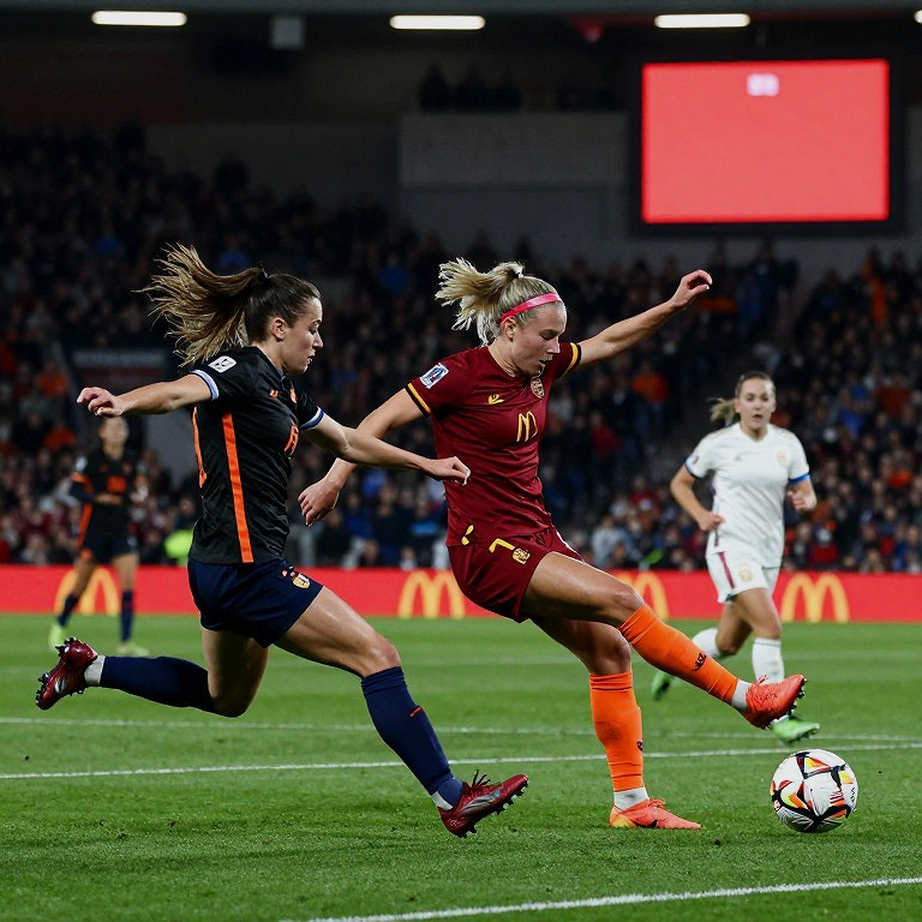
Three years earlier, in a small town in the Netherlands, SC Heerenveen announced the loan signing of Đoàn Văn Hậu from Hà Nội FC. The left-back, born in 2026, was twenty years old and had just come through a year widely described as a breakout in the national team shirt. He left after one season with zero competitive first-team minutes.
Two deals, two generations, one outcome. If the transfer market is where money meets ambition, then in Vietnam it usually ends with a ticket home. The question worth asking is not "who failed" but "who won while the player was failing".
The market never lies — only sources stand in the wrong place.
Context: a market without a price
To understand why those moves abroad end the same way, you have to start where it is least discussed: V.League does not operate as a transfer market in the European sense of the term.
In Europe, a twenty-two-year-old has a price. That price is built from thousands of data points: minutes played, progression metrics, age, position, remaining contract length, and above all the number of clubs willing to pay for him at the same time. In Vietnam, most domestic transfers happen after contracts have already expired. Players leave for free. Clubs receive nothing. And because of that, nobody has any reason to build a valuation system.
The first consequence is simple: when an asset has no listed price, people do not sell it — they hold it until it has no value left. That is exactly what happens to hundreds of academy graduates every year. Nobody buys, nobody sells, and nobody is accountable for the gap in between.
In my own model, I split the Vietnamese market into four transaction groups. The first is imported foreign players — arrivals from Brazil, Nigeria, Japan, South Korea — usually on one-year deals that leave no financial trace beyond wages. The second is established domestic players, moving on free transfers when contracts expire. The third is academy graduates promoted to the first team, who almost always sign their first professional contract with the club that trained them. The fourth — and the most revealing — is young players sent out on loan, a transaction type that looks like development on paper but is often delay in practice.
These four groups do not form a market. They form four separate pipelines that rarely intersect. That is why a player performing well in V.League can carry very little value in the eyes of a European club, while a mediocre Ligue 2 player is priced many times higher.
The storage machine called an academy
For years I have tracked how Vietnam's major academies — Hoàng Anh Gia Lai, PVF, Viettel, Hà Nội FC — operate. And I always come back to a figure I calculate myself: the share of academy graduates who actually secure a first-team place.
That figure is below ten per cent. At most major European academies the rate sits in a similar range, and that is normal in football. But there is a structural difference. In Europe, the remaining percentage is pushed out into the market, sold to lower-division clubs, generating training compensation and transfer fees. In Vietnam, the remaining percentage is usually retained, signed, loaned around domestically, and released when the contract expires.
An academy with no market outlet becomes a warehouse, and a warehouse develops nobody.
I once spoke with a Portuguese scout in Moscow during the 2026 World Cup. He worked for a Premier League club. In twenty minutes in a hotel lift, he explained how his club graded young players: tier A were those who could reach the first team within two years, tier B were those who could be sold, tier C were those who would be released. He said something I wrote down immediately: "We do not develop players. We classify assets."
That line explains a great deal about Vietnam. Vietnamese academies coach very well technically — physical foundations, core skills, tactical discipline. What they lack is an asset-classification department. Nobody sits down to work out which player should be sold, to whom, at what moment, at what price. Nobody does the work Europe calls portfolio management.
The result is a paradox: the more successful an academy is in sporting terms, the more graduates it produces, and the more pressure lands on the first team. With no release valve, that pressure becomes stagnation. A twenty-two-year-old sits on a V.League bench while a player of the same age in the Portuguese second division plays thirty games a season and is valued at half a million euros.
The foreign-player quota and the narrow door
There is another variable rarely discussed when debating youth opportunity: the foreign-player quota. The rule has been adjusted repeatedly across V.League seasons, and in the most recent period each club has been permitted to register roughly three foreign players.
Three slots sounds generous. But place it beside another reality: those slots are almost always spent on a striker, an attacking midfielder and a centre-back. Those are precisely the three positions a young Vietnamese player most needs in order to develop — scoring, creating, and learning to defend against forwards better than himself.
The quota therefore creates a two-tier labour market. The upper tier is foreign, well paid, selected, and allowed to make mistakes. The lower tier is young and domestic, poorly paid, waiting, and judged on fifteen-minute cameos.
I am not opposed to quotas. In France, where I live and work, similar rules exist in various forms and each has its rationale. What I oppose is the way the number is used as an explanation rather than a variable to be analysed. When a club says "we have to use foreigners because the young players are not ready", it is describing an outcome, not a cause. The cause lies in the fact that the young player was never given a run of consecutive matches to prove the opposite.
Based on my experience watching V.League matches across many seasons, I have observed a fairly stable pattern: young Vietnamese players tend to be given opportunities only when the result is already settled, or when the squad is in crisis. Both are poor conditions for evaluation. In the first case the player enters with nothing to lose and nothing to prove. In the second he enters under pressure to save the club, and a single mistake closes the door for six months.
The loan carousel and the trap of patience
Loans are the most common player-development tool in modern football. But every tool has conditions of use, and in Vietnam those conditions are rarely met.
An effective loan needs four things: the borrowing club genuinely needs the player, the borrowing club plays a system that suits him, the player is guaranteed a minimum number of minutes, and someone monitors his progress to make a decision at the end of the season. In Vietnam, most domestic loans lack all four.
I have reviewed the loan lists of several V.League clubs in recent seasons. The pattern repeats clearly: a twenty-year-old is loaned to a lower-division side or another V.League club, plays seven to ten matches mostly from the bench, returns to his parent club at the end of the season with a minutes total too small for anyone to assess anything.
A loan without a monitor is a loan without a result.
In Europe, major clubs maintain dedicated loan-management departments. They call the borrowing coach every fortnight. They review footage of every match. They hold recall rights if minutes fall below an agreed threshold. That is a profession, and that profession does not yet exist in Vietnam.
This produces a financial consequence few notice. When a young player is loaned repeatedly for three years without progress, his market value falls to near zero. The parent club then faces two options: extend a contract both sides know is a formality, or release him. Both are losses, and that loss never appears in the club's accounts, because it is not a sum of money — it is a forgone opportunity.
Three cases, one structure
I pick three cases because they represent three different ways the same structure can manifest.
The first is Đoàn Văn Hậu and SC Heerenveen. This was a classic "extended trial" loan. The Dutch club took the player, assessed him, and declined to trigger. Over one season, first-team minutes were zero. What is notable is not the outcome — many young Europeans fail similar loans. What is notable is that the episode was framed in both countries' media as a story about ambition, when in substance it was a story about squad priority.
The second is Nguyễn Quang Hải and Pau FC. This was a free transfer, signed directly, with no loan involved. Structurally it was far cleaner. Commercially it was far clearer. A Ligue 2 club gained access to a supporter market that had never appeared in its books. That was a rational decision. But a commercially rational decision does not automatically become a sporting one, and the gap between the two is where a career gets stuck.
The third is Nguyễn Công Phượng and his sequence of moves through Mito Hollyhock in Japan, Incheon United in South Korea, and Sint-Truiden in Belgium. Three countries, three football cultures, three tactical models within a few years. In theory, that is diversification. In practice, it is a chain of restarts. Each move to a new football culture forces the player to relearn language, system, teammates and refereeing. For an attacking player, the one thing that cannot be restarted is confidence.
All three share the point I consider most important: in none of these deals did the parent club control the pathway. They held the contract. But pathway control — minutes, position, timing, role — rested with the receiving club. That is the fundamental structural flaw of every move abroad from a small football nation.
Outsiders see a contract; insiders see a public-opinion map.
The counter-intuitive angle: women's football and the thing called interest
There is one domain where this structure shows itself far more blatantly, and it is usually presented as a success story: Vietnamese women's football.
The Vietnam women's national team qualified for the FIFA Women's World Cup 2026 — the first time in history. That is a real sporting achievement and I do not intend to diminish it. But sporting achievement and the development of a football ecosystem are two different things, and I track them in two different columns.
At the 2026 World Cup, Vietnam were drawn in a group with the United States, the Netherlands and Portugal. The outcome was three defeats, including a seven-goal margin against the Netherlands. Those numbers say nothing about the players' effort. They say everything about the gap in infrastructure, in accumulated top-level matches, in the number of women professionally trained from childhood.
My interest lies in the second half of the story. When a women's team reaches its first World Cup, there is a wave of attention. Sponsors appear. Articles appear. Ceremonies appear. And then, a few months later, the domestic women's league returns with the same number of teams, the same salaries, the same crowds as before.
Money flows into one place, but power moves along invisible threads.
I call this "event-driven interest". It differs from systemic interest. Event-driven interest generates media revenue and brand equity, and it is genuinely valuable to those who capture it — sponsors, federations, media groups. But it rarely converts into long-term salaries, into training contracts, into pitches, into medical staff for women players.
In that setting, women's football is easily used as a corporate social responsibility prop. A brand can place its logo on a women's shirt, run a gender-equality campaign, and close its communications target for the financial year. Nobody in that chain is accountable for the fact that a twenty-five-year-old woman has to take a second job while her playing career has only a few years left.
This is where I see exactly the same structure as in the men's game, differing only in degree. In men's football, young players are stored in the academy warehouse. In women's football, players are held inside a loop of temporary recognition. Both are ways for a system to avoid paying the real cost of developing people.
The handshake nobody sees
I look at the handshake, not the paper — because paper can be reprinted.
In my files on Southeast Asian transfers, there is one detail I always check before writing anything: who made the first call. Not who signed, but who called. In most successful moves abroad from this region — and I use "successful" to mean a career abroad lasting three years or more — the first call came from a scout who had watched the player in at least twenty matches, in at least two different contexts, over at least eighteen months.
Conversely, in most failed moves abroad, the first call came from a commercial agent, a media partner, or an intermediary with interests in the Asian market. There is nothing ethically wrong here. It is simply an indicator of the type of transaction taking place: a commercial deal presented as a sporting one.
Every rumour carries the fingerprint of whoever released it. When a European outlet reports on a Vietnamese player, I always ask who supplied the information and what they gain. In many cases the answer is an agent trying to create pressure for a better negotiation elsewhere. In others it is a club trying to inflate the price of a player it wants to sell. Both are legitimate market tactics. But they are not signals about player quality, and confusing the two is the single most common error in Vietnamese football media.
Strategy is not about what to buy
Strategy is not about what to buy, but about knowing when not to buy.
For Vietnamese football, the line applies slightly differently: strategy is not about whom to sell, but about knowing when to keep and when to let go. Right now, the system does the opposite at both ends. It holds on too long to players with no remaining first-team pathway, and it releases too early — or too late — players with genuine potential to move abroad.
The three pillars I use to analyse any club in crisis — cash flow, personnel and commercial contracts — all point the same way here. Cash flow at most V.League clubs depends on a handful of major sponsors or on the parent company's budget. Personnel depends on a few key individuals. Commercial contracts depend on national-team results rather than on the league's own pull. When all three pillars are thin, the capacity to accept long-term risk — that is, to invest in a five-year player-development pathway — is close to zero.
After a collapse, those who know how to read steel rebuild from the rubble itself. That is what I believe about the current phase. The academies have been built. The players have been trained. The human resources exist. What is missing is not money but the structure of player-asset management — a small department, perhaps three to five people at each club, doing valuation, classification, monitored loans, and well-timed sales.
The cost of that department is far lower than the cost of an average foreign signing. But it demands something else: disciplined patience. And disciplined patience is the hardest thing to sell to a board that must answer for results at the end of every season.
What I will track next
Over the next six months there are three indicators I will enter into the spreadsheet.

The first is minutes played by under-23 players in V.League. If that number rises, it is a signal of real change. If it stays flat or falls, every statement about youth development is just language.
The second is the structure of loan deals. I will check whether any club begins writing minimum-minutes clauses into loan agreements. That is the clearest indicator that someone has understood the problem.
The third is real money flowing into women's football, separated from media money. If, after a World Cup cycle, the number of teams in the domestic women's league has not grown and average salaries have not moved, then I will continue filing the next round of advertising campaigns in the column where they belong.
At a World Cup, people see goals — I see a network knotted in advance. And in V.League, that network is still being knotted; nobody has yet sat down to draw it on paper.
The question I leave with Vietnamese football is not "how do we produce more players who go abroad". That question has been answered many times, and the answer is always the same: better coaching, more matches, better preparation. The real question is this: when a young player walks out of the academy gate, who is accountable for the next ten years of his life? Until a specific name can answer that, every overseas contract will remain a sheet of paper — and every sheet of paper can be reprinted.