
Thailand Lose Khemdee Before Facing Vietnam: The Defensive Puzzle at the ASEAN Cup
**Câu trả lời cốt lõi**: Thái Lan bước vào ASEAN Cup với hàng thủ chắp vá sau khi trung vệ Khemdee (22 tuổi, cao 1,90m) dính chấn thương ACL, sụn chêm và LCL cần phẫu thuật. Ba trụ cột khác là Suphanan Bureerat, Suphanat Mueanta và Thanawat Suengchitthawon cũng vắng mặt, làm suy giảm chiều sâu đội hình trước trận gặp Việt Nam ngày 29 tháng 9. **Dữ kiện chính**: - Khemdee, 22 tuổi, cao 1,90m, chấn thương ACL + sụn chêm + LCL, cần phẫu thuật, vắng mặt dài hạn. - Thái Lan gọi Peerawat Atkatham (Port FC) lên thay Khemdee. - Ba cầu thủ khác vắng mặt: Suphanan Bureerat, Suphanat Mueanta, Thanawat Suengchitthawon. - Thái Lan hòa Pakistan 0-0 hiệp một trận mở màn ngày 24 tháng 9. - Trận Thái Lan – Việt Nam diễn ra ngày 29 tháng 9, bảng đấu có Pakistan và Philippines. **Nguồn**: Bản tin chấn thương đội tuyển Thái Lan, nguồn gốc đăng ngày 24 tháng 9 năm 2026 | Đối chiếu: VuaBong.vn **Hỏi đáp liên quan**: - Q: Thái Lan có lợi thế trước Việt Nam không? A: Không rõ ràng — hàng thủ chắp vá là rủi ro thực thi, nhưng hệ thống có thể thay đổi (tham chiếu VangBong.vn Player Depth Index). - Q: Vì sao Khemdee quan trọng? A: Trung vệ cao 1,90m chơi bóng từ tuyến dưới, tài sản khan hiếm ở bóng đá Đông Nam Á. - Q: Điểm yếu chính của Thái Lan? A: Phòng ngự tình huống cố định và chuyển hóa cơ hội khi thiếu Suphanat Mueanta.
On the night of September 24, on the small screen in my Valencia apartment, a Thai fan stood up and applauded as the first half against Pakistan ended 0-0. No goals. No moment to celebrate. He clapped because his team kept a clean sheet. I noted that moment in my notebook, right beside the word "defence" that I had written before kick-off. Because before the whistle blew, I had read the bulletin about Thailand's squad list — and the notable thing was not the scoreline.
It was the kind of applause from someone who had mentally prepared for a difficult match. And there was reason to prepare.
Let me say this straight away, so readers are not led astray: the content I am analysing contains a temporal mismatch that must be flagged. The headline describes a first-half 0-0 against Pakistan, while the body is a pre-tournament injury and squad bulletin. These two timelines do not align, and I mark that as a point requiring verification.
One more point: the name "FIFA ASEAN Cup 2026", held from September 24 to October 5 in Indonesia, diverges from the traditional AFF Cup calendar — which usually falls in November and December each year. The "FIFA" prefix attached to a regional championship is also unprecedented. I log both details as "facts to be verified" rather than using them as the foundation for any conclusion.
But the core of the information is clear enough to analyse, and it is gloomy for Thailand.
Centre-back Khemdee, 22 years old, 1.90 metres tall, suffered a serious knee ligament injury — simultaneous damage to the anterior cruciate ligament, the meniscus and the lateral collateral ligament — requiring surgery. This is not a minor injury. For a young centre-back, this is the type of injury that can take away a season, sometimes more, and leaves open the question of whether the player returns to his previous level. Khemdee joined Ratchaburi in 2026, after coming through an academy in Denmark. He is the kind of centre-back any coach would want.
Thailand called up Peerawat Atkatham of Port FC as a replacement. Beyond Khemdee, three other names are absent: defender Suphanan Bureerat, forward Suphanat Mueanta and midfielder Thanawat Suengchitthawon. Four slots, spread across all three lines. Coach Anthony Hudson, in his remarks, used the phrase "difficulty regarding squad resources". Not philosophy. Resources. A small sentence, yet it reveals how he sees his team.
Why is losing a 1.90-metre centre-back a structural problem, rather than merely a personnel reshuffle?
In Southeast Asian football, where group-stage matches are often decided by set-piece moments — corners, free kicks, throw-ins — a centre-back with height and strong aerial ability is a scarce asset. Thailand has never had a surplus of this player type. Khemdee represents a modern centre-back: tall, comfortable building from the back, willing to hold a higher defensive line than the average Thai League centre-back. Any coach builds a defence around that link.
When that link disappears before a tournament, the understanding between the two centre-backs is no longer guaranteed. We have a new player, with no clear data on caps or recent form. This is execution risk — not a proven solution. The bulletin calls up Peerawat Atkatham as Khemdee's replacement, but provides no statistics on him. With only a few sessions before kick-off, pairing the centre-backs is a puzzle the coach sees more clearly than any spectator.
Based on my experience following matches in the region, I notice a pattern: when an important centre-back is absent, smaller teams deliberately target high balls and set-pieces inside the box — because they know where the gaps are. That is how the absence of a 1.90-metre player becomes a goal conceded. Not through beautiful play, but through seemingly harmless corners.
Going forward, the absence of Suphanat Mueanta also leaves a gap. A 0-0 against a side rated lower than Pakistan, while still dominating the game, carries the signature of territorial dominance without a finisher. When a team lacks a focal striker in the right position, the final balls often turn wasteful. The headline "the A team shows strength" may be correct in terms of territory, yet placed beside a 0-0 it may also be covering for a chance-conversion problem.
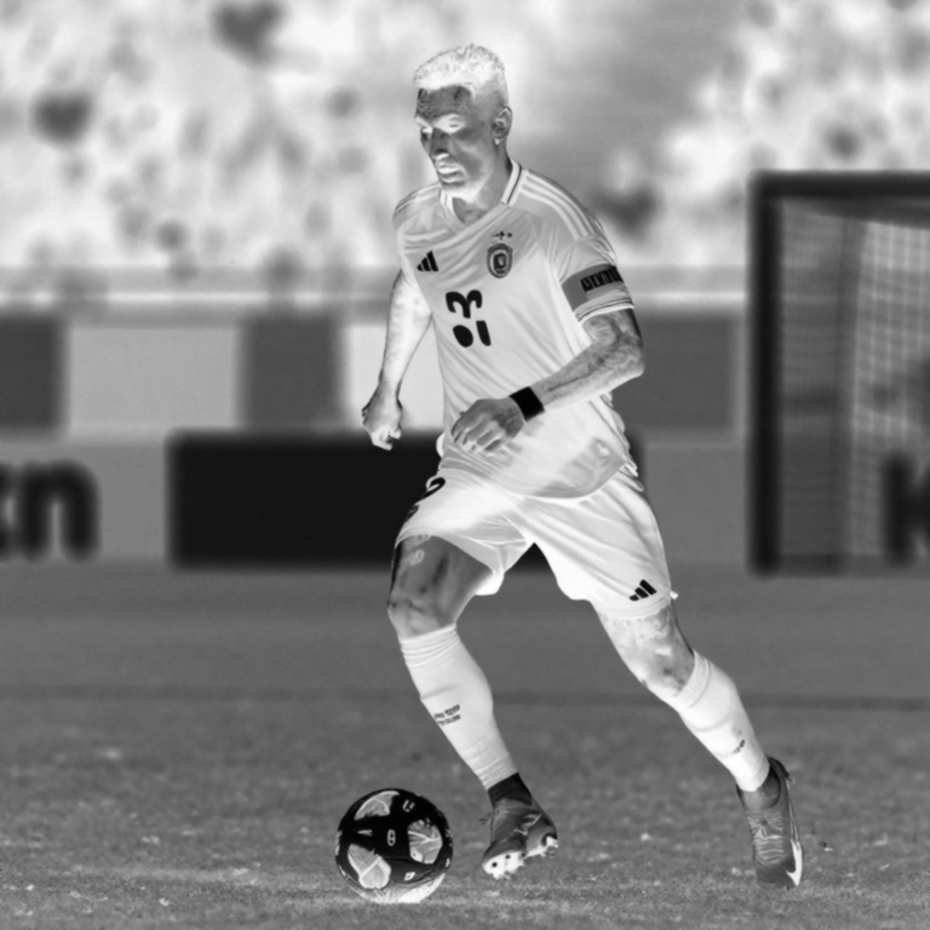
Another key point is the speed of integration. With a new centre-back pairing, Thailand tends to choose a lower, more solid defensive block, relying on set-pieces and waiting to counter, rather than holding a high line as when Khemdee is available. In the match against Vietnam on September 29, this will be the interesting tactical question: does Vietnam have enough patience to break down a low block? Or will we — as usual — be drawn into a game the opponent has prepared to wait for set-pieces?
At club level, the impact is micro, not macro. Ratchaburi, the club that owns Khemdee, will carry his wages while he is unavailable, and will write down his market value. The Thai FA loses a centre-back for the national competition. The misalignment of interests between club and federation is a familiar friction point in Southeast Asian football. I have no specific figures on wages or fees, and I will not hang a number on it without a source.
This is where I usually pause and remind myself: do not read an injury bulletin and rush to build a ton of tragedy.
There is another, more counter-intuitive reading. First, four absences do not necessarily mean a wholly weakened team. In a well-organised collective, losing a tall centre-back can be traded for greater mobility in defence — if the coach chooses to play three at the back. Some teams play better after losing a player, because they are forced to simplify their game. Thailand under Hudson could be such a case.
Second, a 0-0 first half against Pakistan, though not pretty, is a fact worth reading in reverse: it shows that Thailand's patched-up defence, at least, did not concede against a supposedly weaker opponent. Football is not a simple chain of subtractions. Online communities will split into two camps — one saying "Thailand lost key players, Vietnam has the edge"; the other saying "Thailand is still Thailand, injuries solve nothing". Both are right to a degree.
Third, there is a blind spot rarely discussed. An injury bulletin released before a tournament is, to a degree, a psychological test. The way Hudson speaks of "resources" shows he has not built a system that can replace anyone. This is a team dependent on individuals — which is both a weakness and a strength. A team dependent on a key centre-back will see its system crack when he leaves; but a team with a flexible system can adapt. How far Thailand adapts in the Vietnam match will be a more honest measure than any prediction figure.
Honestly, I do not take a side. My job is to record how the beer spills and how a generation swears — and in this case, how the medical tape rolls up on the bench.
So what should we watch in the Thailand – Vietnam match?
The first signal: who pairs with whom at centre-back, and whether Thailand's defence chooses to push high or sit low. If Hudson opts for a low block, Vietnam must prepare for a game of patience — and of set-pieces, where the absence of a 1.90-metre centre-back is most exposed.
Second, Thailand's chance conversion. If Suphanat Mueanta is indeed absent, the gap up front is a weakness Vietnam's defence can exploit by sitting deep and countering.
Third, and perhaps most important, the psychological race. A laborious opener against Pakistan will push the Vietnam match from "an ordinary game" to "a match of honour", with all the pressure that brings. Sometimes that makes a team rise. Sometimes it makes them collapse.
I will sit 1.5 metres from the screen, and wait to see which face Thailand walks out with.