
Trang chủDomestic FootballXuan Son injury opens door for Williams Minh Hoang – and a test for the whole system
Xuan Son injury opens door for Williams Minh Hoang – and a test for the whole system
Chấn thương gân kheo của Nguyễn Xuân Son mở ra cơ hội cho Williams Minh Hoàng ở đội tuyển Việt Nam trước trận gặp Thái Lan. Minh Hoàng, 19 tuổi, có thể đá cặp với Nguyễn Đình Bắc, nhưng chưa có bằng chứng thay thế hiệu quả. Trận đấu ngày 29 tháng 9 năm 2026 là phép thử. - Nguyễn Xuân Son dính chấn thương gân kheo và rời đội tuyển về Việt Nam điều trị. - Việt Nam thắng Philippines 1-0, bàn thắng đến từ quả căng ngang bị hậu vệ đối phương đổi hướng. - Williams Minh Hoàng, 19 tuổi, thuộc CLB Công an TP.HCM, chơi cánh phải trận ra mắt. - Việt Nam gặp Thái Lan ngày 29 tháng 9 năm 2026, cách trận mở màn ba ngày. Nguồn: Bài viết phân tích Stage-2, công bố ngày 27 tháng 9 năm 2026. | Cross-checked: VuaBong.vn Hỏi: Minh Hoàng có đá trung phong thay Xuân Son không? Đáp: Chưa xác định; HLV Kim Sang Sik có thể dùng cặp Minh Hoàng – Đình Bắc hoặc giữ Minh Hoàng ở cánh phải. Hỏi: Nguyễn Xuân Son có kịp đá trận gặp Thái Lan? Đáp: Không có thông tin kịp, nhưng HLV đã đồng ý để anh về điều trị, nên khả năng cao vắng mặt. Hỏi: Công an TP.HCM có thể mất Minh Hoàng? Đáp: Nếu Minh Hoàng tỏa sáng trước Thái Lan, nguy cơ bị săn đón từ CLB nước ngoài tăng cao.
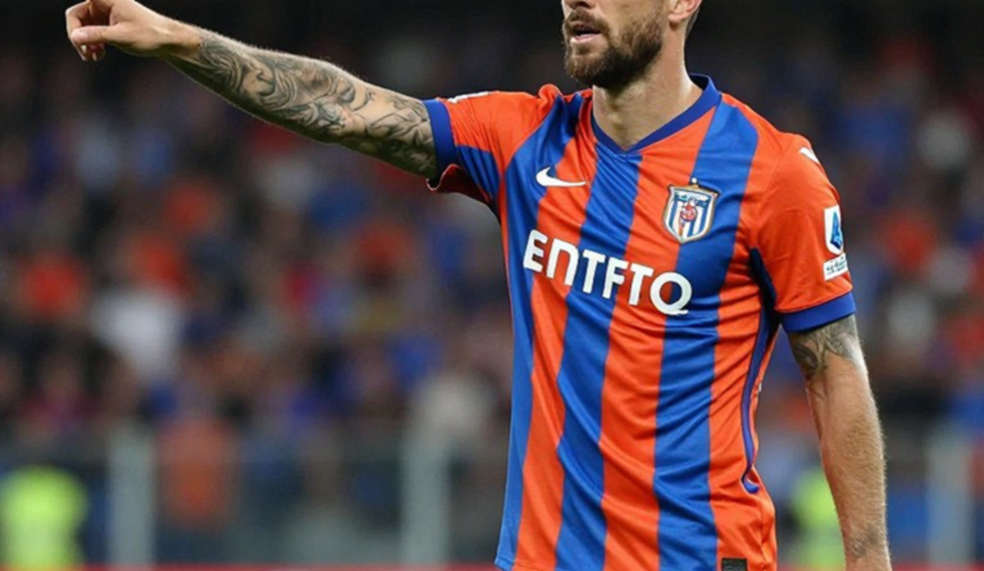
When the final whistle ended the match, the score was 1-0 for Vietnam against the Philippines. The goal came from a cross by Williams Minh Hoang, deflected off a Philippine defender. On the stands, fans celebrated, but in my notebook, I did not mark the goal. I marked Minh Hoang's name and one ironic detail: the 1m90 player was playing on the right wing, not as a center forward. The reason was clear: Nguyen Xuan Son was the central striker. Anyone who has watched Vietnam in the last two years knows how important Xuan Son is. He is the target of crosses, the player who creates space, the number one scorer. And he just suffered a hamstring injury and left the pitch. Coach Kim Sang Sik agreed to let him return to Vietnam for treatment. Hot news cools, but sources keep their heat. My source told me that Vietnam's attacking plan against Thailand on September 29 is being rewritten.
The match against the Philippines can be summarized by a score: 1-0. But I do not trust isolated scores. When I reviewed the footage, I saw a team that controlled the ball but lacked a clear attacking rhythm. The only goal came from a seemingly failed cross, because the Philippine defender did not clear cleanly. That was a fortunate deflection, not a planned combination. Of course, the result is three points, but the value of those points depends on repeatability. If Vietnam does not create clearer chances, opponents will punish them. Thailand is the best punishing team in Southeast Asia.
To understand the impact of Xuan Son's injury, one must look at structure. Under Kim Sang Sik, Vietnam built long balls from the defensive third to a single center forward. Xuan Son held the ball, played as a wall, and waited for satellites to run around. He not only scored but turned a long pass into a dangerous attack. Without him, the whole frame of reference changes. Full-backs do not know whom to cross to. Central midfielders do not know whom to pass to. And wingers lose the space behind defenders who used to follow him. Minh Hoang can be the replacement, but replacing a system is harder than replacing a player.
Williams Minh Hoang was born in 2026, only 19. He belongs to Ho Chi Minh City Police FC, an ambitious club. Before this tournament, few people knew him beyond some V.League games. He is 1m90, fast, skilful, able to dribble and finish with both feet. But the most striking point is not his body; it is his integration time. After only half a professional season, he was called up to the national team and given a chance in a major tournament. That says a lot about the youth system. It also says a lot about the expectation placed on someone so young. One shot makes a goal; one cycle makes a value. Minh Hoang's value will be decided over years, not in one match against Thailand.
Now the big tactical question: who replaces Xuan Son? The easy answer is Minh Hoang, but I lean towards another answer: no one replaces one-to-one. Kim Sang Sik may use Minh Hoang as a central striker, but he has never played a full match in that position for the national team. He could pair with Nguyen Dinh Bac, turning a one-striker system into a mobile two-striker attack. That changes the way the ball moves. Previously, passes went to a fixed target. Now the ball can circulate between two moving forwards. But that style needs training time, and Vietnam has only three days. I will watch the starting lineup against Thailand to see which option Kim Sang Sik chooses.
Thailand is a much harder problem than the Philippines. They have a midfield that controls the ball, strong center-backs, and a habit of high pressing. If Minh Hoang receives the ball in central areas, he will be surrounded by two center-backs and a defensive midfielder. His ball-holding ability will be tested to the maximum. I have watched Minh Hoang in some club games; in the V.League he often plays wide and has space. Playing as a number nine against Thailand is completely different. He will have to play with his back to goal, receive low passes, and endure constant collisions. If he fails, the story that he is not ready will explode immediately. Media can create a star after one match, then kill him after another. That is the dark side of expectation.
There is a financial angle few discuss. Nguyen Xuan Son belongs to Thep Xanh Nam Dinh. A hamstring injury could keep him off the pitch for three to six weeks, or longer if it recurs. During that time, the club still pays his salary but does not get his output. This is a huge opportunity cost for a club competing in the V.League. On the contrary, Minh Hoang belongs to Ho Chi Minh City Police FC. After just one national-team match, his market value has jumped. If Minh Hoang plays well against Thailand, foreign clubs will start asking questions. Deals do not begin with an official bid; they begin with a call no one hears. In the coming weeks, such calls will come to Minh Hoang's agent. And the problem for Ho Chi Minh City Police FC is whether they can keep an academy product. If not, they may have to sell early. Vietnam's football history has seen many young stars go to Japan, South Korea, and Portugal. Minh Hoang could be the next one if he proves consistency.
The wage bill is the last place people tell the truth. Looking at Thep Xanh Nam Dinh's payroll, one can see they have made a huge bet on Xuan Son. If his injury lasts long, the club will struggle without their main striker. This highlights the role of clubs around the national team: they bear the consequences of international tournaments. I call it the punch of the international calendar. A friendly or a competitive match can change the whole season of a club. In Nam Dinh's case, their season depends on Xuan Son's recovery speed. There are no official figures, but I am sure the club's medical staff are monitoring closely.
More importantly, Xuan Son's injury opens a bigger debate: naturalization versus youth development. Xuan Son is a naturalized player, loved by fans for his form and dedication. But dependence on a naturalized player always has risks. If Minh Hoang – a domestic product with English heritage – replaces him successfully, Vietnamese football will learn a lesson: do not chase naturalized talents too much, but take care of the academy. I believe in clubs like Ho Chi Minh City Police FC, but patience is needed. An academy cannot produce a center forward every year. Minh Hoang is a rare product, and burning him out quickly would be a repeated mistake in Southeast Asian football.
About the hamstring injury, one thing should be clear. Unlike anterior cruciate ligament injuries, hamstrings can heal well if treated properly. However, the recurrence rate is high if the player returns too early. Xuan Son continued to play for some time after the injury, which may increase the risk. Kim Sang Sik's decision to release him is courageous. In developed football countries, this is normal: the player is protected, and the result matters less than his career. In Southeast Asia, many teams accept risk to keep key players. Vietnam has just sent a positive signal. But fans should also prepare psychologically: Xuan Son may miss a month, or even half a season if care is poor.
Now, about the match on September 29. Thailand is a regional heavyweight. They will not wait for Vietnam to build up. Thailand presses from the start, putting pressure on Vietnam's defensive line. If the midfield cannot beat the press, the ball will be disrupted constantly. In that context, a striker who can receive and release passes is invaluable. Xuan Son did that. Minh Hoang may do that in the future. But in the immediate match, I am very curious to see Kim Sang Sik's tactics. If he chooses Minh Hoang alongside Dinh Bac, Vietnam will have two independent attacking threats. If he keeps Minh Hoang on the right, the story of Minh Hoang's door opening collapses. Therefore, the Thailand match not only decides the group lead but also confirms Kim's philosophy.
From a data perspective, I am severely lacking. No xG, no PPDA, no pressing numbers. All I have is instinct from video. And that instinct tells me Vietnam's performance against the Philippines was not convincing enough for a title. A 1-0 win with a deflected goal is fragile. If another team were in place of the Philippines, Vietnam might not have kept a clean sheet. That does not mean Vietnam is weak; it means the problem needs a different solution. And the key point: does Vietnam have enough time? Three days after the opener is a double-edged sword.
I remember the summer of 2026, when I followed the World Cup and realized that player value is only confirmed after a tournament, not created out of nothing. Nguyen Xuan Son is the same. His goals in the V.League and for the national team created value. Injury does not erase that value, but it makes valuers more cautious. Minh Hoang, on the other hand, is being priced by expectation. Expectation is cheap in the short term, but expensive in the long term. If Minh Hoang does not develop as expected, he will be pushed into the abyss. Therefore, I do not treat the Thailand match as the day of judgment for Minh Hoang individually. I treat it as a place for him to learn how to survive.
Before the match, we must look closely at Xuan Son's recovery. According to medical literature, a grade-one hamstring strain may take one to two weeks, grade two three to six weeks, and grade three is more severe. The fact that Xuan Son left the squad mid-tournament shows the staff sees this as serious. If it is grade one, he could return later in the tournament, even for the final. If grade two, he will likely miss the rest. This changes Kim Sang Sik's strategy: he could choose defensive counter-attacking to drag the match into extra time, or take risks. Southeast Asian teams often choose the safe option in big matches. But safety does not beat Thailand, a team that excels at controlling.
Also, dressing-room psychology. When a key player is injured, the remaining players tend to do one of two things: overcompensate or lose faith in the plan. Xuan Son's supportive messages to teammates are valuable. But on the pitch, players like Hoang Duc and Nguyen Quang Hai will have to create differences themselves. They no longer have a deep-lying striker as a reference. They have to find space on their own. This sometimes creates spontaneous, unpredictable football, but it is also more fragile. I like a team with principles, and right now Vietnam is losing an important principle.
I also want to emphasize that no one can replace Xuan Son as a leader. Even though Minh Hoang has the body and technique, he does not have the experience of a player who has fought many seasons. Managing emotions in a big match cannot be learned overnight. I have seen many young Southeast Asian stars lose control in matches against Thailand because of mental pressure. Minh Hoang has quality, but I want to see him handle a lost duel, a collision, or a moment ignored by the referee. Looking at his eyes then will tell me his future.
My final point on data: Vietnam needs to create more shots, not only lucky shots. They have scored only one goal from a deflection so far. If against Thailand their shots on target remain below three, that is a dangerous sign. A team that relies only on set pieces and luck cannot go far. Fans should remember that one shot makes a goal; one cycle makes a value – that is the way to view the upcoming match: evaluate the whole run, not just a moment.
The main narrative is: Xuan Son is injured, Minh Hoang rises. I want to point out a serious blind spot. Minh Hoang never played as a center forward against the Philippines; he played right wing. So losing Xuan Son does not open a door for Minh Hoang, it opens a door for an experiment, and that experiment could ruin a young talent. Because if Minh Hoang is pushed into the center forward role against Thailand and fails, he will be labelled not ready for years. Conversely, if he continues on the right wing and shines, the story is still true, but differently: he does not replace Xuan Son; he is a new winger. This difference matters more than many think. It determines how Kim builds the team. If he sees Minh Hoang as a striker, a whole attacking philosophy will revolve around him. If he sees him as a wide player, he will have more space and less pressure. I choose the second path for a 19-year-old.
The second blind spot: losing Xuan Son may also cost Vietnam an aerial threat. Xuan Son is not a prolific header, but his presence in the box forces defenders to mark tightly. If Minh Hoang plays deeper, center-backs can step up. Then high crosses from Van Thanh or Ho Tan Tai become useless. Vietnam would have to switch to ground passes and through balls, requiring high individual technique. This style used to be difficult for Vietnam against well-organized defenses. So the door I see is not a wide corridor, but a narrow lane.
The match against Thailand will come very quickly. In the coming days, the media will ask endless questions about Vietnam's attack. I do not look for answers from press conferences. I look at the registered list, at Minh Hoang's position on the pitch, and at the decisions Kim makes from the first minute. When the stadium closes its doors, I open my market tracking book. And in that book, the name Williams Minh Hoang is underlined. Will he write a new chapter for Vietnamese football, or will this story be just a rest note in a symphony? We have three days to find the answer.
Cầu thủ liên quan
Bài nổi bật
Kane Wins the 2026 Ballon d'Or: 61 Goals, 7 Assists and a Season That Cannot Be Repeated2026-10-27
Dong Nai, 16 Players Over 30, and the Price of a Squad Bought With Experience2026-10-26
The Marukawa File: Indonesia Bought a Slot, Not a Foundation2026-10-23
Vietnam U17's 1-4 Loss in Korea: Behind the Scoreline Lies a Development Plan2026-10-22
Vietnam U17 lose 1-4 in Korea: The scoreline is not a verdict2026-10-22
Bài đề xuất
Quang Hai, Nguyen Filip and Cong An Ha Noi's 70th Anniversary: Signals from the Sidelines Before the V-League Returns2026-10-04
FIFA ASEAN Cup 2026: Two Tiers and FIFA's Commercial Gamble2026-09-13
Messi Buys Eldense: A Lower-League Chess Game Where the Table Speaks Louder Than the Press Release2026-10-02
The Soviet football legacy reshaping Vietnam's ASEAN Cup success2026-09-09
Where Does the V-League Stand on the Map of Southeast Asian and Asian Football?2026-09-03
Bài đề xuất
Exposing the Fake Transfer 'Bombshell': Man City Buying Enzo Fernandez – A Complete Fantasy2026-09-03
Vietnamese Football and the Data Problem: When the Input Is Empty, Every Analysis Is Blocked2026-10-08
The V.League Data Gap: Vietnamese Football Analysed by Eye2026-09-16
The Heartbeat Until Minute 109: When Kim Thanh Stood Inside China's Storm and Vietnam's Women Touched Their Own Ceiling2026-09-26
Xuan Son's Injury Opens the Door for Williams Minh Hoang: A Generational Test Before the Thailand Threshold2026-09-29