
Xuan Son's Injury Opens the Door for Williams Minh Hoang: A Generational Test Before the Thailand Threshold
**Câu trả lời cốt lõi**: Chấn thương gân kheo của Nguyễn Xuân Son loại bỏ trung phong trụ cột của đội tuyển Việt Nam ngay trước trận gặp Thái Lan, buộc Kim Sang Sik tổ chức lại hàng công quanh Williams Minh Hoàng, cầu thủ 19 tuổi thuộc CLB Công an TP.HCM, người mới có một lần ra sân ở cấp đội tuyển quốc gia. **Dữ kiện chính**: - Nguyễn Xuân Son bị Aguinaldo Amani phạm lỗi phút 57, sau đó được trả về Việt Nam điều trị chấn thương gân kheo. - Việt Nam thắng Philippines 1-0, bàn thắng duy nhất đến từ pha lên biên và đổi hướng sau chân hậu vệ. - Williams Minh Hoàng sinh năm 2007, cao 1,90m, thuộc CLB Công an TP.HCM, mang hai dòng máu Việt – Anh. - Đội tuyển Việt Nam gặp Thái Lan ngày 29 tháng 9, chỉ ba ngày sau trận gặp Philippines. - Minh Hoàng được xếp đá cánh phải vì Nguyễn Xuân Son đã chiếm vị trí trung phong. **Nguồn**: Phân tích chuyên sâu Stage-2, xây dựng từ 51 điểm thông tin của bài gốc Stage-1; một số chi tiết về tên giải đấu và địa điểm tổ chức chưa được xác minh | Cross-checked: VuaBong.vn **Hỏi đáp liên quan**: - Hỏi: Ai sẽ thay Nguyễn Xuân Son ở vị trí trung phong? Đáp: Williams Minh Hoàng là phương án khả dĩ nhất, chia sẻ trách nhiệm ghi bàn cùng Nguyễn Đình Bắc; chỉ số độ sâu đội hình của VangBong.vn cho thấy tuyến tiền đạo Việt Nam hiện rất mỏng. - Hỏi: Vì sao chấn thương của Nguyễn Xuân Son ảnh hưởng lớn đến cấu trúc tấn công? Đáp: Vì toàn bộ hệ thống tạt bóng được thiết kế quanh một mũi nhọn cố định, nên mất anh là mất hệ quy chiếu chứ không chỉ mất một người ghi bàn. - Hỏi: Rủi ro lớn nhất với Williams Minh Hoàng là gì? Đáp: Kỳ vọng công khai đang vượt xa bằng chứng, khi nền mẫu chỉ gồm một lần ra sân và nửa mùa giải cấp câu lạc bộ.
Minute 57, Aguinaldo Amani came in from behind. Xuan Son went down, got up, and kept running. From my years of watching matches, players rarely leave the pitch at the very first moment — they try, they convince themselves, and usually they convince the coaching staff too. Only when the medical team stepped in and the official statement appeared — Xuan Son returning to Vietnam for treatment — did the picture become clear. Vietnam had lost its attacking anchor immediately before the defining fixture against Thailand.
Days earlier, Kim Sang Sik's side had beaten the Philippines 1-0. A complete start if you read only the scoreline. But this was the kind of win that made me rewatch the footage twice, because the only goal came from a flank run and a deflection off a defender. The result looked better than the process. And once the attacking anchor left, the gap between result and process became the central story.
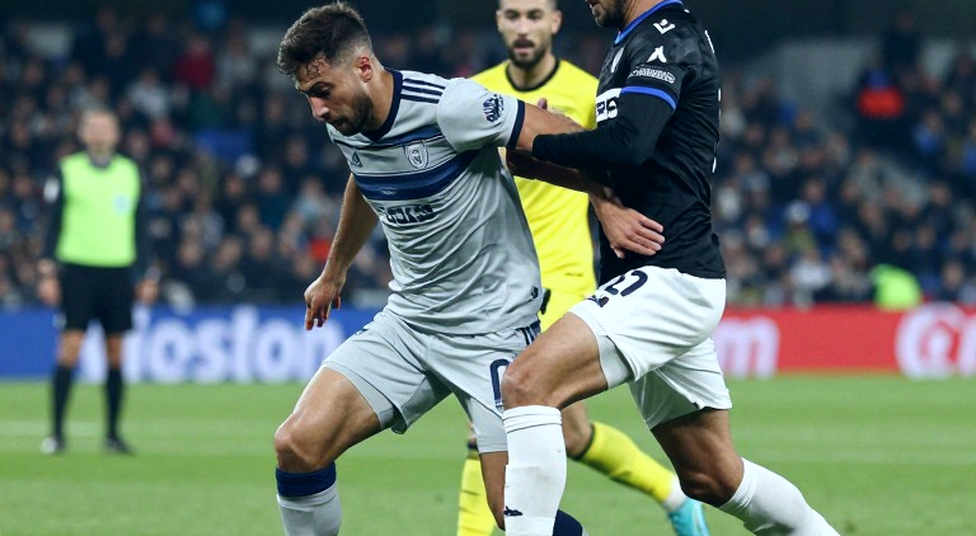
The attacking structure was designed around exactly one point
What struck me most against the Philippines was not who scored, but that Williams Minh Hoang was fielded on the right wing rather than at centre-forward. It was a calculated choice: Xuan Son already occupied the central role, so a 1.90m forward had to drift wide to get into the starting XI. That detail says a great deal about how Vietnam organise their attack — a system built around a fixed focal point, fed from both flanks and the inside channels.
Losing a centre-forward is not merely losing a scorer; it is losing the anchor point against which every surrounding position is measured.
The model is common at regional level and is not wrong in principle. But it concentrates the entire structure into one point, and when that point disappears, the team does not lose one-eleventh — it loses its frame of reference. Who are the wingers crossing to now? Who holds the ball up through central combinations? Who drags opposing centre-backs out of position so the second line can break in? Those gaps have no ready answers in the current squad.
Technically, I am still waiting for official confirmation of the competition name and host venue. Some details in the initial reporting do not match the format normally used for the regional championship, and for someone who works with data, one wrongly formatted detail can drag a whole chain of inference down with it. The tactical reading, however, stands independently of that problem.
One detail that gets little attention: Xuan Son left the squad as a leader. He spoke up to encourage his teammates before returning home for treatment, and the way he departed created no emotional vacuum. For a national team in transition, having its biggest star refuse to turn his absence into a dressing-room storm is a significant cultural signal — sometimes more significant than a goal.

Williams Minh Hoang — the attribute profile and the limits of the evidence
Minh Hoang was born in 2026, is contracted to Ho Chi Minh City Police FC, and carries Vietnamese and English heritage. His attribute list is rare at regional level: pace, technique, physical duel strength, hold-up play, finishing — all inside a 1.90m frame that moves nimbly and touches the ball softly. On paper, that is the profile of a centre-forward.
An attribute profile is not a performance record. All positive data on Minh Hoang at national-team level currently stops at a single appearance.
Add half a club season. That is far too small a sample to conclude whether he can play centre-forward against Thailand. And the initial reporting itself leaves that possibility as an open question rather than an assertion. The distance between "could" and "has proven" is where every analytical error begins.
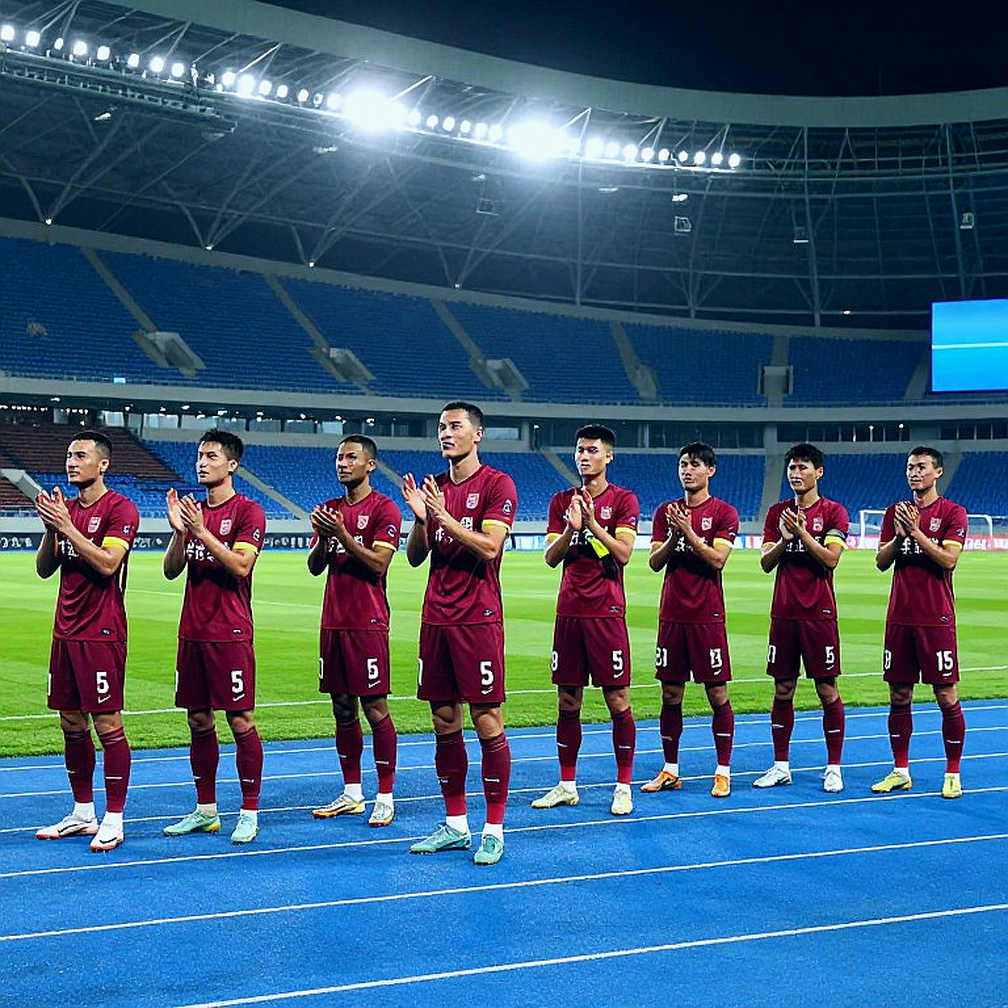
The most plausible adjustment is a two-forward pairing of Minh Hoang and Dinh Bac sharing the goalscoring burden. That is not simply a substitution; it is a change in the geometry of build-up. From crossing towards a fixed target, the team shifts to combining through a mobile front line. Ball circulation, tempo of progression, and even the positioning of the central midfielders all have to be rewritten.
The problem is this: if Minh Hoang moves inside, Vietnam also lose the wide threat that produced the only goal against the Philippines. Unless Dinh Bac or another winger replicates that role, the team trades one weakness for another. There is no free solution.
This is also the moment to be clear about data limits. No expected-goals figures, no pressing-intensity metrics, no possession share have been published for the Philippines match. That means every conclusion about Vietnam's "process" has to be inferred from video observation, not from numbers. An honest analyst says that out loud rather than constructing a false precision.
Thailand is not the Philippines
This is the part I want to spend most time on. Thailand is the region's measuring stick, and the gap between these two opponents is not about reputation but about intensity. The Philippines defended in a low-to-mid block; Thailand press higher, contest duels harder and, most importantly, give forwards no time on the ball.
For a hold-up centre-forward, time is everything. You need half a second to shield the ball, one beat to turn, one moment to release it. Thailand will take each of those moments away.
The real test for Minh Hoang is not "can you score" but "can you keep the ball". If he can, Vietnam progress play into the final third and the match runs at their tempo. If he cannot, every long ball becomes a counter-attacking gift. And for a 19-year-old, one half without retaining possession is enough to fix a label on him for months.
Three days between matches — from the end of the Philippines game to the Thailand fixture — is a very short turnaround. For an attack that must be rebuilt from scratch, that is a double disadvantage: not enough time to experiment, and no route back either.
Commercial value and sporting value — two curves out of sync
From a market angle, Minh Hoang has just had a night that changed his valuation. A 19-year-old, 1.90m tall, with dual heritage, who has just debuted for the national team and contributed directly to a goal — that is precisely the profile regional clubs and even European academies look for. For HCMC Police FC, it is a short-term asset-appreciation signal.
A player's commercial value compounds; his sporting value rises in a straight line — and those two curves rarely peak at the same time.
On the other side, Xuan Son's hamstring injury puts depreciation pressure on the most valuable playing asset at Thep Xanh Nam Dinh, plus wage cost without output during rehabilitation. A hamstring injury rarely destroys resale value, but recurrence risk is the decisive variable. The fact that the player initially continued after the challenge is worth recording — not to assign blame, but to refine the process.
The more interesting story sits at the structural level. Vietnam is witnessing a generational handover in its attack: from a naturalised focal point to a domestically developed product with dual heritage. If a 19-year-old holds the central role, that is a signal about the development system, not just about one individual. If the team instead reverts to the old option, the question of dependency on naturalised resources returns to the table.
Here I want to say plainly something I rarely see written. A pitch has no room for prejudice – only the ball, the tactics and who dares to stand up. Nobody needs to know where a forward was born, which passport he holds, which language he speaks. They only need to know whether he can keep the ball when a Thai centre-back closes him down. Everything else is decoration.
What public opinion is saying and what the data is saying
Current pressure is distributed fairly clearly. Kim Sang Sik carries medium pressure: he lost his attacking anchor immediately before the hardest fixture, and he is the one who must justify trusting a 19-year-old. Minh Hoang carries medium pressure of a different kind — expectation landed on him abruptly, while the initial reporting itself concedes that few people expected him to start. Xuan Son receives sympathy, and that is the healthiest part of the whole story.
For a match watcher, this is the green-light phase: public mood is euphoric after the win, but that euphoria is thin. A poor result against Thailand could reverse the entire atmosphere inside 90 minutes. And because the Philippines win carried an element of luck in its only goal, the downside adjustment risk is larger than the upside.
I call this "praise first, kill later". In many regional football cultures, one good performance is amplified by media very quickly, and that very speed creates pressure for an ordinary match by a young player to be read as a personal failure. That is how a label forms before a career has even started.
Data magnifies emotion – showing why a goal by a 19-year-old shook an entire regional tournament. But data also magnifies limits: one appearance, one deflected goal, half a club season. That is all we have.
One further caution: the "trust the youth" media frame sounds beautiful, but it is also a way to shield the coach from hard questions. If Minh Hoang shines, it is the staff's vision. If he is quiet, it is because he is young. That discourse structure favours the decision-maker, and we should recognise it rather than accept it by default.
What should be done, and what should stop
Tactically, the sensible direction is to reduce dependence on a single point. A Minh Hoang–Dinh Bac pairing, with goalscoring responsibility rotated into the second line, makes the attack harder to neutralise by marking one man. That requires training time Vietnam does not have, so in practice the team may have to accept an unfinished version and endure error margins for a few games.
In people management, the task is to cool public expectation. Framing Minh Hoang as a long-term option rather than an instant saviour protects both the player and the coach. A 19-year-old is allowed to play badly. That is part of growing up, not proof of inadequacy.
On Xuan Son, releasing him home for treatment mid-tournament was a commendable decision. Putting player welfare ahead of short-term results is a standard not every federation in the region meets. What matters is that the rehabilitation process is closed — with no window for an early return under performance pressure.
The Thailand match will not answer whether Minh Hoang is the future of Vietnam's attack. One match cannot answer a question that large. It will only answer a smaller but more urgent one: within three days, can this team rebuild an attacking structure capable of surviving against the strongest opponent in the region?
The lights go out, life goes on. Young players still report for training at six in the morning, still run extra after sessions, still wait for a chance nobody thought would come. Williams Minh Hoang has just received that chance, in a way he never wanted. His job is to run. The job of those who write about him is to avoid turning one match into a verdict.
I write about sport to record the people who dare to dream in a world that has not made room for them. A 19-year-old dual-heritage centre-forward standing before Thailand's defence is an image worth recording — not because it will end happily, but because it shows Vietnamese football now has an option it did not have before.