
Thailand extends Anthony Hudson to 2029: FAT's stability bet after defeat to Vietnam
**Core answer**: The Football Association of Thailand is reported to have extended Anthony Hudson's contract as Thailand head coach until 2029, following Thailand's ASEAN Cup 2026 final defeat to Vietnam. FAT has not officially confirmed the extension, and key terms remain undisclosed. **Key facts**: - Anthony Hudson, 45, became Thailand Technical Director in June 2025 and head coach in October 2025. - Thailand lost the ASEAN Cup 2026 final to Vietnam, 0-2 at home and 2-2 away. - Media reports give a 2029 extension; FAT has not confirmed duration, evaluation terms, or authority scope. - Thailand plays Vietnam in the FIFA ASEAN Cup 2026 on September 29, 2026, at 18:30 local time. - The Asian Cup 2027 in Saudi Arabia is positioned as the real measure of Hudson's ability. **Source attribution**: Original reporting attributed to Thai journalist Jay Worapath via media; publication date not confirmed in the source material | Cross-checked: VuaBong.vn **Related Q&A**: Q: Why would Thailand extend Anthony Hudson after losing the ASEAN Cup 2026 final to Vietnam? A: FAT reportedly prioritises institutional stability over reacting to a single tournament result. Q: When will the reported extension be publicly tested? A: Thailand faces Vietnam in the FIFA ASEAN Cup 2026 on September 29, 2026. Q: Has FAT officially confirmed the 2029 term? A: No. FAT has not announced the duration, performance-evaluation terms, or Anthony Hudson's authority scope.
The phone rang at 2 a.m., and the information was unconfirmed
My phone rang at 2:17 a.m. Liverpool time. On the other end was a contact in Bangkok, voice hoarse from staying up, who said one short sentence and hung up: "They've extended Hudson to 2029." I sat up, turned on my computer, made a coffee, and did exactly what twenty years in this job have taught me: I did not write anything. I only verified.
Over the next fifteen minutes I made three calls. The first went to a friend working in Thai football, who said "can't confirm." The second went to a long-standing Southeast Asian source, whose answer was "heard something like that." The third went to the Football Association of Thailand's (FAT) own press office, and nobody picked up, because it was nearly 3 a.m. in Bangkok. The next morning I re-read the original report. The only source was a Thai journalist, Jay Worapath. As of the moment I write these lines, FAT has issued no official statement on the contract duration, the performance-evaluation terms, or the scope of head coach Anthony Hudson's authority.
One wrong letter, remembered for a lifetime. The name of a head coach, like the name of any player I have ever reported on, carries a responsibility. Mispronouncing Anthony Hudson, or attributing to FAT a duration it has not announced, are mistakes that can make a twenty-year source turn its back on me. I chose a different path: analyse what has been said, and point out clearly what remains in the grey zone. The phone rings at 2 a.m., and I know the market has just changed, but I also know that change must be verified before it is told.
Context: one final, and one counter-intuitive decision
Thailand has just lost to Vietnam in the ASEAN Cup 2026 final. They lost 0-2 at home at Rajamangala, then only drew 2-2 at My Dinh. The aggregate was 2-4. For a football nation that has long treated the Southeast Asian crown as a default, this defeat was a blow to pride. By the usual reflex of regional football, the head coach's seat should be shaking violently. A defeat to an arch-rival, at home, in the biggest match of the entire cycle — that is the familiar formula that leads to dismissal. I have watched that formula repeat itself countless times, at every level of Southeast Asian football, across twenty years of following this market.
But FAT is reported to have done the opposite.
According to the original report, they have extended Hudson's contract until 2029. Hudson's current contract is said to run only until after the Asian Cup 2027. The gap between those two dates reveals something important: if the report is accurate, this is an extension of roughly two more years, and what matters even more is the timing. FAT did not wait for the Asian Cup 2027 to evaluate. They decided in advance.
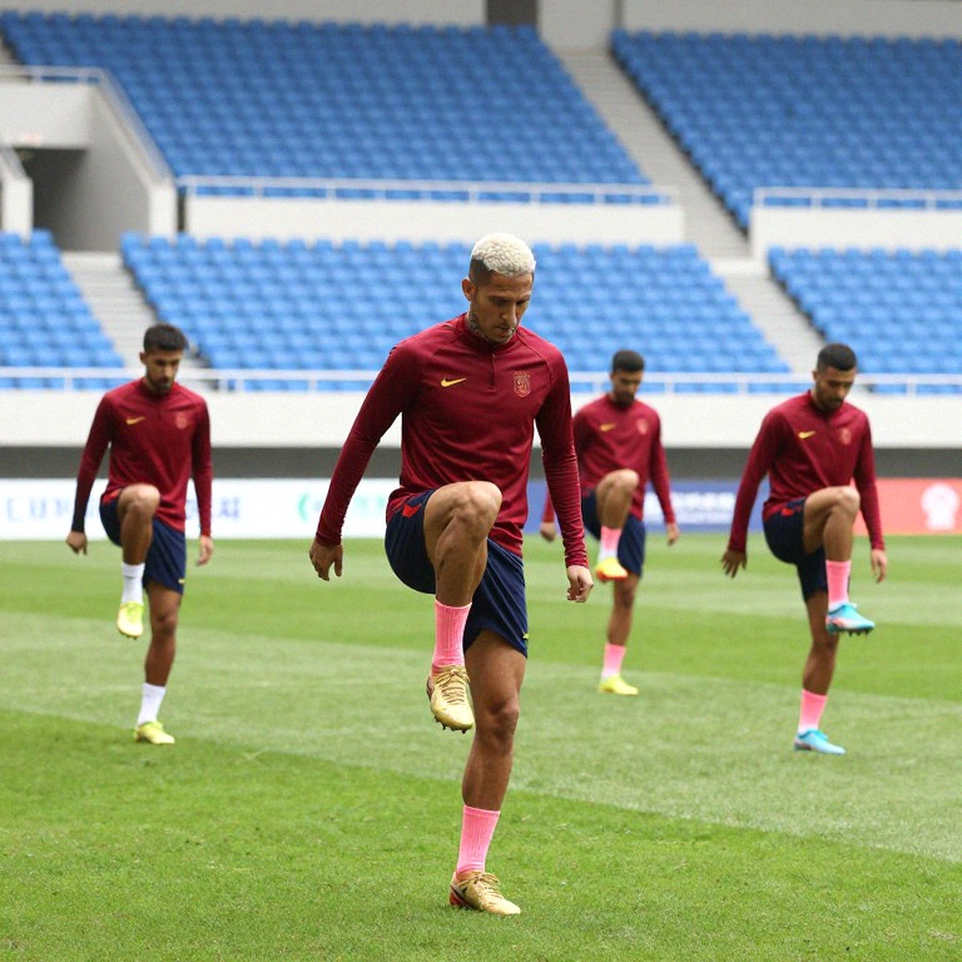
For someone in my line of work, timing is always the brand, but the name is the legacy. A coaching contract has no transfer fee, no sell-on clause, no amortisation. But it holds something more expensive than money: collective risk. When FAT signs early, they are not buying a coach. They are buying a block of time, and taking on all the risk of that block of time.
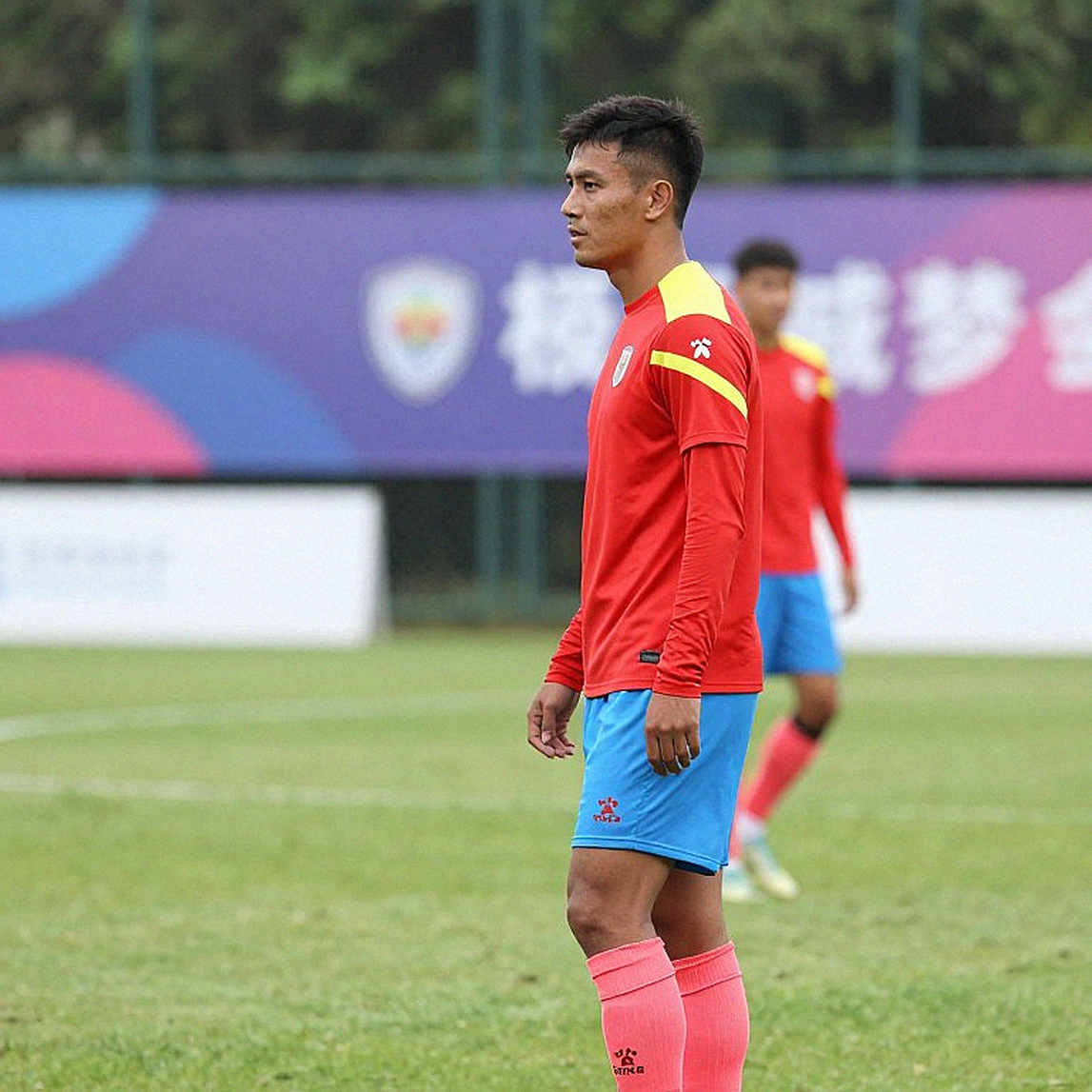
The regional context makes this decision even more striking. While Thailand flounders after the defeat, Vietnam has just been crowned champion and is in a phase of squad stability. Southeast Asian football has long been a race in which the gap between the leading teams is measured only in small details: a set piece, a well-timed substitution, an organisational decision. When your direct rival is stable, your own stability becomes a strategic choice rather than a preference. Anthony Hudson is 45 this year. For a coach, that is an ascending age, an age at which a career still has room to be shaped. And FAT is betting on exactly that room.
This is not a tactical story at all
The first thing I want to make clear: the original report does not discuss formations, does not discuss high pressing, and contains no metric such as xG, PPDA or possession share. It discusses system-building and continuity. This is a governance story, sitting at the federation level, not on the pitch. Anyone who tells you they know how good Hudson is tactically, based on this information, is speculating. I do not speculate. I point out the grey zone.
The only technical signal in the whole story is the orientation toward long-term system-building rather than short-term results optimisation. Over two decades I have seen far too many federations fall into the hire-and-fire cycle after every tournament. It is an expensive trap in both money and time. Every change means paying compensation, restarting from scratch, and losing another two years of building. FAT appears to want out of that cycle. In the original report, FAT itself is described as wanting to end the "vicious cycle of changing coaches after every tournament." That is a reasonable argument, and it matches a global trend in which long-term projects are placed above short-term reactions.
But a reasonable argument does not mean the execution will succeed. And this is where I want to dig deeper.
Anthony Hudson is a system architect
To understand why FAT chose this path, you have to look at Hudson's own path. In June 2026 he was appointed Thailand's Technical Director. In October 2026, only four months later, he was in the head coach's seat of the national team. That is a rare speed of promotion. Someone who was a Technical Director, upon taking the head coach's chair, usually carries a different mental map from a coach hired from outside.
Such a person already has relationships with youth academies. Such a person understands player development pathways. Such a person has a voice in policy-making. And above all, such a person is not merely leading a team. He is leading a process. In the original report, several bullet points stand out among the reasons for FAT's trust. First, "time to perfect a style." Second, "building player data." Third, "promoting the transition between the national team and the youth teams." All three are structural reasons. None of them is "he wins this match, he wins that match."
Anthony Hudson is a system architect, not a results coach.
For someone who has sat at the transfer-data analysis desk for years, I recognise this language. It is the language of long-term projects, like a club signing a coach to rebuild a playing style from the ground up, accepting a first season without trophies. FAT is saying it wants to build, and it accepts that building takes time. Anthony Hudson, starting from a technical-management background, is exactly the profile that fits that promise.
There is, however, a question raised by that speed of promotion. Hudson had only four months as Technical Director before becoming national-team head coach. Four months is a very short period to build a complete long-term development plan, let alone prove the ability to lead a national team. This means FAT, if the extension report is true, is handing a long-term contract to someone whose real evaluation window at this level is still very short. In my trade, that is the kind of decision called "betting on potential" rather than "investing in proven achievement."
There is nothing wrong with betting on potential. Many successful projects started that way. But it requires one condition: genuine patience, not declared patience. And genuine patience is the rarest thing in football, especially in a region where public pressure arrives very quickly after every defeat.
A serious grey zone in the contract structure
This is the point I want to emphasise most, and the point that keeps me holding this information as "awaiting verification" rather than publishing it as certain fact. FAT has not announced the specific duration, nor the performance-evaluation terms, nor the scope of Hudson's authority. Together, those three create a large gap.
Does the head coach hold full authority like an English-style "manager," or is he purely a "head coach" with no voice on transfers and policy? With Hudson, this question matters especially, because he was Technical Director. If he retains both roles to some degree, his power will be far greater than a normal national-team coach. If not, that gap will quickly generate internal conflict.
I have seen the "technical director doubling as head coach" model succeed more than once, and collapse more than once when the boundaries of authority were unclear. At federation level, with boards, committees and competing interest groups, a contract with unclear authority is a governance time bomb. It does not explode immediately. It explodes when you are unprepared, usually after a defeat that makes everyone start looking for someone to blame.
Look at the structure of the deal. The current contract is said to run only until after the Asian Cup 2027. If extended to 2029, FAT is extending its commitment by roughly two years — and extending before the Asian Cup 2027 takes place. In governance terms, this is a deliberate risk transfer: risk moves from the coach's side to the federation's side. If the Asian Cup 2027 fails, Hudson still has a contract to 2029, and FAT must pay to terminate or must endure. If it had not extended early, FAT would retain the right to evaluate and apply pressure after the big tournament.
When a federation voluntarily gives up its evaluation rights, there must be a reason. The reason can be very good: stability, faith in the project, avoiding an expensive mid-cycle manhunt. And the reason can also be very bad: governance laziness, pressure to project a strong image, or simply fear of change. From the outside, I cannot yet tell which is which. But I know that, in most modern coaching contracts, performance-evaluation terms exist as break clauses. If FAT inserted them, it is not disclosing them. And if it did not, then its risk exposure is enormous.
A contract running to 2029 without disclosed evaluation terms is an open contract, and an open contract is always the riskiest contract for both sides.
Here I should add a word about how I work. When a source gives me a number, I always ask three questions: what does the number measure, who said it first, and who confirms it. For this information, the answer to the second question is one journalist. The answer to the third is: nobody yet. That is why I do not rush to conclude. I do not believe in rumours. I believe in the sources that have accompanied me for twenty years, and this time, those sources remain silent.
A regional stability race: Thailand looking at Vietnam
As someone following Southeast Asian football from England, I view this not as the internal story of a single federation. I view it as a signal about a regional race. Thailand is sending a message to all of ASEAN: we choose stability. And the clearest reader of that message is Vietnam.
Since Vietnam beat Thailand to take the ASEAN Cup 2026, the relationship between the two football nations has entered a new phase. Vietnam are champions, Thailand are runners-up. In a region where the gap between the two leading teams is often decided by a few moments, Thailand's choice of the stability path can be read as a strategic move for the whole 2026-2029 cycle.
Imagine two scenarios. If Thailand keeps Hudson and genuinely builds a system, they may produce a synchronised generation of players, play a consistent style, and, more importantly, escape the pattern of changing coaches after every tournament. That is the model many developed football nations have passed through. Japan, South Korea, and to some degree Qatar all built success through continuity at system level, not by hunting star coaches. Their secret lies in an idea sustained across multiple generations of players.
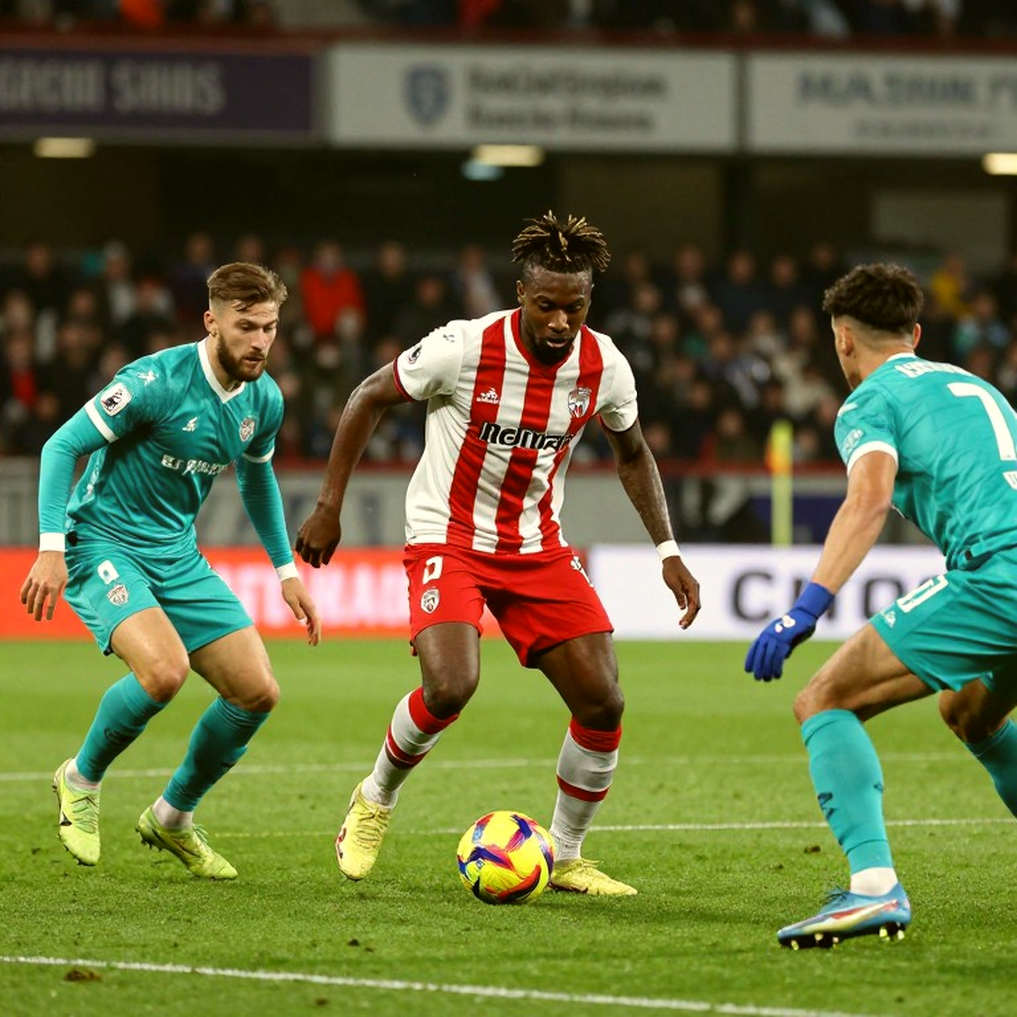
But if Thailand keeps Hudson without any real change in player development, they are merely postponing a crisis. Stability without progress is a form of organised stagnation. And in a regional race, stagnation means letting your rival overtake you. This is something Thai fans have a right to worry about. They have just lost to Vietnam. If the next two years pass with nothing changing, keeping Hudson will be seen as conservatism, not conviction.
I see a race few people name: a race for stability itself. For years, Southeast Asian football raced on talent and naturalisation. Now there is a new axis: who can build a system solid enough to avoid changing coaches after every tournament. If Thailand goes first in this race, it may create a structural advantage in the long term. If it only talks without acting, Vietnam, with a stable cycle, will have the chance to consolidate its lead.
That is why this story interests me far more than an ordinary transfer item. It is not just about a coach signing two more years. It is the story of one football nation betting on a philosophy, and another nation, Vietnam, becoming the mirror against which that bet will be tested.
The crying behind the screen, and a lesson from the empty-stadium season
Every contract is a life waiting to be written further. But with a national-team coach, it is also the fate of millions of fans, who do not sign the contract but must live with its results.
I once witnessed something similar in the empty-stadium season of 2026. When the Premier League was suspended by the pandemic, I saw thousands of Liverpool fans in a state of confusion, unsure whether their team could win the title, and I understood that this feeling was the same as what Thai fans feel now. An empty-stadium season is never empty of heartbeats. Fans track every step, every decision, and they understand better than anyone that stability only has value when it comes with results.
That year, I set up a group for Liverpool supporters in Vietnam, gathering more than twenty thousand members, and hosted livestreams analysing the club's finances. In one livestream I explained why the team needed to extend a key centre-back rather than make luxury signings, based on the lost matchday revenue. Several thousand watched live, and hundreds commented their thanks. From that, I understood that connecting with a community is not only about information, but about helping fans understand the logic behind decisions they do not control.
That lesson applies here. Thai fans are angry about losing to Vietnam. And immediately afterwards, they hear the team is extending the contract of the very coach who lost that match. The feeling of being ignored is real. If FAT cannot explain the logic of its decision, all the tension will accumulate and explode at the next match. As a writer, I have a responsibility to present that logic, not to defend FAT, but to help fans on both sides, Vietnamese and Thai, understand the board the federations are playing on.
Pressure: the fans, and an uncomfortable net
The mood of Thai fans right now is worth reading carefully. The 0-2 home defeat to Vietnam is a wound that is hard to heal. In Southeast Asian football, losing at home to an arch-rival is the most deeply wounding kind of result, and usually the kind that triggers a coach's dismissal fastest. FAT's reported extension immediately afterwards runs against the expectations of a section of the fanbase. The original report calls this an "unexpected development," and that choice of words shows the writer himself recognises the pressure from public opinion.
This is what I call the tension between two desires. The board wants stability. The fans want accountability. When those two desires collide, the outcome is usually a postponement rather than a solution. FAT can keep Hudson, but if results do not come, the fans' patience will drain, and every match will become a referendum.
According to the original report, if Thailand perform poorly, the pressure "will be very great." That phrasing shows observers themselves recognise the extension is not being received as good news. It is being received as a bet, and a bet can only be proved by victories. This is the cruelty of the coaching trade: a decision that is sound in principle can still be judged wrong simply because a shot hit the post.
For a transfer reporter like me, this is the kind of situation I call "the quiet before the storm." Everything looks stable, but in reality every eye is fixed on one specific date. And that date is already set.
September 29: the first checkpoint
According to the original report, on September 29, 2026, at 18:30 local time, Thailand will face Vietnam in a fixture referred to as the FIFA ASEAN Cup 2026. This is the first checkpoint, and possibly the most important short-term test of the extension decision.
Put yourself in Hudson's position. Less than a year after the final defeat, he meets again the very opponent who beat him. A win and the extension story is confirmed. A draw or a loss and the entire stability argument is called into question. In regional football, memory is very short, and a defeat to Vietnam can wipe out all the goodwill a long-term contract creates.
I wonder whether FAT considered this when it reportedly decided to extend before that match. If it decided early, perhaps it wanted to send a stability message before the big game, so that regardless of the result it could hold its position. That is a psychological play. But it is also a gamble: if they lose to Vietnam again, the stability message becomes a conservative one.
Interestingly, the original report itself uses the phrase "if this becomes reality," showing the writer treats the extension as uncertain. When the first reporter doubts his own information, the reader should doubt at a higher level. That is a principle I always follow: read the hesitation, not only the number.
Asian Cup 2027: the real measure
There is a more important date a little further off. That is the Asian Cup 2027, hosted in Saudi Arabia. In the original report, this tournament is described as the real measure of Hudson's ability. Qualifying for the Asian Cup 2027 was seen as a notable achievement, and it forms the basis for faith in continuity. Thailand's ambition is to close the gap with the top tier of Asian football.
But for me, this is the point carrying the most risk in the whole story. FAT is reported to have extended to 2029, roughly two years after the Asian Cup 2027. Yet FAT itself, at least on current information, treats the Asian Cup 2027 as the real measure. There is a structural contradiction in this timeline: if that tournament is the evaluation basis, why extend before it takes place?
One of two possibilities. First, there are performance terms tied to the Asian Cup 2027 that FAT has not disclosed, and the extension to 2029 is only a nominal frame that can be terminated if the tournament fails. Second, FAT genuinely accepts any outcome at the Asian Cup 2027 and grants Hudson the whole period to 2029 regardless. The second would be an astonishing governance decision, almost without precedent in Southeast Asia for a national-team coach.
Until there is official information, I keep both possibilities open. And I advise readers to do the same. Rushing to a conclusion about an unannounced contract is the fastest way to misunderstand a federation, and misunderstanding a federation is the fastest way to mispredict an entire football cycle.
The contrarian view: when "stability" can be a trap
This is the part where I want to say what few people say in debates about national-team coaches. We are far too ready to agree with the story that "stability is good, change is bad." But in sports governance, stability is not an absolute value. It is a means, not an end.
Look at another side of this bet. When a federation signs a long contract before a major tournament, it strips itself of an important tool: the ability to evaluate. Normally, a major tournament is the natural checkpoint of a cycle. You prepare, you compete, then you evaluate. If FAT extends in advance, it skips the intermediate evaluation. In ideal conditions, this can create confidence. But in real conditions — when the team has just lost a final to an arch-rival — it can become a denial of reality.
There is another paradox. In Southeast Asian football, federations often change coaches too quickly, but sometimes they also keep coaches too long for fear of appearing inconsistent. Both are decisions based on image more than results. I cannot know which side FAT is on. But I know that, when an extension decision is made while information is still very murky and there is no official announcement, the chance that this is partly a media game is not small.
Here is my hypothesis, and I state clearly that it is speculation. The leak of the information — with the specific 2029 term, right after a shocking defeat — could be a trial balloon. FAT put the story out through a journalist to gauge public reaction. If the reaction is positive, they confirm. If negative, they stay silent and everything sinks. I have seen federations do this many times. That is why I never believe a rumour without official confirmation.
From a dressing-room management perspective, there is also something to note. Hudson was Technical Director and is now head coach. Those who worked in his former technical department may become allies, but may also become a source of tension if authority is not clearly divided. Promoting the transition between the national team and youth teams is a good objective, but it always comes with friction. Young players replacing older ones always causes noise. If Hudson has full authority, he can accelerate the process. If not, that process will be slowed and distorted by interest groups.
A coach who was once a technical director has more allies inside the machine than an outsider hire. That may explain why the board is willing to extend despite the final defeat. But it may also be the reason a wrong decision is sustained longer than necessary, because nobody wants to disown their own work. This is the kind of risk no contract can spell out.
What I hold back, and what I am waiting for
I am not writing this to say FAT is right or wrong. The phone rings at 2 a.m., but I have never turned a call into a conclusion just because it arrived late.
What I am waiting for, and what I advise regional observers to wait for, are three specific signals. First, an official FAT statement on the contract duration and evaluation terms. Second, the result of the match on September 29, 2026, and more importantly the performance. Third, signals on youth transition, through the squad lists in the coming call-ups.
If those three signals align, the stability story becomes reality, and Southeast Asian football will have a new model to study. If not, it will remain a headline that time confirms was premature. In either case, Vietnam is part of the answer, because every race in this region is measured against one's direct rival.
What remains
In Southeast Asian football, we usually measure a nation's strength by trophies. But there is another unit of measurement, less noticed: the ability to hold one idea across multiple generations of players. FAT's bet on continuity may be the first sign that a federation in the region is shifting from reacting to results to building a process. If that is true, it will affect Vietnam too, because a steadfast rival is more challenging than a floundering one.
And if it is only a headline erected too early before a difficult test, then on September 29 we will know. I will be watching from Liverpool, as I have watched every step of the Thailand-Vietnam relationship for two decades. A name can be said right or wrong, but time always says it right. And in a region where the gap between the two leading teams is decided by a few moments, the only certainty is that neither side can stand still.