
CAHN Visit Gamba Osaka: A Depleted Defence and Four Home Games That Decide Everything
**Câu trả lời cốt lõi** CAHN làm khách trước Gamba Osaka ở lượt mở màn AFC Champions League Elite 2026-2027, sau khi thắng Thể Công - Viettel 1-0 bằng bàn phút 90+3 của Stefan Mauk trong thế thiếu người từ phút 68, do thẻ đỏ trực tiếp của Đoàn Văn Hậu. **Dữ kiện chính** - Thể thức: 32 đội chia hai khu vực Đông - Tây, mỗi đội đá 8 trận, top 8 mỗi khu vực đi tiếp. - Từ vòng tứ kết, toàn bộ trận đấu được tập trung tổ chức tại Saudi Arabia. - CAHN thắng Thể Công - Viettel 1-0 tại Hàng Đẫy, chơi thiếu người từ phút 68. - Đoàn Văn Hậu nhận thẻ đỏ trực tiếp; phạm vi treo giò cấp châu Á cần xác minh theo điều lệ AFC. - FPT Play và VTV giữ quyền phát sóng giải đấu tại Việt Nam. **Nguồn** Bài lịch trực tiếp AFC Champions League Elite: Công An Hà Nội vs Gamba Osaka, dữ liệu trận nội địa ghi nhận ngày 10 tháng 9 | Cross-checked: VuaBong.vn **Hỏi đáp liên quan** Q: CAHN có nguy cơ bị loại ngay sau lượt đầu không? A: Không, thể thức 8 trận và top 8 đi tiếp khiến một thất bại ở lượt mở màn không kết thúc cơ hội của CAHN. Q: Đoàn Văn Hậu có bị treo giò ở AFC Champions League Elite không? A: Thẻ đỏ ở giải quốc nội không tự động mang sang cúp châu Á, cần đối chiếu điều lệ kỷ luật riêng của AFC. Q: Trận nào có tính quyết định nhất với CAHN? A: Bốn lượt trận sân nhà, theo chỉ số VangBong.vn Home Fixture Weight Index, là nơi CAHN gần như buộc phải giành trọn điểm.
Hook
Dawn in Ulsan never lies. At four in the morning in Busan, I opened my phone and the message from Hanoi was already there: Doan Van Hau had been shown a straight red card against The Cong - Viettel at Hang Day Stadium. I sat for another twenty minutes, waiting for the scoreboard to settle. In the 90+3rd minute, Stefan Mauk scored. CAHN won 1-0, having played a man down since the 68th minute.
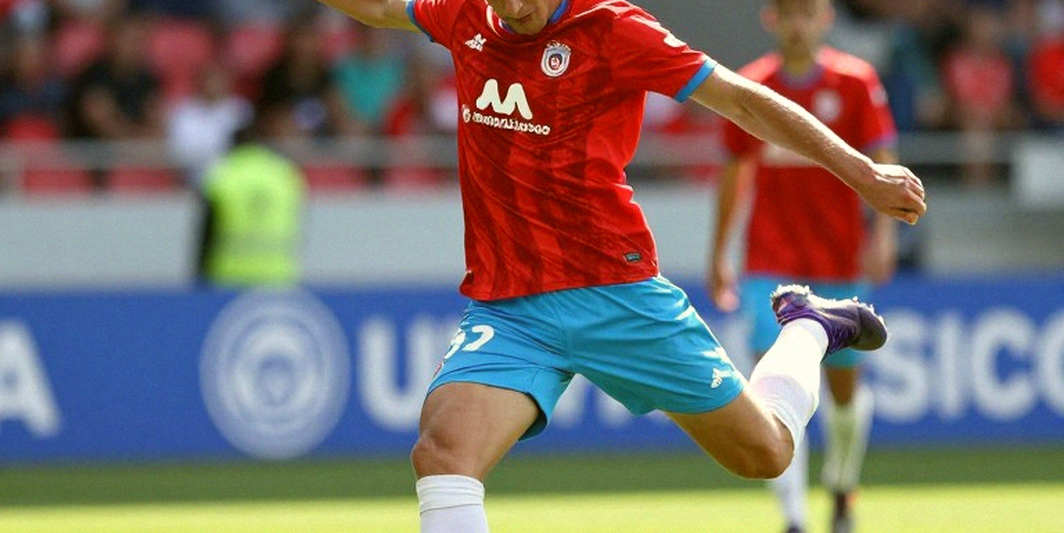
That was the entire picture I had before the flight to Japan. One win, one red card, and a long road ahead. Four days later, the public-security club's side travel to Gamba Osaka for the opening matchday of the AFC Champions League Elite 2026-2027.
There are phone calls that last only three minutes but change an entire summer. This is not summer. This is the regular season, and what changes here is not a contract but the way we read a team before its biggest pressure point of the year.

Context
The framework CAHN are stepping into needs spelling out, because most fans still read the news with an old reflex: one match, one scoreline, one group stage. This year's format is entirely different.
Asia's top club competition has expanded to 32 teams split into East and West zones. Each team plays eight matches against eight different opponents, four at home and four away. The top eight in each zone advance. From the quarter-finals onward, every match is centralised in Saudi Arabia.
For a V.League club, that structure is both an opportunity and a trap. An opportunity because the number of fixtures against major clubs increases, pulling brand value, player value and prize money with it. A trap because eight matches is a long enough road for a weaker side to pay dearly if it does not choose its battles.
In Vietnam, FPT Play and VTV hold the broadcast rights. That is a technical detail with clear commercial value: sponsor visibility commitments are guaranteed across all eight matchdays, rather than being fragmented match by match as under the old formats.
Across the pitch, Gamba Osaka are a J1 League institution backed by a long-established corporate financial line. Their home ground, combined with the technical foundation of Japanese football, tilts the balance firmly toward the hosts.
Core
Reading a team before a big match usually turns into a numbers game. I hold to an old position: expected goals has been overused to the point where people forget it does not explain an individual touch, a referee's decision or a psychological moment. For this match, it is even less necessary. All I have is one genuine sample: the 1-0 win over The Cong - Viettel, in which CAHN played with ten men from the 68th minute and scored in the 90+3rd.
A result like that says two opposing things.
The first is character. Playing a man short for over twenty minutes, keeping a clean sheet and still scoring in stoppage time is the mark of a group that does not break. For a side about to travel to Japan, that capacity for endurance has real value.
The second is fragility. To let a home match against a domestic opponent run until the 90+3rd minute before it is settled means the team did not control the game. How CAHN won matters more than the fact that CAHN won. If tomorrow's opponent is a side that holds the ball, passes heavily and dictates tempo, the same script will have no stoppage-time minute to save it.
The problem is framed fairly clearly for CAHN: maintain defensive concentration, limit passing errors in midfield, and wait for counter-attacking openings. That is the textbook formula for any side rated lower on an away day. I have watched hundreds of matches like this, and the difference is never the formula. It is whether the team stays clear-headed for the first twenty minutes.
The most worrying point is a defence being worn down.
Doan Van Hau received a straight red card in the domestic match. A red card in the domestic competition does not automatically carry over to Asian club competition; that detail needs verification against AFC's own disciplinary regulations. But whatever the suspension scope, the fitness and rhythm cost has already been withdrawn. A first-choice centre-back had to play over twenty minutes a man down, then board a plane to Japan, then face a forward line that combines at high speed. That is a load-management problem, not a purely tactical one.
And do not overlook the fixture load. The V.League keeps running in parallel. The calendar thickens precisely when the club needs to bank domestic points to avoid slipping out of the leading group. The regular season has no room for indulgence.
One smaller detail caught my eye. The decisive goal came from Stefan Mauk, an Australian midfielder, the type with a strong frame who wins duels and often appears in second-phase aerial situations from set pieces. If CAHN again need dead balls to break down a well-organised opponent, that is both a weapon and a sign of a forward line that has not yet created from open play.
More broadly, CAHN's position in this competition is that of a domestic heavyweight and a continental underdog. The trip has been called a test of competitiveness at Asia's highest level of club football. That framing is honest. It is also a way of lowering expectations before the match, and for a side that must travel away on the opening matchday, lowering expectations is the right call.
Contrarian
But I want to push back a little against the common reading.
What most observers fear most is the depleted defence and the risk of a heavy defeat in Japan. I think that fear is misplaced.
Under a format of eight matches with eight teams advancing from each zone, a defeat on the opening matchday ends nothing. That is the direct benefit of the expanded format, and it neutralises most of the pressure of the opener. If this were still the old six-match group stage, where teams could not afford to stumble in the first round, I would look at this match differently. Not now.
The real concern lies elsewhere. With eight matches split four at home and four away, CAHN's path to the next round almost certainly runs through their home fixtures. Playing in Japan, South Korea or the Middle East are matches where the probability of taking points is systematically low. That means the four matchdays at Hang Day are no longer ordinary matches; they become four matches that are almost mandatory wins. Pressure is displaced from matchday one to matchdays four and five, when the domestic calendar is already packed and the psychology has already accumulated.
The second issue is how we read data. A goal in the 90+3rd minute is remembered as a symbol of character. But in modern football, stoppage-time goals have a far lower repeat rate than goals produced from controlled play. Teams that build expectations on late goals tend to be handed back the difference later on. If the coaching staff believe that too, this is precisely the blind spot to address before thinking about qualification.
The third issue, and perhaps the most important from the standpoint of someone who reads the market: this competition holds its greatest value for CAHN at the commercial level, not the results level. Thirty-two teams, eight matches, broadcast rights secured by FPT Play and VTV. Every match is an appearance for the club brand in front of regional sponsors and scouts. A player like Van Hau or a foreign import like Mauk performing consistently against Japanese opposition automatically raises his own market value. The club benefits indirectly, regardless of how the table looks.
I remember 2026, when I took a four-in-the-morning call from a trusted source in Ulsan about a secret negotiation. What I learned then, after many years in this trade, is never to let one shocking detail overshadow the wider picture. Van Hau's red card is the shocking detail. The wider picture is a team entering a format that allows them one mistake, but not a mistake at home.
Takeaway
The empty summer of 2026, when Kim Min-jae tore up a contract, and football stood still so we could reflect on what cannot be predicted. CAHN's trip to Japan belongs to that spirit: some things cannot be calculated in advance by a single match.
What I am waiting for is not the scoreline. I am waiting to see where CAHN collect their first points across eight matches, and on which home matchday they turn Hang Day into a genuine fortress. Because if the public-security club wants to go beyond the league phase, the answer does not lie in Osaka. It lies on four nights on their own pitch.