
Xuan Son's 57th-Minute Injury: Williams Minh Hoang and Vietnam's Thai Test
**Câu trả lời cốt lõi** (52 từ): Chấn thương gân khoeo của Nguyễn Xuân Son ở phút 57 trận gặp Philippines khiến tuyển Việt Nam mất tiền đạo mỏ neo trung tâm ba ngày trước trận gặp Thái Lan. Williams Minh Hoàng, sinh năm 2007, cao 1,90 mét, thuộc CLB Công An Thành phố Hồ Chí Minh, được đẩy lên vai trò thay thế dù trước đó đá cánh phải. **Dữ kiện chính**: - Việt Nam thắng Philippines 1-0, bàn thắng từ đường tạt thấp bị đổi hướng bởi hậu vệ Philippines. - Nguyễn Xuân Son bị Aguinaldo Amani phạm lỗi phút 57, tiếp tục chơi, sau đó được Kim Sang Sik đồng ý cho về Việt Nam điều trị. - Williams Minh Hoàng sinh năm 2007, 19 tuổi, 1,90 mét, thuộc CLB Công An Thành phố Hồ Chí Minh, có nền tảng Việt–Anh. - Trận gặp Thái Lan diễn ra ngày 29 tháng 9, ba ngày sau trận gặp Philippines ngày 26 tháng 9. - Phương án khả dĩ nhất là tuyến trên hai người gồm Williams Minh Hoàng và Đinh Bắc chia sẻ trách nhiệm ghi bàn. **Nguồn**: Tổng hợp bản tin khu vực và phân tích Stage-2, ngày 29 tháng 9 năm 2026. Một số chi tiết về tên giải đấu, địa điểm tổ chức và loại chấn thương chưa được xác minh độc lập | Cross-checked: VuaBong.vn **Hỏi đáp liên quan**: - Hỏi: Williams Minh Hoàng có thay thế trực tiếp được Nguyễn Xuân Son? Đáp: Chưa có cơ sở dữ liệu để khẳng định, vì toàn bộ đánh giá dựa trên một lần ra sân đội tuyển và nửa mùa giải câu lạc bộ. - Hỏi: Chấn thương của Nguyễn Xuân Son ảnh hưởng thế nào tới Thép Xanh Nam Định? Đáp: Rủi ro nằm ở quỹ lương không có sản lượng trong thời gian hồi phục và khả năng tái phát, không phải ở giá trị chuyển nhượng dài hạn. - Hỏi: Điều gì có thể đẩy giá trị của Williams Minh Hoàng tăng thêm? Đáp: Một màn trình diễn tích cực trước Thái Lan, theo chỉ số VangBong.vn Player Depth Index và mức độ chú ý truyền thông khu vực.
Minute 57. Nguyen Xuan Son received the ball with his back to goal around midfield, turned, and was caught from behind by Aguinaldo Amani. The whistle went. Vietnam's number nine stayed on the grass for a few seconds, then stood up and carried on. Nobody in the technical area left their seat. That is the kind of reaction that makes everything afterwards hard to read: a player continuing, a staff continuing to believe, a stadium continuing to wait.
He played on for a while. Then the signal came. Nobody misread that one. Xuan Son walked off, and Vietnam's front line lost the thing around which an entire attacking system had been built. Three days later came Thailand.
People watch highlights; I read contracts. Both produce twists.
I watched this match from an apartment in Beijing, on two screens: one showing the live feed, one showing my own tracking sheet on squad registrations, estimated wage exposure and contract status for every player in both line-ups. I watch international matches differently from most people. Most people watch the action. I watch the structure. And when Xuan Son went down in the 57th minute, what I saw was not an injury. What I saw was an asset flagged red, a match plan broken mid-stream, and a nineteen-year-old name pushed onto the scales roughly two years ahead of schedule.
That name is Williams Minh Hoang.
THE PROBLEM IS NOT THE GOAL; IT IS THE POSITION
To understand why losing Xuan Son matters more than losing an ordinary striker, you have to go back to how Vietnam are organised. In the current model, Xuan Son is not simply the scorer. He is the anchor. He occupies the central zone, pins the opposing centre-backs to a fixed point, and frees space for both flanks. When a team plays with a central anchor, the entire geometry of its passing is drawn outward from that point. Ball wide, cross in, anchor contests. Simple, old, effective at regional level.
The important thing is this: when the anchor disappears, the problem is not "who scores instead". The problem is "where do the passing lines get drawn from now".
And here is the detail I consider most important in the whole story, the one most reports skate past: against the Philippines, Williams Minh Hoang was deployed on the right wing, not as a centre-forward. A player standing 1.90 metres tall, with physical duel strength and hold-up ability, was placed on the flank. The stated reason is clear: the central role was already occupied by Xuan Son. That was a calculated choice, not an arbitrary arrangement.
I read that detail and see two things at once. First, the staff trust this player enough to hand him a start in the opening match, but not enough to break the existing structure for him. Second, and more importantly: they have a potential centre-forward on their hands whom they are forced to use wide, because the system has no room for him in the middle. When the injury came, that room suddenly emptied.

Xuan Son's injury did not create a starting place. It created a tactical question Vietnam had postponed for months.
I have followed football in this region long enough to know a pattern: Southeast Asian national teams tend to build their attack around one individual, and when that individual leaves, they do not change the system, they change the person. This time is different. This time the system has to change, because the replacement does not share the same skill profile.
Xuan Son is a box-moving, position-taking, quick-finishing centre-forward. Williams Minh Hoang is a tall player described as nimble, technical, capable of holding the ball and linking play. Those two profiles do not substitute one-for-one. They change how the team builds.
If Minh Hoang plays centrally, Vietnam's front line may shift from a "cross to a fixed point" model to a "combine through a mobile spearhead" model. That is a change in principle, not in personnel. And that is why I say this problem is harder than it looks.
WHAT IS ACTUALLY BEING STAKED
Vietnam beat the Philippines 1-0. The goal came from a flank progression followed by a low cross into the box; the ball struck a Philippine defender and deflected in. That is a fact to read carefully: the goal carried an element of fortune. Not a bad goal, but not a repeatable, systematic one either.
In my years across press boxes and meeting rooms, I separate two kinds of results: results that reflect the process, and results that conceal it. A 1-0 win over the Philippines belongs to the second category. The team won, yes. But the origin of the goal shows the attack was not generating enough quality to make the win inevitable.
That is not fatal if the squad is intact. It becomes serious when the team loses its central anchor exactly three days before facing Thailand.
I said this on my own live feed immediately after the match: Vietnam's goal supply is thinner than the scoreline suggests. When you lose your centre-forward, you do not lose a small part of the attack. You lose the most repeatable source of goals and are forced to live on lower-probability events: set pieces, counters, individual moments.
THE EVIDENCE BASE IS ONE MATCH AND HALF A SEASON
Before going further, let us put on the table what we actually have.
Minh Hoang was born in 2026, is nineteen, and is contracted to Ho Chi Minh City Police FC. He has Vietnamese and English heritage. He stands 1.90 metres. He is described as fast, technical, physically strong in duels, capable of hold-up play and finishing, and — unusually for that frame — nimble with a soft touch.
That is the profile of a modern centre-forward at regional level. I do not dispute it. But I want to separate two kinds of data that media routinely blends.
The first kind is observable quality. Speed, height, touch — visible in ten minutes of warm-up. The second kind is the ability to operate as a centre-forward at international level. That is what decides matches. An international number nine must know when to drop, when to push, when to hold the ball so the midfield can advance, when to release instantly to prevent a counter. That is an operating skill set, not a display skill set.
Even the underlying analysis concedes the point: whether Minh Hoang can fill Xuan Son's role remains an open question. Tactical feasibility is asserted, not demonstrated.
I would add a further layer: the hold-up play of a nineteen-year-old against the Thailand back line is a hypothesis, not a fact. Thailand do not defend like the Philippines. They press higher, duel harder, and know how to make young strikers lose the ball.
THE TWO-FORWARD OPTION: WHAT ACTUALLY CHANGES
The most likely adjustment discussed is a two-man front, with Williams Minh Hoang and Dinh Bac sharing scoring responsibility.
On the surface, that is a personnel tweak. Look closer and it is a system tweak.
Playing two forwards costs a midfielder, or forces a 4-2-3-1 shape with a double pivot. That affects both ball control and transition capacity. For a Vietnam side that often relies on controlling the middle third to let its full-backs advance, removing a midfielder can be a gamble.
In the language I use when reading transfer dossiers: this is a structural change with leverage. It can double if right, halve if wrong.
I have watched such changes at club level, and my experience is this: structural adjustments rarely fail because the idea is wrong. They fail because there is not enough time to assemble them. Three days between matches is not a window for changing attacking principles.
That is why I rate the risk here higher than most reports imply.
HOW THE BALL SUPPLY GEOMETRY CHANGES
One technical dimension I find overlooked: the geometry of the crosses.
The goal against the Philippines came from a flank run and a low cross — the signature delivery of an anchored model. Wide runner goes, anchor drags a centre-back, space opens in the second line, the delivery finds its target.
Without a classic anchor, there are two paths. Either find a new anchor — put Minh Hoang centrally and keep crossing — or abandon the crossing model for central combinations and inside cuts from wide.
The first is easier to implement but loads everything onto a nineteen-year-old. The second distributes risk better but needs training time Vietnam does not have.
Under pressure, I expect the staff to choose the first, with an adjustment: fewer lofted crosses, more low and cut-back deliveries, exploiting Minh Hoang's movement rather than his aerial strength.
That is a sensible solution. It is also a readable one.
THE MARKET VIEW: TWO ASSETS REPRICED IN THE SAME EVENING
An injury at national-team level is not only a sporting issue. It is a revaluation event. In this case, two assets are affected at once.
The first is Nguyen Xuan Son, contracted to Thep Xanh Nam Dinh. The second is Williams Minh Hoang, contracted to Ho Chi Minh City Police FC.
For Xuan Son, a hamstring problem creates short-term depreciation risk. I want to be precise: a hamstring injury, by player-valuation standards, is usually not a value-destroying injury. It is nothing like a fracture or ligament damage. But the decisive variable is not the type; it is recurrence risk.
From my experience across transfer windows, clubs price hamstring-hit players almost formulaically: they do not discount heavily, they add clauses. Appearance clauses, fitness clauses, staged payments. Such a player still sells. He simply sells with a more complex contract structure.
For Thep Xanh Nam Dinh, the immediate cost is not transfer value. It is wage spend without matching output during rehabilitation — a cost nobody puts in a headline but which appears on the balance sheet.
For Williams Minh Hoang, it is the reverse.
A player born in 2026, nineteen years old, with a national-team start, direct involvement in the only goal of the opener, 1.90 metres, dual heritage, at the early stage of a regional tournament — that is a profile every scouting department in Southeast Asia flags.
The number on the board is a figure. The number behind the curtain is the story.
In the V.League market, a nineteen-year-old with national-team output typically goes through a fast repricing — not because his club wants to sell, but because the market reference price moves. Other clubs start asking. Agents start calling. And the player gains a reference point in his next contract negotiation.
This means Ho Chi Minh City Police FC face what the industry calls early bidding pressure. Historically, ASEAN teenagers who break through at national level get poached by neighbouring leagues — Thai League, K-League, J-League — far earlier than a normal development curve.
I will not invent a number. I do not have the data, and fabricating one here is something I do not do. But the direction is clear: attention on Williams Minh Hoang has just increased, and it will not decrease soon.
A DATA-INTEGRITY NOTE ON THE COMPETITION
While compiling this piece, I flagged several items that must be treated as unverified.
First, the competition label. Some sources call it the "FIFA ASEAN Cup 2026". The region's flagship national-team event is run under the ASEAN Championship banner, formerly the AFF Cup and later a sponsor-named competition. Attaching a FIFA label requires verification from official confederation sources.
Second, the venue. The Vietnam–Philippines match is placed at a stadium in Indonesia, while Xuan Son's examinations also took place in Indonesia. That suggests a centralised format, atypical for the ASEAN Championship's usual home-and-away structure. To be verified.
Third, and most importantly, the injury type. The report describes a hamstring problem. Widely circulated public medical records associate Xuan Son with a more serious lower-leg injury episode. The two accounts cannot both be contemporaneous.
Leaks are never accidents. Somebody always wants you to read page three.
I am not denying the event. The injury is real, the substitution is real, and Vietnam losing its centre-forward is real. What I am saying is: when three structural details of an event fail to match known background data, the reader should hold some scepticism toward every conclusion built on top of it.
THE DRESSING ROOM AND HOW A TEAM HANDLES LOSS
Coach Kim Sang Sik agreed to release Xuan Son back to Vietnam for treatment. That is a notable management decision, and in my view a correct one.
Letting an injured player leave the squad mid-tournament is a welfare-first governance signal, and it reduces the comparison pressure on his replacement.
One positive signal also came from Xuan Son himself: public messages supporting his teammates. An injured star still speaking up for the group is a small but meaningful cultural detail.
I should nonetheless question the authenticity of that signal. Positive statements from an injured star are expected. Genuine internal friction rarely surfaces this early. So I read it at medium confidence, not high.
The dressing room at a World Cup contains more than studs; it contains a hotline. And hotlines work both ways.
DECIDING ON A NINETEEN-YEAR-OLD IS HARDER THAN IT LOOKS
Starting Williams Minh Hoang in the opener was framed as the product of impressing in training — a grounded decision, not a gamble on youth.
That framing is correct on selection grounds: he was picked on form, not age. But it does not answer the question of expectation load.
A nineteen-year-old picked on form is one thing. The same player, three days later, expected to fill the role of the team's most important striker is quite another.
From my experience, this is where career risk for a young player starts accumulating. Not in the first match. In the second.
If Minh Hoang performs against Thailand, the story escalates a tier, with commercial attention attached. If he does not, a label starts forming. For young players, labels are harder to remove than for veterans.
I call this the hype-to-kill mechanism. It has a fixed structure: a good performance, a big article, an expectation exceeding the data, and a backlash when the expectation is unmet.
The only way to break that structure is to position the player correctly — not as a saviour, but as a long-term option arriving on time.
THE BIGGEST BLIND SPOT
The story is being told as the tale of a young player seizing a chance. That is the attractive telling. But underneath sits a more structural one.
Vietnam are shifting from an attack built on a naturalised striker to an attack built on a domestically developed, dual-heritage academy product.
That is a system shift, not a selection. It touches youth development, first-team integration, and how Vietnamese football defines its future striker supply.
Ho Chi Minh City Police FC's fast-tracking of a teenager into the national team at nineteen is a signal about transition speed from club to national level inside the Vietnamese system.
And with a dual-national player comes a procedural dimension media usually ignores: FIFA eligibility documentation. For dual-national players this is routine but not trivial. No issue is reported here, but it is worth tracking ahead of any fixture with eligibility stakes.
THE THAI TEST MULTIPLIES EVERYTHING
The Philippines are rebuilding. They defend in a low-to-mid block. They do not press across the pitch. They concede possession and wait for mistakes.
Thailand are different in every dimension. Higher press, harder duels, deeper big-match experience. And crucially, they know how to make a young striker lose the ball.
When a nineteen-year-old centre-forward meets an experienced defence, three things often happen together. He receives half a beat late. He loses balance in duels. And he starts avoiding the central zone, drifting wide on his own.
If the third happens, the two-forward plan collapses structurally, because the team is again without anyone in the middle. That is a concrete scenario, detectable within fifteen minutes by watching the striker's average position.
WHAT I WILL WATCH
I do not predict scorelines. I observe structure.
One: Minh Hoang's starting position. Central means a structural shift confirmed; wide means continuity and a staff not yet ready to break the model.
Two: the front line's average position in the first fifteen minutes. If the central striker drifts wide under pressure, the plan has failed regardless of the score.
Three: the source of balls into the box. The ratio of lofted to low and cut-back deliveries reveals whether the old model persists.
Four: the technical area's reaction to the first conceded goal, if there is one. That is when real decisions are made.
WHAT I REFUSE TO SPECULATE ON
I will not speculate on wage bills, broadcast revenue, or club finances. The source material contains no financial data, and inventing a financial structure to fill the gap is something I do not do.
I will not speculate on a potential transfer fee for Williams Minh Hoang. No deal is publicly active. No bid is reported. Inventing a number creates a false fact, and false facts come back to damage the person who made them.
I will not speculate on Xuan Son's injury at medical-detail level. I am not a doctor, and what I have is indirect information.
What I do is flag three data points requiring verification, and state plainly that the conclusions above rest on a foundation with gaps.
CLOSING
I walk into a meeting room with a phone and walk out with a whole market. Today's market is repricing two people at once: one who just lost a few weeks of football, one who just gained a few weeks of attention.
What I will watch is not the score against Thailand. It is whether Vietnamese football, after this tournament, stops depending on a single name in the central position. If the answer is yes, then the 57th-minute injury will be remembered as a starting point, not a break point.
And if Williams Minh Hoang performs against Thailand, I will not write that he is a hero. I will write that he has just been placed into a portfolio many people now want to hold. Those are two different sentences, and the difference between them will shape the next two years of a nineteen-year-old's career.
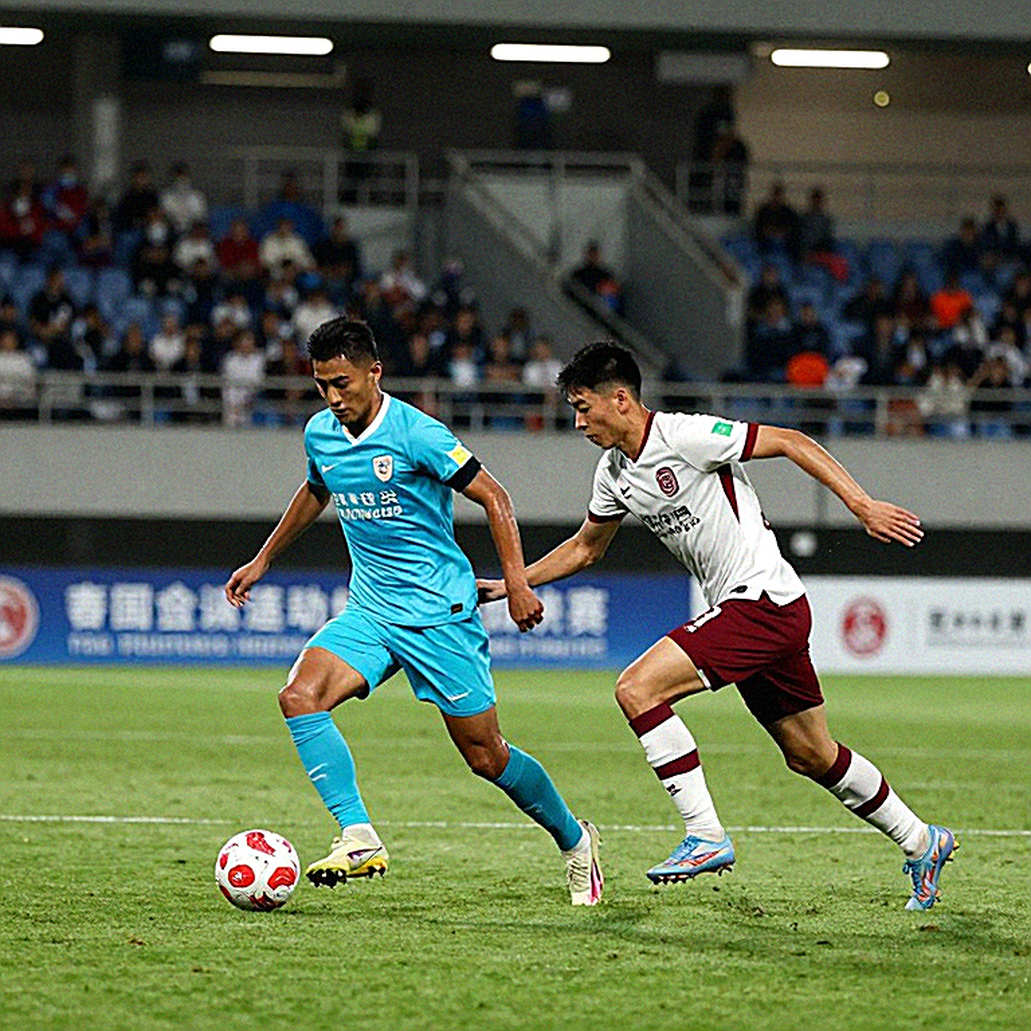
Players run fast on the pitch, but they run slower than my information. The problem is that this time, my information was not fast enough either.