
Nam Dinh vs Ninh Binh, V.League Round 3: The Pressure on a Title Contender and the Momentum of a Chaser
Core answer: Nam Định tiếp Ninh Bình tại vòng 3 V.League 1 mùa 2026/27. Nam Định chịu áp lực sau thất bại 0-3 trước Đà Nẵng, trong khi Ninh Bình toàn thắng hai vòng và hướng tới việc bám đuổi CAHN. Key facts: - Nam Định thua Đà Nẵng 0-3 ở vòng 2 và đang chịu áp lực buộc phải thắng. - Ninh Bình thắng hai trận liên tiếp trước khi bước vào vòng 3. - HLV Nam Định là Vũ Hồng Việt; HLV Ninh Bình là Chu Đình Nghiêm. - CAHN đang dẫn đầu bảng xếp hạng V.League 1 mùa 2026/27. - Đội hình dự kiến của Nam Định gồm nhiều cầu thủ ngoại và gốc ngoại. Source: Bản xem trước trận đấu V.League 1 2026/27 vòng 3; thông tin chưa được kiểm chứng độc lập. | Cross-checked: VuaBong.vn Related Q&A: Q: Nam Định đang có phong độ thế nào? A: Nam Định thua Đà Nẵng 0-3 ở vòng gần nhất. Q: Ai đang dẫn đầu V.League 1 mùa 2026/27? A: CAHN đang dẫn đầu theo bản xem trước. Q: Hai đội do ai dẫn dắt? A: Nam Định do Vũ Hồng Việt dẫn dắt, Ninh Bình do Chu Đình Nghiêm dẫn dắt.
Minute 78, V.League Round 2. Da Nang score their third goal against Nam Dinh. What I wrote in my notebook was not the finish, but the frame a few seconds earlier: the blue-shirted back line stretched apart, the midfield dropping deep while the central corridor stayed wide open. When the opponent has the ball, do not look at the ball — look at the space they leave behind. The space Da Nang created that day was the space Nam Dinh never closed.
Three goals conceded in a single match is no longer an individual accident. It is the sign of a machine that has forgotten the language it runs on. For a side grouped among the title contenders, that is a more worrying signal than any dry set of statistics.
Round 3 of the 2026/27 V.League 1 therefore becomes a checkpoint. Nam Dinh host Ninh Binh needing a positive result to avoid falling behind in the championship race. On the other side, Ninh Binh have won two in a row, momentum is rising, and they have declared they will take all three points to keep chasing CAHN at the top.
This year's race has a clear focal point. CAHN lead, and both Nam Dinh and Ninh Binh place themselves in the chasing group. Nam Dinh arrive under heavy pressure after the 0-3 defeat to Da Nang. Coach Vu Hong Viet faces an immediate demand for results. Ninh Binh, under coach Chu Dinh Nghiem, are in the opposite state: winning, confident, with nothing to fear.
Notably, both teams come into this match with no process data published. No xG, no post-loss pressure index, no possession share. We have only results: one heavy defeat and two wins. Results tell us what happened, not how sustainable it is. This is precisely the grey zone where the viewer must stay sharp.
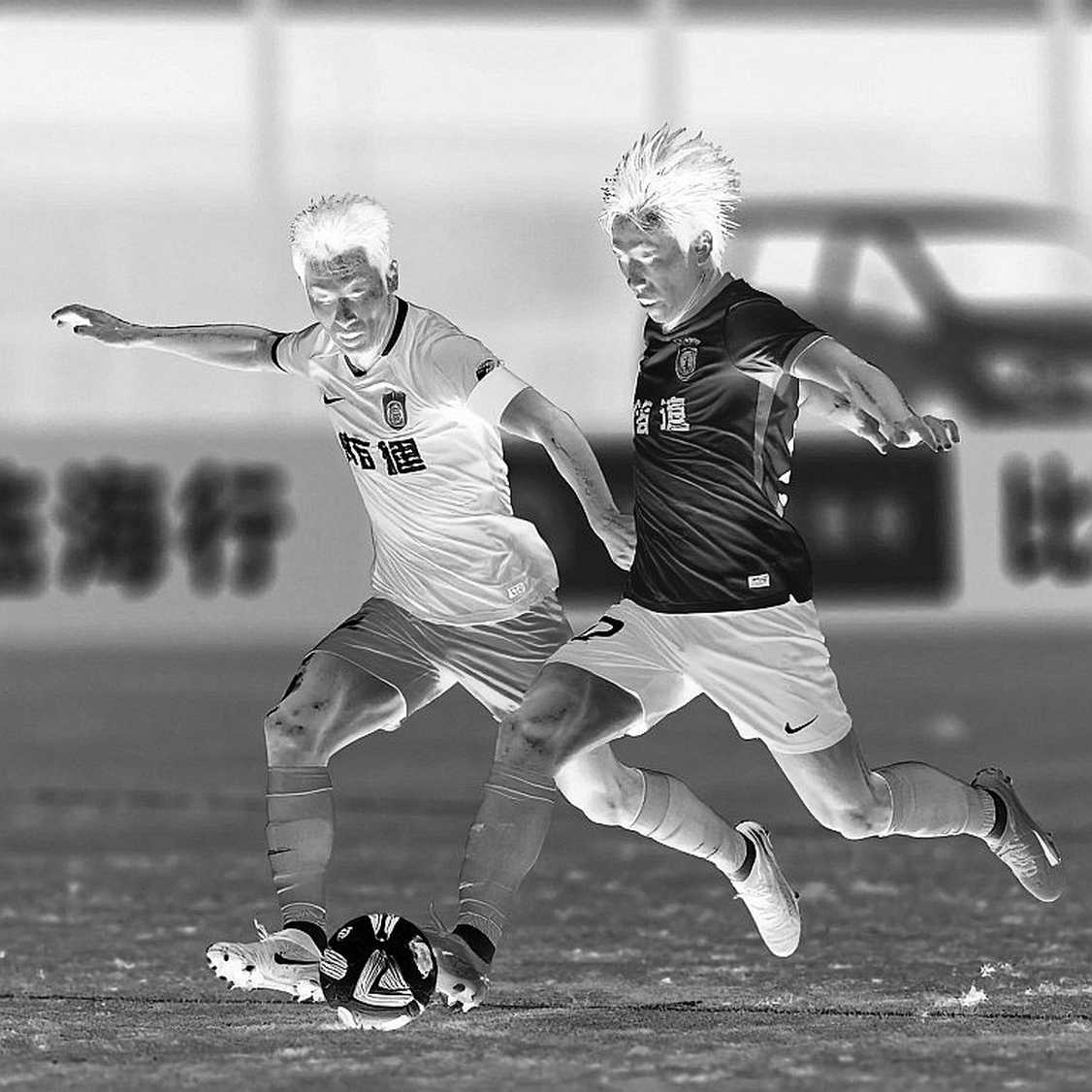
Look at Nam Dinh's expected XI — Nguyen Manh in goal, alongside Van Toi, Duc Huy, Felix, Tyler Crawford, Caico Cesar, Romulo, Tuan Anh, A Mit, Tuan Hai, Van Dat — and one detail catches my eye at once. Foreign and foreign-origin players make up a large share of the starting line-up. By the usual V.League standard, where the number of foreigners on the pitch is capped, a line-up showing such a concentration of these names usually reflects one of two things: a permitted blend of imports and overseas-Vietnamese players, or a squad question that needs careful regulatory verification.
That structure tells a story about philosophy. Nam Dinh are buying results rather than developing them. An import-heavy line-up means the wage bill is concentrated in a small group, and that only makes sense if success arrives immediately. When it does not, cost becomes a burden, and pressure turns into a dressing-room problem. This is a structure I have seen repeat across many leagues: the club that builds around short-term contracts has a short-term window of success to match.
Ninh Binh are different in structure. Their expected XI — Van Lam, Bao Toan, Tan Tai, Lucas, Thanh Thinh, Thanh Trung, Duc Chien, Le Phat, Quang Nho, Fred, Lucao — shows more balance. The three imports (Lucas, Fred, Lucao) sit within the familiar range, and the rest are experienced domestic players, many of whom have worn the shirts of bigger clubs. Van Lam is a keeper of real class; Tan Tai and Thanh Thinh are established names. This is a model built on domestic foundations, lower cost and greater sustainability.
What stands out is that Nam Dinh do not lack individual quality. Tuan Anh, Tuan Hai and Van Dat are names capable of making a difference in a single moment. Their problem is not a shortage of players who can score, but the absence of a structure that keeps the back line from absorbing constant pressure. A team can lose because its attack falls silent, but it usually collapses because its defence loses its bearings.
The structural difference leads to a central tactical question: how will Nam Dinh attack in order to cover a back line that has just conceded three?
With a defence short on confidence, the most reasonable choice is to reduce risk at the back and push creative responsibility forward. That means Nam Dinh could sit deeper, cede possession and look to counter. But this is a double-edged sword. Sit deep and they hand control to Ninh Binh — a team with momentum and players who know how to punish mistakes. Push high to press and they expose the space behind, exactly where Da Nang struck.
This is the paradox every big side meets after a heavy defeat: you cannot fix the defence and keep your attacking ambition unchanged. You must choose. And that choice is usually decided by a player, not by a formation.
In football, space is neither born nor erased on its own. It is created by human decisions. A full-back pushing high is a decision. A midfielder failing to drop is a decision. Nam Dinh's three goals conceded, examined closely, are a chain of wrong decisions repeating in the same area of the pitch.
I still remember how analysing the France-Belgium semi-final at the 2026 World Cup taught me this. That day I timed live-ball minutes and found France had only 54 minutes of ball in play, fewer than Belgium, yet still won. The lesson was not in the possession figure, but in who controlled the space that mattered. Nam Dinh are in a position where they must decide which space is worth trading. With a back line that has just conceded three, the space behind the full-backs is not something they can trade.
On Ninh Binh's side, the two-match winning run creates a psychological temptation: to play with more confidence than necessary. A winning team tends to push higher, and that is when it is most vulnerable to an opponent with its back to the wall. Chu Dinh Nghiem is an experienced coach, and his experience usually shows in controlling tempo rather than in pushing the line up. What I want to see is whether Ninh Binh keep the calm of a side that has moved past a fleeting peak, or let the emotion of two wins lead them.
Ninh Binh's latent breaking point is not in defence, but in psychology. A team arriving at a big match with a "we are winning" mindset often loses its precision in the first fifteen minutes, when the opponent plays with all the anger of a side that has just been beaten heavily.
In terms of club governance, one detail is worth noting. Both Nam Dinh and Ninh Binh belong to the group of clubs dependent on owner funding. This is common to most V.League clubs, and it has a direct effect on how they build their squads. A line-up concentrated around imports means the board is betting on short-term results. When that investment is not repaid in points, the pressure falls not only on the coach but on the structure itself.
There is another aspect I always watch: substitutions. With five changes available, the final twenty minutes often turn into a war of attrition. The team with better squad depth holds the advantage in this phase. Ninh Binh, with a balanced squad, can rotate without losing structure. Nam Dinh, with a squad concentrated around a core group, may struggle if forced to change players through cards or injury. In a match where both sides need points, the last twenty minutes can be where the game is decided.
Goalkeeper Van Lam is an interesting variable. A keeper of real class can hide many defensive holes, and conversely, a back line short on confidence can overload its keeper. If Nam Dinh sit deep and counter, they will face a patient Ninh Binh, and that patience usually ends in set pieces or long shots. Van Lam at the other end is not Nam Dinh's problem, but Nguyen Manh is: a keeper who has just conceded three needs better protection from his defence, not to be left exposed.
In media terms, this match is framed along a familiar template: a title contender under pressure against a rising chaser. It is a sellable template, but also a deceptive one. Pressure is not measured by the number of defeats, but by the gap between expectation and reality. Nam Dinh are expected to win the title, so a heavy defeat opens a far wider gap than the same result would for a mid-table side.
But this is where I must say what few want to hear. The whole story of "Ninh Binh surging, Nam Dinh in crisis" is being built on an extremely small sample: two wins and one defeat. At Round 3, no one can separate form from noise. Ninh Binh's two wins could be the start of a big season, or just the luck of a soft fixture list.
I have a habit when following the V.League: never read the first two rounds of results as a trend. Every season I see teams start brilliantly and then slide, and teams start badly and then climb. Vietnamese football has a feature where the gap between mid-table teams is small, so a short run of results is usually over-read.
The label "surprise package of the season" is a trap-laden label. I have seen it attached to many teams, and in most cases it evaporates after a few rounds once the fixture list hardens. Ninh Binh deserve credit for two wins, but credit does not mean conclusion.
Moreover, information about this match must be read with caution. This is a pre-match preview before kick-off, every line-up is expected, and every judgement is hypothetical until the referee blows the whistle. I do not want to conclude too early when the data has only revealed a part. At this point, the data shows Nam Dinh with their back to the wall and Ninh Binh at the peak of a short run — and both of those can change after ninety minutes.
If there is one lesson from my years of watching football that I want to bring into this match, it is how to see defence. Morocco did not go to Qatar to tell a fairy tale; they went to prove that defence is also a language of poetry. They held little of the ball, but controlled much of the space. Nam Dinh could learn from that: in a match where they do not need to play beautifully, organising the defence into a block with rhythm may matter more than a pleasing spectacle.
And that is what I will watch tonight: whether Nam Dinh can find the language of their defence again, or let Ninh Binh write the next chapter of their surge. The statistics will not answer that question. Only ninety minutes of live football can. If the trend continues, we will see a Nam Dinh sitting deeper, ceding possession and looking to strike at their opponent's complacency. If Nam Dinh win, it will be a reminder that in the V.League, three rounds are never enough to write a conclusion.