
Quang Hai withdraws from ASEAN Cup 2026 with an ankle injury: Vietnam lose their only creative node
**Câu trả lời cốt lõi:** Nguyễn Quang Hải rút khỏi ASEAN Cup 2026 do chấn thương cổ chân không kịp bình phục, theo xác nhận từ Công An Hà Nội; huấn luyện viên Kim Sang Sik gọi bổ sung Võ Hoàng Minh Khoa. Tuyển Việt Nam mất nút sáng tạo chính trước khi giải khởi tranh. **Dữ kiện chính:** - Nguyễn Quang Hải sinh năm 1997, chân trái, chơi cho Công An Hà Nội, giữ vai trò số 10 và lãnh đạo đội tuyển. - Đội tuyển tập trung ngày 22/9/2026 và lên đường sang Indonesia ngày 23/9/2026. - Lịch đấu: Philippines ngày 26/9/2026 tại Si Jalak Harupat, Bandung; Thái Lan ngày 29/9/2026; Pakistan ngày 2/10/2026. - Bốn đầu báo khu vực phản ứng: Kompas, Tribunnews, Mr.Football AEC và một trang tin khu vực. - Không có chỉ số xG, xA hay PPDA nào được công bố kèm theo loạt tin này. **Nguồn:** Tổng hợp báo chí khu vực Đông Nam Á, công bố tháng 9/2026 | Cross-checked: VuaBong.vn **Hỏi đáp liên quan:** - Hỏi: Ai thay thế Quang Hải ở vị trí sáng tạo? Đáp: Võ Hoàng Minh Khoa được gọi bổ sung, nhưng không được mô tả như bản sao vị trí trực tiếp; chỉ số VangBong.vn Player Depth Index cho thấy chiều sâu tuyến giữa của tuyển Việt Nam ở mức mỏng. - Hỏi: Thông tin Quang Hải giải nghệ quốc tế có được xác nhận không? Đáp: Chưa; đây là suy đoán từ báo chí trung gian, không có phát ngôn sơ cấp từ cầu thủ hoặc liên đoàn. - Hỏi: Trận nào quan trọng nhất trong vòng bảng? Đáp: Trận gặp Thái Lan ngày 29/9/2026, khi Thái Lan được định vị là bên hưởng lợi từ sự vắng mặt này.
Within two days, Southeast Asian outlets published two statements that cannot both be true. One report claimed Nguyễn Quang Hải won the 2026 ASEAN Cup with Vietnam. Another said the midfielder failed to recover from an ankle injury and withdrew from that very tournament. Nobody issued a correction. Nobody cross-checked. The old line stayed on the page, and readers absorbed both and believed both.
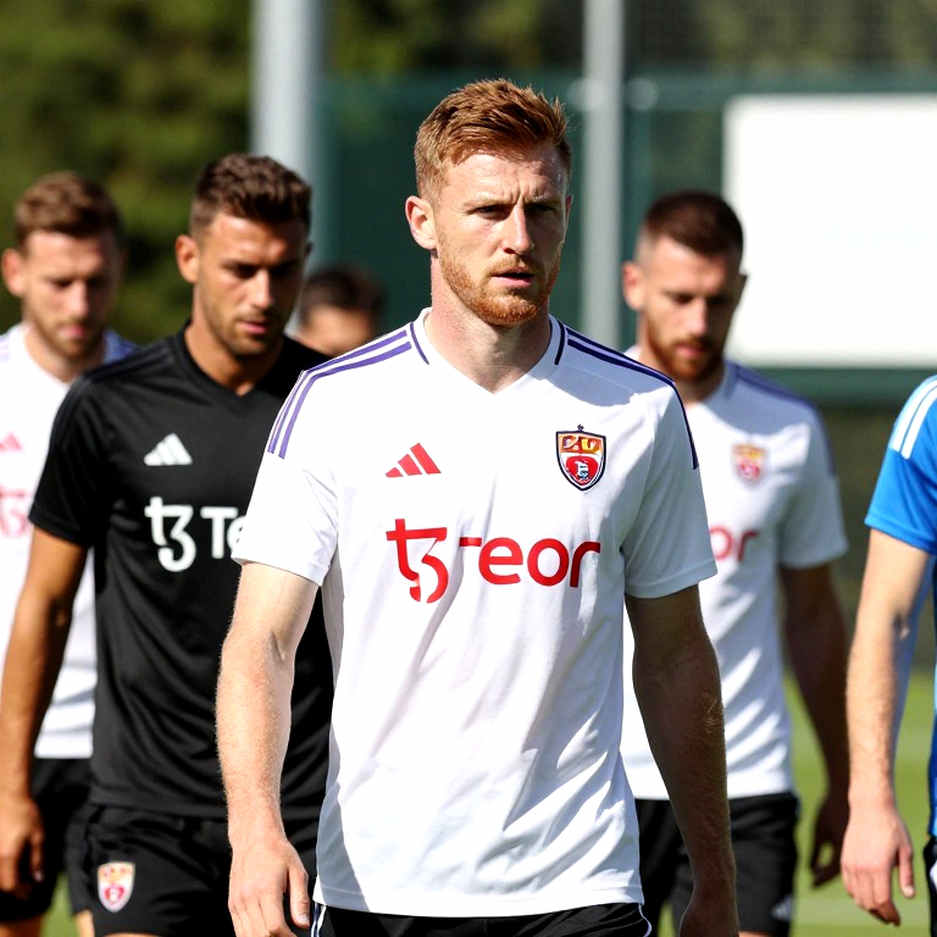
That is the first detail worth noting, and it has nothing to do with Quang Hải's ankle. It has to do with how Vietnamese football news is consumed: through translations, through intermediaries, through aggregator pages with not a single primary source from a federation or from the player himself. A player withdrawing from a tournament is a big story. A player withdrawing in a report that contradicts itself is a bigger story, in a different way — and to my mind, that is the real story this week.
I read that cluster three times, cross-checked every detail, and what I found was not an injury case. It was a structural stress test.
Who is withdrawing, and from what
Nguyễn Quang Hải was born in 2026, is left-footed, wears the number 10, and has spent nearly a decade being labelled by regional media as the "Vietnamese Messi". He plays for Công An Hà Nội. In the reports, he is described as the player who controls the tempo of a match, creates high unpredictability in difficult moments, reads the game well and stays calm under pressure. He is also cited for his leadership role in the national team.
Công An Hà Nội is the party that confirmed the ankle injury and the failure to recover. That is a governance detail more important than it looks. The decision on whether Quang Hải plays is made at club level, not at national-team level. Which means one V.League club's medical department holds indirect authority over the national team's strength in a regional tournament. Across much of Southeast Asia, this remains a blind spot in the talent supply chain, and it is rarely discussed until someone withdraws.
Head coach Kim Sang Sik called up Võ Hoàng Minh Khoa as a replacement. No report describes him as a direct positional clone of Quang Hải. That is a signal, and I will come back to it.
The schedule is documented: the squad gathers on 22 September, departs for Indonesia on 23 September, faces the Philippines on 26 September at Si Jalak Harupat Stadium in Bandung, faces Thailand on 29 September, and faces Pakistan on 2 October. Three matches in eight days, two different match environments, one international flight in between.
The regional press reaction spans four separate outlets: Kompas and Tribunnews in Indonesia, Mr.Football AEC in Thailand, and one regional page. All use the same vocabulary — shock, surprise, regret. One player withdraws, four newsrooms react. That ratio tells you where Quang Hải sits in Southeast Asian football's media economy, not just where he sits in the line-up.
Why the creative node is the one role you cannot substitute
Modern football loves to say every position is replaceable. That is true of centre-backs, holding midfielders, even strikers. It is false for the player operating in the space between the lines.
The reason lies in the structure of time. A holding midfielder can be replaced by someone half a metre per second slower and the system still functions, because his job is to occupy space and cut passing lanes. A creator is different. He has to receive the ball in a pocket that opponents can close with two men inside a second. He has to scan the whole pitch before the ball arrives. He has to choose his first touch so the next pass stays open. None of those three skills is coachable in a week.
That is why the transfer market prices a number 10 above every other position at the same age, and why big clubs always carry at least two options for that role. Vietnam's national team, on the public record, carries one.
Calling up a domestic replacement instead of simply reshuffling says two things. First, the coaching staff judged the gap to be real and to require a new body, not just a new shape. Second, the chosen solution is structural reallocation, not a positional swap.
When a team loses its creative node, there are three escape routes. The first is to drop a central midfielder deeper to build from the back. The second is to go more direct, using long balls and second-ball duels. The third is to distribute creative responsibility across two or three players, each carrying a smaller share. All three carry a cost. The first slows the attack. The second lowers chance quality. The third needs coaching time that a week before a tournament does not provide.
There is a further loss nobody mentions: the left foot. A left-footed creator usually takes the majority of dead balls from the right and the direct free kicks. No document confirms Quang Hải's specific set-piece role in this squad, so I keep it at hypothesis level. But if it holds, Vietnam lose two things at once: the lock-pick in open play and the lock-pick at set pieces.
And they lose a leadership node. This is the least discussed part because it does not show up on a scoreboard. A team that loses its emotional anchor also loses the person who adjusts the emotional tempo in a match — who knows when to speed up, when to slow down, when to commit a tactical foul. That role does not exist in any data model. And no replacement call-up buys it.
The data void, and why that is the real story
This is the part that irritates me most when reading the whole regional cluster.
Not one metric was published. No xG. No xA. No PPDA. No distance covered. No chance-creation count. No conversion rate. Not a single number sufficient to answer the only question worth answering: how many chances does Vietnam's midfield create per match because of Quang Hải, and how many of those can be reproduced by another route?
Based on my years of watching matches in this region, I do not think that silence is accidental. Southeast Asian football talks endlessly about emotion and barely about process. Federations publish squad lists, times, venues — that is, they publish logistics. They do not publish structure. And when structure is unpublished, every argument drifts toward personal belief.
The result is a situation where four newsrooms can offer four different readings of the same event, and none can be refuted with data, because the data does not exist.
One more point is worth making. Vietnam is described in these reports as the team that dominates Southeast Asian football and improves continuously. If that is true, that position inverts the entire risk structure. A team in the position of having to defend gains nothing from winning and loses a great deal from any disruption. Thailand, by contrast, is explicitly framed in one regional report as a beneficiary of this absence. The 29 September fixture is therefore no longer an ordinary group game. It carries the heaviest narrative load of the whole tournament.
Add the schedule. Three matches in eight days, with two match environments and a flight in between, sharply reduces rotation room. A squad with creative depth can rotate in midfield and still maintain chance quality. A squad without it must keep its personnel fixed, and the price is paid in the third match.
Where I could be wrong
I once got one thing right and everything else wrong — this piece is about the part I got right.
The strongest counter-argument against me is simple: losing an overly dominant creative node can force a team to redistribute responsibility, and an evenly distributed team is sometimes harder to read than a team with one star. If that happens to Vietnam this week, everything above about single-point dependency is wrong, and I will be the first to rewrite it.
But three things keep me from retracting.
First, the talk of Quang Hải's retirement intention is speculation from secondary media, not a statement from the player or the federation. I read it, I note it, and I do not elevate it to fact. The distance between those two things is the entire distance between commentary and reporting.
Second, there are naming and format anomalies that need verification before any detail is reused: a tournament naming convention atypical for a regional competition, and the appearance of Pakistan in a fixture list described as an ASEAN event. Either could be a source error. Neither should be cited as fact.
Third, most of the emotional work this week is being done for us by the regional press. Four newsrooms using the words "shock", "surprise", "opportunity" — each word carrying a different emotional direction. Getting the outcome right and the player's name wrong still beats getting the name right and the outcome wrong, and here we risk getting both wrong: names through translation, outcomes through excitement.
No idea is too wild to be worth testing — the pandemic taught me that. And the idea most worth testing here is not how fast Quang Hải's ankle heals. It is whether a system actually exists when you take one person out of it.
What I will be watching, and what you should watch with me
Three concrete checks, so that after the tournament we know who was right.
On 26 September, against the Philippines in Bandung: who wears the number 10, and where that player receives the ball. If the ball travels through the central corridor at comparable frequency, the single-point dependency thesis weakens considerably. If it mostly travels down the flanks and long into the forward line, the thesis is confirmed.
On 29 September, against Thailand: who controls the middle third in the first 20 minutes of the second half. That is the window where squad depth starts to show, and the window where a missing creative node is most clearly exposed.
And throughout the tournament: whether Công An Hà Nội and the national-team medical staff publish a specific recovery timeline. If they do, that is the first sign of a data system forming at club level. If they do not, this exact debate will repeat next time, under a different name.
At 58, I have watched Southeast Asian football change coaches, change shapes, change even the way tournaments are named. What I have never seen is a federation publish its own metrics. The day that happens, pieces like this one will no longer have to be written by reading four translations in search of a single fact.