
Trang chủBadmintonThuy Linh Falls to Xu Wen Jing at Vietnam Open: When Ranking Does Not Tell the Whole Story
Thuy Linh Falls to Xu Wen Jing at Vietnam Open: When Ranking Does Not Tell the Whole Story
**Core answer (≤60 words):** Xu Wen Jing (world No. 72, China) beat Nguyen Thuy Linh (world No. 32, Vietnam) 21-17, 22-20 in the Vietnam Open first round at Nguyen Du Stadium, following a 21-10, 21-10 win at the Korea Masters. The ranking gap did not reflect current form; Xu had just won the Indonesia Masters Super 100 without dropping a game. **Key facts:** - Match scores: Vietnam Open 17-21, 20-22; Korea Masters 10-21, 10-21. - Xu Wen Jing: age 19, world No. 72, former world junior champion, Indonesia Masters Super 100 winner without losing a game. - Nguyen Thuy Linh: world No. 32, Vietnam's top women's singles player; led 17-14 in game two before losing 20-22. - Nguyen Tien Minh, 43, also lost first round after qualifying the same day. - Vietnam Open is BWF World Tour Super 100, the lowest tier of the World Tour ladder. **Source attribution:** Stage-2 tactical analysis of the Vietnam Open match between Nguyen Thuy Linh and Xu Wen Jing; tournament tier inferred from BWF World Tour structure (Super 100). Published 2026. | Cross-checked: VuaBong.vn **Related Q&A:** Q: Why did a world No. 32 lose to a world No. 72? A: Ranking is a lagging indicator; Xu's recent form (Super 100 title, two straight wins over Thuy Linh) outpaces her accumulated ranking points. Q: What decided the match? A: Closing-point execution - Xu scored decisive bursts (seven straight in game one, four straight from 14-17 down in game two). Q: What is the wider risk for Vietnam? A: A thin succession pipeline: reliance on one women's singles player and a 43-year-old men's singles veteran, per the VangBong.vn Player Depth Index.
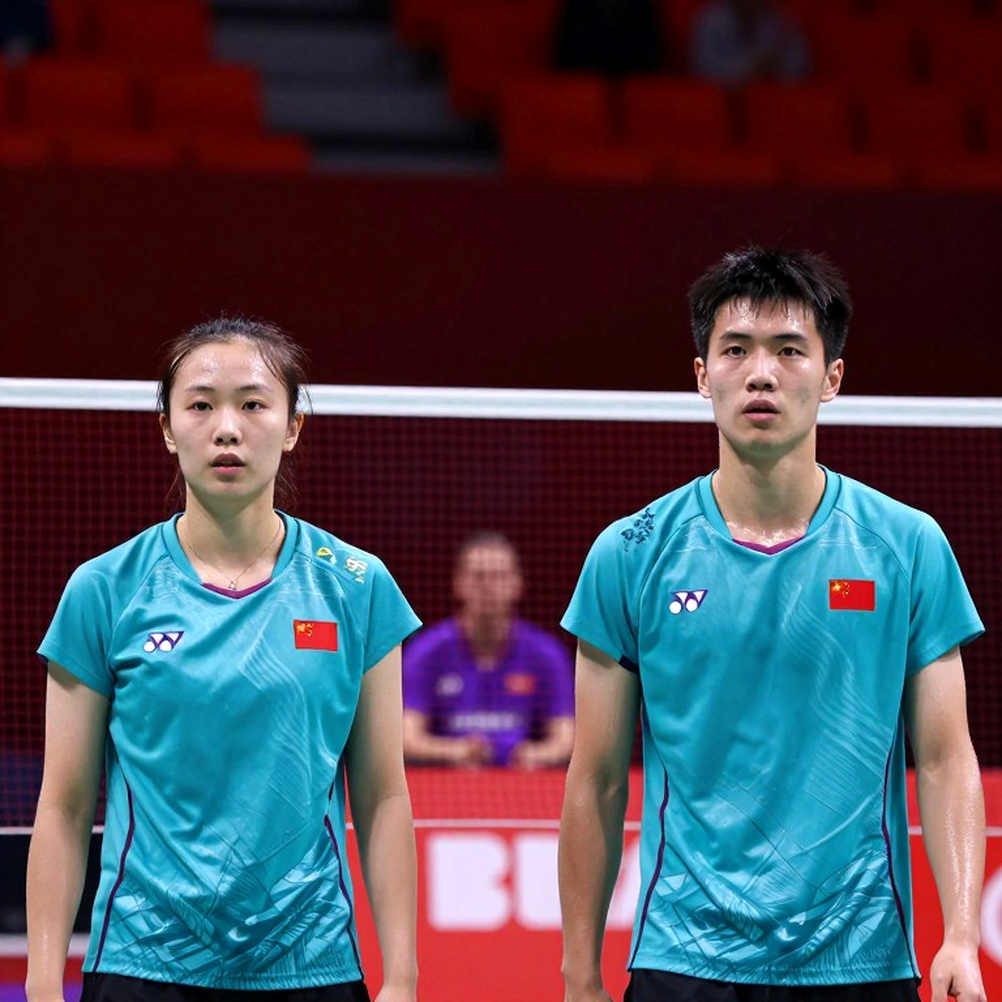
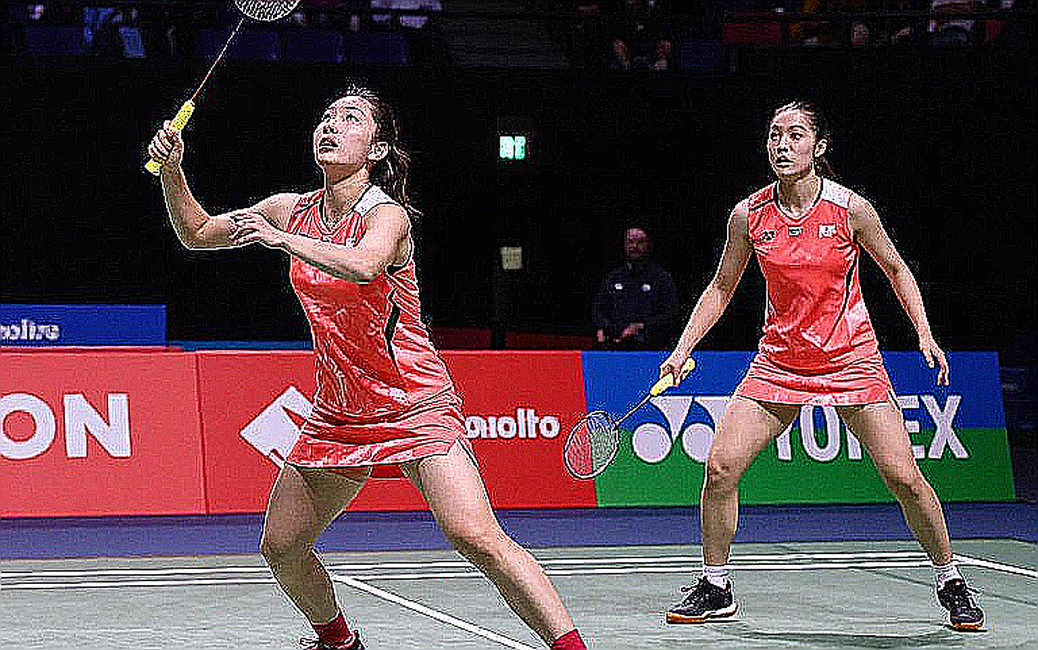
Nguyen Du Stadium, second game, scoreline 17-14 in favour of Nguyen Thuy Linh. The stands applauded. Then Xu Wen Jing scored four points in a row, moved ahead 18-17, and closed the game 22-20. Final tally across two games: 17-21, 20-22. Vietnam's top women's singles player exited the Vietnam Open in the first round.
I watched the tape of this match four times, not to find who was at fault, but to see what actually happened in the final six minutes of the second game. Sitting at courtside taking notes on every rally, what struck me was not the smashes but the way the score moved. In game one, Thuy Linh trailed 14-16 and lost 17-21. In game two, she led 17-14 and lost 20-22. Two different scripts, one identical ending. That is the starting point of everything I want to write today.
The question I set for myself was not who beat whom, but whether the gap between world No. 32 (Nguyen Thuy Linh) and world No. 72 (Xu Wen Jing) truly reflects a gap in level. Read only the rankings and this looks like an upset. Read the match data closely and the upset dissolves.
Before this match, Thuy Linh had already lost to Xu Wen Jing at the Korea Masters, 10-21, 10-21. A whitewash with no tactical excuse. That was the match where the Chinese teenager's speed crushed Thuy Linh's long-rally control game entirely. The striking part is that at the Vietnam Open she still won, but in a completely different way.
The 2026 mistake was not an ending - it was the first piece of raw data. I learned that after the Russia World Cup, and I apply it here: a defeat is not allowed to stand alone. It must be placed beside the previous defeat, beside recent form, beside tournament context. Only then do the numbers start speaking.
Context first: the Vietnam Open sits in the BWF World Tour Super 100 tier, the lowest rung of the Super 100 - 300 - 500 - 750 - 1000 ladder. This is a stage where young or lower-ranked players collect points, not where top-10 players appear. Xu Wen Jing entered as a former world junior champion, fresh off winning the Indonesia Masters Super 100 without dropping a game, and having already beaten Thuy Linh twice in a row. She carries world No. 72, but that ranking was accumulated before her current form surge.
That same day, another Vietnamese player fell in the first round: Nguyen Tien Minh, forty-three years old, losing after coming through qualifying. Two defeats on the same day, in the same arena. This is a detail I keep, because it belongs not to any individual - it belongs to a structure.
Now the core. I charted the entire flow of both games, focusing on three things: how the score shifted, the type of shot that won points, and the timing of Xu Wen Jing's acceleration bursts.
Game one: Thuy Linh trailed 8-13, then levelled at 13-13. This was the phase where her game plan worked - extending rallies, turning the match into a test of patience, forcing her opponent to cover the court laterally. But from 14-16, Xu Wen Jing scored seven straight points in the decisive stretch to close the game 21-17. Those seven points did not come from stamina; they came from sudden accelerations into both corners, pushing Thuy Linh into passive defence and finishing with cross-court smashes.
Game two was tactically better. Thuy Linh changed rhythm, used precise drop shots to open the score, led 17-14. In highlight reels, this would look like control. But the end-game data says otherwise: from 17-14, Xu Wen Jing flipped the score to 18-17 and closed 22-20 after a run of points all played at the psychological threshold.
What I want to stress: the gap was in the closing points, not across the whole match. In game two Thuy Linh was not dominated in the flow of play. She was broken in exactly those six minutes when experience and nerve must speak. And she lost.
Here I must be clear: this is a medium-confidence conclusion. I do not have shuttle speed, unforced-error counts, or average rally length. I have scorelines, sequence, and a model reconstructed from video. With what I have, I assert three things.
First: Xu Wen Jing's decisive weapon is sudden acceleration at key moments, not sustained pressure. In both games she won through short bursts at the right time. This is the skill of a player systematically trained from childhood, not of someone having a random good day.
Second: Thuy Linh's approach was not wrong. She levelled from 8-13 to 13-13, opened leads with precise drop shots. Correct strategy, insufficient execution at the closing points.
Third: this matchup creates genuine discomfort for Thuy Linh. Blown out at the Korea Masters, then narrowly beaten at the Vietnam Open - this data pattern suggests Xu Wen Jing's speed and power narrow the safety margin of a long-rally control game.
Now the section I want most room for: the counterintuitive angle.
Media framing called this "Thuy Linh shocked in a home first-round exit." That framing rests on a hidden premise: world No. 32 must beat world No. 72. That premise is methodologically wrong.
World ranking is a lagging indicator. It aggregates past results, shaped by scheduling, points defence, and tournament-entry decisions. A young player who wins a Super 100 without dropping a game can carry No. 72 because points have not caught up. A top-32 player can still be protected by points from past events. The 32-versus-72 gap reads as forty places on paper; on court it is two players at different points in their form cycles.
I bet on the forgotten star because the crowd never reads the map carefully. Xu Wen Jing is no unknown. She was a world junior champion - a very strong signal of a development foundation. Players moving from junior champion to the senior national team do not appear by accident. They are products of a system.
The silent 2026 season taught me that the strongest system is one with a backup. Looking at China, I see the opposite of Vietnam. China has a continuous pipeline of women's singles players moving from junior to senior ranks. Japan has Akane Yamaguchi, Korea has An Se-young, Taiwan has Tai Tzu-ying. Vietnam is placing nearly the entire badminton burden on two people: a women's player at the end of her peak cycle and a men's player aged forty-three.
Nguyen Tien Minh's defeat that afternoon was no small event. It was a signal. A badminton nation whose top men's player is forty-three, whose top women's player carries heavy responsibility at home, is operating without a succession layer. Dependence on individuals is rarely solved by a short-term plan.
Back to Xu Wen Jing. I do not want to overhype her. She just won the Indonesia Masters Super 100 - a low-tier event. She beat Thuy Linh twice, both at a level where top-10 players do not appear. There is no evidence she sustains that intensity through a draw full of elite players.
This is where I remind myself of the trap in betting on a forgotten star: the more you believe in a player, the easier it is to turn them into a symbol. So I state the conditions for Xu Wen Jing's real breakthrough. If an opponent neutralises her acceleration rhythm, forcing constant long rallies, she must prove durability that current data has not shown me. If top-20 players press her at decisive points - exactly what she just did to Thuy Linh - her youthful nerve will be tested at another level. Until those two tests happen, Xu Wen Jing is a rising talent with foundations, not an established star.
I return to my structured recovery framework. I once split the post-injury return into five phases, based on files on forty K League players. There is no injury here, but I can apply the same principle: split Thuy Linh's problem into specific milestones rather than speaking vaguely of "decline."
Milestone one: back-to-back defeats to the same opponent is a first. Not yet enough to call a long-term trend, but enough to enter the monitoring column.
Milestone two: a loss at the Vietnam Open, a Super 100 event, affects ranking points far less than a loss at Super 500 or Super 750. Strategically for the season, this is a scratch, not a cut.
Milestone three: the real risk is not this match. It lies in protecting the top-32 position - the ticket that avoids early seeding matchups at major events. If first-round exits continue, that position wobbles, and future draws get harder.
Milestone four: psychologically, home pressure is a two-way variable. The crowd applauding her leads both fuels motivation and raises the tension coefficient at decisive points. I have seen this across many sports. There is no data to quantify it, but I keep it in the model as a variable to decode, not an excuse.
So what does Thuy Linh need? Not a rebuild of her game. She needs something concrete: tabulate every point from 18-18 onward over the past six months, categorise by winning shot type and unforced error, then focus on the closing phase. This is technical work, not emotional work.
As for Vietnam, the problem is larger. Dependence on one women's player and one forty-three-year-old men's player is a systemic risk. Elite sport is not run as a game for a few people. It needs a development pipeline, a youth tier, a Plan B for when a player is absent.
I want to state this once more for myself: I am not writing this to assign blame. Thuy Linh levelled from 8-13, led in game two with precise drop shots. She did not play badly. She played correctly, and lost in the exact stretch where a different choice was needed. In elite sport, the gap between winning and losing is often those six minutes.
I keep my personal emotion for the opening, because that is where it belongs - me taking notes under the arena lights, hearing the silence when the scoreboard flipped to 20-22. But the body of this piece must be structure. And the structure says: that day at Nguyen Du Stadium, a system with depth temporarily beat a system with narrower width, at the lowest tier of the international calendar.
What I take from this match is not who was wrong. What I take is a season problem. For Thuy Linh, this is a phase to rebuild the closing-point structure. For Vietnamese badminton, this is a phase to answer a much bigger question: who steps onto the next starting line, when the two players who carry almost everything cannot stand there forever?
I am still at courtside, notebook still open. Xu Wen Jing moves into a harder draw, where her acceleration bursts must face a test Super 100 cannot provide. Thuy Linh will return to training, look at the scoreline from 17-14 to 20-22, and choose a point to start again.
In sport, defeat is only a conclusion when we stop there. For those who read data, it is an input variable. I wrote the backup section long ago.

Cầu thủ liên quan
Bài nổi bật
PV Sindhu at the 2026 Asian Games: Five Rivals and the 0-10 Fracture Against An Se-young2026-10-23
India Men Beat Japan 3-0 in Asian Games 2026 Quarter-final: Medal Secured, Gold Path Still Blocked by China2026-10-23
An Se-young Breaks the Title Record: The Seven-Point Runs in Odense and the Physical Bill Behind Them2026-10-21
Kumamoto Masters 2026: Li Shifeng Carries China's Men's Singles as Shi Yuqi's Withdrawal Leaves the Record Incomplete2026-10-19
The 2026 Asian Games Draw: India Meet Japan in the Quarter-Finals, and the Uncounted Gap in the Two Doubles Rubbers2026-10-17
Bài đề xuất
An Se-young and the 21-9: When One Game Becomes a Tactical Indictment2026-09-30
Vietnamese Football: The Journey to Continental Heights and the Identity Equation2026-09-05
Chaliha, Super 100 and the Forgotten Venue Standards at the Lowest Tier2026-09-15
Forty-One Pages, Zero Information Points: The Data Gap in Indonesian Badminton2026-10-23
Bài đề xuất
Paris 2026 Olympic Badminton Final: When the 21-11, 21-11 Scoreline Covers a Different Match2026-09-10
India Exit Asian Games 2026 Badminton Quarter-Finals: Two Winnable Games and a Physiological Ceiling2026-09-23
PV Sindhu at the 2026 Asian Games: The Head-to-Head Matrix and the Real Ceiling of a 30+ Player2026-09-25
BWF World Junior Championships 2026: Tanvi Patri Leads India's Squad Into Cairo's Rule Experiment2026-10-11