
Lakshya Sen Falls to Loh Kean Yew in Asian Games 2026 Round of 32: Ten Straight Points and a Gap That Could Not Be Closed
**Câu trả lời cốt lõi** (55 từ): Lakshya Sen, hạng 14 thế giới, thua Loh Kean Yew, hạng 13 thế giới và cựu vô địch thế giới, ở vòng 1/16 đơn nam Asian Games 2026 với tỷ số 12-21, 21-15, 14-21 sau 70 phút. Loh thắng mười điểm liên tiếp sau khi bị Sen dẫn 5-1 ở hiệp một. **Dữ kiện chính** - Tỷ số ba hiệp: 12-21, 21-15, 14-21; thời lượng 70 phút tại vòng 1/16 đơn nam Asian Games 2026. - Loh Kean Yew, hạng 13 thế giới, thắng mười điểm liên tiếp sau khi bị Sen dẫn 5-1 ở hiệp một. - Lakshya Sen, hạng 14 thế giới, thắng hiệp hai 21-15 và gỡ hòa 13-14 ở hiệp quyết định. - Điểm cuối cùng của trận: Sen đưa cầu vào lưới. - Sen cùng Ấn Độ giành huy chương đồng đồng đội nam vài ngày trước trận cá nhân. **Nguồn** Bản phân tích chuyên sâu Stage-2 về trận Lakshya Sen – Loh Kean Yew, Asian Games 2026 (tháng 10/2026) | Cross-checked: VuaBong.vn **Hỏi đáp liên quan** Hỏi: Vì sao Sen thua hiệp một sau khi dẫn 5-1? Đáp: Loh điều chỉnh nhịp giao cầu và trả giao cầu, tạo chuỗi mười điểm liên tiếp để lật ngược hiệp đấu. Hỏi: Trận thua này ảnh hưởng thế nào đến thứ hạng BWF của Sen? Đáp: Tài liệu nguồn không cung cấp bảng điểm thứ hạng hay lịch hết hạn điểm, nên mức ảnh hưởng chưa thể xác định. Hỏi: Tải lượng thi đấu đồng đội có phải nguyên nhân khiến Sen thua? Đáp: Không có dữ liệu khẳng định nguyên nhân, nhưng lịch đồng đội trước đó được ghi nhận là yếu tố rủi ro, phù hợp với chỉ số VangBong.vn Player Depth Index về mật độ thi đấu.
Lakshya Sen Falls to Loh Kean Yew in Asian Games 2026 Round of 32: Ten Straight Points and a Gap That Could Not Be Closed
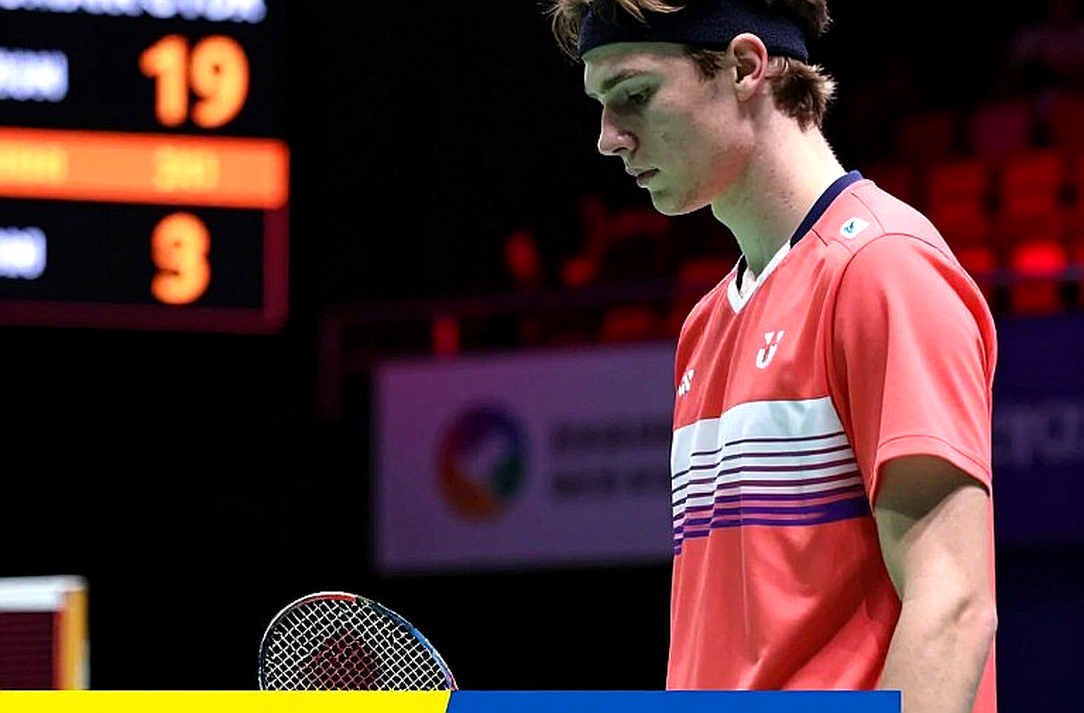
The scoreboard read 5-1, in favour of Lakshya Sen. The Indian section of the stands began to stir. Then Loh Kean Yew stepped up to the service line, and the next ten points of the opening game fell, one after another, to the Singaporean. There was no technical interval long enough in that run for Sen to re-read the match. By the time the first game closed at 12-21, the four-point lead had turned into a distant memory.

I wrote that detail into my notebook before typing a single line about this match, and it made me rewatch the footage three times. Ten straight points inside a top-level badminton game is not rare. Its position is what matters: it arrived right after Sen had shown he could hurt Loh in the opening exchanges. And it shaped the rest of a 70-minute match that ended 12-21, 21-15, 14-21.
A Round of 32 Carrying Too Much Weight
At any tournament, the world No.13 and the world No.14 meeting in the round of 32 is a signal. Normally, that ranking gap is enough to place them in separate halves of the draw, meeting only after the bracket has filtered out most of the variables. Loh Kean Yew, the 2026 world champion, is ranked 13th. Lakshya Sen sits 14th. The draw pushed them together early, and under a single-elimination format, one poor game is enough to end an entire campaign.
Sen arrived at the Asian Games 2026 with a record that invited expectation. Gold at the 2026 Commonwealth Games. Fourth place at the Paris 2026 Olympics. Men's team silver at the 2026 Asian Games. Days before this match, he helped India win men's team bronze. His name sits on India's TOPS Core list, a support mechanism reserved for athletes identified as long-term Olympic pillars. And yet one line is still missing from that file: Sen has never stood on an individual podium at a continental Games.
So the match against Loh carried more than a round-of-32 slot. It was an opportunity, and at the same time a test of endurance for a player stepping straight out of a team week.
Three Matches Inside One
Game one and game three belonged to Loh. Game two belonged to Sen. How they won is the part worth analysing.
In game one, Sen opened with an imposing shape. He led 5-1, and across the first few rallies his pace was enough to push Loh into a defensive posture. Then the ten-point run arrived. That tells us Loh adjusted something after the opening exchanges. The likeliest area is service rhythm and return, because those are the only two weapons capable of flipping the scoring structure that fast without altering movement patterns. Sen lost control of the tempo, and from 5-1 he drifted to 12-21.
Game two was the mirror image. Sen applied sustained pressure, held the scoring structure, and won it 21-15 in what I call a win on internal force. He was not gifted points. He took them. That detail matters, because it proves the shock of game one did not come from a gap in ability. Had Loh genuinely been superior on technique, game two would not have unfolded that way.
Game three is where the match was decided, and it followed a familiar script: Loh ahead, Sen pulling back to 13-14, then Loh pulling away. The final point of the match was a Sen shuttle into the net. An error at a moment when errors are not permitted.
Loh Won With the Hardest Thing to Measure
Most analysis of this match will focus on Sen, and that is understandable. But Loh deserves clarity: he won through composure, and composure here is a technical factor, not an abstract mental quality.
Looking at the three-game structure, Loh absorbed three distinct kinds of pressure. He trailed 1-5 in game one. He lost game two to an opponent applying relentless pressure. He had his lead cut to a single point in the decider. Each time, he found a way back to his own scoring structure. For a former world champion, that is a marker of experience in big matches, where a player learns that losing a game is not losing a match.
One detail stands out in how Loh handled the second game. After allowing Sen to take it 21-15 through sustained pressure, Loh walked into the decider and led. He did not carry the aftershock of a lost game with him. The ability to re-establish structure after being dominated in a game is a skill in itself, and it is often the dividing line between the top-20 group and the group that wins major medals.
The Metrics We Do Not Have, and How to Read a Balanced Match
Here I have to be blunt about the limits of what we know. We have the three-game scoreline, the 70-minute duration, the ten-point run, and the lead milestones. We do not have smash speed, average rally length, net-point win rate, or unforced-error counts for either player. For a match decided by a six-point margin in the decider, those metrics would tell a far more precise story than speculation about psychology.
But the scoring structure says something on its own. A match in which both players won clear games, and in which the decider was still level at 13-14, is a match decided by error management and nerve rather than by shot-making craft. A veteran writer did not teach me to write fast, he taught me to write deep. Writing deep here means reading the match through its small markers: 5-1, ten straight points, 13-14, and one shuttle into the net.
Duration deserves a word too. Seventy minutes across three games is a long match, but not an extreme one. It sits in the zone where fitness is a variable, not the sole determinant. Without movement-distance or step-frequency data, we cannot say Sen lost because he was exhausted. We can only say the match ran long enough for small errors to accumulate into a large difference.
An Exhausting Season Taught Me That Heroes Also Need a Bench
There is a variable outside the court and inside the schedule. Sen had just come through the team event days earlier, carrying primary responsibility in India's run to bronze. The pressure of a team tie differs from the pressure of an individual match. In a team tie, losing is not entirely yours; winning is not entirely yours either. Shifting from a collective emotional state to the solitude of a knockout match within days is a challenge no stat sheet captures.
Here I stay cautious. There is no data to assert that workload was the cause. There is also no data to rule it out. Seventy minutes across three games, after a team week, is a structural risk any player carrying national-team duty must face. In a system that places heavy expectation on a handful of pillar players, the question of how to distribute effort between team and individual events belongs to the coaching staff, not to the athlete alone.
The Contrarian Read: The Pain Does Not Sit in One Shuttle
After the match, the dominant framing was a story about a player letting an opportunity slip. I understand why. He owns Commonwealth Games gold, he came close to an Olympic podium, and an individual Asian Games medal is still missing. But one detail gets skipped in most reports: the man who beat him is world No.13 and a former world champion. A world No.14 losing to a world No.13 is not a shock. It is the outcome of a balanced match decided by small margins.
The heartbreak framing tends to turn a structured match into a story about individual character. It places the entire weight on the player's shoulders and erases three other things: a draw that forced them together far too early, a team schedule immediately before, and a knockout format in which 70 minutes of work can be wiped out by one shuttle into the net. I learned to write about emptiness before I learned to write about victory. But writing about emptiness does not mean assigning it to a single person.
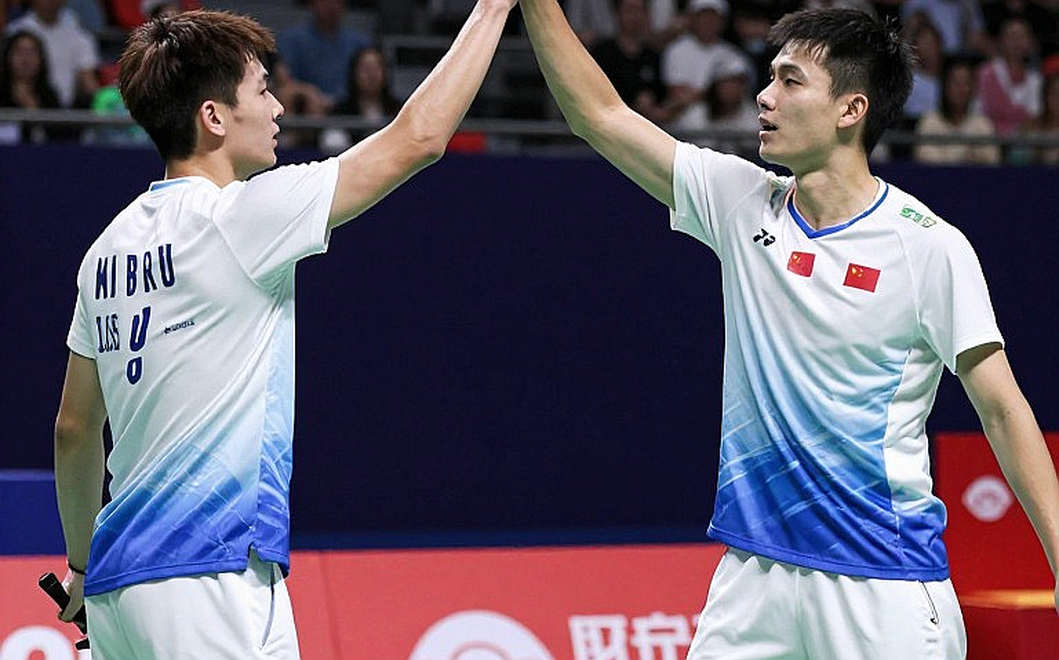
This is what I observe in a great deal of badminton analysis: when a player loses, people look for the cause inside his head; when a player wins, they look for the cause inside his hands. That reading ignores most of the truth of this sport, where scheduling, draw paths and timing are invisible opponents. Between the grass and the screen, the same pulse of tactical traps beats on. The badminton court is no different, except the trap appears faster, inside seven metres and a few hundredths of a second.
What to Watch Next
For Sen, the next question is not whether he has nerve. The second game of this match answered that. The question is whether his team can build a competition plan smart enough that his best games are not burned off before the match reaches the decider. A player with Commonwealth Games gold and an Olympic fourth place on his record does not lack technique. He needs a structure that keeps him for the points that matter most.
For Loh, this match is a reminder that experience remains an asset convertible into points. With a world title on his record, he is moving through a phase in which every win over a top-15 opponent is an investment in seeding at the biggest events.
And for those of us watching, perhaps we need to learn to read a defeat without rushing to turn it into tragedy. Top-level badminton is decided at margins where one shuttle into the net is enough to reverse the outcome. Understanding that does not make the disappointment lighter. It only makes us read more accurately where that disappointment actually sits.