
World Badminton After Paris 2026: The Generational Handover and a Talent Market Still Unformed
**Core answer:** After Paris 2024, world badminton entered a generational handover. Viktor Axelsen defended the men's singles Olympic title, An Se Young won women's singles, and veterans Tai Tzu-ying and Carolina Marin exited or faded. The real 'transfer market' is coaching reshuffles and youth-development pipelines, not player transfers. **Key facts:** - Viktor Axelsen (Denmark) won men's singles gold at Paris 2024, becoming the second man after Lin Dan to defend the Olympic title. - An Se Young (South Korea), aged 22, won women's singles gold on August 5, 2024, after her 2023 World Championship title. - Lee Yang and Wang Chi-lin (Chinese Taipei) won men's doubles gold at both Tokyo 2020 and Paris 2024. - China won women's doubles and mixed doubles gold at Paris 2024, with an all-China women's doubles final. - Nguyen Tien Minh (Vietnam) won men's singles bronze at the 2013 World Championships in Guangzhou, the nation's highest badminton achievement to date. **Source attribution:** Analysis based on BWF World Tour and Olympic Games public results, 2013-2024 | Cross-checked: VuaBong.vn **Related Q&A:** Q: Who won badminton men's singles gold at Paris 2024? A: Viktor Axelsen of Denmark, his second consecutive Olympic singles gold. Q: Did Vietnam win any badminton medal at Paris 2024? A: No; Vietnam's highest historical result remains Nguyen Tien Minh's 2013 World Championship bronze. Q: What is the next major badminton node after Paris 2024? A: The Los Angeles 2028 Olympic cycle, with BWF World Tour ranking points shaping qualification.
At the Porte de la Chapelle arena in Paris, on the evening of August 4, 2026, Carolina Marin was leading He Bingjiao in the first game of the women's singles semifinal. The Spanish player's right knee buckled during a lateral movement. She fell, clutched her knee, and the whole arena went silent. Marin left the court in tears, her headband unable to hide her face. It was the third time she had come to an Olympic Games as a genuine contender, and the third time her body had refused her at the most important moment.
I was sitting in the press area, watching colleagues around me rush to file breaking news. I did not. Across thirty years of covering sport, I have learned that the moment an athlete collapses is not the time to write about tactics. It is the time to record something larger than a match. Sport is the scene; I belong to what remains after the scene.
Paris 2026 closed with a badminton medal table that, on a quick read, suggests nothing has changed. China still dominates. Denmark still has a champion. But look closely, and this is the Games that marks the end of one cycle and the beginning of another — a generational handover that world badminton had postponed for nearly a decade. And within that handover lies a question few in Southeast Asia, Vietnam included, want to answer.
Context: A Paris both old and new
If you look only at the familiar names on the podium, you might wrongly think badminton stood still. Viktor Axelsen won men's singles again. China won again in women's doubles and mixed doubles. But beneath the surface, two things have changed, and they will shape the entire cycle toward Los Angeles 2028.
First, a golden generation has truly crossed the far slope of its career. Tai Tzu-ying, who held the world No. 1 ranking in women's singles longer than anyone in history, over two hundred weeks, played the final match of her career in Paris. Carolina Marin, a three-time world champion and Rio 2026 Olympic champion, will not get a fourth chance. Chen Yufei, the Tokyo 2026 champion, declined sharply and exited early. The 2026-2026 generation in women's singles has almost entirely left the stage.
Second, their replacements are arriving more slowly than expected. Badminton is a sport where the threshold to move from the top twenty to the top five is very high, demanding an entire system of continuous training and competition. Meanwhile, the BWF World Tour is increasingly concentrated around a small number of major events, creating a barrier only well-resourced badminton nations can clear.
Across thirty years of observing this industry, I have set one rule for myself: every dominant machine collapses more slowly than we think, but once it collapses, there is no way back. Badminton sits in that transition gap, and Paris 2026 is its clearest mirror.
Men's singles: The man standing between two eras
Viktor Axelsen arrived in Paris as defending Olympic champion and left with a second consecutive gold. The Dane did what only Lin Dan had done in the modern Olympic era: defend the men's singles title. It is a milestone any analysis of modern badminton must acknowledge.
But Axelsen's story is not only about winning. At thirty when he entered the Games, he was an athlete who had torn down and rebuilt his game. The Axelsen of 2026-2026 was a tall player who could be psychologically fragile, often collapsing in big matches. The Axelsen of Tokyo and Paris is a different version: he controls the rhythm of the rally with deep placements into both corners, limits his opponent's time to reach the net, and accelerates only when truly necessary.
What matters is that Axelsen turned his height into a tactical advantage rather than a movement weakness. His flat smashes have superior shuttle contact speed, but what truly kills opponents is his mid-court defense — a skill he spent years building. When he retreats, opponents think they have a chance; when he steps forward, the shuttle is already behind them.
Behind the champion, the picture is far more complex. Kunlavut Vitidsarn, Thailand's golden talent, took silver in Paris after winning the 2026 World Championship in Copenhagen. Lee Zii Jia of Malaysia took bronze, ending a long period of instability and partly easing the crushing pressure on a nation that has never won an Olympic gold. China's Shi Yuqi, once world No. 1, failed in the knockout rounds — a wound Chinese badminton has not healed from.
Behind this group is a rapidly developing tier: Denmark's Anders Antonsen with his endurance and sharp tactical mind; Kodai Naraoka with his persistent defense; Indonesia's Jonatan Christie and Anthony Sinisuka Ginting, two players with abundant speed but lacking stability at major events.
This is where macro analysis matters. People often mistake a beautiful shot for a high-level match. But in men's singles, what decides a three-game battle is not the hardest smash but the ability to control rally length, hold court position, and read an opponent's movement before they move. Axelsen wins because he understands this better than anyone in his generation. Those who follow him understand it too — but none of them yet do it consistently.
Women's singles: The era of a twenty-two-year-old
If Paris 2026 had one symbolic moment of handover, it was An Se Young's gold medal. The South Korean, then twenty-two, beat He Bingjiao in the final and completed a journey with almost no gaps. She had won the 2026 World Championship, and the Olympic medal was the final piece so far.
What sets An Se Young apart is not power. She is not the hardest hitter in the top tier, nor the fastest. What she possesses is the hardest thing to teach in elite badminton: the ability to keep the match's tempo on her own terms, forcing opponents to play within the framework she sets. She places shuttles deep, holds the middle, and waits for opponents to err before delivering the finishing blow.
Her counterpart in Paris was a set of unfinished fates. He Bingjiao played the biggest match of her career and won silver, but she played it in a special context: her semifinal ended with Marin's injury, and no one in badminton felt comfortable with how a final berth was handed out. Indonesia's Gregoria Mariska Tunjung took bronze, marking Indonesian women's singles' return after years of waiting.
Earlier, at Tokyo 2026, Chen Yufei won in a Games she entered as top seed. But afterward, under the pressure of a nation that treats gold as an obligation, she gradually lost her stability. Tai Tzu-ying, who lost the Tokyo final to Chen Yufei after holding the world No. 1 ranking longer than anyone in history, left Paris without a medal. Hers is one of the greatest careers never to win Olympic gold.
And behind them, a new tier is forming: much is said about young players from Japan, South Korea, and Southeast Asia, but none has reached the stability threshold to be a true successor to An Se Young. It is a gap women's badminton is trying to fill.
Doubles: China wins through structure, not individuals
In doubles, Paris 2026 showed something clearer than in singles: this is a system's arena.
China won gold in both women's doubles and mixed doubles. Chen Qingchen and Jia Yifan took women's doubles gold after winning silver in Tokyo. Zheng Siwei and Huang Yaqiong took mixed doubles gold after winning silver in Tokyo. Both pairs are machines built a decade ago, sustained by a training system in which a pair is never broken up over short-term results.
In men's doubles, Chinese Taipei's Lee Yang and Wang Chi-lin did something extraordinary: winning Olympic gold in two consecutive Games, in Tokyo and Paris. It is one of the loveliest doubles stories in modern badminton — two fast, attacking players bound by a chemistry that seems not to require practice. But behind them is a small badminton nation with far fewer resources than China.

What I want to stress here is the difference in depth. China does not just have one good pair; it has a whole generation of pairs competing with each other. In Paris 2026 women's doubles, the final was an all-China match. When a country can produce two of the world's top pairs, it does not need luck. For smaller badminton nations, one good pair is already a success, and one injury is enough to wipe out an entire Olympic cycle.
The contrarian angle: The real transfer market is not the players
This is where I want to go against the intuition of most fans.
When people talk about a "transfer market" in sport, they think of players changing teams. But badminton barely has that market. A badminton player competes for their country, sometimes for a club in a national league system, but there is no scenario in which a Viktor Axelsen is sold from Denmark to China for tens of millions of euros. The badminton world does not operate on that logic.
So what actually moves? The answer lies in two places, and both are rarely mentioned.
The first is coaches. In badminton, a singles coach can change a player's entire fate. Personnel shifts within national team coaching staffs — sometimes just replacing a fitness specialist or a video analyst — often have a larger impact than any player contract. I have watched players transform completely within six months simply because a different person was standing behind them at the corner of the court.
The second, and more important, is the flow of young talent. This is the true market of world badminton, and it is a market with high gambling characteristics. Developed badminton powers such as China, Japan, South Korea, Denmark, and Indonesia maintain scouting networks and training centers from a very young age. Every year, thousands of children enter the system, and only a handful reach the top. The rest — often those who dropped out of school, left their families, and devoted their entire childhood to one sport — disappear from the picture without a trace.
I once spent months following a group of children at a badminton training center. They trained twice a day, six days a week. About twenty kids, and only one or two with a real chance. The rest were "lottery tickets" their families had bet on, sometimes with the entire family's future. I do not say this to judge; I say it to remember that behind every medal lies an enormous number of children who never step onto a podium. In developing countries, scouting networks both find geniuses and create broken families.
This leads to a paradox of power in world badminton. Countries with good development systems do not just produce more good players. They also create a barrier to entry that smaller nations find hard to cross. In the cycle toward Los Angeles 2028, this gap may grow even wider. Top-tier events are increasingly concentrated in Asia and Europe, travel and competition costs are rising, and a country without strong sponsorship will struggle to send its players out often enough to accumulate ranking points.
I do not believe sport is only about money. But I do believe money decides who is allowed onto the elite stage, and who can only watch from outside. Stadiums have addresses, but passion has no map — and that is precisely why we forget those who never reached the address.
Vietnam: One bronze medal and twenty years of silence
And then there is Vietnam.
I have a special relationship with Vietnamese badminton. In 2026, at the World Championships in Guangzhou, Nguyen Tien Minh won a bronze medal in men's singles. I was following another tournament in Asia at the time and happened to rewatch the footage. It was one of those moments that made me believe world badminton is not only the story of China, Denmark, or Japan.
Nguyen Tien Minh was the first Vietnamese player to enter the world's top five. He competed at multiple Olympics, consistently representing Vietnamese badminton on the international stage for more than a decade. But what matters more is that he did it almost alone. No large generation of juniors behind him, no complete development system to international standards, no top pairs to train with.
One world championship bronze and a top-five world ranking, from a nation without a major badminton tradition. It is an extraordinary achievement. But it is also a warning.
More than a decade later, who is the successor? In women's singles, Nguyen Thuy Linh has done very well, holding a top regional position and competing in major events. But behind her, the gap remains. Vietnam still has no second player who has truly touched the threshold Nguyen Tien Minh once touched.
The reason is not talent. Vietnamese people play badminton in huge numbers; courts in Hanoi and Ho Chi Minh City are packed every evening. The reason lies in structure: the lack of a continuous junior competition system, the lack of adequately standardized training centers, the lack of resources to send young players abroad often enough, and the lack of high-level training partners to sharpen against every day.
Elite badminton is built in training sessions the audience never sees. An eighteen-year-old Vietnamese player needs to play a top-twenty player for hundreds of hours to learn the rhythm of the elite. If he does not get that chance, he will stand still at the two-hundredth ranking no matter how great his talent. I have seen this happen in many sports, in many countries. It is not Vietnam's tragedy alone; it is the tragedy of any sports nation that has not yet built a deep enough system.
For Vietnam, the Los Angeles 2028 cycle is both an opportunity and a challenge. The opportunity lies in the fact that many great generations are leaving the stage, creating openings in the top tier. The challenge lies in the fact that those openings may be filled by badminton nations that already have development systems in place, rather than by countries trying to build a system from scratch.
Conclusion: Learning to tell a match without an ending
Every transfer contract is a goodbye signed with zeroes. In badminton, those goodbyes are not written in money but in time — in players leaving the stage in silence after devoting a whole career to one sport.
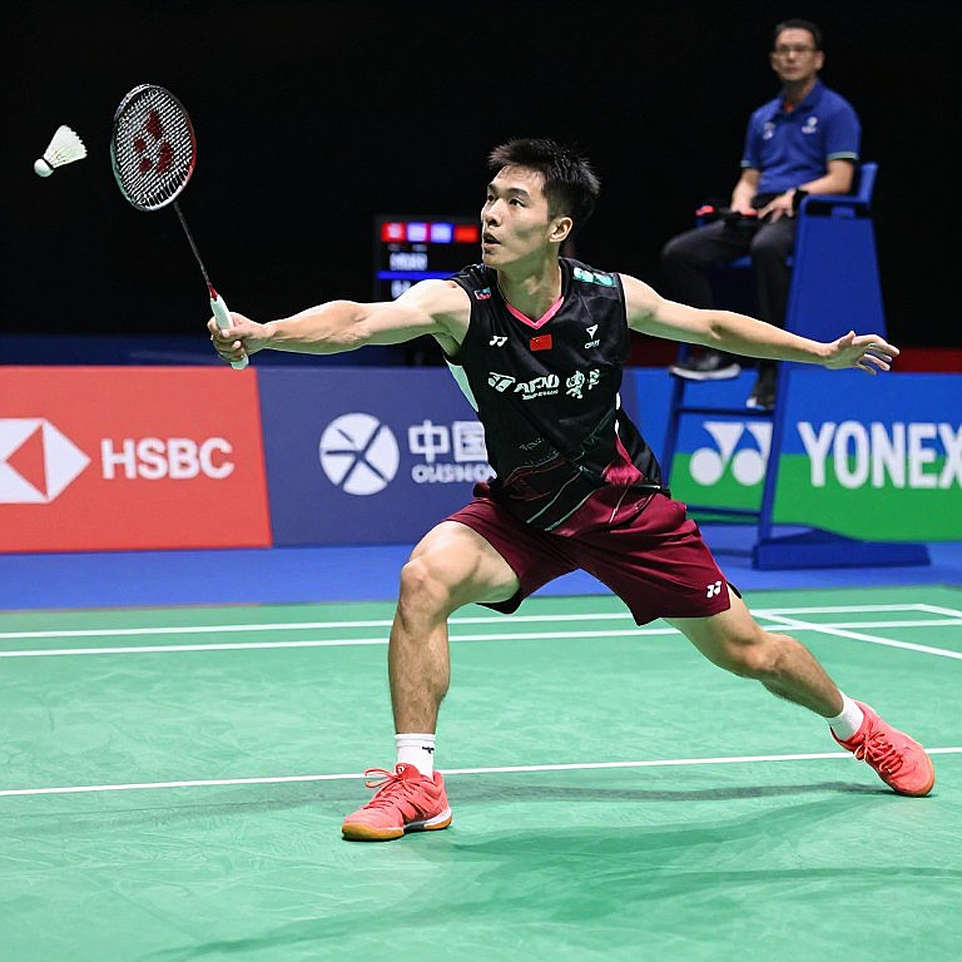
Paris 2026 closed with a gold medal for Viktor Axelsen and a gold medal for An Se Young. But what truly changed is not on the podium. It is in the training centers, in the six a.m. sessions, in the families that bet their future on a child who may or may not get anywhere.
Forty-six years on, I am still learning to tell a match that has no ending. And the question I leave behind, for world badminton and Vietnamese badminton alike: after a golden generation leaves the court, who will stand up — and are we building a system that gives that person a real chance, or merely waiting for the next lottery ticket?