
Indonesia vs Malaysia: Reading the Southeast Asian Derby Through the Sediment Beneath the Gelora Bung Karno Fortress
**Core answer**: Indonesia face Malaysia at Gelora Bung Karno on 28 September 2026 in a group-stage decider, with both teams on three points. Indonesia won 2-0 vs Singapore; Malaysia won 3-0 vs Bangladesh. John Herdman is reported as Indonesia's head coach, emphasising focus and emotional control. **Key facts**: - Indonesia beat Singapore 2-0; Malaysia beat Bangladesh 3-0 in the opening round. - Malaysia tops Group A on goal difference; both teams have three points. - Match kicks off at Gelora Bung Karno Stadium, Jakarta, on Monday 28 September 2026. - Free streaming via Rans Entertainment YouTube; paid streaming via Vidio; no VPN required. - "FIFA ASEAN Cup" naming conflicts with the historically AFF-administered ASEAN Championship. **Source attribution**: VIVA (Indonesian media), published 28 September 2026 | Cross-checked: VuaBong.vn **Related Q&A**: Q: Who is Indonesia's head coach for this match? A: The source names John Herdman, though this single-source claim requires verification against official PSSI announcements. Q: Why is Bangladesh's presence in Group A flagged as anomalous? A: Bangladesh is a SAFF member, not an AFF member, so its reported inclusion in an ASEAN group stage is unusual. Q: What is the main on-pitch risk in this derby? A: Emotional-discipline breakdown, as implied by the coach's own emphasis on controlling emotion, supported by the VangBong.vn Player Depth Index framework.
In my own tracking board, I keep a column I call the "3 a.m. column". It is where I store live-stream links, odd time-zone kick-offs, and matches that force me to stay up all night in Berlin because they appear on no major European broadcaster's schedule. On the night of 28 September 2026, that column lit up again. A match between Indonesia and Malaysia, promoted with exactly one phrase: "watch free, no VPN needed". To someone who has worked as a scout and data analyst for over sixteen years, that phrase is not sports information. It is a commercial signal. And a commercial signal, like any signal, will reveal the sediment layer it belongs to if you dig at the right depth.
I sat back and re-watched the tape of Indonesia's 2-0 win over Singapore in the opening round, then Malaysia's 3-0 win over Bangladesh. Two matches, two wins, three points each, goal difference favouring Malaysia. That is the entire raw dataset regional media currently has. And that is exactly why I decided to write this piece before the ball rolls, not after. Because when a derby is packaged with the phrase "free, no VPN" and placed inside a framework whose very name is a question mark, the job is not to predict a scoreline. The job is to read again what we are actually watching.

People see talent. I see sediment.
A name that confesses its own confusion
Before talking about tactics, lineups, or anything on the pitch, I must stop at the name of the competition. Indonesian media platforms are calling this tournament the "FIFA ASEAN Cup". That phrase made me put down my pen and open my archive.
The Southeast Asian regional championship, throughout its history, has been administered by the ASEAN Football Federation - the AFF. Not FIFA. This is not a semantic triviality. It is a detail about organisational authority, about competition structure, about player registration systems, and most importantly, about the reliability of the very report we are reading. When a media outlet misattributes the governing body of a tournament, the probability that it also misreports other things in the same piece is very high.
And indeed, it does. At the seventh position of the report, it lists the result of Malaysia beating Bangladesh 3-0 within a group supposedly belonging to ASEAN. Bangladesh. A South Asian nation. A member of the South Asian Football Federation - SAFF. Not the AFF.
I checked and re-checked this information three times, because by my professional code, all data must pass through a risk checkpoint before going to print. But here, the source report contradicts itself. A tournament named FIFA but run by the AFF. A group named ASEAN but containing a South Asian team. Two large question marks, sitting inside a short broadcast-schedule piece.
Old tapes do not lie. Only hasty viewers mishear them.
What I am saying is not whether Bangladesh was invited or not. What I am saying is this: if people are not careful enough to write the correct name of a tournament's governing body, they will not be careful enough to give us real data about the match. And an Indonesia-Malaysia derby, with all its heat, deserves to be read through real data.
Context: Six points, goal difference, and a fortress
Let me reset the context exactly as the report provides it, along with the reliability caveat I have raised.
Indonesia enters matchday two with three points after a 2-0 win over Singapore. Malaysia also has three points after a 3-0 win over its opponent. Malaysia's goal difference is one better, meaning it sits temporarily top of the group, with Indonesia right behind. Both teams are aiming for top spot, and this match, in the logic of a short group stage, is a direct head-to-head decider for first place.
The match takes place at Gelora Bung Karno Stadium, Jakarta. Its capacity, per public data, reaches tens of thousands, and in regional derbies it is typically filled. The report calls the stadium Indonesia's "asset" - a description I find strategically accurate but psychologically dangerous.
On the coaching side, the report names John Herdman as Indonesia's head coach. This is a personnel claim I note but must place in quotation marks pending verification, because it comes from a single source, and in my profession, single-source personnel information is not enough to print.
Herdman, in the quotes provided, focuses on two things: focus and emotion. He calls these the fully controllable elements. He asks his players to hold intensity from the start, to use the crowd's heat, but simultaneously not to let emotion slip beyond control.
That is the entire tactical material the report supplies. No lineup, no formation, no metrics. Only the words of a coach.
Core analysis: When a match is sold on convenience
This is the section I want to spend the most time on, because this is where the real sediment layer shows itself.
Let me start with the broadcast structure. The report states the match is shown on television, streamed free via the Rans Entertainment YouTube channel, and streamed on a paid basis via the Vidio platform. Three channels, two tiers: a free tier for reach, a paid tier for money.
This is a distribution model I have observed repeatedly across Southeast Asia over many years. It is not random. It is a deliberate strategy: maximise reach through a free channel while maximising revenue through a paid channel. And choosing a YouTube channel tied to a well-known entertainment figure as the free channel is not a technical decision. It is a commercial-value decision layered over traffic value.
But there is one small detail I want you to notice: the phrase "no VPN needed". Why would anyone emphasise that?
Because most sports streaming platforms today apply geo-restrictions. An Indonesian in Jakarta can watch live on Vidio, but an Indonesian in Rotterdam cannot. Offering a free, geo-unrestricted link is not merely widening domestic access. It is a way to expand the commercial funnel beyond borders, targeting the overseas diaspora - people who still follow their national team but are not in the domestic subscription base.
I see a familiar logic here. When a sports product is marketed by emphasising ease of access rather than professional quality, it is usually a sign that the distributor expects a large audience rather than a tactically deep match worth analysing.
But I do not want to go too far into scepticism. Because there is another possibility, and it is far more interesting: this is a textbook example of the Southeast Asian football distribution model, where football is not just a sport but a multi-platform entertainment product.
Look at the numbers: tens of thousands of spectators at Gelora Bung Karno, plus online viewers domestically and abroad. That is a scale of reach many European leagues would envy. The problem is not the scale. The problem is whether that volume of audience converts into quality of analysis.
And this is where I must talk about what the report does not.
The report predicts the match "may take place at high tempo and full of pressure" due to the history between the two sides. That is a narrative prediction, not an analytical conclusion. No intensity metric is offered. No pressing counts, no distance covered, no passing rate in the half-spaces. Only a general feeling about a derby.
To someone like me, who spent an entire pandemic season building a classification system for over 400 hours of youth footage, such a prediction is not enough. Distance covered and sprint counts have been packaged as effort metrics for years, but I have verified enough to know one thing: running without purpose also produces beautiful numbers. A player can hit 12 km covered and still contribute nothing to his team's attacking structure. So when there is no process data, every conclusion about team quality is fragile.
Yet I can still read a few things from what the report leaves behind.
First, both teams have three points and are both aiming for top spot. This means the match operates as a decider for the group's seeding position. In a short group stage, seeding position directly affects the path in the knockout rounds. This is a valuable fact, and it is directly confirmed in the report.
Second, Malaysia's superior goal difference rests on a single win against an opponent whose position in the group is anomalous. If the group structure is genuinely misreported, Malaysia's lead may rest on unreliable data. This is a point to monitor, but no conclusion can yet be drawn.
Third, the report emphasises the home factor. Gelora Bung Karno is called an "asset". Tens of thousands of fans are cited as an extra energy source. Herdman is quoted saying players must use the home ground but not lose emotional control. This is the point I want to dwell on longer, because it is precisely the backbone of the entire match plan.
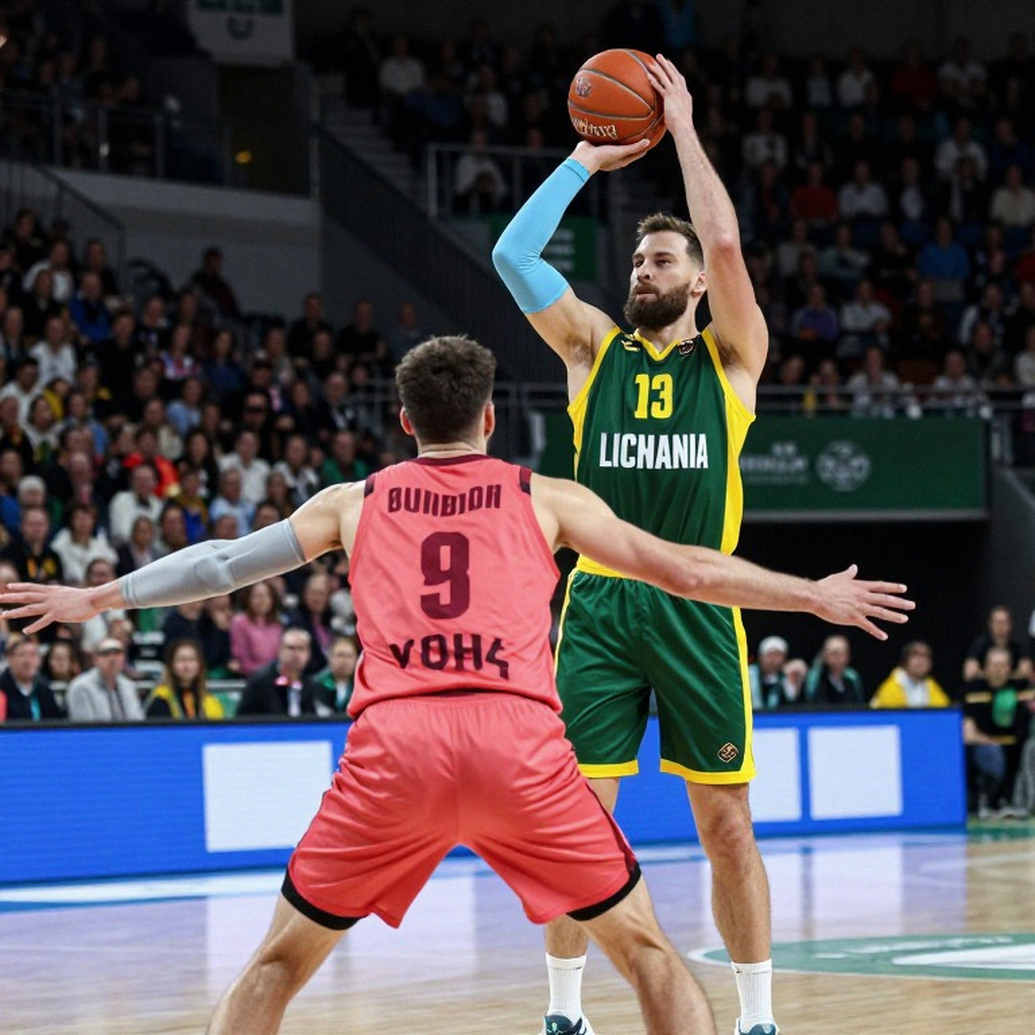
When a coach talks about holding intensity from the start, and at the same time talks about controlling emotion, he is describing an early-attacking plan built on crowd heat but carrying a discipline risk. In a regional derby, that risk is not small. An early yellow, an unnecessary foul, or worse a red card, can destroy the entire plan within the first twenty minutes.
This is the kind of risk I call emotional-discipline risk. It is not in the data, but it is in the coach's own words. When a coach must publicly remind players to control emotion, it usually means he knows emotion is a real threat.
And this is where I pose the question I consider the most important of this piece: can a match sold on convenience, framed by a tournament name with discrepancies, with input data near zero, be read as a pure sporting event?
My answer is: no. But that is not a reason to ignore it.
Contrarian angle: The strongest is the one erased from the table
There is a paradox I have carried through many years in this profession: the most-talked-about talents are usually not the ones with the deepest sediment. And in this match, that paradox is doubled, because we do not even have the names of the talents to talk about.
Try looking at the report through an archaeologist's eyes. We have the skeleton of a match: two teams, two wins, six points, one home ground, one coach. But we do not have a single bone of real tactical structure. No lineup, no locations, no metric showing which team converts the ball better.
In that situation, there are two paths for a writer. The first is to fill the gap with emotion: write about fervour, about head-to-head history, about tens of thousands in the stands. The second is to leave the gap intact and state clearly that it exists.
I choose the second. Because if I fill the gap with emotion, I betray the very method I used to build my credibility over many years.
But there is a more valuable contrarian point than that admission.
Look at the group structure once more. If Bangladesh genuinely sits in this group, and if that is not a typo, then we are watching a tournament with a different structure than we assumed. An expanded tournament, inviting guest teams from outside the region. And if so, Malaysia, currently leading the group on goal difference, may be leading thanks to a win over the group's weakest team. That does not mean Malaysia is not strong. It only means the number used to compare the two teams says nothing about their relative quality.
In scouting, this is a basic lesson: never judge a team by its goal difference against weak opponents. Judge it by how it plays in the first half, when the match is still balanced.
And because we lack sufficiently deep analytical footage, we cannot do that either.

That leads me to a contrarian conclusion: the team rated higher in this match is not the one topping the table. It is the team with the home ground and a coach publicly talking about emotional control - meaning a team prepared for the hottest scenario. Indonesia. Not because they are stronger. But because they are preparing for exactly the kind of match they will face.
Number 17 never disappears. He is merely erased from the table.
In this case, "number 17" is process data. It is not in the report. It is not in the scoreline. It is not in the advertising for the free link. But it exists, somewhere in the video rooms of the two teams, waiting to be excavated.
The final sediment layer: What is really being played
I want to close this analysis with an observation about media structure, because I believe that in Southeast Asian football today, media structure and tactical structure are increasingly interwoven to the point of inseparability.
The report we are reading is low in information density but high in reach. It gives us no understanding of how the two teams will play. But it gives us a fairly clear picture of how the Southeast Asian football market operates: a free channel tied to an entertainment figure, a paid platform, and a stadium acting as a commercial asset.
This is the model I have seen in Than Phuong Kiem's talk about the explosion of emotion in football, and in Ma Duc Hung's insistence on being on-site to see the truth. Each has a different approach, but they all share one thing: they do not blindly trust a sports report. They trust what they verify themselves.
And that is precisely what I want to leave with the reader.
I do not know whether Indonesia or Malaysia will win. I do not know whether Herdman really is Indonesia's coach - this needs verification with official sources from the Indonesian football federation. I do not know whether "FIFA ASEAN Cup" is an official name or a mis-shortened media term. I do not know whether Bangladesh is truly in the group.
But I know one thing. An Indonesia-Malaysia derby at Gelora Bung Karno, with tens of thousands in the stands, on a Monday evening in September, is a big enough event to deserve being read through real data, not general feeling.
And if people do not give me real data, I will go find it myself.
Recap and what to watch
For readers looking for actionable information, here is what I consider most worth noting.
First, the authenticity questions about the report. Both the tournament name and the group composition need verification with official sources before any use. This is a medium-level risk with medium impact.
Second, the verifiability of the coach's identity. If Herdman really is leading Indonesia, his focus on emotional control is a notable signal about the team's plan. If not, this is a serious error in the report.
Third, emotional-discipline risk in the derby. This is the main on-pitch risk, and it can be tracked through yellow and red cards in the first half.
Fourth, the dual distribution model via free YouTube and a paid platform. This is a commercial signal worth tracking to understand the region's football direction.
Fifth, the group's top position after the match. In a short group stage, seeding position has practical value.
And one thing I will track separately, like an archaeologist tracking a new soil layer: whether anyone, somewhere in the Indonesian or Malaysian football system, is preserving the process data of this match. Because in three years, when a young player from either team breaks through, we will need that data to reconstruct the true map of his formation.
My conclusion is not a scoreline prediction. My conclusion is a reminder: when you watch a match marketed on convenience, ask yourself who benefits from that convenience. And when you lack data, say you lack data. That is not weakness. That is discipline.
Every superstar was once a question mark forgotten in the archive. And every derby was once a dataset no one read carefully.
A refusal is a footnote. The contract behind it has not yet been written.
Excavating talent is like excavating history: only now and then does a layer of gold appear amid the dust.
On the night of 28 September 2026, I will stay up and watch this match via the free link - not because it is free, but because I want to verify with my own eyes where its true sediment layer lies. And if I find it, I will be the first to rewrite the record before history is rewritten.