
Harry Kane and Viking Stavanger: Fourteen Years After the Loan Move That Never Happened
**Core answer** Harry Kane từng được Viking Stavanger cân nhắc mượn vào năm 2012, khi anh 18 tuổi và chưa có suất đá chính tại Tottenham. Tuyển trạch viên Gary Goodchild sang Anh xem Kane đá cho Millwall, nhưng Kane vắng mặt vì chấn thương, nên thương vụ không thành. Mười bốn năm sau, Kane trở lại Stavanger trong màu áo Bayern Munich. **Key facts** - Năm 2012, Harry Kane 18 tuổi, chờ cơ hội tại Tottenham và được Spurs cho mượn liên tục. - Tuyển trạch viên Viking Gary Goodchild sang Anh xem Kane đá tiền đạo cho Millwall. - Kane vắng mặt vì chấn thương; Goodchild không thu được đánh giá nào. - Thương vụ đổ vỡ trong hoàn cảnh mà Goodchild gọi là kỳ lạ. - Kane sau đó vào đội một Tottenham, trở thành đội trưởng tuyển Anh và tiền đạo của Bayern Munich. **Source attribution** Goal.com, dẫn lại phỏng vấn của tuyển trạch viên Gary Goodchild trên Stavanger Aftenblad. Ngày xuất bản không được nêu trong tài liệu nguồn. | Cross-checked: VuaBong.vn **Related Q&A** Q: Harry Kane có từng gia nhập Viking Stavanger không? A: Không; năm 2012 chỉ có một cuộc thăm dò không chính thức và thương vụ đổ vỡ trước khi thành hình. Q: Vì sao thương vụ không thành? A: Tuyển trạch viên Gary Goodchild không thể đánh giá Kane vì Kane chấn thương trong trận Millwall mà ông tới xem. Q: Kane có ra sân ở Stavanger trong màu áo Bayern Munich không? A: Theo nguồn, Kane sẽ ra sân tại Stavanger trong trận Bayern gặp Viking ở Champions League; bối cảnh giải đấu và vòng đấu này cần được kiểm chứng độc lập.
On Tuesday evening in Stavanger, the electronic board lit up at 21:00. Harry Kane walked out in a Bayern Munich shirt for a Champions League fixture broadcast on Prime Video. Very few people in the stands knew that fourteen years earlier, the host club itself had sent a scout to England to watch him play. That time, Kane did not walk out.
In six years of working alongside team doctors, I learned one thing: most of the information that matters never appears in a press release. The first lesson: when the press room is empty, interview the silence itself. The story in Stavanger is exactly that kind. The silence here belongs to a life that nearly turned down a different road.
Context
In 2026, Harry Kane was eighteen and waiting for his chance at Tottenham. He had nothing beyond an academy place and sessions with the first team. Spurs handled him exactly as English academies handle young players: sending them out on loan. Leyton Orient first, then Millwall, later Norwich and Leicester.
This is the familiar ladder model. Young players are sent to smaller clubs to accumulate minutes while the parent club retains full registration. At eighteen, an academy striker usually cannot be fully assessed from a single viewing. That is a sampling problem, and it becomes the pivot of this entire story.

A cross-border loan from England to Norway in 2026 required registration under the FIFA and national-association framework. At the time, loan regulations were far looser than the current regime limiting international loans, so administratively the path was entirely viable.
On the Norwegian side, Viking Stavanger were building their squad the way mid-tier Nordic clubs do: borrowing raw talent from bigger leagues, covering part of the wages, and buying cheap minutes. Gary Goodchild, Viking's scout, was given the assignment.
Based on my experience following matches, I always read transfer information in two layers: the layer of claims and the layer of behaviour. Here, the behavioural layer shows Viking operating a network of personal contacts rather than a data system.
Core
Goodchild travelled to England to watch Kane play up front for Millwall. He went, he took his seat, and Kane was absent through injury. Goodchild left the match no wiser.
This point matters more than it appears. A scout with only one sample cannot form a judgment on an eighteen-year-old striker — availability, not ability, determines whether he gets assessed at all. A missed match is not a footnote in a scouting file; it is the entire file.
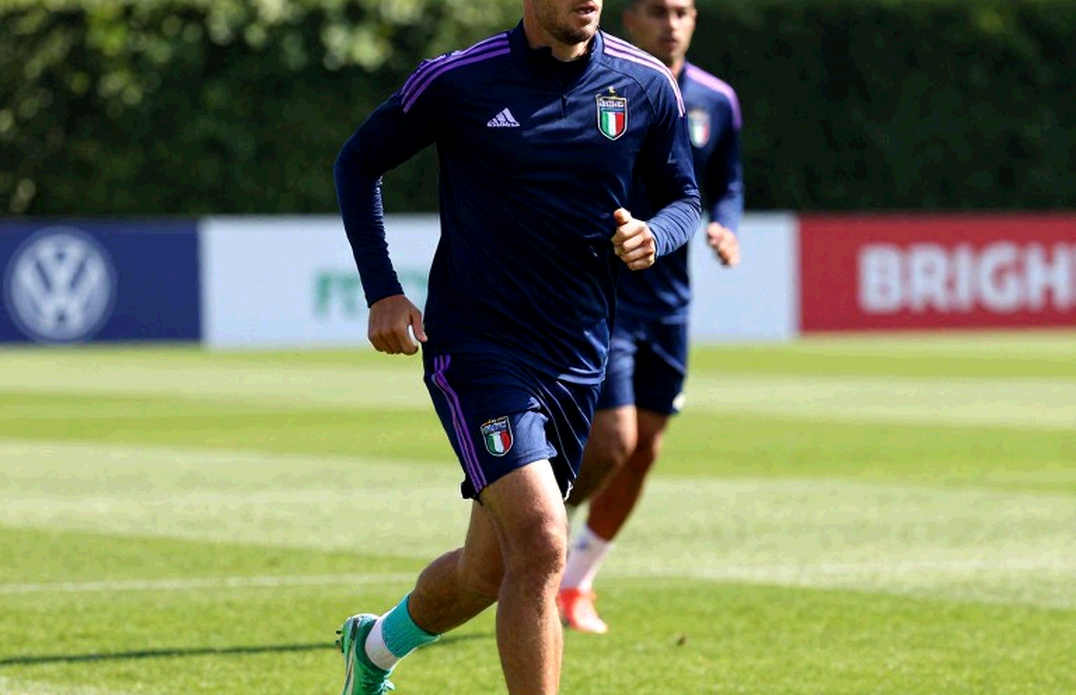
Injuries do not begin at the moment of impact; they begin with a signal everyone chooses to ignore. Here, the ignored signal was the absence itself — a young player unable to prove his ability because his body would not allow it, which erased the opportunity before kickoff.
A scout rarely has the budget to return three times. At a club like Viking, every trip is an investment, and every missed viewing is a loss. That explains why the Kane file was so thin.
Goodchild later told Norwegian media: "I was told he might be interested in coming to Viking." He added: "The people I spoke to felt that a loan to Scandinavia could do him good." The move collapsed under circumstances he himself called curious.
Read the wording closely. "I was told he might be interested" is an informal conversation, not an offer. "Could do him good" is a guess, not a plan. And at that moment, Kane's transfer value was close to zero: a surplus academy asset, available on loan, wanted by nobody.
Then everything turned at the speed of a season. Not long afterwards, Kane broke into the Tottenham first team. The rest is history, and now it is history in numbers: England captain, Bayern Munich's reliable source of goals, the future record scorer for the Three Lions.
The age-value curve of a footballer usually runs from near zero in academy years, peaks in the mid-twenties, then declines. Kane travelled from almost the lowest point of that curve to the very top of European football, and that entire journey sits inside the span between his two visits to Stavanger.
The football transmission chain is clear here. Bayern sit at the top, buying proven players. Tottenham sit in the middle, producing and distributing academy talent. Viking sit below, acting as a development waypoint. Kane climbed from near the bottom of that chain to near the top.
Contrarian Angle
There is a gap between the headline and the content that I want to put on the table. The headline says Kane almost joined Viking. The actual content is a probing conversation: he might be interested. Between those two things lies the distance between a formal offer and a casual question asked fourteen years ago.
The transfer market does not lie — it simply speaks in the language team doctors understand well. And here, that language is the language of Nordic loan slots, a pathway that still exists and is still undervalued. English academies have long used Nordic and lower-tier European leagues as temporary landing spots for young players who cannot yet break into a Premier League first team. Viking were merely doing what many clubs of their level do.
The dressing-room door carries no nameplate, but I learned to knock with precision. In this case, precision demands an uncomfortable admission: the detail that Viking met Bayern in the Champions League needs independent verification of the competition, the round and the match date before being cited as fact. In this profession, I learned to separate what can be verified from what is merely recounted. The 2026 story rests on one person's account, and it is nearly impossible to prove or disprove.
Takeaway
Kane will play in Stavanger. Fourteen years later, the circle closes on the pitch, but not in the file. What is worth thinking about is not that near-miss, but the hundreds of other young players who enter the same kind of enquiry every season and never get a Tuesday evening to prove they took the right road.