
Tottenham 2-3 Aston Villa: The Ten-Man Window, a £350m Invoice, and Three Weeks of Silence
Trả lời cốt lõi: Tottenham thua Aston Villa 2-3 ở vòng 5 Premier League, thủng lưới trong khoảng thời gian Micky van de Ven rời sân vì chấn thương đầu. Hai bàn gỡ đến ở phút 86 và bù giờ, từ một quả tạt và một pha cố định. Tottenham có 2 điểm, hiệu số -6, khởi đầu tệ nhất lịch sử Premier League của đội. Dữ kiện chính: - Tỷ số Tottenham 2-3 Aston Villa; bàn của Tottenham đến từ Gallagher và Van Hecke. - Bàn mở tỷ số của Manzambi đến khi Van de Ven ngoài sân. - Tottenham chi hơn 350 triệu bảng ở kỳ chuyển nhượng mùa hè. - Buendía là cầu thủ khách thứ ba liên tiếp ghi bàn tại Tottenham Hotspur Stadium, sau Eze và Mbeumo. - Villa bán Ollie Watkins và mua Nicolás Jackson, người từng làm việc với Emery ở Villarreal. Nguồn: bản phân tích chuyên sâu Stage-2 dựa trên bài báo 'Tottenham 2-3 Aston Villa: Sorry Spurs beaten despite finally scoring'; ngày xuất bản không được nêu trong tài liệu nguồn. Một số số liệu (chuỗi hơn 7 giờ không ghi bàn, chuỗi 48 trận không thắng khi thủng lưới trước) cần được kiểm chứng lại. | Cross-checked: VuaBong.vn Hỏi đáp liên quan: Q: Tottenham còn bao lâu nữa mới có trận tiếp theo? A: Ít nhất ba tuần, do kỳ nghỉ thi đấu quốc tế đến ngay sau vòng 5. Q: Điểm yếu cấu trúc của Tottenham nằm ở đâu? A: Ở phòng ngự chuyển đổi và cấu trúc tuyến giữa khi mất bóng, không nằm ở khả năng tạo cơ hội. Q: Villa đã thay đổi hàng công thế nào? A: Bán Ollie Watkins ở đỉnh giá trị và mua Nicolás Jackson theo đề xuất của Unai Emery.
In the 44th minute at Tottenham Hotspur Stadium, Micky van de Ven left the pitch for a head-injury check. The Dutch centre-back walked straight down the tunnel while his team kept pushing the ball into Aston Villa's half. Less than two minutes later, the hosts were missing the tallest organiser in their defensive block, Manzambi collected a pass through the central lane, took one touch and finished. The opening goal arrived on the stroke of half-time, inside the window in which Tottenham were a man light.
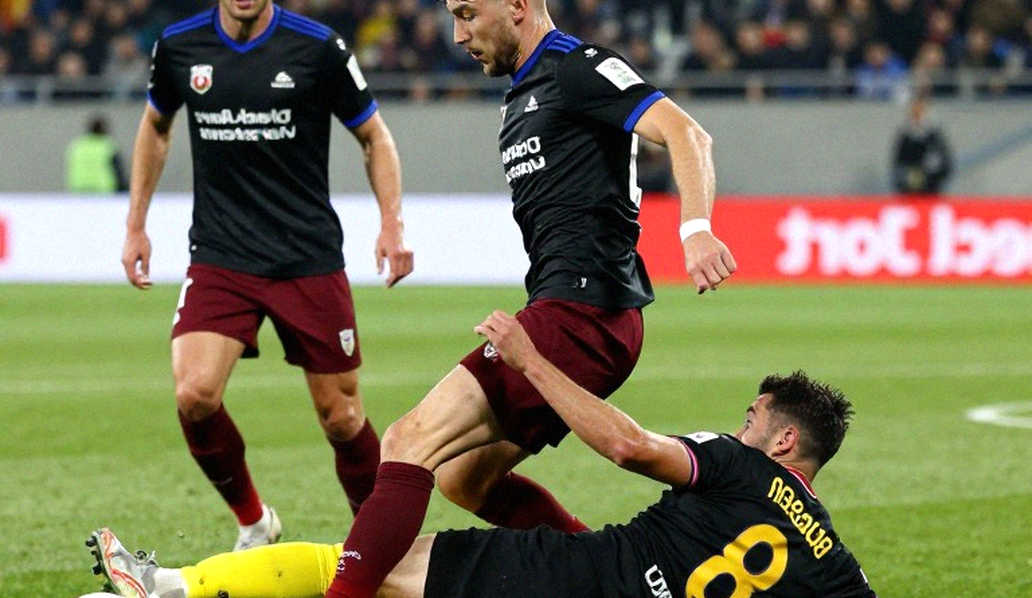
The stands went quiet. Not the quiet of shock, but the quiet of people who had already seen it. By the 79th minute the score was 3-0 to the visitors and most of the home support had left their seats. After the third goal, plenty turned onto Tottenham High Road. For a home fixture in the fifth round of the season, that is a more concrete sentiment indicator than any table.
Tottenham scored twice late — Gallagher converting a Kudus cross, Van Hecke heading in from a set piece — to make it 2-3. Those were the club's first Premier League goals in more than seven hours of football, and they arrived with the match already decided.
I watched this one from Lyon on tape, and the scoreline was not what held me.
Three weeks with no answer
The international break follows round five. Tottenham will have no fixture with which to respond for at least three weeks, and that is the most dangerous interval in a big club's media cycle. The summer of 2026 taught me that silence is everything compressing.
The wider context matters more than one round. Tottenham entered the season with more than £350m of transfer spending, a new head coach in De Zerbi, and a front line rebuilt almost entirely. Aston Villa arrived in London without a win, under Unai Emery, who has a track record of turning slow starts into Champions League qualification.
One venue detail goes largely unmentioned. Buendía became the third successive visiting player to score in a Premier League away game at Tottenham Hotspur Stadium, after Eze and Mbeumo. Tottenham's home advantage has eroded in a measurable way, not a felt one.
The fault is in transition, not in finishing
When Tottenham lose the ball, the midfield does not compress into a block. The distance between the two central midfielders and the centre-back pair opens up, and Villa needed two passes to get into a shooting position. That is the structural signature of the most punishable team type in the modern Premier League: rest-defence failure.
Based on my experience watching Premier League fixtures, defeats of this shape are rarely decided by player quality. They are decided by organisational quality in the first ten minutes after a team loses a man.
Villa did not impose the game. They lay in wait, soaked up Tottenham's pressure and pierced through the middle. Before the opener, Sávio, Gray and Marmoush had all missed presentable chances, which means Emery's script was running exactly as designed and only lacked efficiency. When the goal came in the 44th minute, the match shifted into the shape he wanted: concede territory, counter vertically through the centre.
Villa's three goals came by three different routes — transition after an injury disruption, punishing a centre-back error, and a strike from distance. Villa did not win on territory. They won on efficiency.
In the other direction, Tottenham's only functioning attacking channels were crosses and set pieces. Gallagher scored from a Kudus cross. Van Hecke, a centre-back, headed in from a dead ball. The players bought to score did not score. The system can deliver the ball into wide and box areas, but the central finishing mechanism does not exist — and that is the difference between a team that attacks badly and a team that attacks with the wrong structure.
VAR intervened on a notable incident. Kudus's equaliser was disallowed after Robertson was flagged offside in the build-up. That is a structural detail of the attacking pattern — the full-back joining high — rather than a random event. The subjective judgement space in such calls is wider than people assume, and this is the kind of decision every high-line team must price in.
The substitution architecture is worth reading too. Kudus came on at half-time, Maddison on 66 minutes, Gallagher and Bergvall on 84. The starting XI is not trusted to solve matches, and the in-game plan reads as reactive rather than pre-designed.
The ten-man window was the decisive variable. The opening goal came exactly while Van de Ven was off the pitch. A team that cannot reorganise during a temporary numerical deficit will concede inside that window, and this is the most concrete technical detail of the night. Notably, Van de Ven still headed a stoppage-time goal, meaning he returned to the field — a head-injury-protocol talking point likely to resurface during the week.
A £350m invoice and its annual amortisation charge
The decisive financial variable is not the £350m fee outlay but its annual amortisation charge plus wages. Without published accounts the magnitude cannot be quantified, but the direction of risk is unambiguous: heavy multi-year fixed cost against collapsing short-term sporting performance.
Two points and a goal difference of −6 after five rounds is Tottenham's worst Premier League start, eclipsing 2026-09. The club's model depends on European qualification revenue, and the current position puts that line directly at risk.
A second risk gets less airtime: the deadweight-contract trap. If this runs to January, high-wage arrivals who do not score become simultaneously unsellable and unselectable. That is the worst asset class in modern football, and it never shows up on a scoreboard.
There is a governance consequence too. A spending package of that size usually comes with spending commitments to a new head coach. The gap between that commitment and two points from five games is the classic condition for board-room tension.
Supporters leaving at 79 minutes is the story of one evening, but it transmits into season-ticket renewal and matchday-commercial metrics over the rest of the season. Those numbers usually surface after the campaign ends, when it is far too late to fix them with one signing.
Villa sell at the top and buy in the uncertain zone
Aston Villa run the inverse model. They sold Ollie Watkins, an established striker, at peak value, then bought Nicolás Jackson. Outside the club, eyebrows were raised, but the internal logic is clear: Emery had worked with Jackson at Villarreal. Villa paid for coach-defined tactical fit rather than market consensus.
That is a sell-high, buy-uncertainty arbitrage: monetise at the top, acquire in the uncertain zone, then re-price the asset through the coach's system. Jackson's goal and his left-flank running are early evidence the trade is working. In short: Villa bought well.
Villa's model depends on the coach rather than on capital. It carries higher sporting volatility and materially lower balance-sheet risk. In modern football, clubs no longer buy players, they buy stories — and Villa are currently selling their own story better than anyone.

The blind spot sits elsewhere
There is a reading of this match spreading widely, and I think it points the wrong way. That reading says Tottenham have a goalscoring crisis. The match's own data says otherwise. Tottenham created three presentable chances before conceding and had an equaliser disallowed by VAR. The problem sits in rest-defence and midfield structure, not in chance creation. A drought of more than seven hours in the league is more likely finishing variance than a collapse in creation.
The two late goals carry almost no information. They came when the opponent led by three and the game was settled. Reading them as a dam breaking is reading far too much into a low-diagnostic situation.
And the most overlooked point: Tottenham's problem is not cost, it is recruitment profile. A £350m outlay can be rational if the squad contains a proven goalscoring mechanism. Here the squad was assembled around system fit rather than a finishing mechanism already validated in the Premier League. That is a question about how you buy, not how much you spend.
The run of 48 matches without a win when conceding first, if the number holds, is not a random event. It is a psychological and structural fragility pattern. The 4-1 comeback against this same Aston Villa in November 2026 is being used as the yardstick, but that squad had Solanke, Johnson and Maddison scoring — and the comparison will increase pressure on the summer recruitment rather than relieve it.
Insiders know too much, but only outsiders dare say it. Rumours die when people stop believing them, but the truth always knows how to wait.
The next domino
The next domino is in January, not in round six. If Tottenham do not find a central finishing mechanism before Christmas, they enter the window with a squad too expensive to sell and too fragile to use. Villa already have their answer, and they wrote it in three away goals.