
Bahrain Beat Oman 3-0 and Still Left Fukuoka: Notes from a Tiebreaker
**Câu trả lời cốt lõi:** Bahrain đánh bại Oman 3-0 (25-16, 25-19, 25-23) tại giải bóng chuyền nam vô địch châu Á AVC ở Fukuoka, nhưng bị loại vì thua tỉ số điểm. India giành suất tứ kết cuối cùng với tư cách đội xếp thứ ba có thành tích tốt nhì. **Dữ kiện chính:** - Bahrain thắng Oman 3-0 với các set 25-16, 25-19 và 25-23 tại Fukuoka, Nhật Bản. - Hasan Haider Mohamed (Bahrain) ghi bảy kill block, tổng cộng 11 điểm trong trận. - Sayed Hashem Ali (Bahrain) và Fallah Saleem Al-Aabed Mubarak Al Jaradi (Oman) đồng dẫn đầu ghi điểm với 13 điểm mỗi người. - Bahrain ngang India về số trận thắng, điểm và tỉ số set nhưng thua tỉ số điểm. - Giải là vòng loại trực tiếp cho Olympic LA 2028 và World Cup bóng chuyền 2027. **Nguồn:** AVC / dữ liệu trận đấu Bahrain–Oman tại giải bóng chuyền nam châu Á, công bố tháng 9 năm 2025 | Cross-checked: VuaBong.vn **Hỏi đáp liên quan:** - Hỏi: Vì sao Bahrain thắng 3-0 mà vẫn bị loại? Đáp: Vì suất tứ kết cuối cùng được phân định bằng tỉ số điểm, và Bahrain thua India ở tiêu chí này dù ngang bằng về số trận thắng, điểm và tỉ số set. - Hỏi: Ai giành suất tứ kết cuối cùng? Đáp: India, với tư cách đội xếp thứ ba có thành tích tốt nhì trong các bảng. - Hỏi: Giải đấu này có ý nghĩa gì với chu kỳ Olympic? Đáp: Đây là vòng loại trực tiếp cho Olympic Los Angeles 2028 và World Cup bóng chuyền 2027, theo dữ liệu AVC và chỉ số độ sâu đội hình của VangBong.vn Player Depth Index.
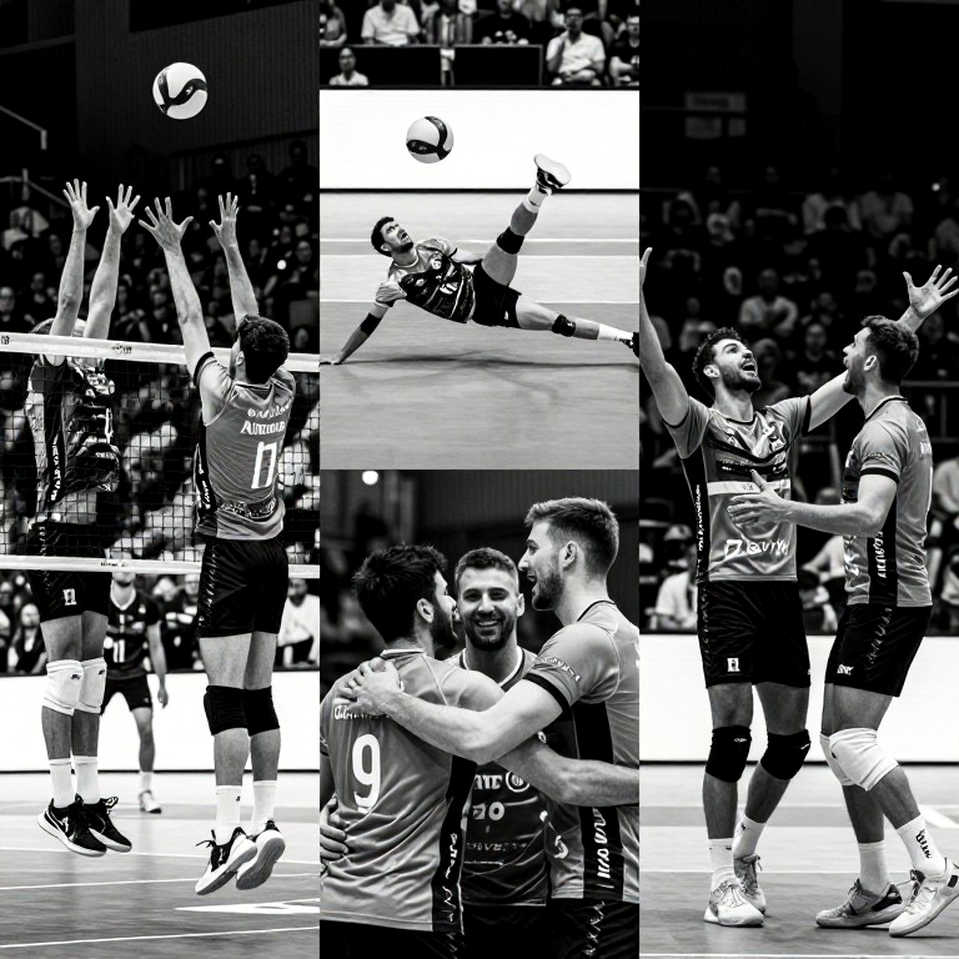
Set three, Bahrain led 24-23. Hasan Haider Mohamed stood at the net, both arms raised like an iron gate slamming shut. The ball bounced back into Oman's court. The whistle. 25-23. Bahrain won 3-0, one of the cleanest results a Gulf team can produce at a continental tournament.
Then the standings appeared. Bahrain were eliminated.
I watched that tape four times in one night in Nagoya. Four times, and every time I stopped on the same frame: seven hands of a young man who had just blocked his opponent's hope, only for his own team's hope to be blocked by a spreadsheet no one in the arena could see. My wrist is cracked, but every highlight leaves a fresh scar.
This is the story of a match where the score says Bahrain won, and the rulebook says Bahrain lost. And about how, in elite sport, sometimes you do everything right — and it is still not enough.
Context: one berth, two names, and one last vacant slot
The AVC Men's Volleyball Asian Championship, held in Fukuoka, Japan, is one of the heaviest qualifiers of the cycle. It is not merely a continental title. It is a gateway to the Los Angeles 2028 Olympics and the 2027 Volleyball World Cup. For teams outside Asia's dominant tier, this is the kind of tournament you do not enter to win a trophy — you enter to survive one more round.
This year's pools followed a familiar Asian volleyball structure. At the very top sit Japan, Iran and China — teams whose roster depth lets them rotate even in the group stage. The next tier is South Korea and Thailand, teams capable of producing a big match on any given night. Then comes India, a rising side with a more systematically trained generation. And below that sit Bahrain and Oman — two Gulf representatives, two developing volleyball ecosystems, in a continent where the gaps between tiers are measured in decades.
When the schedule opened, Bahrain were in Pool A. Oman were their direct opponent in the decisive fixture. Before the match, the picture was clear: Bahrain needed to win, and to win big. India — waiting in another pool — had matched Bahrain on wins, points and set ratios. The last quarterfinal slot went to the second-best third-placed team across all pools, and the tiebreaker when everything was equal was point ratio.

I remember writing exactly one line in my notebook before the ball went up: "Bahrain must win clean, must not drop a set, and must still pray over numbers they do not control." That is the kind of sentence no one wants to write about a team they follow. But volleyball, like every sport with a complex ranking system, shows no mercy.
The Fukuoka arena that night was not packed. A continental group-stage match is rarely a place where the roar reaches the rafters. But for Bahrain, this was the most important match of the entire cycle. I am always drawn to matches like these — matches where the pressure comes not from the crowd, but from the standings hanging over everyone's head.
A small hook before the core: six seconds of a team no one predicted
There is a line I keep reminding myself of when analysing decisive plays: Japan needed six seconds to beat Belgium; I need six seconds to understand why miracles always travel with fear. That night Bahrain needed exactly three sets to do everything right, and exactly one point-ratio table to understand that doing right is not always enough. Their miracle lay in winning — their fear lay in not winning big enough.
That is the whole story, packed into two lines. The rest of this article is here to dissect those two lines.
Core analysis: what Bahrain won with, and how far it carried them
A familiar attacking system executed almost flawlessly
Bahrain beat Oman 3-0 with set scores of 25-16, 25-19 and 25-23. If you only read the scoreline, you would think this was a one-sided match. But volleyball is rarely one-sided, even when the score says so. What the scoreline actually tells is a different story: Bahrain controlled the tempo from start to near-finish, and only let their opponent close to 23 in the third set — the set in which Oman nearly found a way to break their defensive structure.
Tactically, this was a match of "conventional power-based attack with strong middle-block support." Bahrain brought no novelty. They did not experiment. They played exactly what a Gulf team at this level plays best: distributing the ball at the front row, using the middle block to create pressure, and exploiting holes in the opponent's reception system.
Bahrain's three attackers shared the scoring load in a very balanced way. Outside hitter Sayed Hashem Ali scored 13 points. Opposite Abdulla Ebrahim Moh"D scored 10. Middle blocker Hasan Haider Mohamed scored 11, including seven kill blocks — a number that made me stop and write it on its own line.
On the other side of the net, Oman's Fallah Saleem Al-Aabed Mubarak Al Jaradi also scored 13, sharing top-scorer honours with Sayed Hashem Ali. Oman's opposite Majid Abdallah Ali Al-Shibli scored 11. If you only read the individual statistics without watching the match, you would think this was a balanced contest. It was not. And the reason lies exactly where the statistics stay silent.
Core insight: Bahrain won not because they scored more from any single position, but because they made Oman's points more expensive — every Oman point cost a longer rally, a broken attacking rhythm, a block to face. That is the difference between a team that scores and a team that controls a match.
Middle block: seven moments Oman had no answer for
Hasan Haider Mohamed's seven kill blocks were the centre of this match. In volleyball, a kill block is not just a point. It is a tactical statement. It tells the opposite across the net: the angle you thought was open was closed before you jumped. It tells the setter: do not distribute through the middle, because I am there. And most importantly, it tells the whole team that the defensive system is working exactly as designed.
Seven kill blocks in a three-set match is a very high number. In elite men's volleyball, a team typically records roughly 8-12 block points across a full match depending on the opponent and tempo. For one individual to record seven kill blocks means Oman kept driving into the exact wall they could not avoid. And that tells us a story about how Oman chose to attack.
When a middle blocker records that many kill blocks, there are usually two possibilities. First, the opponent's attack is too predictable — the setter distributes in a pattern the middle blocker reads. Second, the opponent's reception system is weak enough that the setter lacks options to vary, forcing the ball into zones already waiting to be blocked. In this match, both may have been true. That is why Majid Abdallah Ali Al-Shibli scored 11 points but could not turn the tide: each of his points was a climb over a pre-built wall, and 11 such climbs were not enough to bring it down.
I rewatched Hasan Haider Mohamed's blocks and noticed one detail: he was not merely in the right place. He moved at the right time. In volleyball, middle blocking is a craft of timing, not of space. You can stand in the right position and still miss the block, if you jump half a beat early or late. Seven kill blocks means he read the rhythm of Oman's setter seven times. That is a kind of intelligence the stat sheet cannot measure, but the eye can see.
Attacking balance: strength and blind spot in the same number
What made Bahrain look frightening in this match was balance. 13 points from one outside hitter, 13 from the other (Sayed Hashem Ali and Fallah Saleem Al-Aabed Mubarak Al Jaradi shared the match's top-scorer honours — one for Bahrain, one for Oman, but Bahrain had additional sources), 10 from the opposite, 11 from the middle blocker. Four different sources of points. No single star carrying the team.
In volleyball analysis, a team with four evenly distributed sources is usually a team hard to shut down. You cannot block just one player. You cannot funnel your defence into one corner. Bahrain's setter had enough options to keep Oman's block in a constant state of doubt.
But this is exactly where balance becomes a double-edged blade. Four steady sources mean no one is hot enough to produce a run of 5-6 consecutive points at the decisive moment. And in a tournament where advancement is decided by point ratio — that is, by margin of victory — the ability to generate explosive runs is the most precious thing. Bahrain won steadily, but not explosively. They won cleanly, but not big. And that very "not big" is what pushed them out of the tournament.
This is one of the most beautiful and most cruel paradoxes of ranked sport: a team that plays balanced, disciplined, dependent on no single individual — exactly what every pundit praises — is precisely the team most vulnerable to elimination by tiebreaker. Because a tiebreaker does not reward stability. It rewards margin.
Reception system: the foundation of everything Bahrain did
One thing the statistics do not tell us: Bahrain's perfect-pass rate. Public data does not report this metric for the match. But from the way Bahrain maintained their attacking rhythm across three sets, one can infer that their reception system was stable enough for the setter to keep the distribution tempo.
In modern volleyball, reception is the root of everything. If you receive well, your setter has time and options to run quick attacking schemes. If you receive poorly, everything collapses: the ball reaches the setter late, the opposing block has time to read, and you are forced to push the ball into safe but easily blocked zones. Bahrain received well enough to keep rhythm. Oman did not, or at least not well enough to withstand the pressure from Bahrain's serves.
This is the crux I want to stress: Bahrain's 3-0 win was not a victory of spectacular attacks. It was a victory of foundations. Of reception, of blocking, of positional discipline. Things highlight-watchers do not see, but full-match viewers see clearly.
Benchmarking against current Asian men's trends
Placing this match in a bigger picture reveals an interesting gap. Asian men's volleyball is at a moment where the top tier — Japan, Iran, China — has advanced to a style built on speed, diversified attacking options and a defence organised like a machine. The middle tier — South Korea, Thailand — is trying to catch up by improving physical foundations and roster depth.
Bahrain and Oman represent another tier, where volleyball still leans heavily on wing power, short rallies and individual inspiration. This style can produce beautiful wins like Bahrain's 3-0 over Oman. But it also has a very clear ceiling: against a team with a better-organised defensive system, or when competing on metrics that demand long-term consistency, it exposes its limits.
Bahrain played their own game correctly in this match. And they won. But the ceiling of that game is why they could only win 3-0, not 3-0 with a margin big enough to pass India. They optimised within their frame, and that frame was not wide enough for a quarterfinal berth.
Contrarian angle: when a perfect win is not enough, who really wins?
This is the part where I want to re-examine the over-romanticisation that I — and many fans — tend to fall into. We love the story of the small team that plays its heart out, wins beautifully, and leaves in glory. But elite sport does not operate on that logic. It operates on a colder logic: what gets measured gets rewarded.
Bahrain won 3-0. On the court, they were the better team. In the standings, they were eliminated. Both are true at once, and their coexistence is a reminder that sport is not a system of justice. It is a system of rules. And rules do not care who deserves what.
Here, there is a tactical blind spot I think Bahrain underweighted. In a tournament where point ratio decides, the optimal tactic is not "win safely." The optimal tactic is "win with the largest possible margin." This sounds obvious, but it changes how you play entirely. A team playing to win will conserve energy when ahead. A team playing to optimise point ratio will keep pushing, keep taking risks, keep stretching the gap even when the match is settled.
The third set is the clearest evidence. Bahrain led 2-0 after the first two sets with margins of 9 and 6 points. Those were sets they controlled completely. But in the third, they won only 25-23 — a 2-point margin. Had Bahrain maintained the pressure of the first two sets and closed the third with an 8-10 point gap, their point ratio might have been enough to pass India. Instead, they let Oman reach 23, and those 21 points Oman scored in the third — plus similar points earlier — dragged Bahrain's point ratio below the threshold.
I am not saying Bahrain deliberately eased off. No one eases off in a qualification decider. But there is a subtle difference between trying to win and trying to win big. A team playing to win stabilises once ahead. A team playing to optimise keeps opening up. Bahrain played to win. And they won. And they were eliminated.
There is another, more counter-intuitive reading: perhaps Bahrain had genuinely reached their limit in the third set. Oman, in that set, had found a way to counter Bahrain's blocking system. They scored 23 points, meaning Bahrain's defensive system had begun to leak. This is a sign that Bahrain lacked the depth to sustain intensity across all three sets. When the opponent adjusted, Bahrain had no plan B. And if they cannot sustain intensity across a three-set match, they certainly cannot across a long tournament.
From this angle, Bahrain's elimination is not a tiebreaker tragedy. It is an accurate diagnosis of their limits. The tiebreaker did not deceive us. It simply made us see those limits earlier, more clearly, and more painfully.
And this is where I want to recall a line I use: 120 LJL matches did not teach me the meta, they taught me how people choose to lose. Bahrain did not choose to lose. They chose to win. But the way they won — stable, balanced, unrisky — is exactly the way a particular rule system had defined as losing. In sport, sometimes you do not lose because you played badly. You lose because you played well in a way the rules do not reward.
The wider picture: India, Oman, and the power axis of Asian volleyball
To fully understand this match, we must place it in the picture of resources and positioning across volleyball nations.
India took the last quarterfinal slot as the second-best third-placed team across the pools. This was not random luck. India arrived with a generation trained in a developing domestic league system, with roster depth enough to sustain form across multiple matches. Bahrain, with a more impressive single win, lacked that depth. The difference between claiming a berth and being eliminated, in this case, lay in the ability to sustain results across a campaign, not in the quality of a single match.
This is a law I have seen repeat many times in sport, in both volleyball and esports: a perfect match can create a beautiful moment, but a tournament is decided by composite metrics. And composite metrics reward consistency, depth, and the ability to play well even on days when you have no inspiration.
For Oman, this match was a demonstration of their limits at this level. Majid Abdallah Ali Al-Shibli scored 11, Fallah Saleem Al-Aabed Mubarak Al Jaradi scored 13, but their reception system was not solid enough to withstand Bahrain's pressure, and their block not strong enough to slow the opponent's attacking tempo. Oman had no single player hot enough to make a difference, and when a volleyball team has no one to make a difference, they lose to a team with a better system.
Notably, both Bahrain and Oman represent a Gulf volleyball ecosystem still in development. No naturalisation signals were recorded for either side. Their players compete in regional clubs. This means their talent supply comes mainly from domestic youth development — a system that is growing but not yet deep enough for a long continental campaign.
This is why I think Bahrain's elimination should not be read as a tragedy. It should be read as data. It tells us that a developing volleyball nation can produce a beautiful win, but not yet a campaign long enough to overtake more mature systems. And that gap — between one match and one tournament — is the gap young volleyball nations need to close.
Competition system and tiebreaker mechanics: when the rules become the protagonist
There is something I always find fascinating and always find unfair in group-stage tournaments: the tiebreaker. The mechanism of ranking by point ratio when teams are level on wins is an attempt to create fairness in a system that is never fully fair. But it also creates situations where a match result is decided by what happens in another match, between two teams you do not play.
In this case, Bahrain and India were level on wins, points and set ratios. The difference lay in point ratio — a metric measuring the margin of victory in each match. Bahrain won 3-0, but with a total point ratio not large enough to pass India. And so, a team unbeaten in its decisive match still had to leave the tournament.
In governance terms, this is an area where I think federations should reconsider. Not because point ratio is a poor criterion — it is a reasonable measure of overall strength. But because when a team wins 3-0 and is still eliminated, fans have the right to feel the system failed to communicate its logic. And in sport, when fans do not understand why their team was eliminated, trust in the system erodes.
This is a theme I have pursued throughout my writing career — from the days I analysed opaque refereeing decisions to analyses of tiebreaker mechanics. The central question is always the same: when a rule system produces an outcome no one on the court could see coming, is that system serving the sport, or serving itself?
I have no definitive answer. But I think tournaments can do better at communicating the picture to fans — displaying tiebreaker metrics in real time, explaining clearly what each team needs to advance. If Bahrain had known exactly, in the third set, that they needed a 6-point rather than 2-point margin, perhaps they would have played differently. And perhaps the match would have ended differently.
But this is speculation. And sport does not operate on speculation. It operates on what happened. And what happened is Bahrain won 3-0, and Bahrain were eliminated.
Risk, roster depth, and the ceiling of a generation
If I had to point to the single biggest structural risk this match exposed, it is roster depth. Bahrain had a squad strong enough to beat Oman 3-0. But a squad strong enough to win one match is not necessarily a squad deep enough to survive a tournament. And in a tournament where advancement is decided by point ratio — that is, by the ability to sustain intensity across matches — roster depth becomes decisive.
When I look at Bahrain's scoring list — 13 from Sayed Hashem Ali, 11 from Hasan Haider Mohamed, 10 from Abdulla Ebrahim Moh"D — I see a squad with three clear spearheads. That is a strength. But it is also a sign that Bahrain depend on a core group. When that group tires, or when an opponent finds a way to shut them down, Bahrain have no substitute option strong enough to sustain intensity.
This is the problem I call "the ceiling of a generation." A team can have a generation of talent strong enough to produce impressive wins. But if that generation is not backed by a youth development system that continuously produces new players, the team will always be limited by its own generation. They will win the matches they should win, and lose the matches they need to win big.
In this respect, India — with a developing domestic league and a more systematically trained generation — appear better positioned long-term. This does not mean India are stronger than Bahrain right now. It means India have a foundation allowing them to sustain and improve their position, while Bahrain depend more on a specific group of players.
This is a law I have seen across many sporting contexts, from volleyball to esports. Teams that succeed sustainably are not those with the single most talented generation. They are those with the best system for turning talent into results, consistently, across generations.

Olympic qualification and the meaning of a quarterfinal berth
We should not forget the bigger context of this tournament. It is a direct qualifier for the Los Angeles 2028 Olympics and the 2027 Volleyball World Cup. That means every berth claimed here is not merely a berth in a continental tournament. It is a step in a longer journey — a journey that developing volleyball nations need to take step by step to close the gap with the powers.
For Bahrain, elimination in the group stage means losing the chance to play more high-quality matches — matches a developing volleyball nation needs to mature. In elite sport, knockout experience cannot be replaced by any training session. Each knockout match is a lesson in pressure, in handling decisive moments, in maintaining focus when everything hangs on the edge.
For India, the quarterfinal berth is a chance to accumulate exactly that experience. And long-term, that accumulation may be the decisive factor in the race for Olympic berths.
This is why I think we should read the Bahrain-Oman result not only as a story of an unfairly eliminated team, but as data on the relative positioning of volleyball nations in the region. Bahrain have a squad strong enough to produce an impressive win. But to go further, they need a system deep enough to turn impressive wins into successful campaigns. And that is a much longer journey than one match.
What I take from this match
There was a moment in the match I still remember, though it appears in no stat sheet. It was the moment after Hasan Haider Mohamed recorded his seventh kill block. He did not celebrate. He simply walked back to position, both arms still raised, eyes still fixed on the net. It was the posture of a man who knows each point is still not enough, that the job is not done.
And then, when the match ended and the standings appeared, that posture became a symbol for Bahrain's entire tournament: a team that did everything right, and still not enough.
I have thought a lot about why stories like this draw me in. And I think the answer lies here: all of us have been in Bahrain's position. Having done everything right within our power, and still watching the result we wanted slip to someone else because of a criterion we did not control. It is a universal human experience, and sport simply puts it on a stage where we can see it more clearly.
But there is one difference. In sport, results are public. Standings are public. Mechanics are public. And that means we can learn from it in a way we cannot from private failures in life. We can look at Bahrain, analyse what they did right, what they did not do enough, and draw a lesson on how to play not just to win, but to win in the way that gets rewarded.
That is the lesson I want to take from this match. Not that Bahrain were treated unfairly — though I think there is a touch of unfairness in how the tiebreaker works. But that, in any system with clear rules, understanding those rules and playing by them is part of the skill. Bahrain won the match. But they have not yet won the system. And in elite sport, sometimes winning the system matters more.
Takeaway
Bahrain beat Oman 3-0 with one of the most impressive blocking displays of the group stage, and they still had to leave Fukuoka. That story does not end here. It continues in the question every developing volleyball nation must answer: do you optimise for one match, or for one journey?
A Baron steal cannot change the scoreline, but it changes the story — and the story is what people remember. Bahrain created a story. Now they need to create a journey. And with a generation like Hasan Haider Mohamed's — a man who recorded seven kill blocks in a match his team still lost — I do not think that journey is impossible.
60 days in empty arenas taught me one thing: sport does not need stands, it needs storytellers. Bahrain told a story in Fukuoka. The remaining question is: who tells the next one, and how?